The fort sat in a shallow bowl of ochre earth, adobe walls the color of old bone, a wooden gate that groaned whenever the wind leaned against it. Beyond the stockade, the land rolled away in pale scrub and stone, the kind of country that swallowed sound and men alike. An American flag hung limp from its pole in the late light, its stripes dulled by dust. Wagons stood in a line near the quartermaster's shed. Horses stamped and blew soft clouds into the cooling air.
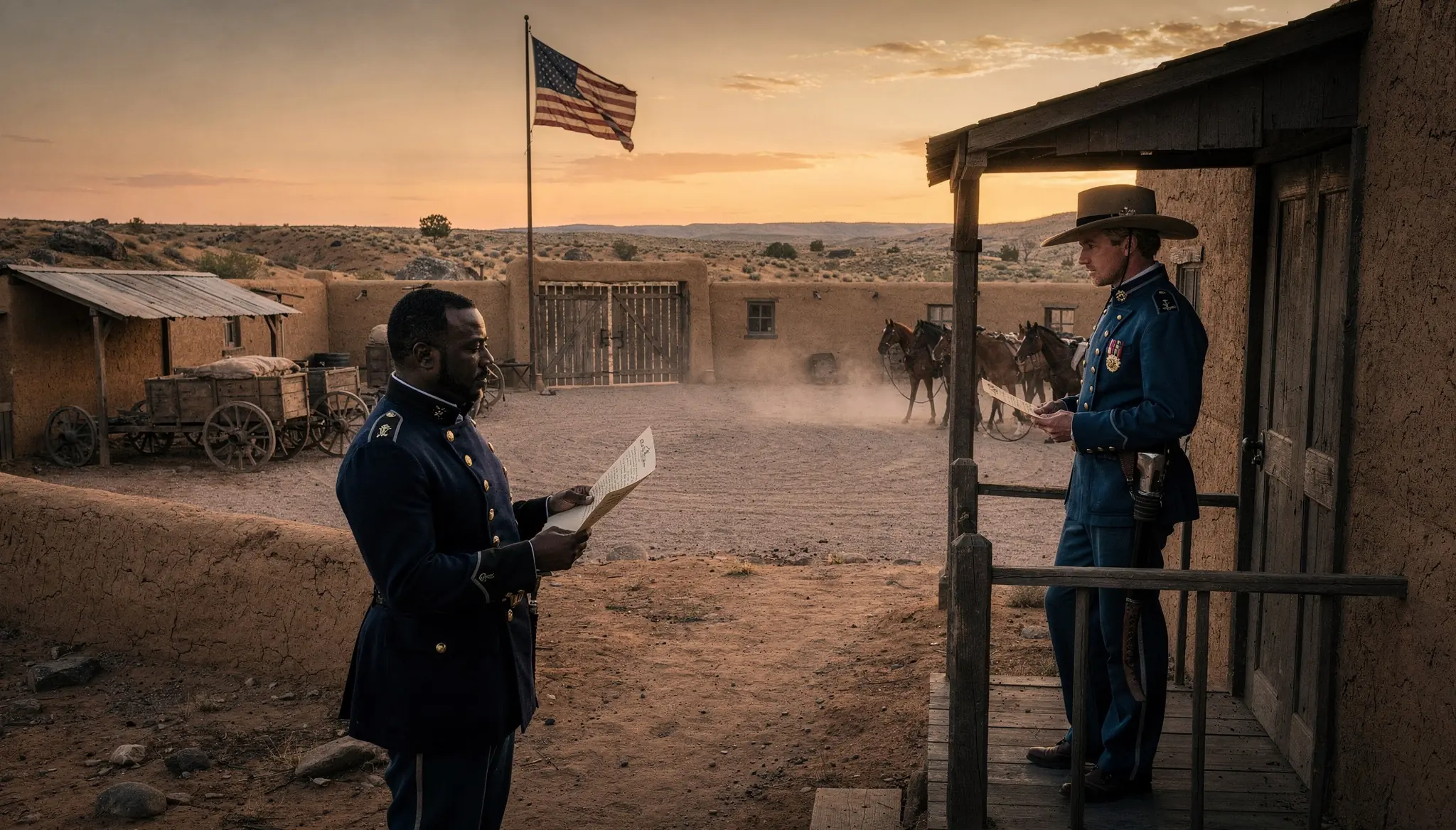
Captain Marcus Hale stood alone on the porch of the command hut, a folded sheet of paper open in his dark hands. He was thirty-nine, broad through the shoulders from years of carrying more than his share, and the blue of his Union-style coat had been worn to a quieter shade by sun and travel. The brass buttons still caught the gold of the hour. He read the order a third time, though the words had not changed.
You will evacuate the fort at once. Proceed south with all stores and personnel to Fort Ellison. Hostile force approaching from the north estimated at two hundred. Delay is death. By authority of Colonel R. S. Harland, District Headquarters.
The signature looked right. The seal looked right. The courier who had ridden in at noon—a thin white man with a sunburned neck and a courier's pouch stamped with the district mark—had looked exhausted enough to be believed. He had drunk water, refused a meal, and ridden out again toward the southern road before anyone thought to ask him more than his name. Hale had not liked that. He liked clean questions and clean answers. The desert did not always offer either.
He folded the paper once more along its crease and held it between finger and thumb, as if weight itself might tell him whether the ink was honest.
Boots struck the packed earth behind him. First Lieutenant Wesley Kane came up the steps two at a time, fair hair bright beneath his hat, face flushed with purpose. Kane was twenty-six and carried himself like a man who expected doors to open. He had arrived at Fort Red Clay three months earlier with letters of recommendation and a smile that never quite reached his eyes when he thought no one was watching.
"We move before dark," Kane said. No greeting. No pause. "I've already told Sergeant Briggs to hitch the teams. The men can eat in the saddle if they must."
Hale turned slowly. Dust motes drifted between them in the slanting light. "The order says at once. It does not say we abandon sense. I want a head count, a final inventory, and the sick wagon ready first."
Kane's mouth tightened. "With respect, Captain—two hundred hostiles. If headquarters says delay is death, then delay is death. Every minute we spend counting flour is a minute they close the distance."
"Headquarters also taught me to verify when the ground feels wrong," Hale said quietly. "That courier did not wait for a receipt. He did not ask for a fresh horse. He did not even wipe the foam from his mount before he left."
"He was under orders to return," Kane said. "Same as we are under orders to leave."