Grow Longer Eyelashes and Thicker Eyebrows in Just 3 Days 💯
Health 22/01/2026 14:50
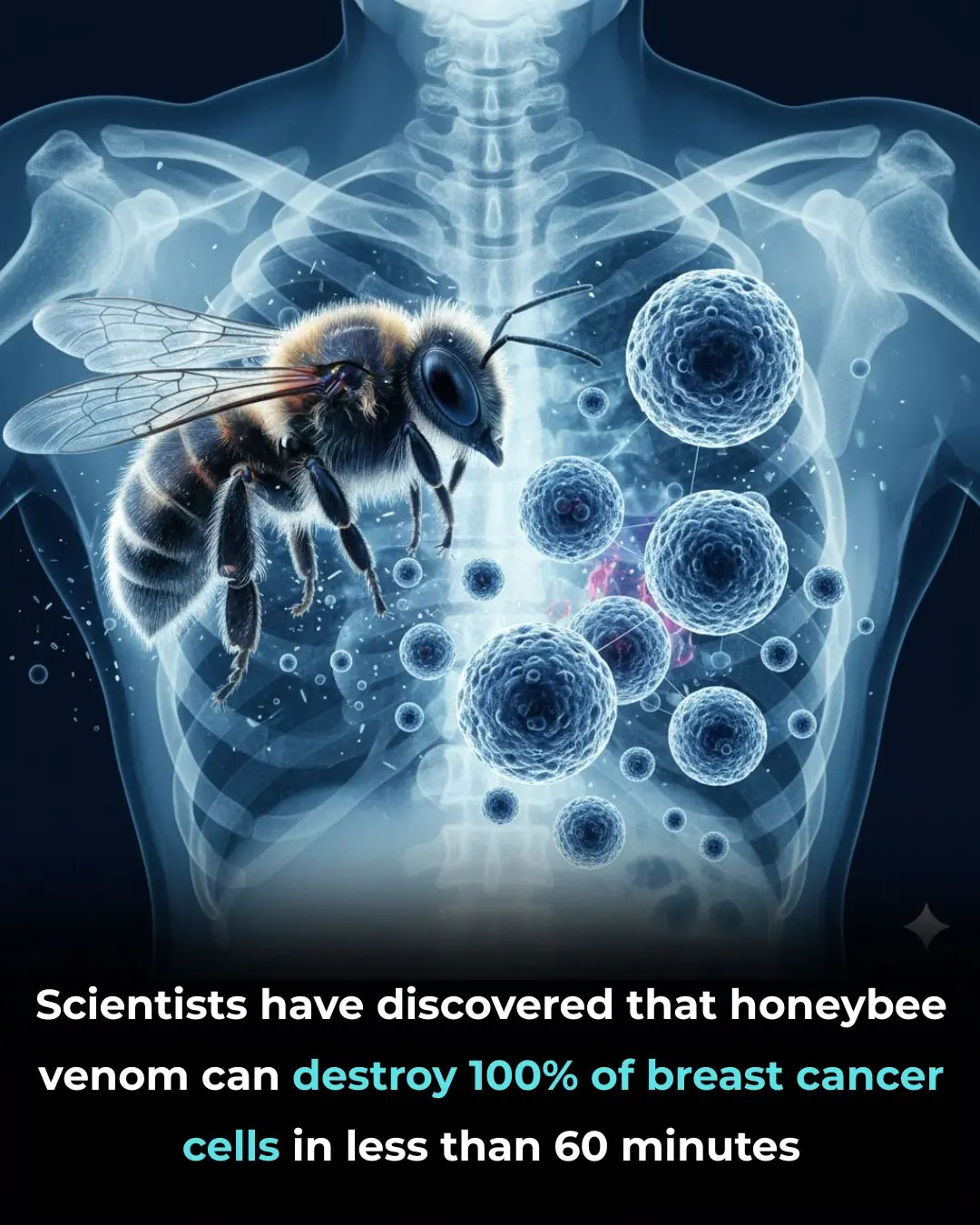
In recent years, scientific interest has increasingly turned toward nature as a source of novel cancer therapies. Among the more intriguing areas of investigation is honeybee venom, a complex biological substance traditionally associated with pain and allergic reactions. Emerging research now suggests that specific compounds within honeybee venom may possess the ability to selectively target cancer cells, opening promising new avenues for future cancer treatments.
Honeybee venom is a rich biochemical mixture composed of peptides, enzymes, and bioactive molecules, the most well-known of which is melittin. Melittin accounts for nearly half of the venom’s dry weight and has long been recognized for its potent biological activity. While it is responsible for much of the venom’s toxicity, scientists have discovered that this same property may be harnessed for therapeutic purposes when carefully controlled.
Laboratory studies have shown that melittin can disrupt cancer cell membranes, leading to cell death through mechanisms such as apoptosis and necrosis. Cancer cells often possess membranes that differ structurally from those of healthy cells, making them more vulnerable to melittin’s membrane-penetrating effects. This selectivity has sparked significant interest, as one of the greatest challenges in oncology is destroying cancer cells without harming surrounding healthy tissue.
Beyond direct cell destruction, research indicates that honeybee venom compounds may interfere with key signaling pathways involved in tumor growth, inflammation, and metastasis. Some studies suggest that these compounds can inhibit cancer cell proliferation, suppress angiogenesis (the formation of new blood vessels that feed tumors), and reduce the spread of malignant cells to other parts of the body. These multifaceted actions make honeybee venom particularly appealing as a potential complementary or alternative therapeutic strategy.
Importantly, modern research is not focused on using raw venom as a treatment. Instead, scientists are developing advanced delivery systems—such as nanoparticles, targeted carriers, and modified peptides—to guide venom-derived compounds directly to cancer cells. These technologies aim to minimize toxicity, improve precision, and enhance treatment safety. Early experimental models have shown that when melittin is delivered in a targeted manner, its anticancer effects can be significantly increased while reducing damage to normal cells.
Despite these promising findings, researchers emphasize that honeybee venom-based therapies are still in the early stages of development. Most evidence to date comes from laboratory experiments and animal studies, and extensive clinical trials will be required before such treatments can be considered safe and effective for widespread human use. Potential risks, including immune reactions and toxicity, must be carefully evaluated and addressed through rigorous testing.
Nevertheless, the exploration of honeybee venom reflects a broader shift in cancer research toward biologically inspired treatments. As resistance to conventional chemotherapy and targeted drugs continues to pose major challenges, naturally derived compounds offer a valuable reservoir of new therapeutic possibilities. By studying and refining substances like honeybee venom, scientists hope to expand the arsenal of tools available to fight cancer in more precise and less harmful ways.
In the future, venom-based therapies may not replace existing cancer treatments but could complement them, enhancing effectiveness and reducing side effects. While much work remains, the growing body of research highlights how even the most unexpected natural substances can contribute to breakthroughs in modern medicine.
Oršolić, N. (2012). Bee venom in cancer therapy. Cancer and Metastasis Reviews, 31(1–2), 173–194.
Duffy, C., & Sorolla, A. (2020). Honeybee venom and melittin: Potential anticancer agents. Toxins, 12(9), 562.
Rady, I., Siddiqui, I. A., Rady, M., & Mukhtar, H. (2017). Melittin, a major peptide component of bee venom, and its conjugates in cancer therapy. Cancer Letters, 402, 16–31.
National Cancer Institute (NCI). Targeted cancer therapies.
World Health Organization (WHO). Cancer research and innovative treatment approaches.