For ten years, I thought I had built the kind of life people envied from a distance.
A good house in a quiet neighborhood. A six-figure job that kept getting better. Three healthy kids. Two cars in the driveway. A wife people used to describe as beautiful, charming, and lucky to be loved the way I loved her.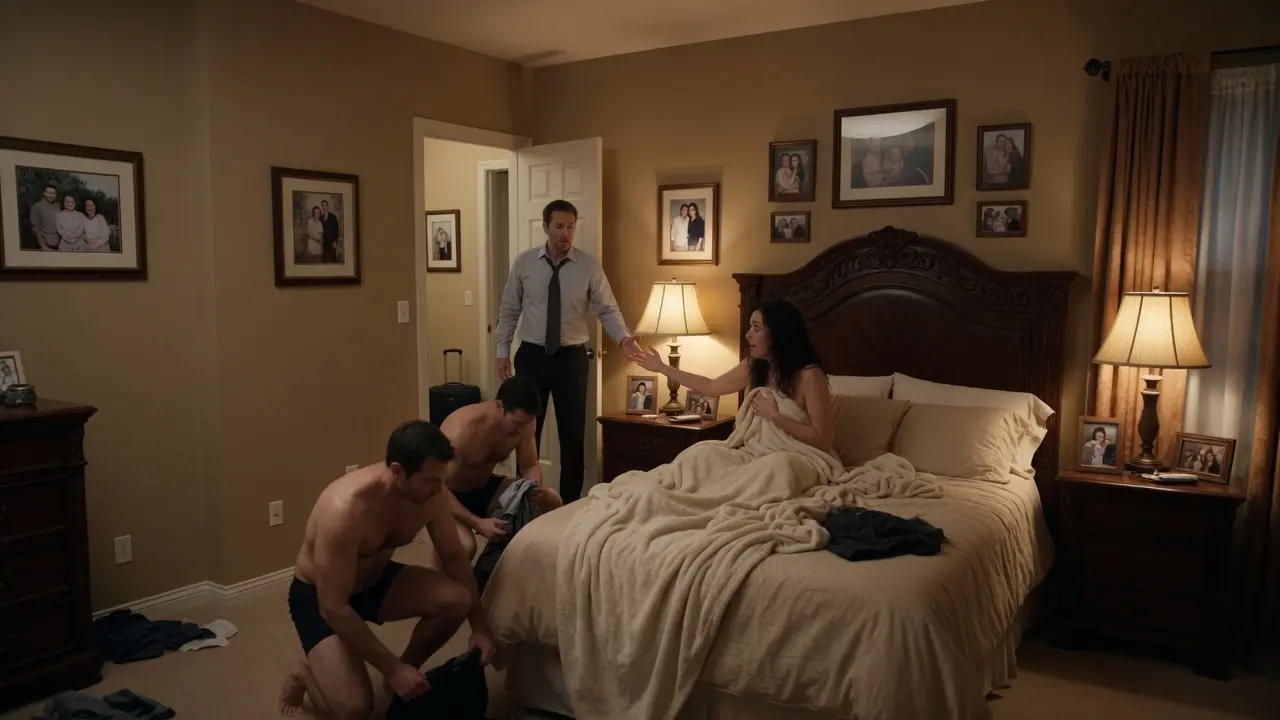
Her name was Marissa.
Mine is Daniel Mercer.
Back then, if you had asked me what happiness looked like, I would have pointed to our kitchen on a Sunday morning. Pancakes on the griddle, cartoons playing too loudly in the living room, the kids arguing over syrup, and Marissa standing by the window with a mug of coffee, smiling like she knew she was exactly where she was supposed to be.
I believed in that picture.
I protected it.
And for a long time, I never thought to ask whether she still did.
I was doing well at work then. Better than well. I was a senior director for a medical software company, and my income had climbed into numbers my younger self would have thought belonged to someone else. Marissa was doing well too. She had built a strong career as an eye doctor, respected in town, known by half the parents at our children’s school.
People liked us.
At dinner parties, someone would always say something like, “You two make marriage look easy.”
Marissa would laugh, touch my arm, and say, “It’s because Daniel spoils me.”
I did spoil her.
I liked spoiling her.
In early spring, after one of my biggest promotions, I bought her a brand-new electric SUV for her birthday. She had been driving the same old sedan since before our first daughter was born, and I wanted to surprise her with something she would never buy for herself.
She cried when she saw it.
Real tears, I thought.
She threw her arms around me in the driveway and whispered, “I don’t deserve you.”
I should have listened more closely to that sentence.
That day was beautiful. We drove around for hours learning the touchscreen, the cameras, the ridiculous voice commands, and all the little features neither of us needed but both of us pretended were amazing. The kids climbed in and out of the back seats like it was a spaceship.
For one afternoon, everything felt perfect.
Then, somehow, it all started falling apart.
At first, the changes were small enough that I explained them away.
Marissa became quieter at dinner. She stopped asking about my day. She spent more time in the bedroom with the door closed, claiming she was tired from work. When the kids tried to talk to her, she answered in short bursts, like every question was an interruption.
Our oldest, Hannah, noticed first.
She was ten then, sharp and sensitive in the way oldest daughters often are. She would sit beside Marissa on the couch and ask about school, friends, books, anything to make her mother engage. Some days Marissa would soften and talk. Other days she would snap so sharply that Hannah’s face would fall before she could hide it.
I hated seeing that.
But I still made excuses.
Work stress.
Hormones.
Burnout.
Maybe even depression.
I told myself marriage had seasons.
Some were warm.
Some were cold.
Good husbands waited through the cold ones.
The first time I truly suspected there was another man was the summer after the SUV.
Marissa had started going to yoga three nights a week. At least, that was what she told me. She bought new workout clothes, new perfume, and a gym bag expensive enough to make me joke that it probably needed its own insurance.
One Thursday evening, she left angry.
Not normal irritated.
I had asked if she wanted me to order dinner before she left. A simple question. She looked at me like I had accused her of something.
“I don’t need you managing every minute of my life,” she said.
Then she grabbed her bag and walked out.
About twenty minutes later, I opened the family location app to check whether our son’s phone had made it home from soccer practice. That was when I saw Marissa’s phone.
Not at yoga.
Not anywhere near the studio.
It was parked in a neighborhood north of town, the kind with long driveways, stone gates, and homes big enough to have rooms nobody used.
I stared at the screen for a long time.
Then I refreshed it.
Same place.
My first instinct was denial.
Maybe she stopped at a friend’s house.
Maybe the app was wrong.
Maybe the yoga studio had moved and somehow become a private residence with a three-car garage.
I did not confront her that night.
When she came home, flushed and distant, I asked how class was.
“Fine,” she said.
“Good workout?”
She looked at me too quickly.
“Yeah. Hard one.”
I nodded.
And something inside me went very still.
For the next several weeks, I watched.
I hated myself for doing it, but I watched anyway. Tuesday nights. Thursday nights. Sometimes Sunday afternoons when she said she needed quiet time. Her phone returned to that same house again and again.
The man who lived there was named Grant Ellery.
I learned that later.
Older than me.
Richer than me.
Twice divorced.
The kind of man who hosted charity events and looked harmless in photographs because money has a way of softening people’s suspicion.
I planned to confront her with everything.
Then suddenly she started going to actual yoga again.
The location matched.
Her moods lifted.
She became more affectionate.
For a little while, I wondered if I had imagined the whole thing into something worse than it was.
But marriages do not heal because someone returns to the place they pretended to be going.
They just hide the wound better.
Eventually, I sat her down.
The kids were asleep. The house was quiet. I had rehearsed the conversation all day in my head, trying to be calm, trying not to sound like a jealous fool.
“Marissa,” I said, “I need to ask you something.”
She barely looked up from her phone.
“What?”
“Where were you going on those nights you said you were at yoga?”
Her face changed before her voice did.
That was how I knew.
She sat up straight and asked what I meant. I told her about the location app. About the house north of town. About the repeated visits.
She turned it around so fast it almost impressed me.
“You were tracking me?”
“We have a family location app.”
“You were spying on me.”
“I noticed you weren’t where you said you were.”
Her eyes filled with tears so quickly they seemed prepared.
“I cannot believe you would violate my privacy like this.”
And there I was, a grown man with proof, somehow feeling like I was the one on trial.
That is how manipulation works.
It does not always shout.
Sometimes it cries.
When I finally asked, “Are you having an affair?” she said no.
Immediately.
Too immediately.
For weeks after that, the house became a battlefield without raised voices. She was cold. Punishing. Wounded in public, cruel in private. She acted like my suspicion was the betrayal, not whatever had caused it.
Then one night, after the kids had gone to bed, she confessed.
Not everything.
Just enough.
She said she had been “emotionally confused.” She said Grant made her feel seen. She admitted they had slept together but claimed it had only happened twice. She cried into her hands and said she loved me, loved our family, and hated herself for what she had done.
I believed the parts I wanted to believe.
That was my mistake.
A person can be smart in business and still be a fool in love.
I forgave her.
I told myself forgiveness was strength. I told myself the kids needed an intact family. I told myself one terrible mistake did not have to erase ten years of marriage.
Looking back, I can see the truth.
I was not forgiving her because she had earned it.
I was forgiving her because I was terrified of losing the life I thought we had.
We went to marriage counseling.
We scheduled date nights.
We took weekend trips.
We had long talks about communication, resentment, intimacy, rebuilding trust. I read books. I changed my work schedule. I came home earlier. I planned dinners. I asked more questions. I listened harder than I had ever listened in my life.
And for a while, it seemed to work.
Marissa laughed again.
She played with the kids more.
She held my hand in public.
She told me she was grateful I had stayed.
I wanted that to be enough.
I wanted our family so badly that I mistook quiet for peace.
Three years passed like that.
Not good years exactly.
Careful years.
Years where I watched her without admitting I was watching. Years where she smiled without ever fully returning. Years where the children learned the temperature of the house by the sound of their mother’s footsteps.
Then came Denver.
I was supposed to be gone four days for a client presentation. My colleague got sick the first night, and the clients asked to reschedule. It was annoying, expensive, and inconvenient, but by noon the next day, I was on a flight home.
I almost texted Marissa from the airport.
I almost called to tell her I was coming back early.
I don’t know why I didn’t.
Maybe some part of me wanted to surprise her.
Maybe some part of me wanted to know what happened in my house when nobody expected me back.
When I pulled into the driveway, there was a black Range Rover parked inside my garage.
Not in the street.
Not near the curb.
In my garage.
Like it belonged there.
I sat in the car for maybe thirty seconds, staring at it.
The engine ticked softly after I turned it off.
My hands were calm.
That scared me more than shaking would have.
I entered through the side door.
The house was quiet at first.
Then I heard laughter upstairs.
A man’s laugh.
Then another.
I walked up the stairs slowly.
Not because I was afraid.
Because some moments deserve to arrive exactly as they are.
The bedroom door was half open.
I pushed it the rest of the way.
And there she was.
My wife.
In our bed.
With two men.
For a second, no one moved.
Marissa’s face went from pleasure to horror so fast it was almost childish. One man scrambled for his clothes. The other cursed under his breath and nearly tripped over the comforter. Marissa started saying my name over and over like repetition could rebuild the wall she had just knocked down.
“Daniel. Daniel, please. Daniel, listen.”
I did not listen.
There was nothing left to hear.
I turned around, walked downstairs, went to the basement, and poured myself a drink.
Bourbon.
Two fingers.
No ice.
I remember looking at my reflection in the dark basement window and thinking I looked strangely normal for a man whose life had just ended.
Above me, feet rushed across the floor. Doors opened. A belt buckle hit something. Someone ran down the stairs and out the front door. The garage opened. The Range Rover started and disappeared down the street.
I stayed where I was.
When I went back upstairs, Marissa was sitting on the edge of the bed wearing a robe, her hair messy, her face wet with tears.
She looked smaller than usual.
Not sorry.
Cornered.
“There is an explanation,” she said.
I stood in the doorway.
“No.”
“Please. You don’t understand.”
“I understand enough.”
She reached for me.
I stepped back.
“Get out.”
Her mouth fell open.
“What?”
“Get out of my house.”
“Daniel, we have children.”
That was when something in me finally broke cleanly instead of painfully.
“You should have remembered that before inviting strangers into our bed.”
She flinched.
“I’ll get your things to you by the end of the week,” I said. “Tonight, you leave.”
“You can’t just throw me out.”
“I can call the police and explain why two men were running out of my house half dressed while my wife cries upstairs. Or you can pack a bag.”
She stared at me like she was waiting for the old version of me to come back.
The forgiving one.
The patient one.
The man who would ask how this happened and what he could do to fix it.
That man was gone.
She packed in silence.
I watched from the hallway.
Not because I wanted to intimidate her.
Because I no longer trusted her alone in any room of my house.
When she left, she tried one final time.
“What about Hannah? What about Noah? What about Grace?”
Our three children.
The only part of our marriage that still felt sacred.
I looked at her and said, “They are the reason I stayed the first time. They are also the reason I will not stay again.”
She drove away in the electric SUV I had bought her on the birthday that seemed to mark the beginning of the end.
I did not sleep that night.
In the morning, the kids asked why their mother had not come home.
I made pancakes because I did not know what else to do with my hands.
Then I told them.
Not every detail.
Not the full ugliness.
But enough truth that they would not grow up thinking silence was protection.
I told them their mother had broken our marriage. I told them adults make choices, and some choices have consequences. I told them I loved them, and nothing about the divorce would change that.
Hannah cried without making a sound.
Noah got angry.
Grace asked if Mom still loved them.
That question nearly killed me.
“Yes,” I said, even though in that moment I did not know what love meant to Marissa anymore. “She loves you. But she has made decisions that hurt this family.”
I did not send them to school that day.
The three of them stayed upstairs together, sharing the kind of grief children should not have to carry.
By that afternoon, Marissa had switched from begging to threatening.
She called and said I could not keep the children from her. She said the courts favored mothers. She said she would tell everyone I was controlling, unstable, emotionally abusive. She said I had poisoned the kids against her.
I let her talk.
Then I hung up and called an attorney.
His name was Victor Kline, a divorce lawyer recommended by a friend at work who had once described him as polite until politeness stopped being useful.
Victor listened to the whole story without interruption.
When I finished, he asked one question.
“Do you want custody?”
“Yes.”
“Then we build the case like your children’s future depends on it.”
Because it did.
Over the next several weeks, we gathered everything.
Phone location records.
Old screenshots.
Travel schedules.
Counseling receipts.
Messages she had sent.
Evidence of Grant Ellery.
Evidence of the men from the house.
Statements from people who had noticed her behavior changing over the years.
I hated every minute of it.
There is something humiliating about turning your pain into paperwork.
But paperwork matters.
Especially in courtrooms.
Marissa tried to play wounded mother.
At first.
She told friends I had snapped after a stressful business trip. She said I had become paranoid years earlier and never recovered. She said I was using money to punish her.
Some people believed her.
Most people didn’t.
Not after the truth began leaking out in pieces.
A prominent eye doctor with a perfect family and a perfect reputation had not just cheated once. She had built a second life while letting her children grow up in the shadow of her moods.
That was what people could not forgive.
Not the affair alone.
The years.
The performance.
The way Hannah had spent half her childhood trying to earn warmth from a mother who was spending it elsewhere.
The hearing happened in July.
It lasted two days.
I barely remember the courtroom itself. Just the wood paneling, the smell of paper, the hum of air conditioning, and Marissa sitting across from me looking polished, pale, and furious.
She had announced plans to move to Southern California.
Fresh start, she called it.
A better environment, she said.
Her attorney argued the children could adjust. Kids were resilient. Schools could be changed. Friendships could be rebuilt. Mothers and children belonged together.
My attorney stood and asked the only question that mattered.
“Have the children been asked what they want?”
Marissa’s face changed.
The judge allowed it carefully.
Hannah, at thirteen by then, spoke first.
She did not attack her mother.
That almost made it worse.
She simply told the truth.
She said she wanted to stay in the house where she had grown up. She wanted to stay at her school. She wanted to keep her friends. She said her mother had been unpredictable for years, sometimes loving, sometimes cold, and she had learned to manage it by staying quiet.
No child should ever have to say that in court.
Noah said he wanted to stay with me.
Grace cried and said she did not want to move away from everyone she knew.
Marissa’s attorney suggested I had influenced them.
The judge asked Hannah directly.
She looked at her mother, then at me, then back at the judge.
“No one had to tell me what happened in our house,” she said. “I lived there.”
That was the moment the case turned.
The ruling gave me primary custody.
The children could visit Marissa whenever they wished, but she could not take them out of state without my written consent or court approval. She was barred from entering my property without permission, including the house, my office, and the lake place.
When the judge finished, I did not feel victorious.
I felt tired.
Relieved.
But tired in a way sleep could not fix.
Marissa cried outside the courtroom and said I had stolen her children.
I looked at her for a long moment.
“No,” I said. “You lost their trust. I just protected their home.”
She slapped me.
In front of both attorneys.
Victor smiled like Christmas had arrived early.
That slap did not change the ruling, but it did make future boundaries easier to justify.
After the divorce, the house felt strange.
Not empty.
Rearranged by truth.
I changed the bedroom first. New mattress. New sheets. New paint. I threw away the comforter and every pillow from that day. I sold the electric SUV even though it technically belonged to the marital asset division. I did not want it sitting in my driveway like a monument to my own blindness.
The kids and I built new routines.
Pizza on Fridays.
Hiking on Sundays.
Breakfast for dinner whenever life felt too heavy.
Some days were good.
Some days one of them would remember something and go quiet.
Healing in a family does not move in a straight line.
It circles.
It returns.
It asks the same questions in different voices.
Hannah went to therapy first.
Then Noah.
Then Grace.
Eventually, I went too.
Not because I wanted to talk about Marissa.
Because I wanted to understand why I had confused endurance with love.
A few months after the divorce, my promotion came through.
I almost laughed when my boss told me.
For years, I thought my marriage needed more of me, and maybe it did. But not in the way I believed. It had needed a version of me willing to see the truth sooner.
Without the constant anxiety of wondering which Marissa would appear at dinner, I became sharper at work. Calmer at home. Better with the kids.
Better with myself.
Marissa did move west eventually.
Not with the children.
Alone.
She opened a small clinic under her maiden name, according to a mutual acquaintance who thought I would want to know. I didn’t. People expected me to enjoy her downfall, but I never did.
Revenge is too much work.
Consequence handled things well enough.
The children visited her once that first winter.
They came back quiet.
Hannah said the apartment was nice but didn’t feel like home. Noah said she kept acting like everything could be normal if everyone tried hard enough. Grace said she missed the idea of her mom more than the person sitting in front of her.
That sentence stayed with me.
Because I understood it.
I missed the idea of Marissa too.
The woman in the kitchen on Sunday mornings.
The woman laughing in the new car.
The woman touching my arm when people complimented our marriage.
Maybe parts of her had been real.
Maybe all of her had been real once.
But the truth about betrayal is that it doesn’t only destroy the future.
It rewrites the past.
Years later, people sometimes ask how I knew I was finally okay.
It was not one big moment.
It was small things.
The first time I forgot to check my phone for bad news.
The first vacation where I did not feel responsible for another adult’s mood.
The first time Hannah laughed loudly in the kitchen again.
The first time I walked into my bedroom and thought only of sleep.
Not of that day.
Not of the men.
Not of the sound of Marissa saying my name like it could still save her.
I thought leaving my wife would destroy me.
It didn’t.
Staying after the first betrayal nearly did.
That is the part people don’t understand.
Walking away was not the collapse of my family.
It was the first honest thing I had done for it in years.
I am not proud of the divorce.
I am not proud of the pain my children endured.
I am not proud of how long I stayed after I already knew something was wrong.
But I am proud that when the final truth stood in front of me, I did not bargain with it.
I did not explain it away.
I did not turn myself into a smaller man just to keep a broken marriage standing.
Tonight, Hannah is home from college for the weekend. Noah is grilling burgers in the backyard even though he still burns half of them. Grace is on the couch with the dog, pretending not to cry over some movie she has already seen three times.
The house is loud again.
Messy.
Alive.
Not perfect.
Better than perfect.
Real.
I used to think I had the perfect life because other people looked at it and wanted what they saw.
Now I know better.
A perfect-looking life can still be rotting under the paint.
And sometimes losing the thing everyone envied is how you finally get something worth keeping.
Peace.
Truth.
A home where nobody has to pretend.