"I have six months to live, perhaps less, and I require an heir. That is the whole of what I have to offer you, Miss Ellery, and I will not insult you by dressing it as anything finer."
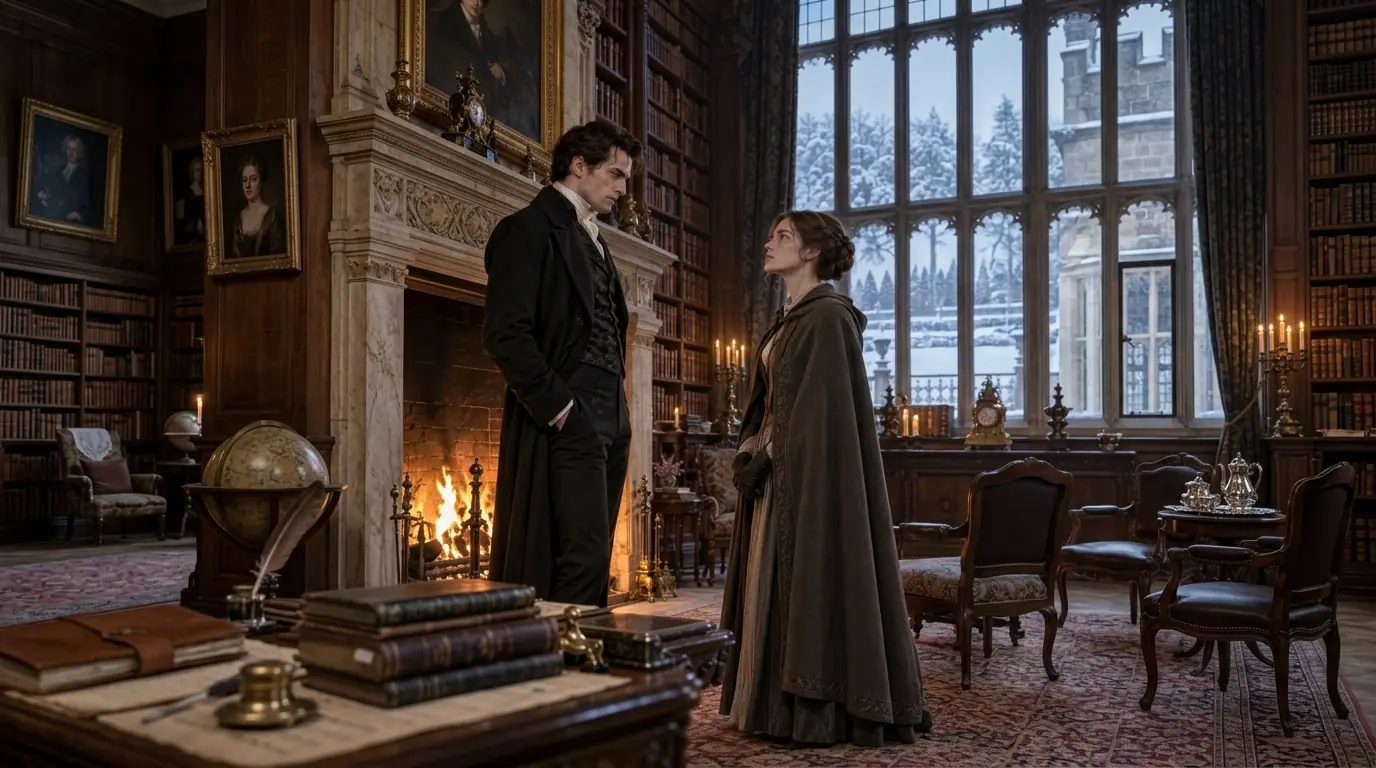
The Duke of Wintersea said it standing before the great cold hearth of his library, with the winter pressing white against the tall windows behind him, and he watched the young woman in the worn traveling cloak receive the words without so much as a flinch.
He had expected tears, or a swoon, or the bright mercenary calculation he had seen in the eyes of every other lady to whom his man of business had made discreet inquiries. He had got refusals from three of them and a fainting fit from the fourth.
He had not expected this: this steady, level regard, as though he had remarked upon the weather and she were deciding whether to agree.
"You are very direct," said Marguerite Ellery.
"I have not the leisure to be otherwise. The physicians give me until the summer. There is no son, no brother, no cousin nearer than a man I detest, and when I am gone, everything that I have spent my life holding together—the estate, the tenants, the hospital my mother founded in the village—passes to him, and he will sell it all within the year. I have watched it happen to other houses. I will not watch it happen to mine."
He turned from the window to face her fully.
"I am told your family is impoverished. I am told there are younger sisters. I am offering you the rank of duchess, the security of a great fortune settled wholly upon you and any child of this marriage, and the freedom when I am dead—which will not be long—to live exactly as you please for the remainder of your life. You will be the richest widow in the county before you are five and twenty. I ask only one thing in return."
"An heir," said Marguerite.