The pen scratched against the paper, and the room went silent. Duke Alister Vause did not look up from the contract. He did not need to look up to say what he said next, loud enough for the girl standing near the door to hear every word.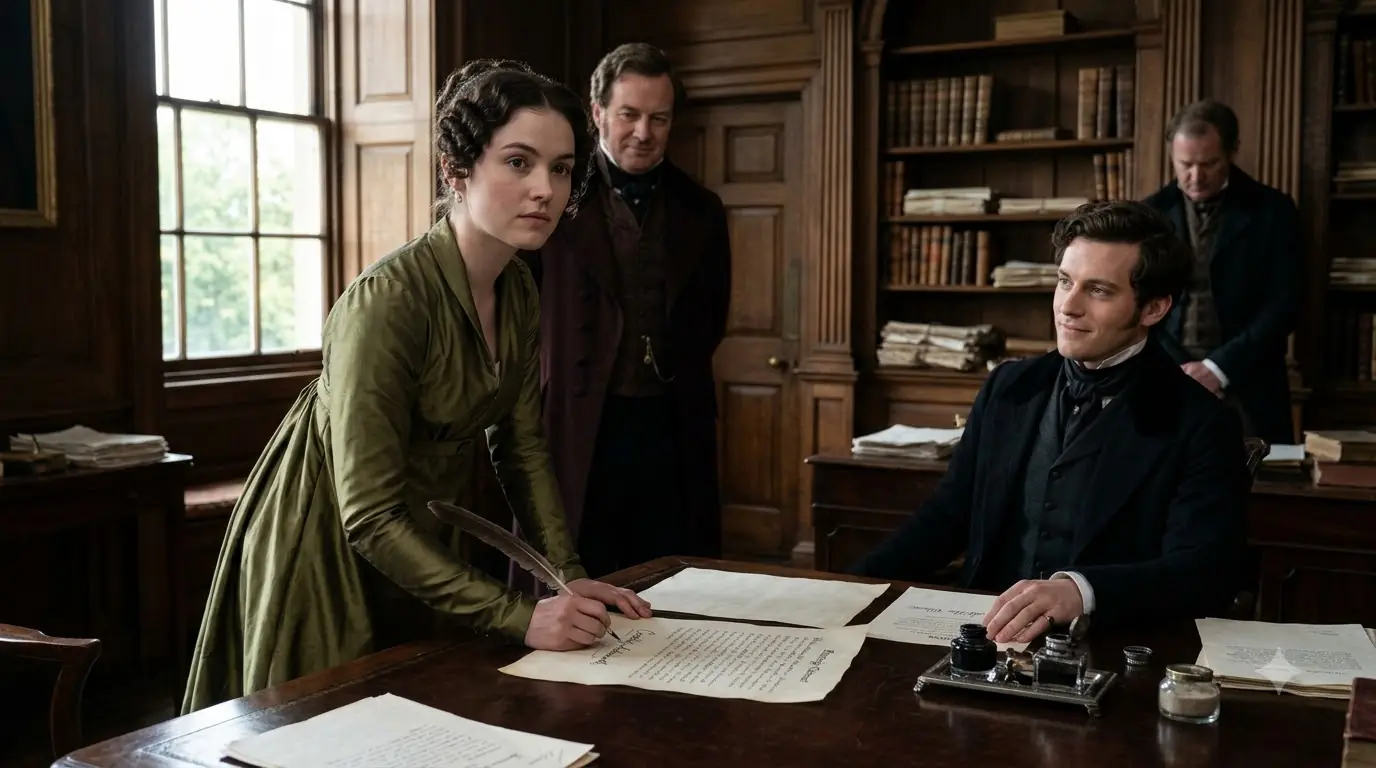
"I will tolerate her if I must. That is the best I can offer."
Cordelia Ashworth heard it. She did not turn red. She did not gasp. She walked forward, picked up the pen before he could stop her, and signed her name above his. Her hand did not shake, not once.
Her father, a wealthy merchant desperate for a noble name to attach to his family, smiled as if nothing had been said at all.
Alister Stewart looked at the floor, embarrassed for his master. Alister simply watched the ink dry, a small smirk on his face, certain he had won something.
He had not won anything. He had only started something he could not yet see.
The wedding happened 3 weeks later, quiet and quick, more like a business meeting than a celebration. Cordelia wore a plain gray dress instead of white. Alister barely looked at her during the ceremony. His mind was on the debts this marriage would erase, the estate this marriage would save, the disaster this marriage would prevent. He thought of numbers. He did not think of her.
That night, alone in her new room, Cordelia sat by the window and stared at the dark garden below. She thought about home, about the ocean her father's ships crossed, about the life she had imagined for herself before all of this. None of it included a cold house or a colder husband.
She did not cry. She had promised herself long ago that she would not cry over men who thought so little of her.
But her hands, the same hands that had signed the contract without trembling, would not stay still that night. She pressed them flat against her knees until they finally listened.
Down the hall, Alister sat in his study surrounded by 17 clocks, each one showing a different time. His father had collected them. Alister had never bothered to fix them. He told himself it did not matter what time it was in a house with nothing worth waking up for.
He thought about the girl down the hall, about the way she had picked up that pen without flinching, about the ink blot she had left on the last page of the contract. He had told the steward to have the page redrawn.
Then, for reasons he could not explain even to himself, he had told the steward to leave it exactly as it was.
He blew out the candle and told himself it meant nothing, a stain on paper, nothing more.
Outside, the wind picked up, rattling the old windows of the estate, and somewhere in that enormous cold house, two strangers lay awake in separate rooms, each one certain the marriage in front of them would be nothing but an arrangement to endure.
Neither of them yet understood how wrong they were about to be proven.
Morning came with rain, and Cordelia was already awake, walking through the estate with a notebook in her hand, counting broken chairs, torn curtains, and empty cupboards. The house had once been grand. Now it was simply tired, much like the man who owned it.
She found the account books in the study and opened them without asking permission.
The numbers were a mess, debts hidden behind other debts, servants unpaid for months.
She began fixing them the way she had watched her father fix his own ledgers, with a sharp eye and no patience for excuses.
Alister found her there that afternoon, ink on her fingers, a determined look on her face.
He opened his mouth to tell her this was not her place. Instead, he found himself checking her numbers instead, expecting mistakes.
There were none.
He said nothing about it, but the next day he did not correct a single entry she had made. It became a quiet pattern between them. She worked, he checked, he said nothing. She kept working anyway.
Weeks passed this way. Their conversations grew longer, sharper, filled with a kind of wit neither of them expected from the other.
She teased him about his 17 broken clocks. He teased her about her habit of talking to the horses as if they understood English. Neither of them called it friendship. Both of them looked forward to dinner more than they wanted to admit.
One evening, over a small fire in the drawing room, Cordelia asked him why he never had the clocks repaired. He shrugged and said there was nothing in this house worth being on time for.
She looked at him for a long moment, then quietly changed the subject as if she understood something he had not meant to reveal.
He noticed that. He noticed that she often did that, letting things go unspoken rather than pushing him into a corner.
His first wife, had there been one before this arrangement, might have demanded an explanation.
Cordelia simply let the silence sit, comfortable rather than cold.
It unsettled him more than any argument could have.
At night, in his study, he found himself thinking less about numbers and more about the sound of her laugh, which she rarely let loose but which, when it came, filled the entire hallway.
He told himself he was only tired. He told himself many things that winter that were not quite true.
Cordelia, for her part, wrote letters to her father that grew shorter with each passing week.