For almost an entire day after my thirty-second birthday, I kept dividing what happened into two categories. There were things I intended to do and things I never planned, and I convinced myself that distinction should matter more than anything else. I had not gone to the rooftop expecting to betray my boyfriend, and I had not invited my ex because I secretly wanted him back. For twenty-four hours, those facts were the wall I hid behind because the truth on the other side was much harder to admit.
My name is Lauren Mitchell, and at the time I had been with Ryan Parker for nearly four years. We lived together in a two-bedroom apartment in Charlotte, had a shared savings account for travel and eventually a house, and had started having those quiet conversations couples have when marriage stops feeling hypothetical. Ryan was steady in a way I once considered one of his best qualities. By the night of my birthday, I had somehow begun treating that steadiness like something ordinary enough to test.
My birthday dinner was held at a hotel rooftop in Uptown Charlotte with twelve friends, long tables pushed together beneath string lights, and a skyline everyone photographed before we even ordered drinks. Ryan had arranged almost everything himself, from the reservation to the cake to making sure two friends who did not get along were seated far enough apart to survive the evening. He spent the afternoon picking up decorations and answering messages from people who were running late. I arrived at the restaurant with nothing to do except enjoy myself.
That should have been enough attention. Instead, the moment my ex-boyfriend, Gavin Reed, stepped off the elevator, something in me sharpened with interest. Gavin had been part of my social circle for years before Ryan and I became serious, and cutting him out entirely had always seemed unnecessarily dramatic. I told myself adults should be able to share a room with people they once dated without turning history into danger.
Ryan had never demanded that Gavin disappear from my life. He knew we occasionally attended the same birthdays, weddings, and group dinners, and he trusted me to understand where friendship ended and old intimacy began. Looking back, that trust gave me more freedom than I knew how to respect. Instead of protecting it, I sometimes used it as evidence that Ryan would tolerate almost anything because he was secure.
Gavin hugged me when he arrived. The embrace lasted just long enough for me to notice that it lasted too long, and when he stepped back, he told me the green dress I wore was still “dangerous.” I laughed and reminded him that he had always claimed green was my color. Ryan heard us and continued his conversation with a friend across the table.
Nothing happened after that for nearly an hour. Gavin sat several seats away, talked about work, ordered bourbon, and behaved almost exactly like the harmless ex I had promised Ryan he was. Every questionable step came gradually enough that I could pretend I was not choosing anything. That became the pattern of the night.
Gavin complimented my hair. I smiled. He mentioned a restaurant we used to visit years earlier, and I corrected him when he remembered my old order incorrectly. Each small exchange gave me a private little rush because another man still remembered details about a version of me that existed before Ryan.
Ryan barely reacted. He did not interrupt, touch my shoulder possessively, or pull me into his side so Gavin would understand I belonged to someone else. He trusted me to handle my own boundaries. For reasons I am still embarrassed to admit, his lack of jealousy irritated me.
The feeling lasted maybe three seconds. That was long enough. I noticed Gavin could flirt with me openly and Ryan did not immediately become territorial, and some insecure part of me interpreted that calmness as a lack of urgency. I never consciously decided to punish him for being emotionally healthy, but once I noticed the contrast, I started enjoying it.
By dessert, I had consumed enough wine to soften my judgment but nowhere near enough to erase it. I was not stumbling, slurring, or confused about where I was. Later, I desperately wanted alcohol to explain the entire evening because “I was drunk” sounded cleaner than “I understood more than I wanted to admit.” The problem was that I remembered almost every second.
People stood around the table taking photographs. Gavin moved closer beside me while someone tried to fit six of us into one picture. His hand rested against the small of my back.
I knew immediately that the touch was too familiar. It was not an accidental brush in a crowded space. His palm remained there after the photograph was taken, and I could have stepped away without creating any drama. I stayed.
Part of me liked being wanted. Another part told me moving too quickly would make the interaction seem more serious than it was. That was how I converted cowardice into sophistication in real time. I called my silence “not overreacting” because that sounded better than admitting I was enjoying the attention.
Gavin’s hand moved lower. Alarm went through me first. Then something uglier arrived beside it: curiosity, validation, the old electric feeling of being desired by somebody who once knew me intimately.
I looked across the table. Ryan was watching. There was no uncertainty in his face about what he had seen.
That should have ended everything. If I could change one second from that night, it would not be the first time Gavin touched me because I could still claim surprise at that point. I would change the second after I met Ryan’s eyes. I would step away immediately.
I did not. I remained where I was long enough for Gavin to believe my silence was permission to continue testing the boundary. His fingers slipped beneath the edge of my dress, and suddenly the private little game in my head became visible as something humiliating in a room full of people. For several seconds, I did nothing.
I did not tell Gavin yes. I also did not tell him no. That distinction became incredibly important while I was defending myself later, but it meant almost nothing to Ryan. What mattered to him was that I had understood exactly what was happening and still delayed stopping it.
A woman beside me stopped talking first. Then another friend looked down at her drink. Laughter around the table faded in that strange uneven way it does when a group realizes something personal has become public. That was when I finally moved.
I stepped forward, pushed Gavin’s hand away, and turned around. I reacted quickly enough that I immediately tried to convince myself the delay had been insignificant. Gavin looked embarrassed and said my name. I barely heard him because Ryan had already set his glass on the table.
He did not confront Gavin. He did not call him a name or ask what he thought he was doing. Ryan simply stood, picked up his phone, and walked toward the elevator.
That frightened me. Anger would have created a scene I understood. I could apologize to anger, argue with anger, or tell anger it was making everything worse. Silence gave me nothing to fight except what I had done.
I followed him. One of my friends, Allison, grabbed my wrist and asked whether I was okay. I snapped that I was fine and pulled away, even though the expression on her face told me she knew the question should probably have been directed toward Ryan.
The elevator doors closed before I reached them. I stood beneath the display watching the numbers descend toward the parking garage. During that wait, I constructed my entire defense.
I had not invited Gavin intending for something to happen. I had been drinking. Gavin moved too quickly. I stopped him before anything worse happened.
I was not going home with him. I was not in love with him. I had no plan to sleep with him or leave Ryan for him.
Almost every sentence contained something technically true. That was why I thought putting them together would create innocence. I did not understand yet that Ryan was evaluating a different question.
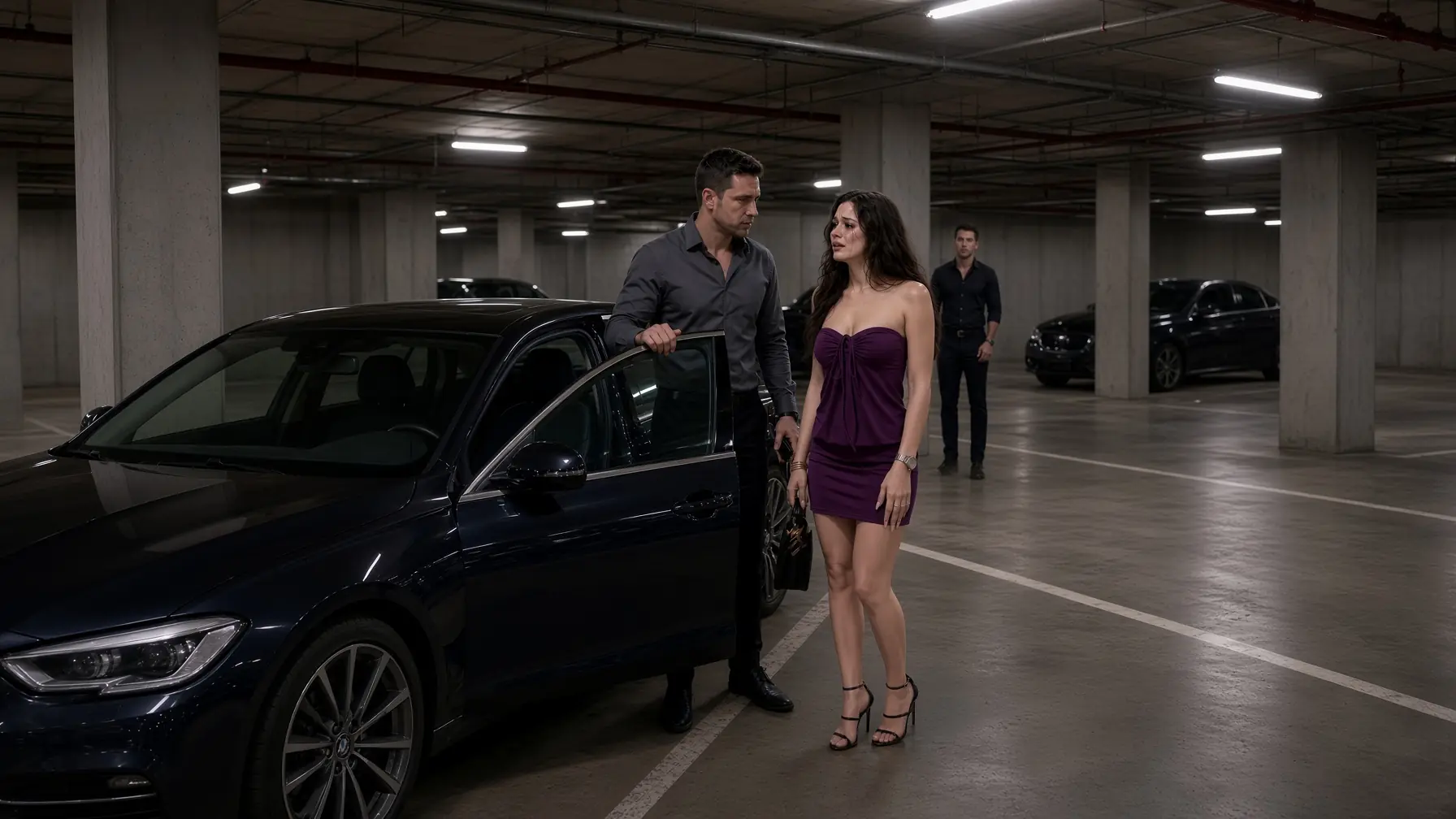
I found him beside his car. The key fob was already in his hand. Seeing him actually preparing to leave transformed my embarrassment into panic.
“Ryan, I didn’t plan any of this,” I said. “It just got out of control.”
I expected him to challenge that. Instead, he turned toward me with a calm expression that looked more painful than anger. “Lauren, he crossed a line with you while you were looking directly at me, and you didn’t want the moment to stop yet.”
I immediately told him that was unfair. He did not argue about fairness. He asked whether I remembered seeing him.
I said yes.
“Then why didn’t you move?”
“I was shocked.”
Ryan waited.
“I’d been drinking.”
“You were sober enough to know I was watching.”
I started crying.
“I stopped him.”
Ryan nodded. “After the whole table realized what was happening.”
That sentence destroyed the defense I had been building. There had been two separate moments: the moment I realized Ryan was hurt and the later moment I realized other people were watching him be hurt. I moved only after the second one.
I hated that distinction. It made my choice look deliberate in a way I had been refusing to see. Ryan did not need access to my thoughts because the order of my actions said enough.
I asked him not to throw away four years over one stupid night. He told me he was not deciding anything in the parking garage. For a few seconds, I heard hope in that answer.
Then he got into the car. He did not promise to come home. I stood there until his taillights disappeared down the ramp.
When I returned upstairs, the party was still technically happening. Nobody was dancing anymore. Conversations restarted whenever I approached and died again when I moved away.
Gavin had left. Part of me felt relieved. Another ugly part felt abandoned, as though the person who helped create the disaster should at least have stayed long enough to absorb some of it.
That reaction embarrassed me too. Gavin was the easiest person to blame because his hand had crossed the physical boundary. If I made him the villain, I could remain somebody who merely failed to respond quickly enough.
Allison drove me home. I spent most of the ride insisting Ryan had interpreted the worst possible motive from a few seconds of confusion. Allison listened until we were ten minutes from my apartment.
Then she asked, “Do you want me to agree with you, or do you want me to tell you what I saw?”
I said I wanted the truth. People say that often when they mean they want reassurance delivered honestly enough to feel credible. Allison gave me neither.
She said Gavin touching me was uncomfortable. What made the entire table go quiet was watching me look toward Ryan and remain where I was. “That’s the part everyone noticed,” she said.
I became angry. I told her nobody could know what I had felt in those seconds. Allison agreed.
“Maybe not,” she said. “But we could see what you chose to do.”
I turned toward the window and did not speak for the rest of the ride.
Ryan was not home. His shoes remained beside the entryway, his jacket hung inside the closet, and his charger was still beside the bed. I convinced myself he was driving somewhere until he calmed down.
I texted him that we needed to talk. Then I wrote that I loved him. When he did not answer, I added, Nothing happened beyond what you saw.
That was the first message I regretted. Something had happened. I had simply reduced “something” to whether sex took place because that gave me a line beneath which I could call everything else manageable.
Ryan did not reply that night. I slept badly and checked my phone every hour. The next morning, his side of the bed remained untouched.
At 8:11, I called. Voicemail. At 10:03, I called again.
Near noon, I sent a longer message saying I understood he was upset but needed him to come home so we could handle the situation like adults. His response arrived seventeen minutes later.
I’m safe. I need space.
Five words. No accusation. No reassurance.
I read them repeatedly until irritation started replacing fear. Then I understood irritation was easier because fear required admitting I might actually lose him.
Messages from friends began arriving throughout the afternoon. Most asked whether I was okay. I knew what they really wanted to know was what happened after Ryan left.
I answered almost none of them. I did not want my birthday to become a story circulating through the same social group that had watched me humiliate the person who spent the entire afternoon trying to make that birthday special. For once, silence felt appropriate.
Allison texted around three. She asked whether Ryan had returned. I told her no.
Then I asked the question I had been afraid to ask. Did it really look that bad?
She took six minutes to answer. When the message appeared, I wished she had lied. It looked like you knew Ryan was watching and still liked the attention.
She added something else. Several people at the table had started looking toward Ryan, waiting to see what he would do. That was the humiliation I had not fully considered.
He was not simply watching his girlfriend allow an ex to cross an obvious boundary. Other people were watching him watch it. They were measuring whether he would yell, confront Gavin, pull me away, pretend not to care, or leave.
Ryan chose the one response that gave nobody entertainment. He walked out. At first, I had mistaken that for emotional distance.
By evening, I understood it might have meant the opposite. He had been emotional enough to know remaining inside the room could make everything worse. His calmness was control, not emptiness.
Ryan returned to our apartment the following night around nine. Relief rushed through me when I heard his key. Then I saw the duffel bag.
He did not remove his shoes. He went directly to the bedroom and began folding clothes. Every movement looked temporary until I noticed what he selected.
Work shirts. Jeans. Running shoes.
His laptop charger. Toiletries.
Enough clothing to continue his normal routine from another address.
“Where are you going?” I asked.