Signs and Symptoms of Parkinson's Disease
:max_bytes(150000):strip_icc():format(webp)/GettyImages-1156342928-a13afaf6cd924d34ae3a17b8925e477e.jpg)
Parkinson's disease is a neurological disorder. The four cardinal signs, or key symptoms, include postural instability, slow or interrupted movements (bradykinesia), rigidity, and tremors.12
This disorder is progressive, with symptoms slowly worsening over time. Parkinson's disease begins several years before symptoms appear.3 Early signs of the disorder include difficulty standing up from a chair, speaking softly, and writing slowly.4 Non-motor symptoms, which affect digestion, mental health, and sleep, are also some of the earliest.5 Parkinson's disease can lead to Parkinson's dementia, which causes severe cognitive and memory problems.4
National Institute of Aging. Parkinson's disease: Causes, symptoms, and treatments.
Parkinson's disease is the second most common neurological disorder worldwide, affecting 2% to 3% of people older than 65. This disorder can significantly impact both physical and mental health.6
Cardinal Symptoms
The degeneration and death of brain cells in the substantia nigra region of the brainstem causes Parkinson's disease. This region regulates motor skills, or your ability to move and stay balanced. This disorder's primary, or "cardinal," symptoms affect your ability to move.
There are four cardinal Parkinson's disease symptoms, including:
- Bradykinesia: This is slowing or consistent interruption of physical movement. Movement becomes hard and causes fatigue, lack of coordination, and weakness. About 80% of people have bradykinesia at the onset of symptoms.7
- Postural instability: This is an inability to maintain proper, erect posture. Postural instability can affect balance and ability to move, leading to falls. This issue is typically a sign of a more advanced illness.4
- Rigidity: This is muscle stiffness and resistance to movement or applied pressure. Rigidity tends to affect one side of the body before spreading. Characteristic signs include stooped posture, reduced arm swing when walking, and striatal hand (a "locking" of the knuckles and joints in the hand).7
- Tremors: These are uncontrollable shaking in the arms, hands, feet, jaw, tongue, and lips. They generally arise on one side of the body and occur at rest, lessening with activity.6
Cognitive Symptoms
About 24% to 31% of people with Parkinson's disease have cognitive decline, or dementia.8 This includes difficulty concentrating or completing tasks, memory problems, and trouble paying attention.4 Cognitive decline can develop gradually or rapidly.
Parkinson's dementia is a type of Lewy body dementia. Deposits of the protein alpha-synuclein in the brain cause this cognitive decline. Parkinson's dementia can severely impact your quality of life and ability to live independently over time.1
Parkinson's disease causes psychosis and visual hallucinations in 20% to 40% of people who take medication to treat the disorder.7 Psychosis can increase in severity over time and lead to the development of Parkinson's dementia.9
Motor Symptoms
Parkinson's disease can also cause motor problems. These symptoms can be broken into different types: those affecting the head or face (craniofacial), movements of the eye (visual), the system of muscles and bones (musculoskeletal), and the ability to walk (gait).
Craniofacial Symptoms
Several Parkinson's disease symptoms directly affect the face and head. These include:7
- Dysphagia, or an inability to swallow properly
- Excess drooling
- Hypokinetic dysarthria, or an inability to coordinate muscles for breathing and talking
- Hypomimia (masked face), or the inability to produce facial expressions
- Hypophonia (an inability to speak loudly), which leads to a quiet, breathy, or monotone voice
- Reduced amount of time you blink spontaneously
Visual Symptoms
Parkinson's disease can affect the visual system and eye movements. This can lead to several issues, including:7
- Blurry vision: A lack of focus in the visual field may arise due to the progression of the disease.
- Hypermetric saccades: This is when your eye rapidly shifts focus from one object to another. Severe cases impact this ability, leading to difficulties with focusing.10
- Impaired contrast sensitivity: This refers to your ability to see the outlines of small objects and subtle differences in patterns and textures. Parkinson's disease can impair the ability to perceive details.
- Impaired convergence: This is the ability of your eyes to work together to focus on objects nearby. People may experience an inability to gaze upward.
- Impaired vestibulo-ocular reflex: This is the ability to maintain gaze and focus during head movements. The impact on motor function reduces your eyes' ability to compensate for motion.
- Lid-opening apraxia: Another effect of disease progression is the inability to voluntarily open your eyes after you close them.
Musculoskeletal
Other impacts on the muscular and skeletal systems include:7
- Camptocormia (bent spine syndrome): An abnormal forward bending of the spine while upright or walking, potentially resulting in a stooped posture
- Dystonia: Involuntary muscle contractions that cause repetitive and twisting movements, which can affect posture
- Kyphosis and scoliosis: Different types of curving or bending of the spine
- Micrographia: An inability to make fine movements, which affects handwriting and speech
- Myoclonus: A recurrent period of involuntary muscle twitching and jerking
- Pisa syndrome: A sideways bend in the spine while upright or walking
Gait
Changes can occur in your pattern and manner of walking, largely as the result of the disorder's effects on muscle and motor control. This can lead to a distinct "Parkinsonian gait." People with the disorders will shuffle, take short steps, or stop suddenly or freeze when walking.
Festination is another characteristic of a Parkinsonian gait. This is a tendency to speed up and shorten repetitive movements.7
Non-Motor Symptoms
A range of other symptoms can arise with Parkinson's disease. These symptoms affect digestion, mental health, sleep, and other bodily functions. Non-motor symptoms are often the earliest symptoms of Parkinson's disease and come before the onset of the disorder itself.5
Mental Health Impact
Parkinson's disease can have a significant effect on mental health, as is the case for many chronic (long-lasting) and debilitating disorders.
The most common of these are:7
- Anxiety: This is a severe and constant feeling of worry and fear that's often associated with depression.
- Apathy: This is a persistent lack of interest or excitement in activities and motivation. It can lead to a loss of impulse or will and reduced speech or expression of emotions.
- Depression: The most common mental health impact of this disorder is depression. This is a persistent feeling of sadness, loss of interest in activities, and melancholy mood that affects daily living.
Sleep Disorders
Disturbances in the quality and quantity of sleep represent another common hallmark of Parkinson's disease. Research has found that about 64% of people with the disorder experience sleep disturbances.11
Associated sleep disorders include:7
- Excessive daytime sleepiness: Difficulty staying awake during the day
- Insomnia: An inability to fall or stay asleep
- REM sleep behavior disorder (RBD): Excessive body movement during the rapid eye movement (REM), or dreaming, stage of sleep
- Restless legs syndrome (RLS): An uncontrollable urge to move the legs, especially at night, which can disrupt sleep
Fatigue, as a result of sleep disturbances, is a common early sign of Parkinson's disease.5 These sleep disorders can also impact other aspects of mental and physical health.
Autonomic Function
Parkinson's disease can affect a range of autonomic (involuntary) bodily functions. These include:7
- Constipation: Difficulty completely emptying your bowels
- Diaphoresis: Excess sweating
- Dysphagia: An inability to chew food properly
- Orthostasis: Low blood pressure upon standing up, which can lead to fainting
- Sexual dysfunction: This can include a lack of sexual desire, erectile dysfunction, sexual over- or under-activity, and vaginal tightness or dryness
- Urinary incontinence: Lacking control of urination
Other Symptoms
Additional symptoms include problems with sense of smell. You may be unable to distinguish odors or lose your sense of smell completely. Aches and pains are another common feature, affecting about 46% of those with the disorder.7 The quality of this pain may be tingling, burning, or sharp and pointed. Pain can occur throughout the body or affect specific joints, the genitals, the abdomen, or the face.
When To See a Healthcare Provider
Contact a healthcare provider if you suspect Parkinson's disease and have typical symptoms, such as tremors, rigidity, and difficulty with motion or staying upright. Get medical attention right away, even after a diagnosis, if you have:12
- Cognitive symptoms (e.g., concentrating or difficulty remembering)
- Difficulty eating, including choking or coughing
- Severe reactions or lack of response to medications
- Signs of a bladder infection (e.g., burning during urination, fever, or frequent urination)
- Sudden onset of or changes to the pattern of your symptoms
- Worsening pain
Questions To Ask a Provider
It's important to see a healthcare provider if you have Parkinson's disease symptoms. Here are some questions you might ask:13

- How do Parkinson's disease symptoms progress and change over time?
- How often do I need to schedule appointments with a healthcare provider? Do I need to meet with specialists?
- What treatments are available for Parkinson's disease?
News in the same category


Beets The Superfood That Actually Lives Up to the Hype

Signs and Symptoms of Thyroid Cancer

The Truth Behind White Skin Spots

Cinnamon and Vinegar: Potential Benefits, Risks, and What Science Says

Foods Commonly Linked to Parasitic Infections and How to Avoid the Risks

Why Sweet Potatoes Are One of the Healthiest Foods You Can Eat

One Teaspoon a Day: The Health Claims Behind Honey, Lemon, Garlic, Onion, and Ginger

Can One Food Rebuild Knee Cartilage in 24 Hours? Separating Fact from Hype

What Happens to Your Body When You Eat Broccoli Regularly

Avoid These Foods to Help Prevent and Relieve Arthritis Discomfort

How to Manage Joint Pain During Menopause: Effective Tips and Treatments

This “Weed” Could Be One of the Most Valuable Plants in Your Garden

Pain on the Right Side of the Body

Here's the ideal frequency for staying healthy.

Signs and Symptoms That May Indicate High Cholesterol Levels

Why You Might Be Bruising So Easily

Garlic for Ear Infections: How to Relieve Ear Discomfort and Support Hearing Naturally

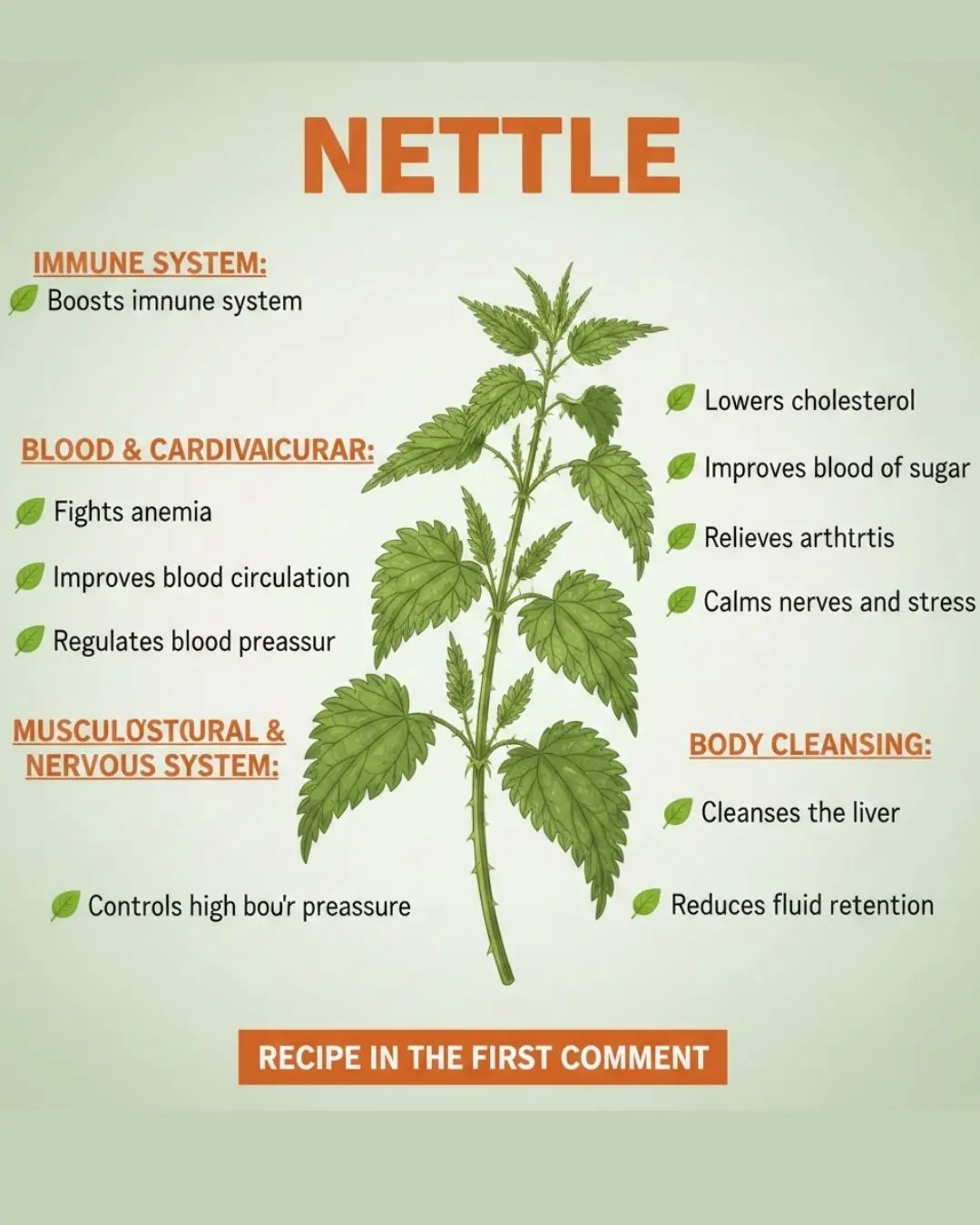
Benefits of Nettle (Urtica Dioica): 20 Health Problems You Can Treat Naturally
News Post

This carrot soup is like medicine for my stomach! Simple and delicious recipe!

Beets The Superfood That Actually Lives Up to the Hype

Signs and Symptoms of Thyroid Cancer

The Truth Behind White Skin Spots

Cinnamon and Vinegar: Potential Benefits, Risks, and What Science Says

Foods Commonly Linked to Parasitic Infections and How to Avoid the Risks

Why Sweet Potatoes Are One of the Healthiest Foods You Can Eat

One Teaspoon a Day: The Health Claims Behind Honey, Lemon, Garlic, Onion, and Ginger

Can One Food Rebuild Knee Cartilage in 24 Hours? Separating Fact from Hype

What Happens to Your Body When You Eat Broccoli Regularly

Avoid These Foods to Help Prevent and Relieve Arthritis Discomfort

How to Manage Joint Pain During Menopause: Effective Tips and Treatments

This “Weed” Could Be One of the Most Valuable Plants in Your Garden

Pain on the Right Side of the Body

Here's the ideal frequency for staying healthy.

Signs and Symptoms That May Indicate High Cholesterol Levels

How To Remove Gas From Stomach Instantly

10 Probiotic Foods to Improve Your Gut Health Naturally