American holly (Ilex opaca) is instantly recognizable by its glossy evergreen leaves and bright red berries—icons of winter décor. Yet beyond ornamentation, this native North American tree holds a quieter history of traditional, practical use among Indigenous communities and early settlers. When handled with restraint and knowledge, select parts of the plant—the leaves only—were valued for cleansing practices, circulation support, and gentle mental alertness.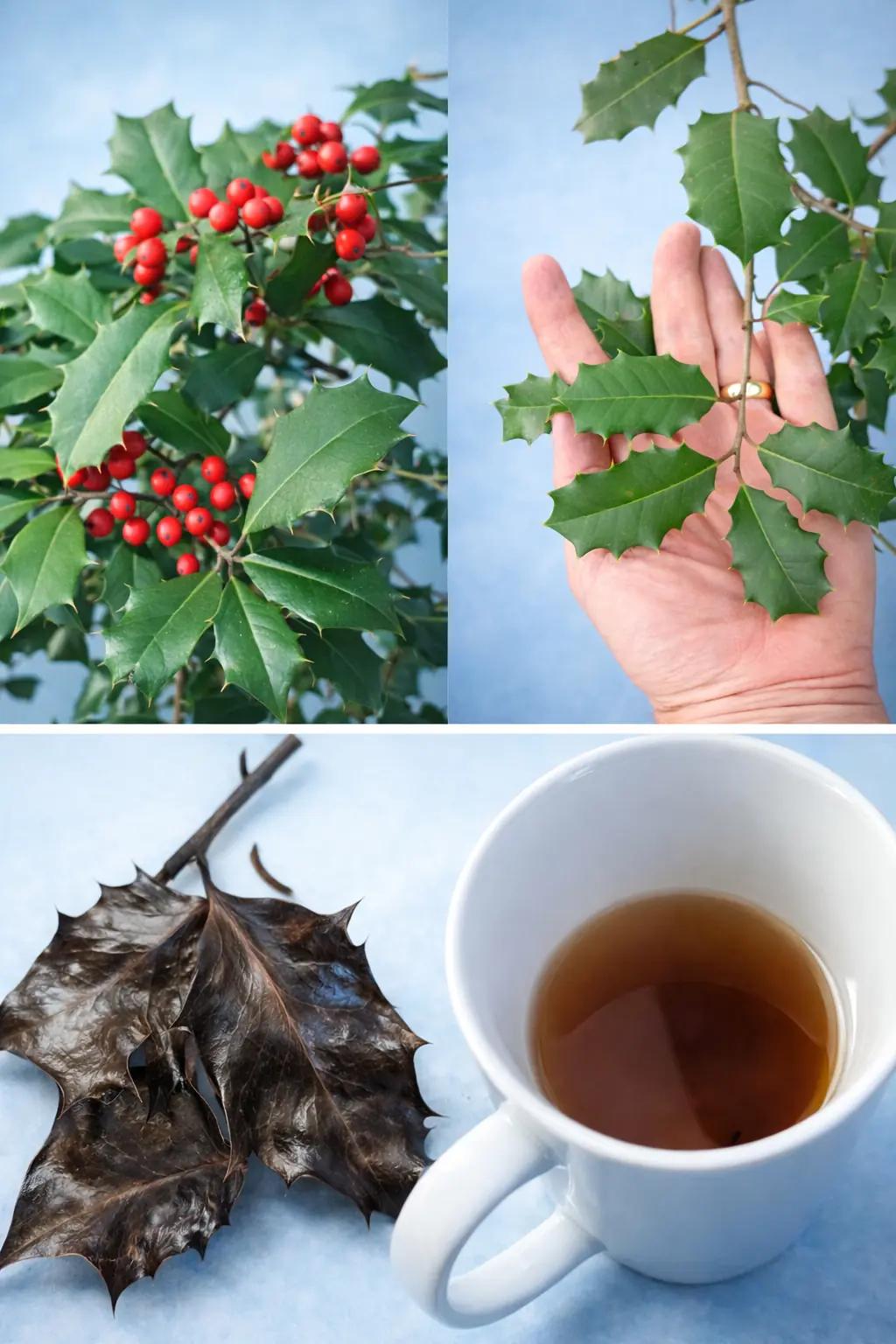
This guide highlights the most intriguing traditional properties, outlines careful homemade uses, and closes with critical safety guidance.
The Most Notable Traditional Properties of American Holly
1) Seasonal Cleansing & Purification (Traditional)
Historically, holly leaves featured in cleansing rituals during seasonal transitions—especially late winter—when people sought to “reset” after heavy foods or low energy. The intent was gentle renewal, not aggressive detoxification.
2) Subtle Mental Alertness
Unlike its South American cousin (Ilex paraguariensis, yerba mate), American holly contains very mild stimulant-like compounds. Traditional use aimed for quiet focus and endurance—not a strong boost.
3) Circulation & Warmth Support
In colder regions, leaf preparations were associated with promoting warmth and blood movement, helping counter feelings of cold extremities or sluggish circulation.
4) Support During Fever & Fatigue (Historical Context)
Infusions were sometimes taken during seasonal illness or weakness, with the goal of supporting recovery rather than suppressing symptoms.
5) Antioxidant Plant Compounds
Leaves contain polyphenols that help defend cells against oxidative stress. Effects were considered subtle and cumulative.
6) Bitter Digestive Stimulation (Occasional)
In very small amounts, the leaf’s bitterness was used to nudge digestion, particularly after rich meals.
7) Symbolic Strength & Endurance
Evergreen through harsh winters, holly symbolized resilience and protection, reinforcing its traditional reputation as a strength-supporting tree.
Traditional Homemade Uses (With Restrain)
Important: Only the leaves were used traditionally. Berries are toxic and must never be consumed.
1) American Holly Leaf Infusion (Occasional Use Only)
Traditional purposes: mental alertness, seasonal cleansing, mild circulation support
How to prepare (historical method):
-
Use fully dried leaves only
-
Lightly crush
-
Steep ½ teaspoon in hot water for 5–7 minutes
-
Strain completely
-
Consume sparingly, not daily
2) Non-Ingestive Ritual or Aromatic Use
Dried leaves were sometimes burned or steeped for symbolic cleansing during seasonal changes. This use is cultural and non-ingestive.
3) Bitter Digestive Tonic (Historical, Rare)
Extremely diluted leaf infusions were taken before meals to stimulate appetite. This practice is not common today and should be approached with caution, if at all.
Safety & Responsible Use (Read Carefully)
-
❌ Berries are toxic — never ingest
-
Use leaves only, and in very small amounts
-
Not suitable for children, or pregnant/breastfeeding individuals
-
Avoid if you have heart conditions or stimulant sensitivity
-
Do not combine with other stimulant herbs
-
No long-term or daily use
-
Misuse may cause nausea, vomiting, or digestive irritation
Final Perspective
American holly is a plant of discipline, not abundance. Its traditional value lies in cleansing, alertness, and symbolic resilience, not nourishment. When respected and used with restraint—and never casually—it offers a glimpse into how native plants supported people through cold climates and demanding seasons.
Disclaimer
This article is for informational and educational purposes only. It does not diagnose, treat, cure, or prevent disease. American holly can be dangerous if misused. Always consult a qualified healthcare professional or trained herbalist before using any plant medicinally.