Serafina Devereux stood in the corridor outside the portrait gallery, staring at the empty space on the wall where her likeness used to hang. It had been removed twenty years ago, the day her mother died. No one ever explained why. No one needed to.
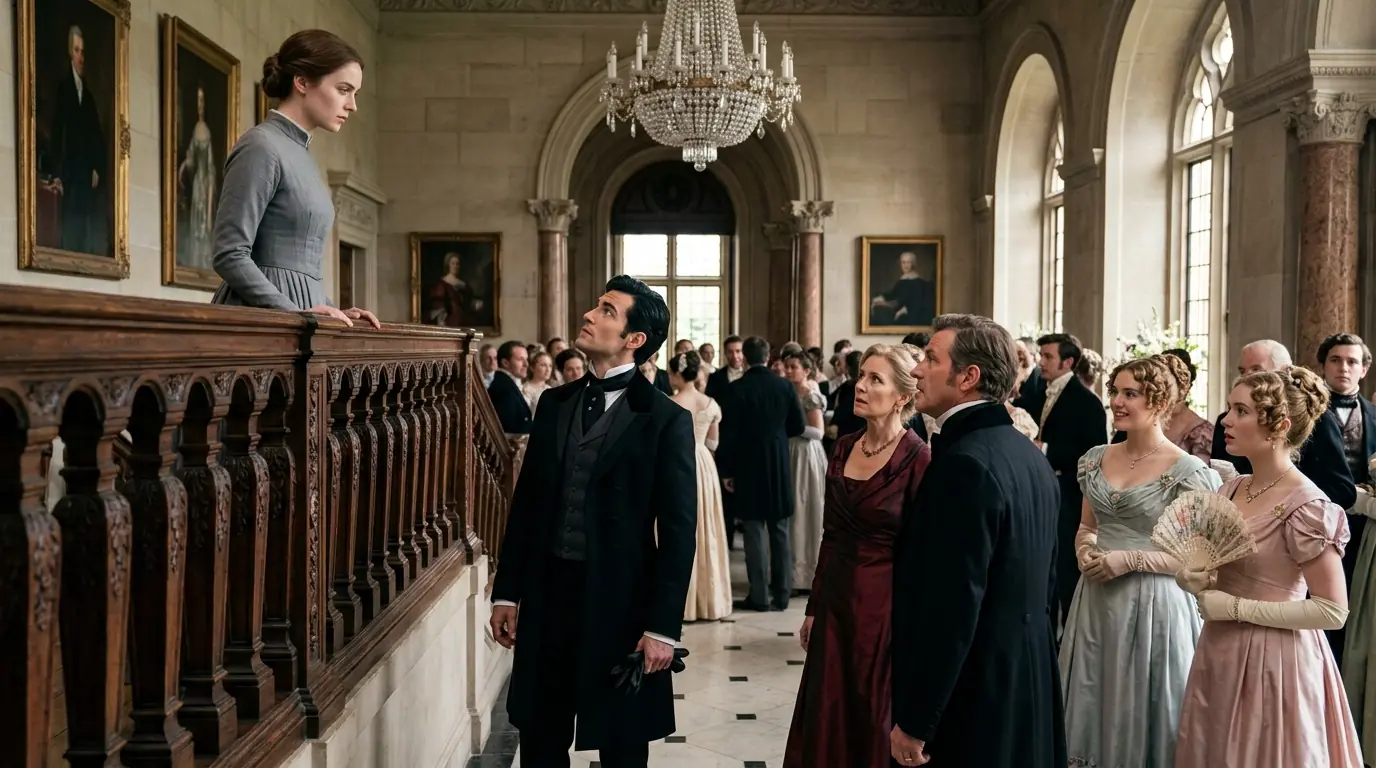
“The stain on this family’s name.” Her stepmother, Lady Cordelia Devereux, said it so often it had stopped sounding like an insult and started sounding like a fact everyone accepted without question. Her stepsisters, Marguerite and Isolde, drifted past her in the hallway that morning, silk skirts hissing against the floor, and did not so much as glance her way. When Isolde did speak, it was only to laugh behind a gloved hand and murmur something to Marguerite that made them both smile the way people smile when they know they’re being cruel and don’t care.
Serafina had long since stopped waiting for her father to look at her. He passed her in the breakfast room without a word, the same as every morning, his eyes fixed somewhere just past her shoulder as if she were furniture that had been moved into the wrong room. The servants whispered. She heard it in the way conversations died when she entered, in the way the younger maids studied her with a mixture of pity and fear, as though disgrace might be contagious.
No one asked what she had actually done. They simply knew, the way people know the sky is blue, that Serafina Devereux was the family’s shame, and that was the end of it.
What no one saw was where she went after the house went quiet. The estate ledgers, neglected for years, now balanced themselves under her careful hand. The tenant children who couldn’t read now knew their letters because she taught them in secret in the old gamekeeper’s cottage, using candle stubs no one would miss. The Whitmore family, three fields over, had food that winter because someone left grain sacks at their door before dawn and never said who.
The estate library, once rotting with damp and neglect, had been quietly restored, book by book, shelf by shelf, by hands no one thanked. She did all of it without asking for forgiveness she was never going to receive. Only sometimes, in the hush after midnight, she let herself wonder not why the family hated her, but what she had supposedly done to deserve it. No one had ever told her. Perhaps no one alive still remembered the truth.
The question came, unannounced, on a gray Tuesday afternoon. A royal courier rode through the gates at speed, his horse lathered, his coat marked with a crest Serafina had never seen: a black wolf beneath a broken crown. Within the hour, the entire household had gathered in the drawing room, breathless with the news.
The Duke of Blackthorn, cold, unmarried, and famously untouchable, was coming to Ashford Manor.
Every eye in the room turned toward Marguerite and Isolde. No one thought to look at Serafina at all.
The manor had not seen this much commotion in years. Lady Cordelia commanded the household like a general preparing for war. Seamstresses were summoned. The good china was unpacked. Marguerite tried on four gowns before breakfast and declared none of them worthy of a duke.
“He will choose tonight,” Isolde said, admiring herself in the hall mirror. “Mark me. A man like that doesn’t travel this far for anything less than a bride.”
Serafina was given no gown, no seat at the table, no place in the receiving line. She was told, plainly, to remain upstairs until the family required her, which was to say never. She didn’t mind. She had long ago stopped expecting an invitation to her own life.
But curiosity got the better of her, and she slipped down the servants’ stair to watch from the gallery above the entrance hall, hidden behind the balustrade, the way she used to watch her mother greet guests before everything changed.