Rogfast Tunnel: Norway's Record-Breaking Undersea Highway Project
Facts 05/12/2025 11:56
Your skin is much more than just an outer layer; it can serve as an early warning system, providing crucial insights into your internal health. Often, subtle changes in skin color, such as unusual paleness, yellowing, or bluish hues, can indicate underlying health conditions before more noticeable symptoms develop. Recognizing these skin changes can help individuals seek timely medical intervention, leading to better health outcomes.
One of the most common and telling signs that your skin can reveal is pallor, or an unusual paleness of the skin. This change often occurs due to anemia, a condition where the body lacks sufficient red blood cells to carry oxygen. It can also be a sign of poor circulation or reduced blood flow to the skin, making the person appear unusually pale. Pallor can occur anywhere on the body but is most noticeable on the face, lips, or nails. This subtle sign can alert both individuals and healthcare providers to a potential issue that needs further investigation.
Another important skin change to look out for is cyanosis, which causes a bluish tint to the lips, fingertips, or other extremities. Cyanosis often occurs when there is not enough oxygen in the bloodstream, suggesting that the lungs or heart may not be functioning properly. It could indicate serious conditions such as chronic obstructive pulmonary disease (COPD), heart failure, or severe asthma. When noticed, cyanosis should prompt immediate attention, as low oxygen levels can be dangerous if left untreated. The presence of cyanosis often signals the need for urgent medical care to address the root cause of the oxygen deficiency.
Jaundice, another visible sign, involves the yellowing of the skin and the whites of the eyes, commonly caused by liver dysfunction. Jaundice is typically associated with elevated levels of bilirubin, a substance produced by the liver. Conditions such as hepatitis, liver cirrhosis, or bile duct blockages can lead to jaundice. If left unaddressed, jaundice can indicate serious liver problems, making it crucial to seek medical advice if this change is observed. A comprehensive evaluation by a healthcare professional is necessary to identify the underlying cause of jaundice and determine the best course of treatment.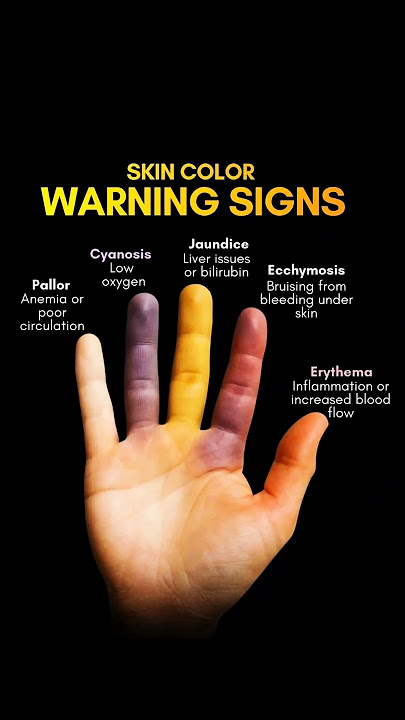
Ecchymosis, commonly known as bruising, can also be a visible indicator of internal health issues. Large, unexplained bruises that appear without obvious trauma can indicate blood clotting disorders or conditions that affect the blood vessels, such as hemophilia or platelet disorders. Ecchymosis can also be a sign of trauma or injury that may not be immediately apparent, and its presence on the skin can serve as a warning that further examination and possible diagnostic testing are needed.
In addition to these common warning signs, other subtle skin changes — such as redness or inflammation (known as erythema) — can indicate increased blood flow due to infection, injury, or inflammation. These changes, although often associated with minor issues, could also be early signs of systemic problems, such as an autoimmune disorder or an allergic reaction.
Because the skin is such a visible and sensitive organ, it can often reveal internal health imbalances before more obvious symptoms appear. Your skin’s appearance can provide valuable clues that alert you to potential issues, from cardiovascular health to liver function and beyond. Early detection and intervention can make a significant difference in the progression of many conditions.
Recognizing these signs is not just about being vigilant for cosmetic changes, but about understanding the deeper connection between the body’s external and internal health. When skin changes are noticed, seeking medical attention promptly is vital to ensure that any underlying conditions are diagnosed and treated early, improving overall health outcomes.
In conclusion, paying attention to subtle skin changes is a critical part of maintaining your overall well-being. While not all changes in skin color signal a serious problem, being proactive in recognizing these warning signs and seeking medical advice can lead to earlier diagnoses, more effective treatments, and ultimately, better health outcomes. The next time you notice a shift in your skin’s color or texture, remember that your skin may be trying to tell you something important about your health.
Sources:
"Understanding Pallor and Cyanosis" – National Heart, Lung, and Blood Institute. https://www.nhlbi.nih.gov
"Jaundice and the Liver" – American Liver Foundation. https://www.liverfoundation.org
"Ecchymosis and Bruising" – Cleveland Clinic. https://www.clevelandclinic.org
"Signs of Inflammation and Erythema" – Mayo Clinic. https://www.mayoclinic.org