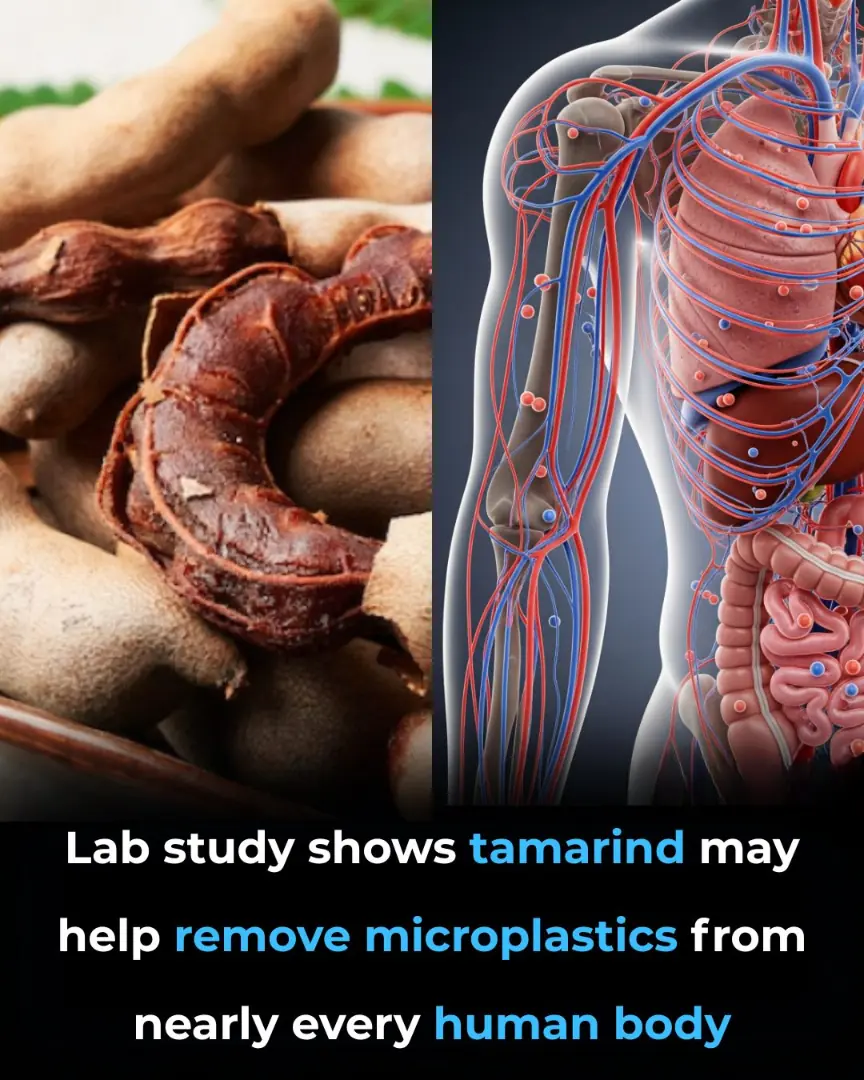
Tamarind: A Promising Natural Solution to Help the Body Clear Microplastics
Facts 05/12/2025 15:08
At just 15 years old, Canadian teen inventor Ann Makosinski developed a remarkable flashlight that needs no batteries — it runs entirely on the warmth of a human hand. Her device, known as the “Hollow Flashlight,” harnesses the thermoelectric effect: special thermoelectric (Peltier) tiles generate electricity when one side is warmed by the palm and the other side is cooled by the surrounding air.
Makosinski was motivated to build such a flashlight by a friend in the Philippines who lacked reliable electricity — a situation that prevented her from studying properly at night. Recognizing that many children in under-electrified or remote areas around the world face the same challenge, Makosinski envisioned a simple, low-cost, sustainable solution. “Humans are like walking 100-watt light bulbs,” she once said, highlighting the human body’s wasted thermal energy.
The Hollow Flashlight is constructed around four Peltier tiles mounted on a hollow aluminium tube, enclosed in a PVC shell. The user grips the outer side of the flashlight so that body heat warms one side of the tiles, while ambient (usually cooler) air flows through the hollow core cooling the other side — creating the required temperature differential.
After some trial and error — notably achieving sufficient voltage by adding a custom transformer and fine-tuning the circuitry — the flashlight successfully powered an LED. In her tests, the light lasted for over 20 minutes. The materials for her prototypes cost around US $26, and Makosinski believed the cost could drop further if the device were mass-produced.
In 2013, she presented the Hollow Flashlight at the Google Science Fair and won first place in the 15–16 age category. The jury recognized the flashlight for its simplicity, ingenuity, and potential social impact. Indeed, the flashlight requires no batteries, no moving parts, no external power — making it ideal for communities where electricity is unreliable or unavailable.
Although the light produced by the prototype was modest — enough to read a book or find one’s way in the dark, but far dimmer than commercial LED or battery-powered flashlights — Makosinski and many supporters saw tremendous promise. She emphasized that mass-produced versions could be made brighter, cheaper, and more durable — potentially giving children in low-resource regions access to lighting and enabling them to study or carry out basic tasks at night.
Beyond just a clever school science project, the Hollow Flashlight stands as a powerful example of “energy harvesting” — capturing surplus or wasted energy (in this case, human body heat) and converting it into useful, practical power. The concept holds promise not only for individual flashlights but also for other low-power applications, such as sensors, small lights, or emergency tools in resource-limited settings.
In effect, Ann Makosinski’s invention points to a future where energy doesn’t have to come exclusively from bulky batteries or the power grid — but could instead come from the simple warmth of our own bodies. A small innovation with potentially far-reaching humanitarian and environmental impact.