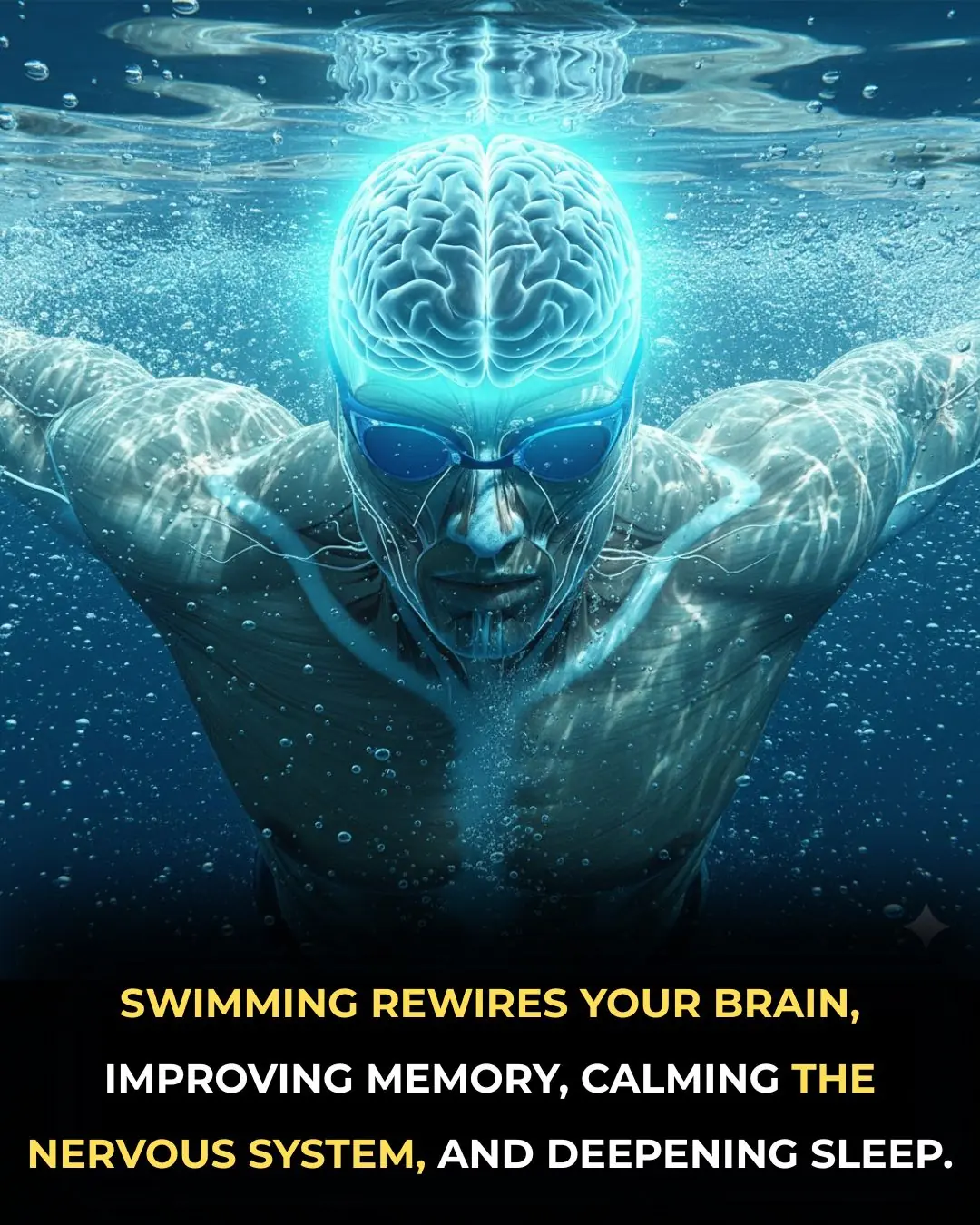
How Swimming Rewires the Brain and Strengthens Cognitive Health
Health 13/01/2026 21:10
Modern neuroscience is revealing something remarkably simple yet powerful: movement changes the way the brain works. When we sit still for long periods, our neural activity tends to drop to a relatively low, idle level. In contrast, when we get up and start walking, the brain “lights up.” Even light, gentle movement activates a wide network of neural pathways, sharpening attention, enhancing learning, and stimulating creative thinking. Walking is therefore not only a form of physical exercise; it is also a catalyst for improved mental performance and clearer thinking.
Multiple research studies suggest that brief bouts of physical activity can rapidly increase blood flow to the brain, elevate arousal, and improve communication between brain regions involved in memory and executive function. The simple act of walking, especially at a comfortable pace, has been associated with improved idea generation and problem-solving. Instead of viewing movement solely as a fitness habit, it can be understood as a highly effective mental tool — one that helps unlock focus, clarity, and cognitive flexibility in everyday life.
Unfortunately, many modern environments discourage this kind of natural movement. Car-dependent urban design keeps people seated for most of the day — in cars, offices, classrooms, and homes. These sedentary patterns become self-reinforcing, contributing not only to reduced physical health but also to lower mental vitality and diminished attention. By contrast, cities and neighbourhoods designed for walking — with safe sidewalks, nearby destinations, trees, and pleasant public spaces — encourage regular light movement throughout the day. Walkable environments are increasingly recognised not only as healthier for the body, but also as environments that support healthier brains and emotional well-being.
Designing walkable communities can therefore be seen as a public-health strategy. When people walk more, they tend to experience lower stress, better mood regulation, improved sleep, and sharper cognitive function. This is especially important for children and adolescents, whose brains are still developing. Access to safe walking routes, parks, and active play spaces supports both physical development and cognitive growth. Creating environments that allow movement is not merely a lifestyle preference; it is an investment in collective mental clarity and long-term brain health.
The growing body of evidence connecting movement and brain function is compelling. While cars offer convenience, overreliance on them shapes our habits in ways that keep us sedentary. Re-introducing walking into daily routines — whether through urban planning, school design, or personal choice — has the potential to boost productivity, creativity, and overall psychological resilience. Even short walks during work or study breaks can stimulate neural activation and help reset attention.
Individuals with specific health conditions or mobility limitations should consult health professionals about appropriate forms of activity. Still, the core message is clear: movement matters for the mind.
Selected reputable sources for further reading on movement and brain function
World Health Organization (WHO): Physical activity and brain health
U.S. Centers for Disease Control and Prevention (CDC): Physical activity and cognitive benefits
American Psychological Association (APA): Exercise and the brain
National Institutes of Health (NIH): Physical activity and psychological well-being
Pediatrics – Hillman et al. and related research on activity and cognitive performance in children
Nature Neuroscience and The Lancet Neurology – reviews on exercise, neuroplasticity, and brain function
Harvard Medical School / Harvard Health Publishing – walking and cognitive performance
In a world designed increasingly around sitting still, walking is a quiet form of resistance. It reawakens neural activity, clears the mind, and reconnects the brain with the body. Light movement requires no special equipment, no gym membership, and no training — yet it holds the potential to sharpen thought and improve mental well-being in everyday life.