
Doctor issues warning about eating too much rice
Tips 03/02/2026 22:29
When people think about rare physical traits, they often picture features that are immediately noticeable or visually striking. Yet some unusual characteristics are so subtle that they often go completely unnoticed—even by the individuals who have them. One such example is a tiny hole or dimple located just in front of the ear, near the upper edge. This small opening is known as a preauricular sinus. At first glance, it may resemble a faint birthmark or an oddly placed piercing, but it is neither of those.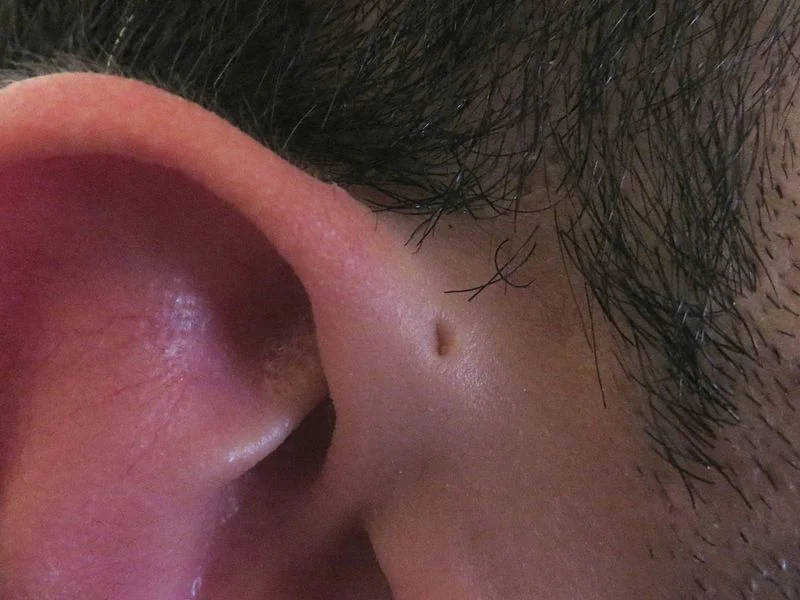
A preauricular sinus—also referred to as a preauricular pit or fistula—is a small congenital opening that forms during early fetal development, usually around the sixth week of pregnancy, according to Medical News Today. It develops when parts of the outer ear do not fuse completely as the ear structure forms. This feature is often hereditary, meaning it can be passed down through families. The pit may appear on one ear or both, although having it on both sides is relatively uncommon.
For most people, this tiny opening causes no symptoms at all and is considered a harmless genetic variation. Many individuals live their entire lives without realizing it is unusual. In some cases, however, the pit can become infected, leading to redness, swelling, pain, or fluid discharge. These infections are typically treated with antibiotics and basic wound care. If infections occur repeatedly or become severe, doctors may recommend minor surgery to remove the sinus tract entirely to prevent further complications.
Although this small ear feature is uncommon, it serves as an interesting example of how tiny differences in early development can shape the human body. These subtle variations highlight the complexity of embryonic growth and explain why no two people are exactly alike, even in the smallest details.
Some researchers have even speculated about an evolutionary explanation for preauricular sinuses. According to Business Insider, evolutionary biologist Neil Shubin has suggested that these small holes may be linked to ancient fish gills, representing a leftover structure from our distant aquatic ancestors. While this theory is intriguing, it has not been scientifically proven, and there is currently no direct evidence confirming this evolutionary connection.
Whether or not it has ancient origins, the condition itself is generally harmless and rarely interferes with daily life. For most people, a preauricular sinus is simply a minor anatomical quirk—one that carries no medical significance unless infection occurs.
Ultimately, this tiny ear feature is a quiet reminder of how human bodies still reflect traces of early development and possible evolutionary history. It shows that even the smallest details can carry fascinating stories about how we form, grow, and differ from one another.