Experiencing persistent itching on or around your breasts can be frustrating, uncomfortable, and for many people, anxiety-provoking. It is completely natural to worry about serious conditions such as breast cancer when symptoms involve the breast area. However, it is important to understand that in the vast majority of cases, breast or nipple itching is caused by benign, easily treatable conditions related to the skin, hormones, or minor infections.
Knowing the difference between common, harmless causes and rarer warning signs can help you respond appropriately without unnecessary fear.
Is an Itchy Breast a Sign of Breast Cancer?
Many people wonder whether itchy breasts can be an early sign of cancer. According to Dr. Tim Woodman, medical director for Cancer Services at Bupa UK Insurance, it is rare for itching alone to be the only symptom of breast cancer. Most breast cancers present with more noticeable signs, such as a lump, skin thickening, or changes in breast shape.
That said, health professionals emphasize that any persistent or unexplained change should be evaluated. While uncommon, there are rare forms of breast cancer that can cause itching as a primary symptom.
Inflammatory Breast Cancer (IBC)
One such rare type is Inflammatory Breast Cancer (IBC). Unlike typical breast cancers that cause a lump, IBC affects the skin and lymph vessels of the breast, causing it to appear inflamed. Symptoms may include:
-
Persistent itching
-
Redness or bruised appearance
-
Swelling and warmth
-
Pain or tenderness
-
Skin changes resembling the texture of an orange peel
Paget’s Disease of the Nipple
Another rare condition associated with potential malignancy is Paget’s disease of the nipple. This disorder affects the skin of the nipple and areola and can sometimes be linked to cancer in the underlying breast ducts. Common symptoms include:
-
Ongoing soreness and itching
-
Flaking, scaling, or crusting of the nipple skin
-
Redness or rash that does not heal
-
Bleeding or discharge from the nipple
The key takeaway from medical experts is that while itching can occur with certain cancers, it is usually accompanied by other visible or structural changes. If you have a localized area of skin that you repeatedly scratch and that does not improve, it is wise to have it evaluated by a healthcare professional.
More Common Reasons for Itchy Breasts
In most cases, itchy breasts are not related to cancer. The far more likely causes involve skin irritation, hygiene factors, infections, or hormonal fluctuations. These conditions are significantly more common and generally easy to treat.
1. Eczema and Contact Dermatitis
The skin on the breasts, particularly the nipple and areola, is sensitive and prone to irritation. Eczema (also called atopic dermatitis) can cause dry, red, inflamed, and intensely itchy patches. Contact dermatitis occurs when the skin reacts to substances it finds irritating, such as:
-
New laundry detergent or fabric softener
-
Tight or synthetic bra fabrics
-
Perfumes, soaps, or body lotions
Avoiding the triggering product and using fragrance-free moisturizers or medicated creams often brings relief.
2. Dry Skin
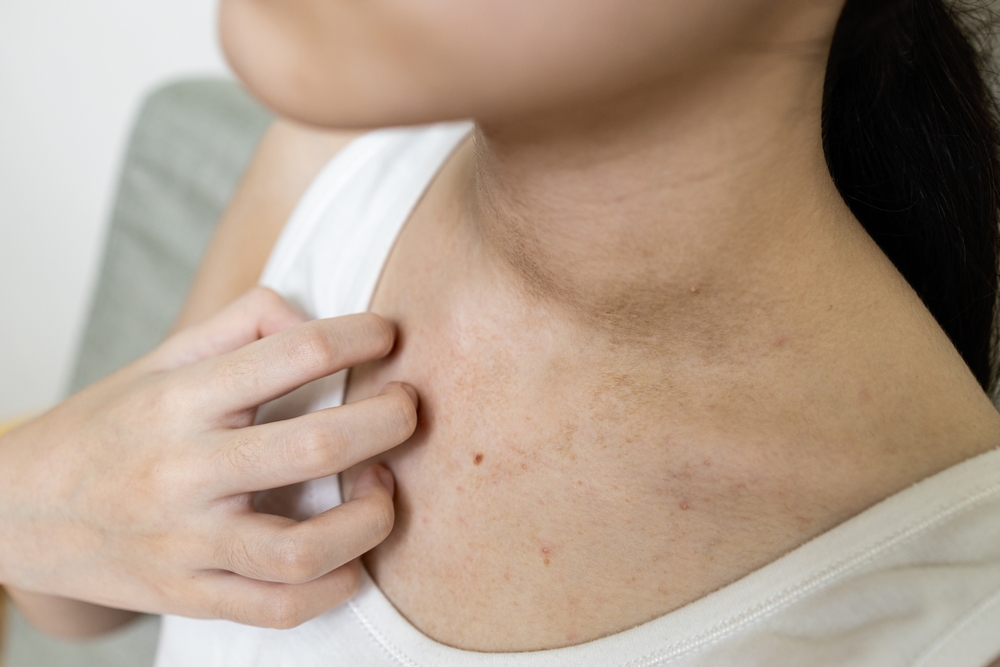
Like any part of the body, breast skin needs moisture to stay healthy. Cold weather, long hot showers, and harsh soaps can strip natural oils from the skin, leading to dryness, flaking, and itching. Dry skin often causes widespread discomfort rather than a single painful spot.
Regular moisturizing and using gentle, unscented skincare products can significantly reduce symptoms.
3. Fungal Infections (Under the Breast)
Warmth and moisture collect easily in the skin folds beneath the breasts, creating an ideal environment for yeast and fungal infections, such as candida. This condition, often called intertrigo, usually causes:
-
Bright red or raw-looking rash
-
Persistent itching or burning
-
Moist or weepy skin in the affected area
Proper hygiene, keeping the area dry, and antifungal treatments can usually resolve the problem quickly.
4. Mastitis
Mastitis is an inflammation of breast tissue, most commonly seen in breastfeeding women but possible in others as well. It is often caused by bacterial infection and can result in:
-
Itching and redness
-
Swelling and pain
-
Warmth over the affected area
-
Fever or flu-like symptoms
Mastitis requires prompt medical treatment, often with antibiotics, to prevent complications.
5. Hormonal Changes
Hormonal fluctuations during menstruation, pregnancy, or menopause can cause breast tissue to swell and stretch. This temporary expansion of the skin may trigger itching, tenderness, and mild discomfort. These symptoms often resolve on their own once hormone levels stabilize.
When to Seek Medical Advice

Although an itchy breast is unlikely to indicate cancer, persistent or unusual symptoms should never be ignored. You should consult a doctor if the itching:
-
Does not improve after a few weeks
-
Is associated with a rash that does not heal
-
Affects only one breast and is accompanied by other warning signs, such as:
-
A new lump or area of thickened skin
-
Changes in breast size or shape
-
A nipple that becomes inverted or changes direction
-
Discharge or bleeding from the nipple
-
Persistent scaling, redness, or crusting of the nipple or areola
-
Becoming familiar with what is normal for your breasts through regular self-exams is one of the best ways to detect subtle changes early and maintain peace of mind.
The Bottom Line
Itchy breasts can result from many causes, ranging from simple fabric irritation or dry skin (the most likely) to rare forms of breast cancer (the least likely). While the symptom is usually harmless and easy to resolve, understanding the possible warning signs allows you to take action when necessary.
If something does not feel right, do not delay seeking medical advice. Early evaluation provides reassurance when nothing serious is found and enables timely treatment if a problem does exist. When it comes to breast health, acting sooner is always better than waiting.