I never thought my own son would lay a hand on me in this house, not this house, the one my husband and I built with dreams and scraped up blessings. But last night proved that even the walls you trust most can become witnesses to your breaking. When Carson struck me, the sound was so loud it echoed against the magnolia patterned wallpaper like a gunshot. But I didn't cry. I didn't scream.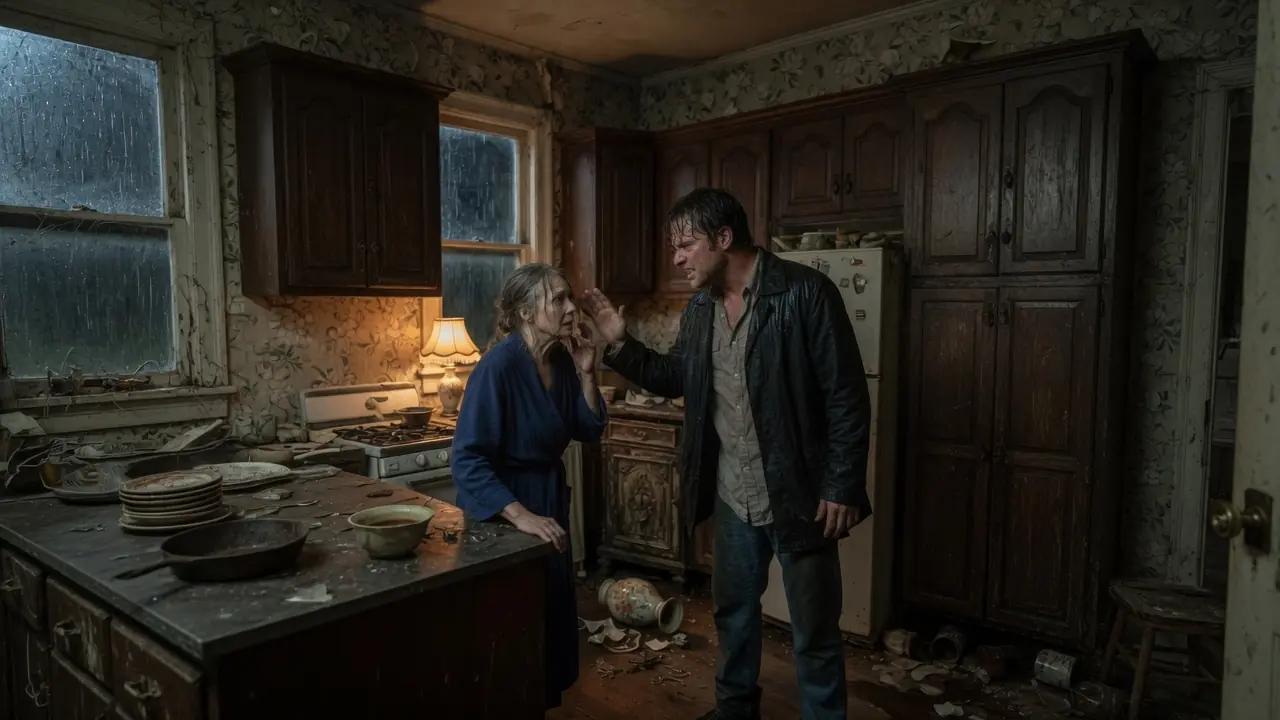
I didn't even raise my voice. I just stood there in the dim kitchen light. My lips split, my cheek throbbing, staring at the man who used to fall asleep on my chest when he was three. And when he stumbled upstairs afterward, grumbling, slurring, completely proud of himself, as if hurting me was a victory he could tuck into bed with him. I didn't say a word, not one.
Silence, I learned, can be a verdict, and mine was already decided, but nothing, absolutely nothing, prepared him for the morning. Carson came down around 7:45, still smelling of bourbon and whatever cheap cologne he thinks hides it. He walked into my dining room with that swagger he's worn like armor these last few years. Shoulders too wide, chin too high, eyes too dead. I was sitting at the head of my table in my navy crepe dress, smoothing the lace tablecloth my grandmother crocheted by hand before she died.
He didn't notice my swollen lip. He didn't see the bruise blooming across my cheek like a dark storm cloud. He didn't see me at all. Not really. For the last year, he'd only ever seen the version of me he wanted.
The quiet mother who shrank back, who made excuses, who carried the shame for him so he wouldn't have to. He saw the table set like it was Easter Sunday. He saw the biscuits rising in the basket, steam curling from them like warm breath. He saw the fresh grits, the peach butter simmering in a crystal bowl, the coffee pot polished till it shined, he grinned. Well, damn, Mom, he said, dragging out the chair across from me.
Didn't expect a whole royal feast after last night. Guess you finally understand how things work around here. He reached for a biscuit, the prettiest one, naturally, and bit into it like he was the king of Charleston. crumbs scattered across the lace tablecloth. He talked with his mouth full, bragging, planning.
All while I watched him with a calm so cold it didn't feel like mine. Then it happened. The chair beside me moved. A single scrape across the floorboard, slow, deliberate, heavy with authority. Carson froze midchw.
His eyes cut to the sound. The color drained from his face so fast it was like someone pulled the life right out of him. Sitting at my table, legs crossed, hands folded, wearing her peachcoled linen suit and that unmistakable string of pearls, was Judge Helena Crowder, retired circuit court judge, my neighbor for 34 years. And the last woman in Charleston any guilty soul wants to see at 8:00 in the morning. Carson's jaw slackened.
The biscuit fell from his hand and hit the floor, crumbling into soft, pathetic pieces. His voice didn't work. His throat bobbed, but not a sound came out. And in that instant, right there, in the quiet between us, I saw recognition dawn in his eyes. My silence last night hadn't been fear.
It had been a promise. A promise that this morning, justice would sit at my table wearing pearls. Carson stared at Helena as if she'd been summoned from the dead, like some ghost of truth come to drag him out of the fantasy he'd been living in. I didn't say a word. I didn't have to.
Helena sat perfectly still, her chin slightly raised, her gaze fixed on Carson with a calm that only decades of courtrooms and shattered families can teach a woman. She looked like a storm inside a bottle contained, but only by choice. Carson finally found his voice. What is she doing here? His words cracked like weak wood.
Still, I didn't answer. His eyes darted to me to the bruise on my cheek, to the swelling on my lip. Details he hadn't bothered to notice until that moment. until another pair of eyes saw them first. And for the first time in years, I watched something I thought I'd never see again on my son's face.
Fear. Real bone deep fear. Not of me. Not of consequences exactly, but fear of what my silence meant. Of who I had finally become overnight, a woman who had reached the bottom of a well.
She refused to drown in. When Helena finally spoke, her voice was soft, but it carried the weight of a gavel amplified a thousandfold. Good morning, Carson. He flinched like the words struck him. We have much to discuss.
I sat there, spine straight, dress smooth, hands folded neatly in my lap, this was no longer a family breakfast. This was Carson Dubois reckoning, and the table had been set for exactly that. When Carson's face twisted into that wary, frightened expression, I felt something shift inside me. A slow, quiet movement, like a tide drawing back before it crashes in full force. Not joy, not triumph.
Those feelings belong to people who get satisfaction from hurting others. And despite everything, I am not one of them. What I felt was something colder, steadier, a confirmation. I had finally done something I should have done years ago. But to understand why this moment mattered, to understand why the sight of Judge Helena Crowder seated at my table was more than a simple surprise, you need to know who I used to be, who I'd allowed myself to become, and the woman I was forced to resurrect in order to survive.
My name is Marlene Dubois. I'm 66 years old, a widow of nearly two decades. And for most of my life, I lived in a quiet corner of Charleston, a street lined with peon trees and porches, with wind chimes that dance in the slightest coastal breeze. It's the kind of place where neighbors wave from their rocking chairs, where magnolia bloom like they're trying to reach heaven, and where you can hear the church bells from street allas three times a day. I always thought peace was the default state of my life.
Maybe that was my biggest mistake. Peace isn't something you inherit. It's something you guard. And for years, I failed to guard it. I wasn't always alone.
My Antoine was a good man. He worked at the Charleston Harbor docks for 32 years. Strong and steady as the ropes he handled. He had a laugh that people said you could hear clear across the water, deep, warm, a sound that wrapped itself around your heart. And his pride, his greatest joy, was our son, Carson.
If you had told me 20 years ago that Carson would one day raise a hand to me, I might have slapped you myself for daring to suggest something so impossible because Carson wasn't born cruel. He was born hopeful. There's a photograph, one I used to keep on the mantle until I couldn't bear to look at it anymore. In it, Carson is 8 years old, standing on Folly Beach with his fishing rod, grinning so widely I swear you can count every missing tooth. Antoine is beside him, kneeling in the sand, steadying Carson's hands as they lift a tiny flounder together.
Their faces are mirrors, one younger, one older, but both shining with the same light. Carson used to climb on Antoine's shoulders during Fourth of July fireworks. He used to sit with me on the porch swing every Sunday evening, telling me what he learned in Sunday school. "Mama, God sees everything," he'd say, eyes wide like he discovered something no one else knew. He promised me when he was 10 that he was going to take care of me forever.
But life has a wicked way of stripping a person down layer by layer until the promises they made as a child become shadows. When Carson turned 19, the harbor offered him a junior operations job. And for a while, it looked like he was following in his father's footsteps. Antoine couldn't have been prouder. He bought Carson a silver watch engraved with the words, "Stand tall.
The world needs men who do. " Carson wore that watch every day until the layoff. We don't talk enough about what happens to a man when the world he's built his identity around collapses. When the place that made him feel like someone needed, someone capable, someone important casts him out like a broken tool. The harbor brought in new management, computers, automated systems, outsourced operations.
Suddenly, 30-year workers like Antoine became redundant. and younger workers like Carson became non-essential. One Friday afternoon, they handed him a cardboard box with his name written on the side and marker. They didn't even spell his last name right. Carson came home silent, like the words he might have spoken had turned to glass in his throat.
I remember opening the screen door and seeing him standing on the porch with that box in his hands. And when he stepped inside, I swear I heard something in him crack something no mother ever wants to hear. He tried to be strong. Lord knows he tried, but strength turns to stone when it has nowhere to go. He lost himself in the months that followed.
At first it was sadness, then shame, then resentment. It spread slowly, like mold in a damp corner of a house left unkempt. Then came Brett Maddox. Brett had been Carson's friend since high school. The kind of man who only shows up when someone else has something he wants.
He was a small-time hustler, a smoothtalking liar. Brett had a way of offering help that always came with chains attached. And when Carson lost his job, Brett showed up with a six-pack, a false smile, and promises of easy money. I should have told Carson not to trust him. I should have banned Brett from my doorstep.
But a mother tries to believe in her son even when she fears the worst. That was the beginning. And the beginning, as it often does, slid downhill into a much darker middle. My house, my sanctuary, slowly began to change. The laughter that used to echo up the staircase disappeared.
The warmth that used to settle around the dinner table chilled. Carson's footsteps became heavier, sharper thud, thud, thud like a warning. At first, the arguments were small, money missing, late nights, cold responses. But as his drinking worsened, the bitterness bloomed like a poisonous flower. He blamed the harbor, then Brett, then the world.
And when the world wasn't close enough to strike, he blamed me. Mama, if you didn't make everything such a big deal, Mama, you never understand. Mama, stop nagging me. Mama, don't look at me like that. I used to tell myself that he was hurting and that hurt people hurt others, but I forgot that hurt people also choose.
And Carson chose to turn our home into a war zone. The night he threw a chair at the wall because I asked him to unload the dishwasher. I swept up the pieces alone. The night he hurled my mother's vase across the room because I wouldn't give him my credit card. I picked up the shards bleeding.
And the night he slammed his fist into the door frame and screamed that I ruined his life, I stood trembling in the hallway, telling myself he didn't mean it. But abuse always escalates. That's something Judge Helina once told me long before Carson ever laid a hand on me. When a storm bruised long enough, she said, "It will either pass or break something. " Carson didn't pass.
He broke. And last night, when his hand collided with my face, when the sting shot through my cheek, when the kitchen spun around me, when the world shrank down to the size of a single violent moment, I realized something with terrifying clarity. The boy I raised was gone. What stood in front of me was a man who no longer recognized me as his mother, only as something he could dominate. That's why I didn't cry last night, because crying might have convinced me to keep hoping.
And hope in the hands of a dangerous man is a weapon turned against you. This morning, as Carson stood frozen before Judge Helena, everything about my past crystallized into this single truth. I had spent years loving the boy he was while surviving the man he became. And today finally was the day I protected myself from both. People always imagine that the breaking point arrives with a bang, with screaming, with shattered dishes, with slamming doors.
I sat in my rocking chair by the kitchen doorway, wrapped in my deep blue robe, listening to the rain against the roof. The house was dim, except for one warm bulb above the stove, glowing like a lighthouse in a dark harbor. I'd been up for hours already. Partly because I couldn't sleep from the way he'd slammed the door when he left earlier. Partly because fear has a way of keeping you awake, but mostly because something in me knew.
When the door flew open with a violent bang, the sound rattled through the house. I stiffened in my chair. Carson stood framed in the glow of the street lamp outside. His coat was soaked, dripping onto the rug in steady, angry drops. His eyes had that unfocused sheen of a man who's had more liquor than blood running through him.
His breath lingered before he even stepped fully inside a potent smell of bourbon and something cheaper beneath it. He didn't see me at first. He just staggered forward, muttering to himself. He yanked the bundle of keys from his pocket and hurled them toward the little table in the hallway. I heard the sickening crack immediately.
My mother's vase, the handpainted ivory one with the pink chameleas, shattered on impact. The sound pierced me straight through the ribs. That vase had survived three generations of Dubois women, a hurricane, two moves, and the clumsy fingers of a toddler, Carson. But it didn't survive him at 44. The vase had endured everything except the man I raised.
Carson didn't even look back. He kicked the broken shards aside with his boot, scattering the pieces like they were crumbs on a plate. Rage, hot and thick, burned in my throat. But fear, fear held it down. He finally noticed me when he staggered into the kitchen doorway.
"Well, isn't this precious? " he slurred, bracing himself on the door frame. "Mama sitting in the dark like she's waiting up for some prodigal son. " His voice was wet with contempt. I kept my hands tight on the arms of the rocker, steadying myself.
I've learned something about abusive men. Your stillness is not for their comfort. It's for your survival. You should go to bed, Carson, I said calmly. You're soaked through.
You need rest. It was the wrong thing to say. I knew it even as the words left my mouth. Reason to a drunk man. Sounds like accusation.
His shoulders rolled back and something shifted behind his eyes. A flicker of anger, a flare in a dry forest. You think you can tell me what to do? He snapped. He stepped forward.
I could smell the bourbon, the rain, the sour bitterness of the bar he must have crawled out of. "I'm not telling you what to do," I murmured. "I just Oh, save it," he spat, cutting me off. "Everything's always a damn criticism with you. The house, the bills, the job I lost.
" "Yeah, I know what you think. You think I ruined my life. You think I'm nothing. " My heart clenched. "I never said that.
You don't have to say it. " he roared. His hands shot forward suddenly, gripping my upper arms with so much force, I heard a pop one of my joints, or maybe something in my shoulder. Pain streak through me. Then came the shaking, hard, violent.
His fingers dug into my flesh like claws. The room spun. The wooden floorboards blurred. My glasses slipped down my nose, then fell and skidded across the floor. Carson, stop.
Please, I gasped, my voice barely audible. But he wasn't listening. His grip tightened, my teeth rattled, my robe twisted beneath his fists. You care more about your precious house and your damn antiques than your own son, he shouted. You think you're better than me?
No, I whispered. I don't, he shoved me hard. My body flew backward, weightless for a terrifying moment before I collided with the antique cabinet behind me, the one Antoine restored by hand after we married. My back slammed into its wooden frame, daggers of pain erupting along my spine. Then my head snapped sideways and cracked against the corner.
Stars exploded behind my eyes. A hot ringing buzz filled my ears. I collapsed to the floor. My cheek pressed against the cold hardwood. The air was knocked out of me.
I couldn't breathe, couldn't move. The world tilted and then his shadow fell over me. He lifted his hand. The slap landed with an ugly wet crack. My lip tore open on impact.
Blood filled my mouth with that metallic tang that tastes like heartbreak. I didn't scream. I didn't cry. I just lay there, my breath trembling, staring up at the man who once held my hand when he was afraid of thunder. He huffed a dismissive, satisfied sound, then turned and stomped up the stairs.
The sound of his heavy steps echoed through the house. Each one a nail sealing a coffin shut. His bedroom door slammed hard enough that dust fell from the ceiling. The silence that followed was not silence at all. It was grief.
It was shame. It was the death of the last thread connecting me to the boy he once was. I lay on the floor for longer than I'd like to admit. My chest rose and fell unevenly. Pain radiated through every bone, every muscle.
The kitchen light above the stove flickered softly, painting the room gold. When I finally pushed myself to my knees, the world swayed. I reached for the counter, dragging myself upright inch by inch. My legs trembled beneath me. My lip pulsed.
My head throbbed. I walked to the halfbath mirror, flipping on the light. The woman who looked back at me, she wasn't the woman I'd been yesterday. Her lip was split. Her cheek was swollen.
A bruise was forming under her eye like spilled ink. Her hair hung limp, damp from sweat. Her eyes Her eyes were awake. Fully, painfully awake. I touched my cheek.
It burned. But beneath the pain was something sharper clarity. This wasn't an accident. This wasn't a bad night. This wasn't a phase.
This was the truth. And the truth whispered back at me. Clear as a bell. Tonight was the last night you let this man hurt you. I splashed cold water on my face.
The sting of it snapped me into myself. My breath steadied, my shoulders straightened even through the pain. Then, instead of climbing the stairs to hide or to weep or to sleep, I went to the kitchen. I turned on the oven. I took out the flour, the butter, the baking powder, the mixing bowl, the champagne colored baking sheets my sister Clawudette sent me, and I started to bake.
It wasn't madness. It wasn't denial. It was preparation because I wasn't going to fight him with screaming. I wasn't going to reason with a man who threw reason aside. I wasn't going to leave my home to the monster my son had become.
I was going to set the table for his reckoning. And with each biscuit that turned golden in the oven, my plan sharpened. By sunrise, justice would sit where love had failed. The smell of biscuits filled the kitchen like a haunting hymn, warm, familiar, and devastatingly out of place. Every time I slid a new tray into the oven, the heat brushed my bruised face, reminding me of the hours before when that same face had been crushed beneath my son's hand.
Yet somehow, the warmth steadied me. It felt like fire, not the kind that destroys, but the kind that purifies. People misunderstand baking. They think it's gentle, soft, a domestic ritual meant for comfort. But that night, there was nothing comforting about it.
My movements were deliberate, almost surgical. Each one stripping away a layer of fear. Knead, fold, press, cut, repeat. The rhythm kept my hands from trembling and my mind from spiraling into the dark place where victims hide. The storm outside had calmed to a low, steady drizzle.
It tapped gently against the kitchen window, like an old friend reminding me I wasn't alone. The digital photo frame on the counter cast a soft glow in the dim room. I didn't mean to look at it, but as I reached for the mixer, the screen changed and struck me in a way none of Carson's blows ever could. A picture of him at age seven appeared. He was standing in the marshes behind our old neighborhood, his pant legs muddy up to his knees, holding a mason jar up to the sun.
Inside, it was a single firefly blinking wildly. His smile was so wide, so innocent, so full of light that the memory of it made my heart ache deep in places I thought were numb. "He loved fireflies. He used to run barefoot through the grass, cupping them gently and releasing them into the jar so I can keep the light close. " "Mama," he'd say.
Antoine would laugh and tell him he couldn't capture something meant to be free. But Carson would try anyway, determined and gentle in equal measure. That gentle boy had disappeared piece by piece over the years like a photograph left out in the sun too long. Its colors fading until only shadows were left. And seeing that picture now it almost broke me.
Almost. But pain doesn't always weaken a person. Sometimes it crystallizes into resolve. The frame flickered again. Now he was a teenager standing at his high school graduation in a rented blue gown that didn't quite fit his broad shoulders.
I remembered the moment clearly. I remembered how he'd teased me for crying, wiping my cheeks with the back of his hand. "Mama, it's not like I'm getting shipped off to war," he'd laughed. I remember thinking how tall he looked that day, how proud Antoine would have been if he were still alive. The pride had filled me like sunlight.
It felt warm, safe, worth every sacrifice. I wanted that boy back. But the man upstairs was not that boy, and wanting him back wouldn't make it so. The photos kept changing. snapshots of birthdays, church picnics, beach trips, father-son fishing days, a life built on love and effort and meals cooked late at night so Carson never went to bed hungry.
A life I had poured into him like holy water. And now, in quiet defiance, as the biscuits rose in the oven, I realized what was happening inside me. Love wasn't dying. It was transforming into something fiercer, into something protective, into something I should have felt long before last night. When the third batch was done, I set them on the cooling rack.
The heat from the oven coated the room in a haze that made the air thick and the memory sharper. I pressed my palm flat against the counter to steady myself. Standing too long made the pain in my back flare. A dull ache that radiated from the point where I'd hit the cabinet. But I didn't stop.
Pain didn't matter. The bruises didn't matter. What mattered was the choice I made in that small half-bath mirror. Never again. I wiped my hands on a towel and stepped back toward the dining room.
The lace tablecloth, starch white and delicate, spread across the table like a shroud. I smoothed it with slow, intentional strokes. My hand brushed the polished wood beneath it. Antoine had refinished that table himself the year before he passed. I could almost feel the roughness of the sandpaper.
Hear the rasping scrape as he smoothed the grain. He used to say, "A man leaves two things behind in this world. " Marlene, his work and his people. And if God's good, both will be strong. His work had been strong.
His people had fractured. "What would you do, Antoine? " I whispered into the quiet room. "A foolish question. I already knew the answer.
Antoine would have marched Carson to the police station himself if he could have seen what his son had become. He loved Carson deeply, but he didn't confuse love with blind forgiveness. The grandfather clock chimed five times. Its slow, heavy toll traveled through the house like a warning bell. Dawn was approaching.
I still had work to do. I went to the kitchen and filled a pot with water for grits. As the water heated, I reached for the jar of peaches. Soft slices swimming in syrup the color of old gold. The scent rose the moment I poured them into the saucepan.
Sweetness and cinnamon. Childhood mornings. Sundays after church when Carson used to lick the spoon and pretend it wasn't him. A sound drifted from upstairs. The shifting of bedsp springs.
Carson moving in his sleep. I froze, wooden spoon in hand, holding my breath until the house fell silent again. I wasn't ready for him to come down. Not yet. The thought struck me suddenly.
For the first time in years, I wasn't afraid of him waking up. I was afraid he'd wake up too soon and ruin what needed to happen. That realization chilled me. My fear had changed. It wasn't the fear of a victim anymore.
It was the fear of a woman who had already stepped into her decision and refused to be pulled back. The preserves thickened. The biscuits cooled. The water for the grits began to bubble. I moved quietly, methodically, aware of every sound in the house, the boards that creaked, the hum of the refrigerator, the steady tick of the clock.
Then came the moment that shifted everything. As I stirred the pot, tears ran down my cheek. Not from sadness, not from pain, but from something deeper, something almost spiritual. This was the final night I would suffer in silence. This was the night I retook my life.
I glanced at the cordless phone resting on the counter. Its backlit buttons glowed softly in the half dark. Three calls, three lifelines, three witnesses. By sunrise, I would dial them. But for now, I cooked.
And the house, heavy with memory and flower, dust, and quiet fury cooked with me. The storm outside slowed to nothing, but the occasional tap of water falling from tree branches. I tasted the peaches. Too sweet. I added more cinnamon.
Not sweet anymore. Not tonight. Tonight. Sweetness belonged to the life I was reclaiming. The clock ticked, the biscuits cooled, the plan solidified, and as the first faint hint of dawn brightened the kitchen window, I knew I wasn't waiting for rescue.
I was preparing the stage for justice. The peaches were slow simmering when the next memory struck me so vivid it nearly stole my breath. It wasn't a big moment, not one of the milestones people frame in their living rooms, but something small, tender. Carson must have been nine. It was late August, the kind of Charleston evening where the heat clings to your skin even after sunset.
Antoine had taken him to the backyard to teach him how to use the old fishing rod he kept from his own boyhood. I was watching from the porch, fanning myself with the church bulletin from earlier that day. Carson cast the line entirely wrong. It snared in the Aelas and snapped back, nearly hitting him in the face. But instead of getting frustrated, he burst into laughter.
Antoine scooped him up, planted a kiss on the top of his head, and said, "Boy, one day you're going to laugh your way through every storm life throws at you. I used to believe that. I used to believe that my son had joy stitched into his bones. " I stared at the simmering peaches and felt an ache so deep it hummed in my ribs. When had his laughter stopped sounding like joy?
When had it started sounding like a weapon? The peaches bubbled higher and I lowered the heat. My hand trembled slightly, a reminder of how violently he'd shaken me hours earlier. I rubbed the sore spots on my arms, feeling the deep finger-shaped bruises already forming beneath my skin. Pain has a strange way of sharpening memory because once I remembered the boy he had been, the next memory that came wasn't soft at all.
It was the day Brett Maddox slithered back into our lives. Brett had been trouble since they were teenagers. slick hair, slick smile, slick lies. He'd always been the kind of boy who borrowed things he never returned and owed people he never planned to repay. But he knew how to make himself likable.
When they were 16, Brett nearly sweet talked his way out of an arrest after tepeing the principal's house. Sheriff Mason let them off with a warning only because Carson had been the responsible one in the trio. I still remember standing in the station lobby, Antoine pinching the bridge of his nose, muttering, that Maddox boy is going to drag someone to hell with him one day. I didn't know that someone would be Carson. The memory of the night Brett returned hit me like a cold hand around the throat.
It was 9 months after Carson lost his job at the harbor. He was already drinking more than he should have been. Just a beer here and there, he claimed. A beer here and there had turned into a six-pack at night. And then bourbon, then more bourbon.
I'd begun finding empty bottles tucked behind the couch, hidden in the laundry basket, in the shed behind the house. I should have confronted him. I should have screamed. I should have shaken him the way he shook me last night. But mothers don't always confront.
Sometimes they beg with their silence, praying the storm will pass. Then Brett showed up. I heard a knock on the door while I was cleaning the kitchen. When I opened it, Brett leaned against the porch column with that same old smirk, wearing an expensive jacket I knew he hadn't earned, honestly. He brushed past me without waiting for an invitation, calling out, "Carse, get your ass out here.
Your old friend is back. " Carson came down the stairs so quickly, I thought he'd fall. He hugged Brett like a brother returning from war. My stomach twisted. I felt something dark sliding into place that moment, something I couldn't name, but recognized all the same.
Brett didn't waste time. Within an hour, he had Carson laughing, drinking, reliving stories from their reckless youth. He talked about a guy who needed help with moving some things, quick cash, easy work. He talked about opportunities, his voice honey, but the words rotten to the core. Carson's eyes lit up at the sound of money.
Real money, fast money. Desperate men grow hungry for shortcuts, and Brett knew exactly which buttons to press. I tried to intervene. Carson, honey, maybe don't jump into anything with Brett. You don't know what kind of business he's in.
Brett just grinned, revealing the gold tooth he'd gotten somewhere along the line. Oh, Miss Marleene, ain't nothing to worry about. I'm running clean these days. Clean? That man wouldn't know clean if a preacher dunked him in holy water.
Carson didn't listen. He never listened after that day. Within weeks, he was out late with Brett nearly every night. Their jobs were never explained. Money came in fast at first.
Carson bought new shoes, a watch, even a gaming console he didn't need, but the more he earned, the deeper his mood sank. Brett introduced him to gambling, then to a crowd that bled him dry. Before long, the money stopped, and the drinking intensified. Carson grew angry, defensive, restless, and I foolishly kept covering for him. But the moment that sealed their toxic bond happened one night in the kitchen.
Carson stormed in, pacing like a man possessed, running his fingers through his hair. I asked what was wrong. He snapped at me to mind my business. 20 minutes later, Brett arrived at the door with a look I'd never seen on him before, something frantic. I overheard them whispering, "You owe him, Carson.
I can't keep stalling. You owe him. Carson's whisper cracked. I'm good for it. I just need you need money, Brett said sharply.
And you need it now. Then the whisper that changed everything. What about your mama? I froze in place. Carson hissed.
No, don't even. She's got that pension, doesn't she? The money from Antoine's policy? Those credit cards? You're living with her?
You think she's not going to help her own son? Silence. A terrible complicit silence. A mother knows when her child is about to break. But sometimes a mother also knows when he's already broken.
That night, for the first time, Carson asked me for money in a tone that wasn't a request. It was a demand. I gave it, not because I wanted to, because fear told me to. I watched the boy I raised slowly warp under the weight of his own mistakes and the poison of Brett's influence. He became mercurial, one moment affectionate, the next venomous.
He stopped going to church. He stopped returning calls from family. He stopped showing up for himself. And I, God forgive me, kept hoping he'd find the path back. But he didn't.
He walked further into the dark. A year passed, and with every month, the violence simmering beneath the surface grew stronger. There was the night he shoved the laundry basket across the hallway because a sock was missing. The night he slammed the fridge door so hard the handle broke off. The night I asked him to take out the trash and he punched a hole in the pantry door.
I patched the drywall myself, covered the damage with a painting. Another desperate attempt to hide what was happening behind my four walls. Each incident got worse. Each apology got weaker. Each promise got cheaper until last night.
Last night wasn't a moment. It wasn't an accident. It was the culmination of years years of bitterness, fear, resentment, and enabled violence. And as I stirred those peaches in the saucepan, watching the syrup thicken into amber, I understood something with breathtaking clarity. Carson hadn't become a monster overnight.
I had watched him transform, piece by piece, bruise by bruise, excuse by excuse, and now I was the only one who could stop him. The clock chimed six. The house remained still. I picked up the cordless phone with a steady hand. It was time to make the first call.
I stared at the cordless phone glowing in my hand. its buttons soft and green in the dim kitchen light. It felt heavier than it should have, like the weight of every decision I'd avoided for the last 2 years had settled inside the plastic. I set it down for a moment, my breath shaky, not from fear of what I was about to do, but from the years of fear that led me here. The house was still, too.
When someone you fear is sleeping under your roof, the silence carries sound differently. Every creek feels amplified. Every gust of wind feels like a warning. My ears strained for movement from upstairs, listening for his footsteps, the shift of the mattress, the groan of the floorboards. Nothing.
Carson was still asleep, still unaware, still dangerous. I moved through the kitchen as quietly as a shadow. I didn't want to wake him. Not yet. Everything had to unfold exactly as I planned.
The sun was starting to cut through the blinds in long, thin beams, revealing every grain of flour on the counter, every smudge of peach syrup on the stove top. I wiped my hands on a towel, wincing as the motion pulled at the bruised muscles in my arms. That's when the ache in my back hit again a deep, throbbing reminder of where he'd thrown me into the cabinet. I hissed through my teeth, steadying myself on the counter. The pain shot up my spine and bloomed behind my eyes.
For a moment, I had to close them just to regain balance. But the pain didn't stop me. If anything, it anchored me. Pain has a strange clarity to it. It focuses the mind.
It sharpens resolve. I walked into the dining room, letting my fingers trail along the tablecloth. It was smooth, cool, and impossibly pure, so different from the chaos that had lived in this house for so long. I touched the back of my chair. The one I'd chosen deliberately.
The one at the head of the table. A position of authority, not submission. For years, Carson had made me feel small in my own home. Tonight, that ended. The digital photo frame on the sideboard flickered.
A new image appeared. Antoine holding Carson the day he was born. Carson was wrapped in a soft cotton blanket embroidered with tiny blue anchors. Antoine looked exhausted, elated, terrified, and proud. Every emotion a new father wears like a second skin.
That photo nearly undid me. I remembered the weight of Carson's tiny body in my arms. The way he'd opened his eyes for the first time and seemed to look straight into me as if he were memorizing my soul. I remembered the way Antoine whispered, "That's our boy, Marlene," with tears in his voice. We were so young then, so hopeful, so unprepared for how unforgiving life could become.
I pressed my hand gently to my stomach, steadying myself against the swell of grief. "Where did you go, baby? " I whispered to the photo. "Where did I lose you? Sometimes I wondered if Carson changed the moment Antoine died.
Loss shapes men differently than it shapes women. For me, grief turned inward, making me quiet. For Carson, grief turned outward like a flame, searching for something, anything to burn. He'd only been 22 when they called from the hospital. Antoine's heart had given out on the docks.
One moment alive, the next gone. Carson didn't cry at the funeral. He stood tall beside me, face hard, jaw clenched. He held my hand the entire time, but never looked at me. Later that night, he broke down in the kitchen, sobbing into my shoulder, saying over and over, "I'll take care of you now, mama.
I promise. " And for a long time, he did. Maybe that's why I let things slide. Maybe that's why I let bruises fade without telling a soul. Maybe that's why I pretended not to hear the lies, not to see the slumped posture of a man drowning in his own bitterness, because he'd once carried me through the darkest night of my life, and I didn't want to admit that he'd become the darkness in his own.
I went back to the kitchen. The grits were thickening. The biscuits were cooling on the rack. The peaches had been reduced into a glossy golden preserve that smelled like summer. Everything was ready except me.
The phone buzzed lightly on the countertop when I touched it again as if urging me to take the next step. I closed my eyes and inhaled deeply. I dialed the first number, Helena's number. It rang once, twice. On the third ring, her familiar voice answered, groggy but alert.
Marlene, what's happened? The moment I heard her voice, the damn inside me cracked. Not the whole thing, just enough for the truth to seep through. I told her everything. She didn't interrupt.
didn't gasp, didn't judge. By the time I finished, her voice had changed. It was firm, controlled, deadly calm. "I'll be there at 8," she said. "And Marlene, you're doing the right thing.
" After I hung up, my knees weakened. I sat on the kitchen stool, lowering myself slowly so my back wouldn't seize. Tremors ran through my fingers. Not fear, release, relief. I wasn't alone anymore.
Someone else was stepping into this storm with me. But I wasn't done. I dialed the second number. Detective Marcus Ellery. I prayed he'd be awake.
He was. His voice was crisp with concern the moment he heard mine. "Are you safe? " "Yes," I whispered. "He's asleep.
" I explained what had happened, leaving nothing out. Marcus knew Carson had watched him grow up at Street Alloras. I could hear the pain in his silence as I spoke. When I finished, he sighed a long, heavy sigh. We'll come quietly, he said.
Two officers, no sirens, no lights, eight sharp just as you asked. I thanked him. My voice cracked. I hoped he couldn't hear my tears, but I think he did. Then came the hardest call.
My sister Clawudette. She answered on the first ring as if she'd been waiting. Her breath hitched when she heard my voice, and before I could even speak, she said, "What did that boy do now? That boy, her nephew, my son. I told her everything, and she listened in raw, devastated silence.
Clawudette had always been the fiercer one between us, sharp tonged, sharper willed. But when I finished, her voice trembled. Marlene. "Why didn't you tell me sooner? " "Because I wasn't ready," I whispered.
Not ready to admit it, not ready to face it, not ready to lose him. She inhaled shakily. "I'm getting in the car. I'll be there by noon. " I hung up and placed the phone gently on the counter.
The calls were made. The dye was cast. The morning was coming. I leaned against the counter, breathing deeply. The pain in my back, the throb in my cheek, the sting on my lip.
They no longer felt like signs of weakness. They felt like reasons. Reasons to stand, reasons to act, reasons to stop forgiving a man who used forgiveness as a weapon. The sky outside grew lighter, shifting from charcoal to pale blue. The storm had passed.
A new day was crawling into the world with slow, cautious light. I straightened my robe, wiped the flower from my face, and whispered into the quiet house. This ends today. After the last phone call, the house settled into a silence so deep it hummed. Not the oppressive silence of fear.
No, that one I knew far too well. This silence was different. It was waiting. It was the breath the world takes before the tide shifts or the sky cracks open. I stood in my kitchen, hands pressed flat against the cool marble countertop, letting that silence soak into me.
My fingers still trembled. My ribs still achd each time I inhaled too deeply. But something about the quiet steadied me. It was as if the house, this old place I'd loved and tended for decades, was finally standing with me. For two years, these walls had held my secrets.
They'd absorbed every yell, every slam, every midnight sobb I pushed into my pillow so Carson wouldn't hear. But now, for the first time, they held something else. My resolve. The peach preserves were done. I poured them into the crystal bowl and set it on the counter to cool, watching the syrup thicken around the soft fruit.
My hands moved automatically, but my mind kept drifting back through all the nights I'd sat in this kitchen waiting up for Carson. Nights when he stumbled in smelling of bourbon and defeat. Nights when he didn't come home at all. Nights when I pretended he was still the boy who used to run barefoot through the yard chasing fireflies. A bitter laugh escaped me, small and sad.
Mothers cling to Hope long after Hope has packed its bags and walked out the door. The grandfather clock struck 6. The chimes sounded different this morning, sharper, more urgent, as though counting down rather than marking time. The sound carried through the house and up the staircase, but there was no movement from Carson's room. He was still asleep, blissfully ignorant of how close his world was to collapsing.
I wasn't afraid of him waking anymore. Fear had burned itself out of me in the hours since his hand struck my face. Something else had taken its place, something quiet, steady, and unshakable. I walked into the dining room. The lace tablecloth glowed in the soft morning light.
The fine china white porcelain edged with tiny blue forget me knots caught the dimness like stardust. I smoothed a wrinkle near the edge of the table and took a slow breath, letting the ache in my back settle into something manageable. This table had seen so many things. Thanksgiving dinners, birthday cakes, Sunday lunches, where Antoine carved the roast and Carson tried to sneak bites before the prayer. It had held laughter, spilled wine, arguments, celebrations, and today it would hold justice.
The idea made my eyes sting, not with regret, but with something bittersweet. Some endings come with fireworks, others come with breakfast. I arranged the biscuits, stacking them in neat layers on the round platter Antoine gifted me on our 10th anniversary. I placed the peaches beside them, followed by the grits and the steaming pot of coffee. The smell was rich and comforting, cruy so, given what awaited Carson.
As I set the coffee cups down, my gaze drifted to the window. Dawn had begun to break fully now, the sky a soft, bruised lavender. It reminded me of the bruise blooming across my cheek. I gently touched the swollen skin, feeling the warmth radiate from it. The old me, the me from yesterday, would have hidden that bruise under makeup, concealer, powder, sunglasses, excuses.
But today, I wanted every mark visible. Today, my wounds were evidence. I went upstairs to prepare myself. The climb made my body scream in protest, but I took it slow, using the banister for support. The hallway was dim, washed in the new light creeping beneath the doors.
I paused outside Carson's room. His snores echoed faintly deep, grating, careless. I pressed a hand to the door, feeling its solid wood beneath my palm. There was a time when this door was covered in stickers of dinosaurs and cartoon robots. A time when I'd push it open to find him asleep with books scattered around him or curled up with his stuffed shark.
Those days felt like someone else's life now. God help you, I whispered to him, to myself, to anyone listening. In my room, I peeled off my flower dusted robe and stepped into the bathroom. The light was harsh, unforgiving, and it revealed every bruise, every welt, every reminder carved into my skin. I studied myself without flinching.
My hair, once pinned neatly for Sunday services, had fallen from its bun during the struggle. I brushed it back, wincing as the bristles tugged at the tender spot near my scalp, where his hand had gripped too hard. I twisted it into a low bun. Simple, clean, controlled. Then I opened the closet.
The navy blue dress waited there, the one I hadn't worn since the last formal church gathering two years ago. It was modest but commanding, the kind of dress a woman wears when she needs to look composed, even when her world is cracking apart. I slipped it on gingerly, adjusting the fabric over my sore shoulders. Underneath the dress, I put on a back brace I rarely used, recommended by my doctor long ago for flare-ups. It tightened around my waist and spine, forcing me to stand straighter, taller.
My reflection shifted. The bruises didn't define me anymore. The dress reframed them as something else entirely. Testimony. When I stepped into my shoes, low heels, sturdy, I felt grounded in a way I hadn't in years.
My breathing deepened, my pulse steadied. Downstairs, the house waited. I moved with purpose, my hand gliding along the banister as I descended. The kitchen smelled like warmth and cinnamon. The dining room glowed with a soft golden light.
I set out the linen napkins folded into delicate triangles. I polished the silverware until I could see my reflection warped slightly in the curved surface. Then I placed one more thing on the table. An antique pocket watch that had belonged to Antoine's grandfather. I wound it every Sunday.
Even after Antoine passed, more out of habit than anything, I set it directly in front of my seat. A reminder, time was up for Carson, for my silence, for the life I had been trapped in. By 7:30, everything was ready. All that was left was to wait. I sat down at the head of the table, my chair, my place, reclaimed after years of shrinking into corners and hiding behind softness.
My hands rested lightly in my lap. My back supported by the brace stayed straight. My shoulders squared, my eyes fixed on the doorway. The clock ticked. A steady heartbeat, a countdown.
7:38, 7:42, 7:49. At 7:50, I heard at the groan of the bed upstairs, the unmistakable rustle of sheets. Carson was waking. A chill moved through me. Not fear, not dread, anticipation.
Footsteps crossed the floor. Slow, heavy, familiar. They moved toward the landing, down the first stair, then the second. My heart thutdded once hard. He was coming.
He had no idea what waited for him at the bottom of those stairs. Justice didn't come with chains this morning. It came with biscuits, with a lace tablecloth, with a judge in pearls, with a mother reborn. It came with me. Carson's footsteps hit the last stair with a heavy thud.
And for a moment, the house seemed to hold its breath. I didn't move. I didn't even twitch. My hands stayed folded neatly in my lap, my back straight, my gaze steady on the dining room entrance. I had spent too many mornings shrinking when he walked into a room.
Too many mornings walking on eggshells, praying he wouldn't notice the slightest thing out of place. But today was not one of those mornings. The footsteps paused in the hallway. I could almost see him in my mind's eye, standing there, scratching his jaw, blinking against the morning light, trying to piece together why the house smelled like biscuits and grits instead of stale bourbon and regret. Then came the sound I had been waiting for, the soft scrape of his heel across the floor as he turned toward the dining room.
He stepped into the doorway and froze. For a moment, he looked almost human, wideeyed, disoriented, his hair damp from a rushed shower, a fading bruise on the side of his neck from god knows where. He wore jeans and a wrinkled polo shirt, the same navy one he'd fallen asleep in on the couch two nights ago. He looked older than his 44 years, but there was still a trace of the boy he once was lingering in his features, buried beneath layers of bitterness. At first, he didn't see me.
He saw the table, the lace cloth, the steaming bowls, the biscuits, the good china, the peach preserves catching the sunlight like gold, his brows furrowed. What the? He stepped inside, rubbing the back of his neck. You doing all this for what? Thanksgiving in July.
Then his gaze dropped to the platter of biscuits, towering, golden, inviting. The air filled with the butter richch scent he had loved since childhood, and his face shifted. Confusion softened into something smug, something satisfied. He thought this was an apology. He thought I'd spent all night cooking out of guilt.
He thought he'd won. His eyes lifted and finally landed on me. He blinked. You're up early. I didn't speak.
His eyes drifted lower. They flicked across the navy dress. The straight posture, the stillness. They twitched toward my cheek, the swelling, the bruise, but he looked away so quickly it made my stomach twist. He saw it.
He knew what he'd done, but he didn't acknowledge it. Instead, he cleared his throat, walked casually toward the table, and pulled out the chair opposite mine with a loud scrape. "Well," he said, sliding into his seat like a king taking his throne. "Ain't this something? " he reached for a biscuit.
I didn't blink. He picked it up, split it open, and smeared a heap of peach preserves across the soft interior. The preserves glistened thick amber. "Perfect," he took a giant bite. Crumbs fell across the cloth.
He chewed loudly. "Damn, mama," he said with his mouth full. "You really went all out. " He glanced around, taking in every detail. "Guess last night knocked some sense into you.
" My heart did not stutter. My breath did not falter. My gaze did not shift. This was the version of Carson I had come to know over the last two years. Cruel in small ways, cruer in large ones, and so consumed by his own pain that he couldn't see anyone else's.
He wiped his mouth with the back of his hand, using the fine linen napkin only as decoration. So he said, leaning back in his chair with the arrogance of a man who believes he has tamed his mother. You going to make yourself a plate or just sit there watching me eat? That was the moment I heard it. The sound.
The doorbell rang, a single sharp chime that sliced through the room like the edge of a blade. Carson paused midbite, biscuit halfway to his mouth, his brows pinched. Who the hell is that? He waited for me to answer. I didn't.
He set the biscuit down, irritation spiking through his voice. Mom, I'm talking to you. Who's at the door? I rose slowly from my chair, straightening my dress. The motion was deliberate, silent, unhurried.
Mama, he said again, irritation cracking toward anger. I asked you, you'll see, I said quietly, his face twisted. Don't play games with me this early. But I was already turning away, walking toward the hallway. My steps echoed softly, each one measured.
The light from the front windows painted the floorboards in pale gold. My fingers wrapped around the door knob, cold against my skin. I opened the door. The morning air drifted in clean, cool, smelling faintly of last night's rain. And standing on my porch were the three people who would change the course of this day.
Judge Helina Crowder, impeccable in her peach linen suit and pearls, her chin lifted with quiet authority. Detective Marcus Ellery, posture straight, expression grim, uniform immaculate. Officer Daniels, young but sharpeyed, hands clasped behind his back. Helena's gaze moved immediately to my face. The bruise, the swelling, the split lip.
Her jaw tightened, but she didn't let emotion break through. Only resolve. Good morning, Marlene, she said, voice steady as steel wrapped in silk. Good morning, I replied. May we come in?
I stepped aside. Please, they entered. Their presence seemed to tilt the air in the hallway. Authority has a wait and it settled across the house like a long- awaited verdict. From the dining room, Carson called out, "Mom, who is that?
" He sounded annoyed, indignant, certain he had control. He didn't know that control had just walked into the house wearing pearls and a badge. He stood up by the time we reached the dining room doorway. The moment he saw Helena, he froze. It wasn't fear at first.
It was shock, then confusion, then something darker and instinctive understanding that the world he believed he ruled had just shifted beneath his feet. Helena walked toward the table with calm, deliberate steps. She didn't look at Carson. She didn't acknowledge his presence. She went straight to the seat beside mine, my right hand side, and pulled out the chair.
She sat, smoothed her skirt, adjusted her pearls, lifted her chin. Authority incarnate. Detective Ellery and Officer Daniels stood behind her, hands clasped, silent, eyes fixed on Carson. The tension in the room tightened like a cord pulled between two posts. Carson's face went through a series of expressions: confusion, annoyance, disbelief, and finally fear.
"What? What is this? " he stammered. No one answered. I took my seat at the head of the table.
For the first time in years, I felt tall. Helena folded her hands neatly in front of her and looked at Carson with a calm that was almost biblical. "Carson Dubois," she said softly. "Sit down. " He didn't move, didn't blink, didn't breathe.
Then something inside him recognized the tone, the tone of a judge, the tone of consequence, the tone of a woman who had seen a thousand broken men try to talk themselves out of the truth. He sat slowly like a child who knew he was in trouble. The house was silent. The clock ticked and the air changed. This was no longer my dining room.
This was a courtroom. And my son was about to hear the charges presented, not in anger, but in truth. When Carson finally lifted his head, his eyes flickered over the scene like he was waking into someone else's life. My gleaming table, the steam from the porcelain coffee pot, the quiet breathing of three officers, standing like carved statues behind him, and Judge Helena Voss seated at the head of the table as if she owned the house he thought he ruled. And then there was me.
Not in the doorway, not sitting small in the corner, not folding in on myself like I had for years, but standing beside Helena's chair, upright, still dressed in deep midnight blue, with the bruise on my cheek uncovered and shining purple under the morning light like a badge of honor. Carson had always been good at pretending, but this time he couldn't pretend anything. Not innocence, not confusion, not control. His face drained of color. the biscuit half chewed in his mouth, turning to paste before he swallowed it with a dry click in his throat.
"Mom, what's all this? " he whispered. Helena didn't let him breathe long enough to find footing. "Sit," she said one word, delivered with the calm authority of someone who'd sent violent men to prison and watched them break down just like he was doing now. He sat, not because he wanted to, because her voice went straight to the bone.
Detective Armen Cole stepped forward, the leather of his duty belt creaking softly. "Carson Hail," he said in an even tone. "We're here to address allegations of domestic assault that occurred in this residence early this morning. " Carson's head snapped toward me, panic flaring hot and bright. "You told them," he hissed.
A whisper, but sharp enough to cut. "I didn't have to tell," I replied softly. "Your actions spoke loud enough. " Helena leaned back slightly, resting both hands at top her cane. Before you continue digging your own grave, Mr. Hail, I'd advise you to use the small amount of composure you have left.
His jaw worked. He looked at the officers. Then at the table, the china, the biscuits, the preserves glistening like amber. This is ridiculous. He finally spat.
We had a fight. That's all. Family's fight. She She exaggerates everything when she's upset. Helena didn't blink.
"Marlelene, dear," she murmured. "Would you please sit? " Her tone didn't ask, it affirmed. I lowered myself into my chair, never breaking eye contact with the man who once called me his anchor. Detective Cole opened a small notebook.
At approximately 3:17 a.m., he read, "A violent altercation occurred that resulted in multiple visible injuries to Miss Browning. We have witnessed testimony confirming repeated disturbances from this address, including shouting, property damage, and suspected intoxication related aggression. Carson slammed both palms onto the table, rattling a spoon. Stop making me sound like some kind of monster, he barked. Are you not?
Helena asked quietly. He froze. The question had no volume, yet it struck with the force of a hammer. His eyes darted to me again, searching for the version of me who used to shrink, but she was gone. I've had enough, Carson growled.
Enough of this drama. Enough of your your theatrics, mom. Calling them here, trying to embarrass me in my own home. It's my home. I corrected him.
My voice is still as water. Always was. You were living here with me, not the other way around. Something in his face, twisted ego, wounded pride, and the first breath of real fear. He tried to laugh, but the sound cracked.
"Mom, look, you don't want to do this. We can talk it out. Just us. These people. " "No," I said.
"Not this time. " A soft inhale from one of the officers told me they saw it the moment I drew a line he couldn't cross. Helena pressed her fingertips together. "Mr. Hail, I've known your mother for 30 years. She has endured more than you will ever know.
And last night, you crossed from emotional cruelty into criminal violence. It wasn't like that, he protested, cheeks blotched red. I just lost my temper. That's normal. Everyone loses their temper.
Normal? Helena echoed. You call shoving your mother into a china cabinet normal? His lips parted. A twitch.
A tiny flicker of shame. He tried again. You don't understand, he said softer now. I've been under pressure. I've been stressed.
Work, life, everything's falling apart. And so you chose to make her fall apart with you. I replied quietly. Carson turned toward me as if something in my tone had slapped him harder than he slapped me. His eyes shone with confusion, anger waring with a fragile, almost childlike desperation.
Mom, he whispered shakily. I didn't mean. I never meant to hurt you like that. Then why did you? I asked.
Silence. A single heavy second. Because there was no answer that could save him. Helena leaned forward. Mr. Hail, this is the part where honesty matters.
Because these officers will not be gentle with a liar. Carson swallowed hard, throat bobbing. He looked at the table, the pretty plates, the steam. The breakfast he thought was for him. "This wasn't a meal," he said horarssely.
His gaze rose, horrified realization creeping in. This was a setup. No, I corrected softly. This was a mirror, his breath stuttered. He sagged back into his chair, one hand trembling as it gripped the edge of the tablecloth.
I didn't know, he whispered. I didn't know you'd actually call someone. I did, I said. And if I hadn't, I would not be sitting at this table now. I would be on a cold cellar floor or at the bottom of the stairs or in a hospital bed somewhere with strangers explaining my injuries.
Carson's face shattered and I watched it happen the unraveling of the false man he pretended to be. Thread by thread. You're the only family I have. He croked. His voice broke.
I thought I thought you'd never turn on me. I didn't turn on you. I whispered. I turned back toward myself. A tear slipped down his cheek.
The first honest tear I'd seen in years. Detective Cole stepped forward again. Mr. Hail, stand up, please. Carson blinked, shook his head. No.
Wait. You, Mom, you can stop this. Just say it was a mistake. Tell them you don't want me arrested. Please don't do this.
I rose slowly. My back throbbed, but I stood tall. The brace under my dress holding me steady. When you hit me, I said softly. You killed the version of me who would have saved you.
Carson's breath hitched. He pressed a palm to his forehead. Mom, please. Helena gave a single nod. The officers moved.
Carson didn't fight. Not with fists. His fight was in the broken, frantic sound that tore from him when the cuffs clicked around his wrists. No, Mom. Please don't let them take me, Mom.
The dining room blurred around me. But I did not break. I did not reach for him. I did not fold. because if I soften now, I would die later.
As they led him toward the door, he twisted to look at me one last time. "You're choosing to be alone," he choked out. "You're choosing loneliness over me. " "No," I said. "I am choosing peace," and the door closed behind him.
The moment the door shut behind Carson, it was as if the whole house exhaled slowly, heavily, like a creature that had been strangled for years and had finally been allowed a single full breath. Judge Helena gently placed her cane beside her and let out a long inhale, her shoulders sinking into a rare softness. Detective Cole murmured something to his officer outside. The porch boards creaking as their footsteps faded. And for the first time that morning, the house was still, still, but not silent.
There was a hum in the air, a strange, trembling hum like something that had been wound too tight for too long and now had to relearn what it meant to rest. I stood in the dining room doorway, watching the place where Carson had stood moments earlier, where he shook, where he begged, where he shattered. The faint clatter of the cuffs still echoed in my mind, clicking against the bones of my memory. Helena rose from the head of the table with the elegance of someone carved from granite. She moved slowly toward me, her posture straight, her steps deliberate.
She took my hand, not with pity, not with sympathy, but with respect. It is done," she said softly. And suddenly, without warning, something inside me broke. Not in pain, not that old frightened break, but a new kind, a release so deep my legs nearly gave out beneath me. My hands flew to my face, and hot tears spilled through my fingers before I could stop them.
Helena didn't pull me into an embrace. She simply pressed one hand to the small of my back, supporting me with a quiet strength that didn't force, didn't smother, didn't fill the room with noise. She was a pillar, firm and present, letting me crumble safely. I didn't think it would hurt this much, I whispered through my hands. Of course, it hurts, she murmured.
You didn't lose a son today. You realized you lost him long ago, and realization is always sharper than loss. Her words sliced cleanly. Clean enough to let truth bleed out. Detective Cole stepped back inside after speaking with his officers.
He looked at me with something like sorrow, something like admiration. Miss Browning. We'll be transporting him to county booking. You will receive a case number and victim advocate contact within the hour. I nodded, wiping my cheeks.
Thank you, I said, for everything. He shook his head. No, ma'am. You did the hardest part. Then he added softer.
We see a lot of women in your situation. Most don't call. I'm glad you did. After they left, the house felt enormous. The dining room too bright, the kitchen too orderly, the morning sun too merciless.
Helena eased herself into the chair beside mine, resting her cane against the table edge. She folded her hands and looked at me, her eyes deep and understanding in a way only a woman who has seen life's darkest corners can be. Marlene, she said gently. You need to eat something. I can't, I whispered.
You must, she insisted. Your body remembers what your soul survives. Feed it. I forced myself into my seat. The biscuits still steamed softly, their golden tops catching the sunlight.
The preserves glistened like molten amber. Everything looked beautiful, clean, intentional. A table I had set not for celebration, but for truth. With trembling fingers, I broke a biscuit in half. It split perfectly along the center, steam curling upward in a thin silver ribbon.
I spread a small spoonful of peach preserve over it. My first attempt to swallow nearly failed, but I forced myself to take a single bite. Warmth spread across my tongue, buttery, soft, faintly sweet with cinnamon. A taste I had known all my life, a taste that now held the weight of freedom. I put the halfeaten biscuit down, unable to take more.
"That's enough," Helena murmured. We sat in silence for a long while until a faint sound broke through the quiet. A distant door slamming somewhere across the street, a car engine starting, the laughter of a neighbor jogging with her dog. Life was going on as if my world hadn't just cracked open. When Helena finally spoke again, her voice was low and steady.
"You know," she said. Everyone talks about survival as if it's simply not dying. But it's more than that. Survival is choosing yourself, even when it breaks you. I looked at my hands, bruised and crimson in the tender places where Carson's fingers had dug in.
They looked like someone else's hands. Not a mother's hands, not a caretaker's hands, not a protector's hands, but hands that had saved me. Hands that had chosen me. What happens next? I asked in a whisper.
Helena smiled faintly. You rest. You breathe. You let yourself be alive again. She reached for her purse and carefully removed a folded sheet of paper.
She slid it across the table. This, she said, is the name of a trauma therapist I trust. And a domestic advocate who will walk you through protective orders, legal safeguards, and recovery resources. And I want you to call your neighbor, Nola. She's been worried about you longer than you think.
Nola. Sweet softspoken Nola. with her Aelia bushes and her peach scented candles. Yes, she had asked me a hundred times if I was doing all right. I had lied every time.
Helena tapped the list gently. You are not alone. Not anymore. Her words were a warm blanket over a wounded heart. I'm afraid, I admitted, my voice cracked.
Afraid of tonight, of waking up alone in this house. Afraid of the quiet. That's natural, she said softly. Your nights have been dark for a long time. You just didn't realize how dark until you lit a candle.
I pressed a trembling hand to my mouth. The truth stung because it was real. I had lived in shadows. And now the light hurt. But light always hurt when you'd been in the dark too long.
I closed my eyes and inhaled deeply. Lavender from the vase, warm bread, coffee cooling on fine china, and something else. Something new. Hope. Fragile trembling hope.
When I opened my eyes again, Helena squeezed my hand. "It begins now," she said. "What does your life? " That afternoon, after Helena left and the police cars had rumbled away, the house settled into a kind of quiet I had never known before. Not the suffocating quiet of fear, not the sharp-edged quiet of waiting for footsteps or raised voices, but a hollow, foreign quiet, a quiet that felt empty, too empty.
I walked through each room as if I were stepping into the shell of someone else's life. The sunlight on the living room rug looked different, almost intrusive. The air felt lighter, but also vast, stretching out around me in a way that made my chest feel both open and unbearably exposed. I stopped at the foot of the staircase. For the first time in years, I wasn't listening for the creek of the third step, the one Carson always hit when he was stumbling home drunk.
I wasn't bracing for the sound of a slammed bedroom door, for the thunder of rage vibrating through the hallway. The stairs were just stairs, silent, still. I placed my hand on the railing. My fingers brushed the indentations carved into the wood. Small marks from years of use, from a life I used to know.
I stood there breathing, letting the stillness settle into my bones. And then I climbed. Each step felt like walking into a memory. Every creek echoed with all the nights I had woken in terror. But this time there was no threat waiting at the top.
His bedroom door stood shut, the brass knob gleaming in the afternoon sun. I hesitated, my pulse thuing against my ribs. My therapist later would tell me this was a form of reclaiming space confronting the ghost of what had been. But in that moment, I was simply a woman standing outside the room of the child she had lost long before this day. I turned the knob slowly and pushed the door open.
The air inside was stale, heavy with the scent of old sweat, liquor, and the faintest trace of cedar from the dresser he'd had since he was 12. His bed was unmade, blankets tangled, pillows thrown to the floor. The room looked suspended in time, frozen at the exact second he'd crashed into it last night. I stepped inside, his shoes were scattered everywhere, his laundry piled in the corner. His old baseball trophy, first place regional, age 14, sat crooked on the shelf.
Dust clung to the edges. It didn't feel like the room of a man who lived here. It felt like the room of a man who hid here, hidden from the world, hidden from himself, hidden from the truth he didn't want to face. I walked to the dresser, my fingertips grazing over a framed picture of him at 7 years old, missing a front tooth, proudly holding up a kite we'd spent hours trying to get into the air. He looked so small, so bright, so full of possibility.
My throat tightened. I tried, I whispered. It wasn't an excuse. It wasn't a plea. It was a truth I needed to say out loud, not for him, but for myself.
My knees felt weak. So, I sat on the edge of his bed. The springs sagged under me, a familiar give. I placed my hands on my lap and let myself feel the weight of everything. Not the fear, not the violence, not the guilt, but the grief, the raw, hollow grief of losing a child who still lived.
A long shuddering breath left me, and I bowed my head, letting the tears fall quietly. Not the panic tears from earlier, not the broken sobs that tore out of me in front of Helena, but slow, exhausted tears, the kind that come when the storm finally ends. After a while, I stood and left the room. I didn't close the door, not because I expected him back, but because shutting it felt like sealing something inside forever. Instead, I let it stand open, a reminder that healing wasn't about locking away the past.
It was about learning to walk past it without fear. Downstairs, the late afternoon light slanted through the windows in long, warm beams. I moved into the kitchen and poured myself a glass of water, my hands still shaky. When I lifted it to my lips, the coolness grounded me. On the counter lay the list Helina had given me.
The therapist, the advocate, Nola's number. I touched the edge of the paper gently, tracing the names with the tip of my finger. Each name felt like a step forward, a stepping stone across a river I had nearly drowned in. I decided to start small. I picked up the house phone, the same one I had held last night when I called for help, and dialed the number I knew by heart.
two rings. Then a warm, familiar voice answered, "Marlelene. Honey, is everything okay? I've been thinking about you all day. Nola, dear, kind Nola.
" My voice shook, but I forced the words out. "Nola, do you think you could come over for a little while? " There was no pause, no question, no hesitation. "Of course I can. I'm already grabbing my keys.
" A soft laugh escaped me, wet with tears, but real. the first real laugh in a very long time. When she arrived 10 minutes later, she didn't ask for details. She didn't pry. She didn't force me to speak.
She simply stepped into the kitchen, wrapped me in a warm embrace, and whispered into my hair, "You're safe now. " I didn't break. I didn't crumble. I simply leaned into her, letting myself be held. Letting myself feel the comfort of a friend who had always been there, waiting for the day I would finally reach out.
We sat in the living room for hours sipping tea, talking about nothing and everything. She told me about her Aelas, about her niece's new job, about a stray cat she'd found on her porch. I listened, grateful for the normaly, for the gentleness, for the way her presence filled the empty spaces without overwhelming them. When the sun dipped low and the first shadows of evening crept across the walls, Nola pulled a knitted blanket over my shoulders. "You're not alone, Marleene," she said softly.
You've never been alone. It wasn't until she left that I realized something profound. The quiet didn't feel empty anymore. It felt peaceful. It felt mine.
That night, the first night without Carson's presence, lurking behind every shadow, I moved through the house with the cautious steps of someone learning to inhabit her own life again. The sun slipped behind the horizon, leaving an amber glow over the treetops outside my windows. The house settled into its nighttime rhythm. The refrigerator humming low, the old pipes ticking faintly as the water cooled, the faint rustle of the curtains when the wind brushed past the walls. These were sounds I had always heard.
But tonight, for the first time in years, they weren't warnings. They were simply sounds. And yet, even in the peace, an undercurrent of fear threaded through my chest, a thin line pulled too tight. The kind of fear that doesn't vanish with the presence of safety, but lingers because the body has learned to expect danger even when it isn't there. I stood in the living room, one hand resting on the back of my armchair, and forced myself to inhale deeply.
"You're safe," I whispered aloud. "You're safe now. " The words floated through the silence, fragile and uncertain, but present, real. I brewed a small pot of chamomile tea, a nightly ritual I'd abandoned months ago, because the sound of boiling water or the clink of cups had often set Carson off. The kettle's whistle rose gently, almost sweetly, and instead of bracing for footsteps, I closed my eyes and let the sound wash over me.
After pouring the tea, I curled up on the couch with my favorite quilt, the one I'd handstitched during my early years of marriage. Soft blues, lavender, and cream patches formed a comforting mosaic across my lap. Something in me softened as I traced the stitches with my fingertips. My hands remembered the peace of making it. My body remembered the safety of the life I had before fear took root.
I sipped my tea slowly. The warmth spread down my throat, unfurling in my chest like a blooming flower. I hadn't felt warmth like that in a long time. The clock chimed 8, then 9, then 10. Hours passed quietly, gently.
The kind of evening I used to dream about when the storms inside this house felt endless. The kind of evening I once thought I would never have again. But when I finally stood to turn off the lights and head upstairs, my legs trembled. The staircase loomed before me. Not physically imposing, but emotionally so.
Every step held memories, every riser a bruise, every creek an echo. For years, I had climbed these stairs with dread crawling up my spine, bracing myself for his door to slam open or for his drunken footsteps to corner me at the landing. Now standing in the quiet, the fear rose not from danger, but from habit, from a body conditioned to survive. I can do this, I whispered, I placed my foot on the first step. It groaned softly under me.
Nothing happened. No footsteps, no voice, no rage, just the sound of wood settling beneath my weight. Step by step, I climbed, my breath catching on the eighth step, the one where Carson had once grabbed me by the wrist during an argument, twisting until I cried out. I paused, one hand gripping the banister, not a memory, a flashback, sharp as glass. But unlike before, I didn't retreat.
I didn't freeze. I placed my palm flat against the wall, warm from the heat of the day, and whispered, "I'm still here. " Then I continued upward. When I reached the landing, I didn't look at Carson's door. I forced myself forward straight into my bedroom, my refuge, my sanctuary.
I closed the door softly behind me, not locking it out of fear, but closing it out of choice. For the first time in too long, the bedroom felt like mine. the quilted bedspread, the framed photos of my parents, the vase of dried lavender on the dresser. They all seemed to glow with a softness I had forgotten how to see. I changed into my night gown and stood at the bathroom mirror.
The woman staring back at me looked older, yes, more tired, but she also looked present, awake, alive. The bruise on my cheek had deepened into a dark plum-colored mark, and my lip was still swollen. I touched the bruise lightly. The pain throbbed, but it no longer felt like humiliation. It felt like proof.
Proof that I had survived. Proof that I had chosen myself, I slid beneath the covers, pulling the quilt up to my chin. The sheets were cool and crisp. The mattress dipped softly under my weight. But as soon as I closed my eyes, the fear rose again.
Not fear of him. Fear of the night itself. Fear of loneliness. Fear of feeling too much all at once. I turned on the bedside lamp, letting the warm yellow glow fill the room.
Sometimes healing begins with something as simple as not sitting in the dark. I reached over to the nightstand and opened the small wooden jewelry box my mother had given me decades ago. Inside was a silver locket, smooth and worn from years of being carried. Inside it were two photos. One of my mother, young and smiling, and one of me at 22, holding baby Carson in my arms, exhausted but glowing.
I held the locket tightly, letting its cool metal press into my palm. "It's okay," I murmured, voice trembling. "It's okay to miss what never truly existed. Tears slipped silently down my temples, soaking into the pillow. Not hysterical tears, not hopeless tears, but quiet, grieving tears, the kind that honor the past while letting it go.
When my eyes grew heavy, I finally reached for the lamp switch. Darkness settled gently over the room, not the old suffocating darkness, a soft, quiet dark that felt like a blanket. I curled onto my side, hands tucked beneath the pillow, and breathed in deeply. Lavender, warm linen, safety. And in that fragile quiet, on the first night of my new life, I whispered a small prayer, not for strength, not for courage, but for rest.
And for the first time in years, I slept. Morning sunlight slipped gently through the thin curtains of my bedroom, casting soft gold stripes across the quilt, draped over my legs. For a moment, I didn't remember where I was, not fully. I lay still, cocooned, suspended between sleep and consciousness, wrapped in a quiet I hadn't felt in years. And then it returned to me.
Not fear, not dread, but the memory of peace. I opened my eyes slowly. The first thing I saw was the ceiling, white, uncracked, calm. The second was the vase of lavender on my dresser, bathed in morning light. The third was the small, delicate rise and fall of my own chest.
I was breathing gently, not shallow, not restrained, not bracing, just breathing. I sat up carefully, half expecting a jolt of panic to hit me the moment my feet touched the floor, but it didn't. My body was sore, yes, my limbs felt heavy from nights of restless anxiety finally unwinding. My bruises achd, a deep, pulsing reminder of a life I had left behind. But I was not afraid.
I wrapped my robe around my shoulders and stepped into my slippers, moving quietly down the hallway. Habit, maybe, but not fear. As I approached the top of the stairs, I paused, resting my hand on the banister. The house felt different in the morning light. Not haunted, not hostile, open.
I descended slowly, each step steady, deliberate. The eighth step didn't catch my breath this time. The memory was still there, but the fear had loosened its grip, like an unwelcome guest finally stepping back. When I reached the bottom, I walked into the kitchen, and something inside me softened. The kitchen was warm with early sunlight.
Dust particles floated gently in the air. The kettle sat on the stove, cool and waiting. The counter was clean. I made tea, letting the scent of lemon and mint fill the room. As the water boiled, the house hummed softly around me, alive but peaceful.
When the tea was ready, I poured it into my favorite mug white porcelain with a painted chameleia. A small crack ran down the side, but I loved it still. I held it between my palms and leaned against the counter. The first sip warmed me from the inside, steady and kind. Then came the knock.
Three taps, gentle, familiar. I set the mug down slowly. It wasn't fear that washed through me. It was anticipation. I walked to the front door, peering through the small window.
Standing on the porch, wrapped in a knitted shawl, was Dora, my neighbor for nearly three decades. Her hair was tucked neatly beneath a scarf. Her expression was soft, a quiet mixture of concern and love. I opened the door. Marlene, she whispered.
May I come in? I nodded. She stepped inside, closing the door gently behind her. And for a few moments, we simply stood facing each other in the hallway of my home. Two old friends, both feeling the weight of what had happened.
Then Dora reached out and cupped my cheek, her thumb brushing just beside the bruise. "Oh, honey," she breathed. "I'm so sorry. " Her tenderness cracked something inside me. I didn't fall apart.
I didn't collapse. I simply let myself lean into her touch for a moment, accepting the comfort I had denied myself for too long. "Come," I said softly. sit with me. We walked into the living room and she sat in the armchair while I curled onto the couch.
I wrapped my hands around the warm mug again. Dora watched me carefully as though afraid one wrong word might shatter me. "How are you holding up? " she asked. I thought about lying, saying, "I'm fine.
" Or, "I'm managing the kind of things abused women say to keep others at bay. But I didn't lie. I'm tired," I said honestly. "But I'm here," she nodded. her eyes misting.
"Do you want to talk about it? " she asked softly. "Or not talk at all. " "I'll sit here either way. " The kindness nearly made my throat close.
I took a deep breath, then exhaled slowly. "I don't want to tell the whole story," I murmured. "Not right now, but I want you to stay," Dora smiled gently. "I'm not going anywhere. " She stayed for an hour.
No judgment, no pressure, just presence. We talked about simple things. The weather, her garden, the community bake sale she'd somehow been roped into organizing. And she didn't once ask about Carson's arrest. She didn't need to.
She knew enough. She knew me. After she left, I walked into the dining room. The table was still set from yesterday morning. The lace cloth, the polished cutlery, the china cups.
It had served as a battleground of sorts, but now it rested in quiet elegance. The symbolism was not lost on me. I walked to the head of the table, the seat Carson had always claimed, and I pulled the chair back gently. Then, for the first time in years, I sat in it, the head of the table, my husband's seat, the place I had never allowed myself to sit because Carson insisted it was for men. Now, it was mine.
I rested my hands on the table, feeling a quiet ripple of ownership move through me. This was my house, my table, my life, and I had reclaimed it. I spent the rest of the morning cleaning up the remnants of yesterday. Not out of shame or panic, but out of intention, out of renewal, I washed the china, smoothing the cloth, dusting the furniture, opening the windows to let fresh air sweep through the house. The breeze carried the faint scent of jasmine from the garden, and I breathed it in deeply.
When the house was clean and the dining room restored, I stood in the center of the room. A quiet filled me that didn't feel empty. It felt new, as if the house itself was exhaling, as if I was exhaling. I didn't know what the future held. I didn't know what healing would look like.
But I knew one thing with absolute certainty. I was no longer living inside fear. I was living inside choice, and that was enough. The afternoon sunlight stretched long and golden across the living room floor, creating warm rectangles on the rug. I followed those rays with my bare feet as I moved quietly around the house, letting the new calms seep into all the corners that once held my tension hostage.
It wasn't perfect peace. Not yet, but it was a beginning. Around 2:00, the phone rang a soft trill from the old landline on the kitchen wall. For a split second, my chest tightened out of habit. I had spent so many years bracing for raised voices, accusations, emergencies.
But the fear passed quickly this time, like a wave that rose but did not break. I answered with steady breath. Hello, Marleene. The voice was warm, edged with worry. It's Sheriff Dalton.
I wanted to check in personally. Of course. Dalton had known Carson since he was just a boy. He had pulled him over for speeding at age 17. Helped him fix a flat tire at 21.
coached his baseball team one summer when they were short on volunteers. "Thank you," I said quietly. "I'm managing," he hesitated. "I need to tell you something not to scare you, but so you feel informed. " Carson is calm, cooperative, a bit shaken, but there's no sign he'll be released early.
Everything is proceeding by the book. A breath I didn't know I was holding slipped free. I appreciate that. And Marlene, his voice softened. You did the right thing.
I know that doesn't make it easier, but you did. I swallowed hard. I know. After we hung up, I stood in the kitchen for a while, my fingers trailing lightly over the rim of my teacup. His words lingered in the air like a low hum.
You did the right thing. But right things didn't always feel good. Sometimes they felt hollow. Sometimes they felt like loss wrapped in clarity. Still, I knew he was right.
Later that afternoon, I stepped out onto the porch. The wooden boards were warm under my slippers, and the soft rustling of the trees filled the air. A gentle breeze carried the scent of jasmine from the yard next door. Somewhere down the street, a lawn mower buzzed faintly. Life, normal life, life that had kept going even when mine had felt like it was shattering.
I sat in my rocking chair, the same one where I had sat the night of the assault, wrapped in a bathrobe, listening to the storm and my own heartbeat. But now, now it felt different. The chair creaked gently beneath me, familiar and comforting, not ominous. As I rocked, absorbing the sounds of the neighborhood, I saw a figure approaching from the sidewalk, tall, thin, wearing a navy cardigan and carrying a brown paper bundle. It was Reverend Talia.
She walked up the steps with that soft smile she always wore, the kind that wrapped around you like a warm blanket. Marlene, she greeted, her voice calm and steady. Mind if I join you? Please, I said, shifting to make room. She sat on the porch bench and placed the bundle beside her.
I brought you some blueberry muffins. My grandson insisted on adding extra sugar. I hope you don't mind. I smiled. A real one this time.
Thank you. That means more than you know. For a few minutes, we said nothing. just sitting there, letting the breeze rustle through the porch plants, letting the quiet settle without pressing for answers. Finally, she spoke.
I heard what happened, she said gently. I heard Carson was taken in. My chest tightened, but not with guilt, not with fear, with the slow settling of truth. Yes, I said. He's in county booking, she nodded, thoughtful.
I'm sorry. Truly, I folded my hands in my lap. I keep wondering if I failed him, if I missed something, if I could have stopped it, if I could have loved him harder. She finished softly, my throat tightened. Yes.
Reverend Talia leaned forward, her elbows on her knees. You loved him enough to raise him, enough to protect him, enough to sacrifice for him. But you cannot love someone out of their demons, Marleene. I closed my eyes. You showed love today, she continued.
A different kind. the hard kind. The kind that says no more. I looked at her, tears blurring the porch in the street beyond. "Is it wrong that I feel both relieved and broken?
" I whispered. "No," she said. "It's human," we sat quietly again, two women sharing the kind of silence that doesn't demand words. "Eventually, she reached into her pocket and pulled out a small folded pamphlet. " "This is the number for a support group," she said.
"Not a therapy group, a community group. Women who've lived through what you have. Women who understand the kind of quiet you're sitting in. I took it, running my thumb over the text. I didn't know if I was ready, but I knew I needed something.
After she left, I stayed on the porch, watching the sky shift into late afternoon blues and soft ambers. A bird hopped along the railing. Somewhere down the street, a child laughed. The world felt gentle again. Eventually, I stood and went back inside the house.
The moment I crossed the threshold, I felt a shift. Subtle but unmistakable. This was no longer a house of fear. It was a house of healing. I walked through the rooms, touching the edges of tables, the frames of photos, the curve of the banister.
Everything felt familiar in a new way. Mine reclaimed. And then I reached the doorway of my small sewing room. For months, I hadn't stepped foot inside. Carson hated the sound of scissors clipping fabric or the hum of my sewing machine.
said it annoyed him, made him itch. But today, today I pushed the door open. The smell of fabric and thread and lavender sachets met me like an old friend. Dust moes danced in the air. My sewing machine sat on the table, covered by the cloth I'd placed over it long ago.
I walked to it slowly. Then, with steady fingers, I lifted the cloth away. The machine gleamed beneath it, untouched, loyal, waiting. I ran my hand along the smooth metal, feeling a warmth bloom in my chest. Not excitement exactly, but something like possibility.
I pulled out the chair, sat down, and pressed the power switch. A low hum vibrated through the table, soft, familiar, alive. My breath caught. The sound had once been forbidden in this house. Now it was a marker of freedom.
I threaded the needle with the ease of long habit, placed a scrap of blue cotton beneath the presser foot, lowered it gently, and began to sew. The rhythmic check of the needle filled the room, not loud, not defiant, but steady, purposeful, mine. With every stitch, my hands remembered. With every pass of fabric, my heart unclenched a little more. With each pull of the thread, I reclaimed something I had forgotten I'd lost.
By the time I finished the small piece of cloth, the sun had dipped low, bathing the room in a gentle orange glow. I held the scrap in my hand, just a small square of stitched fabric. But to me, it was victory. It was voice. It was breath.
It was me returning to myself. And for the first time, truly, deeply, unmistakably, I felt hopeful. The next few weeks unfolded gently, like pages turning in a book whose story I wasn't afraid to read anymore. Healing didn't come to me in grand revelations. It arrived in small, almost invisible moments.
Moments that, taken alone, meant little, but woven together created something like wholeness. I learned the sound of my own footsteps again. I learned the quiet of an evening without fear. I learned how to sit in my garden and let the sun rest on my face without wondering if I'd forgotten something that would anger him. I learned how to breathe.
Some days were harder. Some nights were still tangled with worry. Healing wasn't straight. It bent and curved and doubled back on itself like a wandering river. But every morning, without fail, I made tea.
Every afternoon, I opened the windows. Every night before bed, I touched the locket with my mother's photo and the picture of me holding baby Carson, and I whispered, "I'm still here. " A month after the arrest, a letter arrived, not the kind from the sheriff's office, not an update from the court or the rehab intake coordinator. It was from Carson. My hands trembled as I picked up the envelope.
I carried it to the porch and sat in my rocking chair. The sky was a pale spring blue, dotted with thin clouds drifting lazily across it. For a long minute, I held the envelope without opening it. The weight of it felt too heavy for its size. His handwriting on the front pulled something inside me tight.
Finally, I slid my finger under the flap. Inside was a simple sheet of notebook paper folded neatly in thirds. I unfolded it and read, "Mom, it's been 30 days since they brought me here. 30 days sober. 30 days of waking up and seeing myself clearly without excuses, without anger, without the fog I've lived in for years.
They say the truth hurts. They're right. I've never hurt like this. But this pain, this pain feels necessary. I know I don't deserve your forgiveness.
I know I broke something in you and in myself that I can never undo. I don't expect anything from you, but I want you to know I am trying. I'm going to group sessions. I'm working in the facility kitchen. I'm learning about myself.
I'm trying to fix what's left of me. You saved my life. You may not think so, but you did. I hope someday I can show you that your decision wasn't for nothing. If you ever want to talk when you're ready, I'll be here.
Your son, Carson, I sat there for a long time, letting the breeze dry the tears I hadn't meant to shed. His words didn't erase the pain. They didn't fix everything, but they were a beginning, a fragile, trembling beginning. And beginnings, I was learning, were precious. By early summer, the garden behind my house bloomed in brilliant color hydrangeas, liies, chameleas.
The scent of honeysuckle drifted in through the kitchen window every morning. I spent hours trimming the bushes, pulling weeds, planting new seeds. Something about watching things grow in the soil made me feel grounded. One warm morning, as I knelt by the rose bushes, hands dirty with earth, I heard footsteps on the gravel path, I stood slowly, brushing off my gloves. It was Judge Helena.
She walked toward me with a small smile, holding a wicker basket filled with ripe plums. "Thought you might want these," she said. "My trees been showing off this year. " I took the basket, inhaling the sweet, warm scent of the fruit. "Thank you.
" She looked at me with those piercing knowing eyes, eyes that had seen decades of truths laid bare in courtrooms and hearts alike. "How are you? " she asked. I nodded. "Better," she glanced around my blooming garden.
"I can see that. " We stood together for a little while, admiring the flowers. Helina didn't pry, didn't ask about the case, or about Carson. She just stood in the sunlight with me, offering quiet companionship. As she turned to leave, she paused at the gate.
Marlene, she said, "You didn't just reclaim your house, you reclaimed your life. Not everyone is brave enough to do that. " I met her eyes. "I didn't feel brave," I said. Honestly, she smiled gently.
"Bravery rarely feels like bravery when you're living it. " Then she nodded once and walked back toward the street. Later that evening, I sat at the dining table, the head of the table, my place now, and wrote my own letter, not to Carson. Not yet. I wasn't ready.
This letter was to myself. Dear Marleene, you made it. You chose yourself, and you are learning to live again. When I signed my name at the bottom, I felt something warm inside me, something like pride, fragile, but real.
I folded the letter, placed it inside my jewelry box, and closed the lid. The day Carson was transferred to a long-term rehabilitation center two towns over, I felt a strange blend of relief and sadness. I stood in front of the mirror before bed, touching the fading bruise on my cheek. The yellowing mark was almost gone, but I didn't need it anymore to remember.
Pain teaches without needing scars and healing. Healing writes its own story on the soul. I turned off the light and climbed into bed. Moonlight filtered softly through the curtains, painting silver stripes on the quilt.
As I lay there, listening to the gentle rustle of the trees outside, a quiet certainty settled over me like a blanket. I wasn't just surviving anymore. I was living. And life after everything felt like a miracle.