White Spots on the Skin: Causes, Types, and When to See a Doctor
Health 07/02/2026 20:11
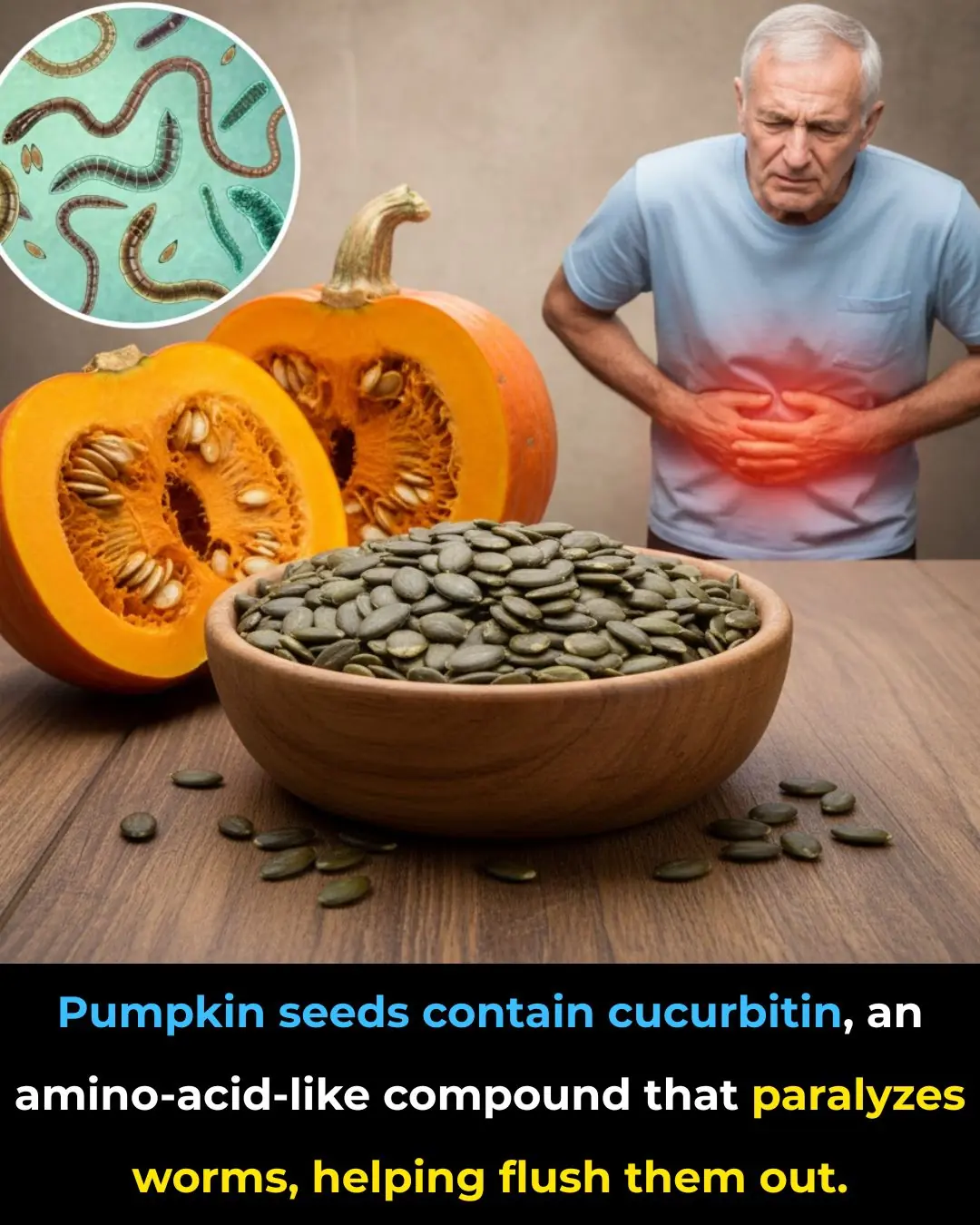
Pumpkin seeds have been used in traditional medicine for centuries, especially as a natural remedy to help the body deal with intestinal parasites. Unlike many pharmaceutical treatments, pumpkin seed therapy doesn’t work by killing worms directly. Instead, it relies on special plant compounds that temporarily paralyze parasites, making it easier for the body to remove them naturally.
In this article, we’ll explore how pumpkin seeds work against intestinal worms, what science says about their active compounds, and how people traditionally use pumpkin seeds for digestive and overall health. We’ll also look at other potential benefits of pumpkin seeds and important safety notes you should know.

Pumpkin seeds (also called pepitas) are rich in nutrients, including:
Protein and healthy fats
Zinc, magnesium, and iron
Antioxidants
Plant compounds such as cucurbitacins and cucurbitin
The key compound often mentioned in traditional parasite remedies is cucurbitin (sometimes grouped under cucurbitacins in popular articles). This amino-acid-like compound is believed to affect the nervous system of certain intestinal worms.
Rather than poisoning the parasites, cucurbitin interferes with their ability to move and attach to the intestinal wall.
Intestinal parasites survive by clinging tightly to the lining of the digestive tract. This grip allows them to resist normal bowel movements and stay in place for long periods.
Pumpkin seed treatment works differently from conventional drugs:
Temporary paralysis
The active compounds in pumpkin seeds can temporarily paralyze certain worms.
Loss of grip
Once immobilized, the parasites can no longer hold onto the intestinal wall.
Natural elimination
Without their grip, the worms are more likely to be expelled from the body during normal bowel movements.
In short, pumpkin seeds don’t “kill” the parasites directly. They make it easier for your body to flush them out naturally.
Pumpkin seeds have a long history in traditional medicine systems around the world:
In parts of Europe and Asia, they were used as a folk remedy for tapeworms and roundworms.
In traditional Chinese medicine, pumpkin seeds were sometimes included in formulas aimed at supporting digestive health.
In some Latin American traditions, pumpkin seeds were used as part of natural “cleansing” routines.
Modern science has studied pumpkin seeds mostly for their nutritional value, but their traditional use against parasites is still widely discussed in natural health circles.
Important note: Pumpkin seeds are a food, not a medicine. They should not replace professional diagnosis or treatment for parasitic infections. If someone suspects they have parasites, they should consult a healthcare professional.
That said, traditional use usually focuses on raw, unsalted pumpkin seeds, because processing and heavy roasting may reduce some of the active compounds.
Common traditional approaches include:
Eating raw pumpkin seeds
People often consume a portion of raw, shelled pumpkin seeds on an empty stomach.
Grinding into a paste
Some traditions grind the seeds into a paste or mix them with a little water or honey to make them easier to eat.
Using as part of a short routine
In folk practices, pumpkin seeds are sometimes used for several days as part of a broader digestive or “cleansing” routine.
Again, these are traditional practices, not medical prescriptions. The exact amounts and methods vary widely by culture, and there is no universally agreed medical dosage for treating parasites with pumpkin seeds.
Even if you’re not interested in their traditional use for parasites, pumpkin seeds are a nutrient-dense food with several well-known benefits.
Pumpkin seeds contain fiber, which helps support:
Regular bowel movements
A healthy gut environment
Overall digestive comfort
A healthy digestive system is one of the body’s natural defenses against many gut-related issues.
Pumpkin seeds are widely studied for their role in supporting:
Prostate health
Urinary function
Bladder control
They’re often included in natural supplements aimed at men’s health, especially due to their zinc and phytosterol content.
Thanks to their healthy fats, magnesium, and antioxidants, pumpkin seeds may help support:
Healthy cholesterol levels
Blood vessel function
Overall cardiovascular health
Pumpkin seeds are rich in zinc, a mineral that plays a key role in:
Immune cell function
Wound healing
Normal growth and development
A strong immune system helps the body better defend itself against infections in general.
Pumpkin seeds contain tryptophan, an amino acid involved in the production of serotonin and melatonin, which are linked to:
Better sleep quality
Mood regulation
Relaxation
It’s important to be honest and clear here:
Medical antiparasitic drugs are designed to kill or remove specific parasites and are tested in clinical settings.
Pumpkin seeds are a traditional, supportive food that may help the body’s natural elimination process, but they are not a guaranteed cure.
For anyone with symptoms like persistent stomach pain, unexplained weight loss, anemia, or digestive problems, a proper medical test and treatment plan is the safest and most effective approach.
Pumpkin seeds can be seen as a nutritious food that supports gut health, not as a replacement for real medical care.
If you simply want to enjoy pumpkin seeds for their nutritional benefits, here are easy and safe ways to use them:
Sprinkle them on salads or soups
Add them to smoothies or yogurt
Mix them into oatmeal or granola
Eat a small handful as a snack
For general nutrition, moderation is key. Pumpkin seeds are healthy, but they are also calorie-dense.
For most people, pumpkin seeds are very safe when eaten as food. However:
Eating very large amounts may cause digestive discomfort, such as bloating or diarrhea.
People with seed allergies should obviously avoid them.
If someone has a serious medical condition or suspects a parasitic infection, they should not rely on home remedies alone.
No. Pumpkin seeds are believed to paralyze certain worms temporarily, not kill them. This may help the body expel them naturally.
No. They should not replace professional medical treatment. They can be seen as a traditional, supportive food, not a cure.
Traditional use usually prefers raw, unsalted seeds, because heat and processing may reduce some active compounds. But roasted seeds are still very nutritious as a food.
You can eat them regularly as part of a balanced diet, just in reasonable portions.
Pumpkin seeds contain natural compounds like cucurbitin that may temporarily paralyze intestinal parasites, making it harder for them to cling to the gut wall and easier for the body to eliminate them. This is why they’ve been used in traditional remedies for centuries.
However, pumpkin seeds are best seen as a nutritious, supportive food, not a medical treatment. They offer many health benefits—from supporting digestion and heart health to boosting immunity—but they should not replace proper diagnosis and treatment for parasitic infections.
If you enjoy pumpkin seeds, you’re already doing something good for your body. And if you’re dealing with real health concerns, especially suspected parasites, the smartest move is always to talk to a healthcare professional first.