On the first Saturday of October, the Marlowe Hotel wore its light the way old Richmond money wore pearls: quietly, and so that you would notice. The porte-cochère glowed under a canopy of cast iron and amber glass, the brick along Franklin Street had been washed down that afternoon, and the line of cars waiting to unload their passengers stretched back past the corner of Adams like a procession of polished beetles.
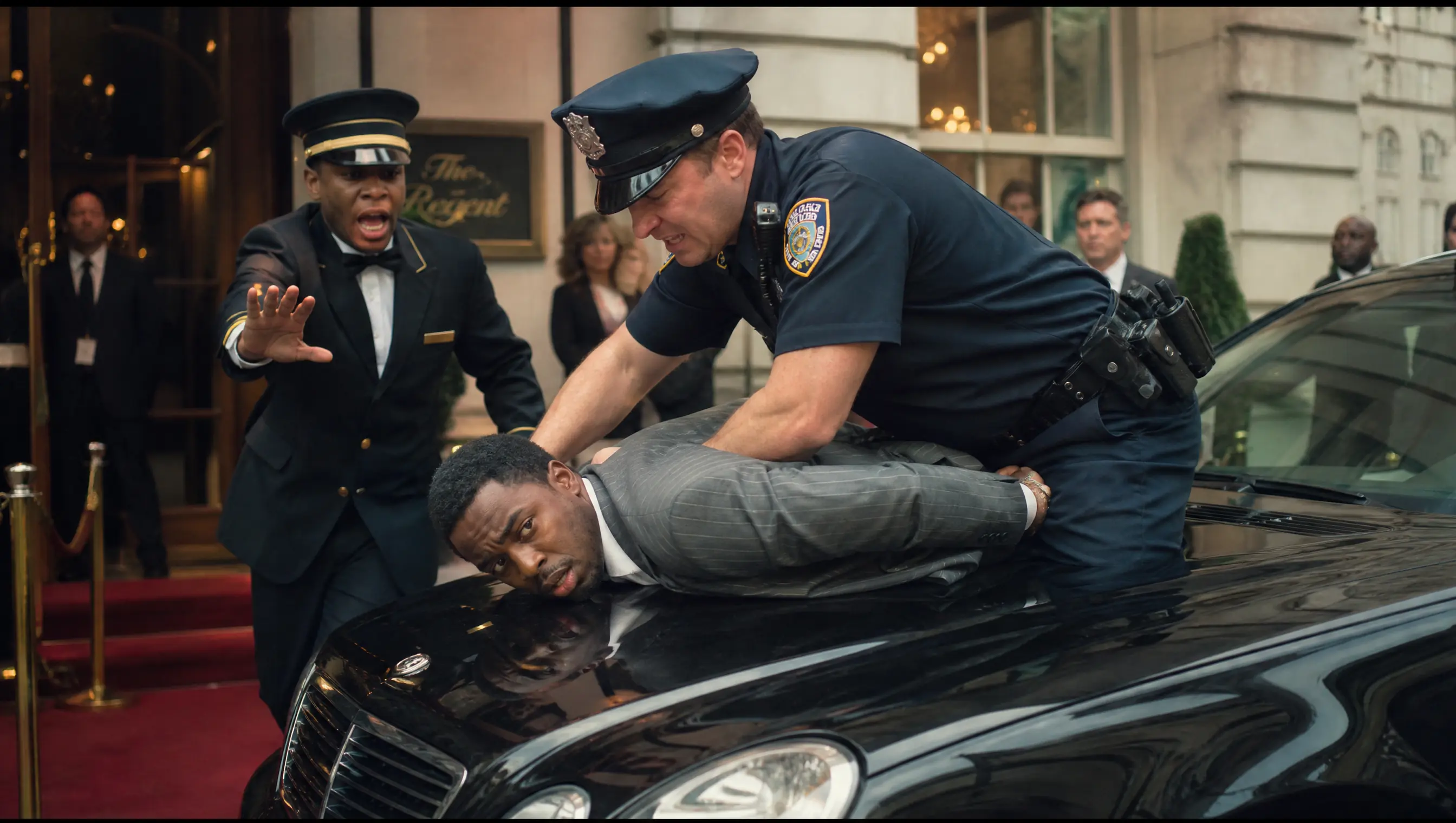
Teodoro Barrientos stood at the valet podium with forty-one keys on the board behind him and a number running in his head that had nothing to do with tickets.
Four hundred and twelve days. That was how long his asylum case had been pending in the Arlington immigration court. He knew the number the way other men knew baseball statistics, because every morning he checked the online portal before he brushed his teeth, and every morning it told him the same thing: Case pending. No hearing scheduled. His lawyer, a tired, kind woman named Ruth Halvorsen who worked out of a nonprofit above a laundromat on Hull Street, had given him three rules when she took his file.
"Show up to everything. Pay your taxes. And Teo, listen to me, never get arrested. Not for jaywalking, not for an open container, not for standing too close to somebody else's fight. Any arrest, even one that goes nowhere, gets your fingerprints into a system that talks to other systems. You understand me?"
He understood her. He had been understanding her for four hundred and twelve days.
"Ticket eighteen," said Marisol, his shift partner, sliding a stub across the podium. "Silver Range Rover. The lady says don't touch the seat position, she has a bad back."
"Everybody has a bad back on gala night," Teo said, and plucked the key from the board.
He liked this job more than he would have admitted to anyone in his family. In Tegucigalpa he had been two years into a drafting program at the Universidad Tecnológica when the men who ran his neighborhood decided that his little brother's refusal to carry packages was a debt the whole family owed. His brother was buried at nineteen. Teo left at twenty-three with a backpack, a mechanical pencil, and a folder of drawings he lost somewhere in Chiapas. Now he was twenty-six and parked other people's cars, and it was not nothing. A car was a small building that moved. You learned a person from it: what they kept in the cupholders, whether they cleaned the glass, how far back they slid the seat. You learned the street from the curb up. The Marlowe's porte-cochère had a gentle crown in the paving so that rainwater ran to the drains at either side, and the cast-iron columns had been recast from molds taken off the originals, and he knew that because the man who had restored it had told him.
That man's car came up the drive at seven-fifteen.
It was a Mercedes-Maybach S-Class in a color the brochure called something like emerald black, a green so deep it only became green when the light slid across it. The two-tone paint broke along the shoulder line in a silver seam. Teo had parked it three times before, at three other events, and every time he had felt the same small embarrassing reverence, like a boy who has been allowed to hold a trophy.