Crush Papaya Leaves Every Night – Your White Hair May Start Turning Dark and Growing Like Crazy by Morning
Garden Healthy 05/01/2026 21:09
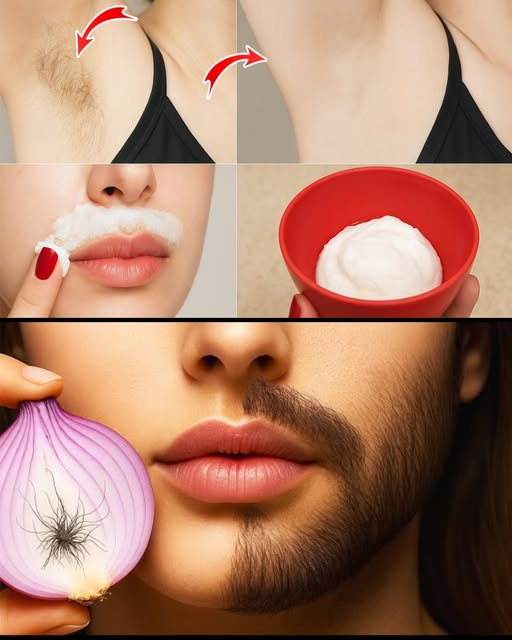
Tired of shaving every few days, dealing with stubble, razor burn, or painful ingrown hairs? You’re not alone. Many people search online for natural, permanent hair-removal solutions—especially for the face, arms, legs, underarms, or bikini area. Viral videos promise smooth skin forever using simple kitchen ingredients.
But do these remedies truly stop hair growth? Or do they just create temporary illusions?
Let’s break down what’s popular, what science actually says, and what safer, proven options exist.
Hair growth is driven by:
Hormones (androgen sensitivity)
Genetics
Age and life stage (puberty, menopause, PCOS, etc.)
Shaving cuts hair at the surface—fast, but short-lived.
Waxing and threading remove hair from the root—longer-lasting, but painful and temporary.
So it’s understandable why people want something gentler, long-lasting, and chemical-free.
Common recipe:
Grated potato + lemon juice + salt or vinegar, applied after shaving.
Claim:
Weakens follicles and permanently reduces hair growth.
Reality:
Potato juice may mildly lighten hair or exfoliate skin.
Lemon can bleach hair temporarily.
None of these penetrate deep enough to destroy hair follicles.
👉 Result: Hair may look lighter or softer—but it grows back.
Claim:
Dries on the skin and “pulls out” hair, killing follicles over time.
Reality:
Toothpaste contains detergents and menthol designed for teeth, not skin.
No ingredient here has depilatory or follicle-destroying action.
Any hair removed is surface-level or broken—not permanently eliminated.
👉 Result: Temporary smoothness at best, irritation at worst.
Many people confuse:
Hair bleaching → hair looks lighter
Exfoliation → hair feels smoother
Slower regrowth → hair cycle variation
With permanent hair removal, which requires follicle destruction. Kitchen ingredients simply can’t do that.
Using these DIY mixtures repeatedly—especially on the face or intimate areas—can cause:
Skin irritation & burns (lemon, vinegar)
Photosensitivity (dark spots after sun exposure)
Chemical dermatitis (toothpaste)
Micro-abrasions → ingrown hairs or infection
⚠️ Always patch test. Avoid broken skin, mucosal areas, or sensitive zones.
| Method | Effectiveness | Notes |
|---|---|---|
| Laser / IPL | Long-term reduction | Works best on dark hair, light skin |
| Electrolysis | Permanent | FDA-approved permanent method |
| Eflornithine cream | Slows facial hair | Prescription only |
| Waxing / threading | Temporary | Weeks of smoothness |
| Turmeric masks | Mild slowing (face) | Subtle, not permanent |
Use chemical exfoliants (AHAs/BHAs) instead of harsh scrubs
Try professional laser consultations
For facial hair, ask about prescription growth inhibitors
Focus on skin barrier health to reduce irritation
There is no scientific evidence that potato juice, lemon, toothpaste, or flour can permanently remove hair. At best, they may temporarily lighten hair or exfoliate skin. At worst, they can damage your skin barrier.
If your goal is less irritation, longer-lasting smoothness, or true hair reduction, evidence-based options are safer and far more effective.
Your skin deserves protection—not experiments driven by viral myths.
Disclaimer:
This article is for informational purposes only and does not replace professional medical advice. Always consult a dermatologist or healthcare provider before starting new hair-removal methods, especially for sensitive areas.