10 Clever Dryer Sheet Hacks That Will Transform Your Home
News 10/12/2025 11:07
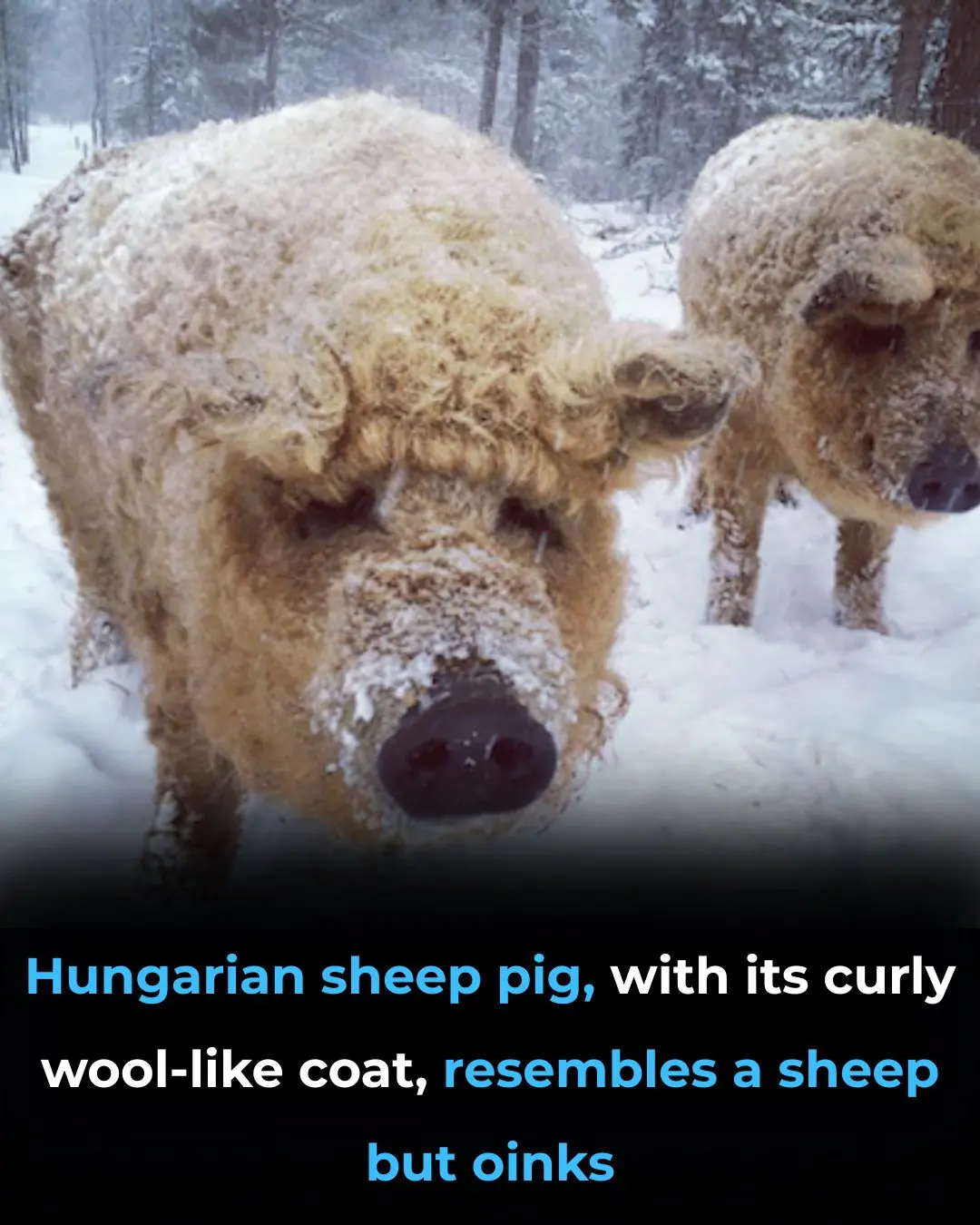
At first glance, you might wonder, “Why is that pig wearing a sheep’s coat?” But don’t let the fluffy curls fool you—this charming creature is not a confused farm animal, but one of the most unique pig breeds on Earth.
Meet the Hungarian Mangalica, often called the “Sheep Pig” because of its thick, curly, wool-like coat. This rare heritage breed has captured the curiosity of animal lovers, farmers, and food enthusiasts around the world—and once you learn its story, you’ll understand why.
The Mangalica’s most striking feature is its long, curly fur. Depending on the variety, this coat can be blonde, red, or black—and in winter, it becomes even thicker and woollier, making the animal resemble a grazing sheep from a distance.
But don’t be fooled:
It oinks, not bleats.
It roots in the soil like any other pig.
And it has the personality of a friendly, intelligent farm animal.
This unusual appearance is not a gimmick—it’s an evolutionary advantage.
The Mangalica was developed in Hungary in the 1800s by crossing native pigs with wild boars and hardy European breeds. The goal was simple: create a pig that could withstand harsh winters while requiring little maintenance.
The result was remarkable:
A thick, insulating coat
Strong resistance to disease
Ability to thrive on pasture and forage
Exceptional adaptability to cold climates
Because of these traits, Mangalicas became highly valued on traditional Hungarian farms.
By the late 20th century, modern industrial farming had nearly eliminated the Mangalica.
In the 1990s, the breed’s population dropped so drastically that it was considered close to extinction. Only a handful of farms—mostly in rural Hungary—still kept small numbers of these curly-coated pigs.
Fortunately, heritage farmers and conservationists stepped in. Through coordinated breeding programs and international interest, the Mangalica began to make its comeback.
Today, although still rare, the breed is no longer endangered and is gaining global appreciation.
Beyond its adorable appearance and remarkable history, the Mangalica stands out for several unique qualities:
Its woolly curls offer insulation in winter, but during the hot months…
➡️ The Mangalica actually needs a haircut!
Farmers often shear them to keep them cool—an unusual practice for pigs.
Mangalica pork is known for:
Rich marbling
High levels of healthy fats
Deep, savory flavor
Chefs compare it to fine Wagyu beef, making it a luxury ingredient in gourmet cooking.
Mangalicas are:
Calm and easy to handle
Excellent for free-range farming
Naturally resistant to many diseases
This makes them perfect for sustainable agriculture.
What nearly disappeared has now become a symbol of revival.
Heritage farms, food enthusiasts, and conservation organizations across Europe and North America have embraced the Mangalica. Farmers praise its resilience, chefs admire its meat quality, and animal lovers adore its quirky charm.
From near extinction to global fascination, the “Sheep Pig” is winning hearts around the world.
The Mangalica proves that nature still has surprises left for us. It may look like a sheep, sound like a pig, and live like a farm animal—but its story is one of resilience, rarity, and remarkable transformation.
🧬 Looks like a sheep. Oinks like a pig. Lives like a legend.