When Sophie Miller first walked into Rosemont High, she knew exactly what kind of school it was.
The kind where everyone had already known each other since kindergarten.
The kind where girls wore glossy lip balm, tiny shoulder bags, denim skirts, and butterfly clips that matched their notebooks. The kind where boys leaned against lockers in varsity jackets like they were posing for yearbook photos they had not agreed to take. The kind where the cafeteria had an invisible map: athletes in the middle, cheerleaders near the windows, theater kids by the vending machines, skaters near the side doors, and honor students close enough to the exit to escape quickly.
Sophie noticed all of it in the first five minutes.
She always noticed things.
That was what happened when you were used to being the new girl.
Her mother had moved them three times in four years, following nursing jobs from Arizona to Nevada to Southern California. Each move came with a new apartment, a new school, a new bedroom that never felt worth decorating, and a new set of faces already arranged into groups that had no empty spaces.
Sophie was seventeen now, a senior, which made transferring worse.
By senior year, everyone had history.
Inside jokes.
Old crushes.
Freshman year disasters.
Homecoming photos.
Prom expectations.
Sophie had none of that.
She had one navy backpack, three thrift-store cardigans, a pair of worn black Converse, and a spiral notebook full of song lyrics she had never shown anyone.
Rosemont High was painted pale cream with red brick columns and palm trees lining the front walkway. It looked cheerful in the September sunlight, like a school from a teen movie where everyone found love by spring.
Sophie did not trust cheerful buildings.
They usually hid complicated people.
Her first morning went exactly as badly as she expected.
In English, Mrs. Donnelly introduced her too brightly.
“Class, this is Sophie Miller. She just moved here from Henderson, Nevada. Let’s make her feel welcome.”
The class looked up for three seconds.
Then most people looked back down.
One girl with perfect blonde highlights whispered something to the girl beside her. They both glanced at Sophie’s cardigan, which was faded green and missing one button near the sleeve.
Sophie pretended not to notice.
She always pretended not to notice.
Mrs. Donnelly pointed toward an empty desk in the second row.
“You can sit there, Sophie.”
The desk was directly in front of a boy who looked like he belonged on a billboard for expensive cologne.
Dark blond hair.
Easy smile.
White T-shirt under a navy zip-up jacket.
Watch that probably cost more than Sophie’s entire closet.
He leaned back in his chair with the careless comfort of someone who had never had to wonder where to sit at lunch.
Sophie slid into the desk and pulled out her notebook.
Behind her, the boy said quietly, “Hey.”
She turned halfway.
“Hi.”
“I’m Carter.”
“Sophie.”
“I heard.”
Of course he had.
Everyone had heard.
The new girl’s name was public property for at least one day.
Carter smiled. “Need help finding classes?”
“No.”
The answer came out too fast.
His smile did not disappear, but it changed slightly.
“Okay,” he said. “Cool.”
Sophie turned back around.
She knew she sounded rude.
She also knew what happened when popular boys were nice to girls like her.
Sometimes it was a joke.
Sometimes it was boredom.
Sometimes it was pity.
Sophie hated pity most.
At lunch, she carried her tray into the cafeteria and stopped near the entrance.
The noise hit her first.
Laughter, plastic trays, chairs scraping, the pop song playing from someone’s portable CD player before a teacher told them to turn it off.
Then came the map.
Every table already owned.
Every chair already claimed.
Sophie scanned the room quickly, pretending she was looking for someone instead of trying not to look lost.
Near the center table, Carter sat with a group that looked exactly like she expected: two football players, three cheerleaders, one girl with a pink sweater and perfect posture, and a boy in a white baseball cap turned backward.
Carter looked up.
Their eyes met.
He lifted one hand slightly, like he might wave her over.
Sophie looked away.
She walked past the main tables, past the vending machines, past the bulletin board covered in homecoming flyers, and sat alone at the smallest table near the side doors.
No one joined her.
That was fine.
She ate half her sandwich, opened her notebook, and wrote:
New school.
Same cafeteria.
Different weather.
She stared at the words.
Then crossed them out.
Too dramatic.
Across the cafeteria, Carter watched her.
He did not know why.
He should have been listening to Madison Vale complain about prom committee drama, or Tyler Rhodes talk about last Friday’s football game, or his best friend Ben Foster explain why he definitely could start a band if someone bought him a bass.
Instead, Carter watched the new girl sit alone with her shoulders slightly hunched, writing in a notebook like the noise around her was something she could fold herself away from.
Madison noticed first.
“Carter.”
He blinked. “What?”
She followed his gaze.
“Oh. New girl.”
“Her name is Sophie.”
Madison raised an eyebrow. “You know her name?”
“She sits in front of me in English.”
“So does half the senior class.”
Ben leaned over. “She’s cute. Sad, but cute.”
Madison made a face. “Ben.”
“What? I said cute.”
Carter looked back at Sophie.
She was not trying to be cute.
That made her more interesting.
Madison stirred her yogurt. “She looks like she shops in old people’s closets.”
Carter frowned.
“That was unnecessary.”
Madison smiled sweetly. “I’m sorry. Does your charity project have feelings?”
The table laughed.
Carter did not.
He looked down at his tray.
He was used to Madison talking like that. Everyone was. She was not always cruel, exactly. She just treated people outside their circle like background characters in a life designed around her.
Carter had dated her for two months junior year.
It had been exhausting.
By the end, he felt like he had been cast in the role of boyfriend and given no lines except “you look amazing.”
Madison still acted like he belonged to her in some vague social way.
Carter was tired of belonging to things he had not chosen.
After school, Sophie stood near the bus loop, checking the schedule taped to the pole.
The Southern California sun was too bright, and her backpack strap dug into her shoulder. She had made it through the first day with no major disaster, which she considered a victory.
Then a silver convertible pulled up near the curb.
Of course it did.
Carter leaned across the passenger seat.
“Hey. Need a ride?”
Sophie stared at him.
“No.”
“You sure? Buses run late here sometimes.”
“I like buses.”
That was a lie.
No one liked buses.
Carter looked amused. “That’s a unique hobby.”
Sophie adjusted her backpack.
“Do you offer rides to every transfer student, or am I special?”
The words came out sharper than she intended.
Carter’s smile faded.
“I was just trying to help.”
Sophie felt a small pinch of guilt.
But pride stepped in front of it.
“I didn’t ask.”
A horn honked behind his car.
Carter looked at her for one more second, then nodded.
“Right. Sorry.”
He drove away.
Sophie watched the convertible disappear through the parking lot.
She told herself she had done the right thing.
A boy like Carter did not just offer rides to girls like her.
There had to be a catch.
There was always a catch.
But when the bus finally arrived twenty-two minutes late, crowded and hot, Sophie sat near the window and wondered why his disappointed expression stayed in her mind all the way home.
Over the next two weeks, Sophie built a quiet life at Rosemont High.
She sat in front of Carter in English.
She ate lunch alone.
She took careful notes in history.
She avoided Madison’s table.
She joined no clubs.
She wrote song lyrics in the margins of worksheets and hid them before anyone could see.
Carter still said hi sometimes.
Sophie answered politely.
Nothing more.
He stopped offering rides.
That should have made her feel better.
It didn’t.
Then came the senior showcase announcement.
Mrs. Donnelly stood before English class one Friday morning, smiling like she had invented excitement.
“As part of Rosemont’s annual fall arts week, every senior English class will contribute to the showcase. Students may perform original writing, music, short scenes, spoken word, or creative readings.”
Groans filled the room.
Sophie sank lower in her seat.
No.
Absolutely not.
Mrs. Donnelly continued, “This will count as a major grade.”
More groans.
“You’ll be paired with a partner to prepare a short performance or presentation.”
Sophie closed her eyes.
Of course.
“Partners are assigned,” Mrs. Donnelly said.
Of course they were.
She read names.
Sophie waited with a feeling of doom.
“Sophie Miller and Carter Hayes.”
The room made a small sound.
Not loud.
But enough.
Sophie felt it.
Behind her, Carter leaned forward slightly.
“Guess you’re stuck with me,” he whispered.
Sophie did not turn around.
“Tragic.”
He laughed quietly.
This time, she almost smiled.
Almost.
Their first planning session was in the library after school.
Sophie arrived with a notebook and three possible presentation ideas that involved absolutely no singing, acting, or emotional vulnerability.
Carter arrived ten minutes late with two sodas and a bag of gummy worms.
Sophie looked at the clock.
“You’re late.”
“I brought snacks.”
“Time management cannot be replaced by candy.”
He placed the gummy worms on the table. “Have you tried?”
She stared at him.
He sat down across from her.
“Okay, serious mode. What are we doing?”
“I made a list.”
“Of course you did.”
She narrowed her eyes.
He held up both hands. “Not an insult.”
“It sounded like one.”
“Then I apologize to the list.”
Sophie opened her notebook.
“We can analyze a poem, read a scene from a play, or do a short presentation on narrative voice.”
Carter looked pained.
“Wow.”
“What?”
“You chose the three options most likely to put the audience into a medical coma.”
“This is for a grade, not entertainment.”
“It’s a showcase. Entertainment is implied.”
Sophie tapped her pen against the table.
“Do you have a better idea?”
Carter leaned back.
“You write.”
She froze.
“What?”
“You write. In your notebook. All the time.”
“That doesn’t mean anything.”
“It means you write.”
“It means I like paper.”
He smiled.
“Sophie.”
She hated the way he said her name.
Soft, like he was not trying to win an argument.
“No,” she said.
“You don’t even know what I’m suggesting.”
“You’re suggesting I share something personal in front of people who still call me new girl because remembering my name is too much effort.”
Carter was quiet.
That shut him up.
Good.
Except he did not look offended.
He looked like he understood.
Finally, he said, “Okay.”
Sophie blinked.
“Okay?”
“Okay. We won’t use your writing.”
She did not know why that surprised her.
Maybe because she was used to people pushing.
Carter looked down at her list.
“But we are not doing narrative voice unless you want Mrs. Donnelly to regret becoming a teacher.”
Sophie bit back a laugh.
He saw it.
His smile returned.
“There it is.”
“What?”
“You almost laughed.”
“I did not.”
“You did. Tiny laugh. Very rare. Like seeing a shy woodland animal.”
She rolled her eyes.
“Please never compare me to forest life again.”
For the next hour, they argued their way into an idea.
A performance about first impressions.
Half scripted dialogue.
Half spoken-word style narration.
Carter would write from the perspective of someone everyone assumed had an easy life.
Sophie would write from the perspective of someone everyone ignored.
It was Carter’s idea.
Sophie hated that it was good.
By the time the library closed, they had a rough outline.
As they packed up, Carter glanced at her notebook.
“I won’t ask to read it,” he said.
Sophie paused.
“Good.”
“But if you ever want someone to…”
“I don’t.”
“Okay.”
Again, no push.
No joke.
No pity.
Just okay.
Sophie walked home that evening because her mother had the car and the bus route was slow. The sky turned soft pink above the palm trees, and the air smelled like cut grass and someone’s sprinklers.
Halfway down Pine Avenue, a silver convertible slowed beside her.
Sophie did not look over.
Carter called, “I know, I know. You like walking too.”
She kept walking.
He drove slowly beside the curb.
“That one’s actually believable.”
“Are you following me?”
“No. I live three streets over.”
Of course he did.
In the nice neighborhood with mailboxes shaped like tiny houses and lawns that looked professionally brushed.
Sophie adjusted her backpack.
“I’m fine.”
“I know.”
“Then why are you driving at sidewalk speed like a creep?”
He grinned.
“Because if I ask if you need a ride, you’ll say no.”
“I will.”
“So I’m not asking.”
She stopped walking and looked at him.
He stopped the car.
They stared at each other.
Finally, Sophie sighed.
“You’re very annoying.”
“I’ve heard that.”
She glanced down the long street, then at the heavy backpack on her shoulder.
Carter leaned across and opened the passenger door.
“No pity,” he said. “Just transportation.”
Sophie hesitated.
Then she got in.
The car smelled like mint gum and clean leather. A CD case sat open between the seats, filled with burned discs labeled in messy handwriting: ROAD MIX, SAD SONGS, BEN’S TERRIBLE PLAYLIST, MOM’S CAR ONLY.
Sophie buckled her seatbelt.
Carter glanced over.
“What?”
“Nothing.”
“You look surprised.”
“I expected worse music.”
He gasped. “You haven’t heard it yet.”
He pressed play.
A bright pop song burst through the speakers.
Sophie immediately reached for the volume.
“No.”
Carter laughed. “What? This is a classic.”
“This is a crime.”
“You’ve been in my car for twelve seconds and already attacked my taste.”
“You invited honesty.”
“I invited transportation.”
She looked out the window, but she was smiling.
Carter noticed.
He did not say anything.
Smart boy.
That became their routine.
Not officially.
Sophie refused to call it a routine.
But three days a week, after library meetings, Carter drove her home.
At first, they talked only about the showcase.
Then school.
Then music.
Then small things.
Sophie learned that Carter hated being called rich even though he was, in fact, rich. His father owned three car dealerships and sponsored half the school’s sports banners. His mother had left when he was twelve and now lived in Chicago with a new husband and twin daughters.
Carter said that last part like it did not matter.
Sophie knew it did.
Carter learned that Sophie’s mother worked twelve-hour shifts and fell asleep at the kitchen table. That Sophie used to play guitar before they sold it during the second move. That she missed Arizona sunsets but pretended not to because missing things made leaving harder.
He did not make fun of her cardigans anymore.
He told her one looked like something a girl in an indie music video would wear.
She said that was not a compliment.
He said it absolutely was.
In school, people noticed.
Of course they did.
Rosemont High noticed everything.
By October, Madison Vale had started watching Sophie like she was a stain on a white dress.
The first comment came in the girls’ bathroom before fourth period.
Sophie was washing her hands when Madison walked in with two girls from the cheer squad.
Madison looked at Sophie through the mirror.
“Cute cardigan.”
Sophie turned off the faucet.
“Thanks.”
“Very… grandmother at a yard sale.”
The other girls laughed.
Sophie dried her hands slowly.
There were many replies she could have given.
Sharp ones.
Mean ones.
But old habits won.
Do not react.
Do not give them anything.
She threw the paper towel away and walked out.
In the hallway, she nearly collided with Carter.
He looked at her face.
“What happened?”
“Nothing.”
“Sophie.”
“It’s nothing.”
Madison came out of the bathroom behind her.
Her smile brightened when she saw Carter.
“Hey, Carter.”
He looked from Madison to Sophie.
Understanding crossed his face.
“What did you say to her?”
Madison blinked innocently.
“Excuse me?”
Sophie’s stomach tightened.
“Carter, don’t.”
Madison laughed. “Relax. I complimented her sweater.”
“Cardigan,” Sophie corrected quietly before she could stop herself.
Carter almost smiled, then remembered he was angry.
Madison folded her arms.
“Wow. You’re really doing this?”
“Doing what?” Carter asked.
“Acting like she’s your girlfriend because you have some new-girl rescue fantasy?”
The hallway went quiet.
Sophie felt heat rush to her face.
Carter’s jaw tightened.
“She’s standing right here.”
Madison glanced at Sophie.
“I know.”
That hurt more than the cardigan comment.
Sophie stepped back.
“I have class.”
Carter turned toward her.
“Sophie, wait.”
But she was already walking away.
She skipped lunch and hid in the library.
She hated herself for it.
Not because she was upset.
Because Madison had made her feel small, and Carter had seen it.
At three thirty, Sophie found him waiting outside the library.
He stood near the double doors, hands in his jacket pockets, looking less polished than usual.
“You skipped lunch,” he said.
“You track my meals now?”
“No. I just noticed you weren’t there.”
“I’m allowed to be places.”
“I know.”
She shifted her backpack.
“I don’t want to talk about Madison.”
“Okay.”
“And I don’t need defending.”
“I know.”
“You keep saying that.”
“Because I do know. I just didn’t act like it.”
That stopped her.
Carter looked down the hallway, then back at her.
“I’m sorry. I made it worse.”
Sophie did not answer.
He continued.
“I saw her being cruel, and I wanted to shut it down. But I didn’t think about how it would feel for you to become the center of hallway drama.”
She looked at him carefully.
That was the exact thing she had not known how to explain.
“You actually understand that?”
“I’m capable of thought.”
“Occasionally.”
He smiled a little.
She sighed.
“Madison’s right about one thing.”
His smile disappeared.
“What?”
“People think you’re saving me.”
“I don’t.”
“But they think it.”
“I can’t control what they think.”
“I can.”
Carter frowned.
Sophie looked down.
“I can stop giving them reasons.”
His expression changed.
“You mean stop hanging out with me.”
She did not say yes.
She did not have to.
Carter looked hurt, and Sophie hated that she noticed.
“Sophie,” he said quietly, “I’m not hanging out with you because you’re new.”
She swallowed.
“Then why?”
He looked at her like the answer scared him.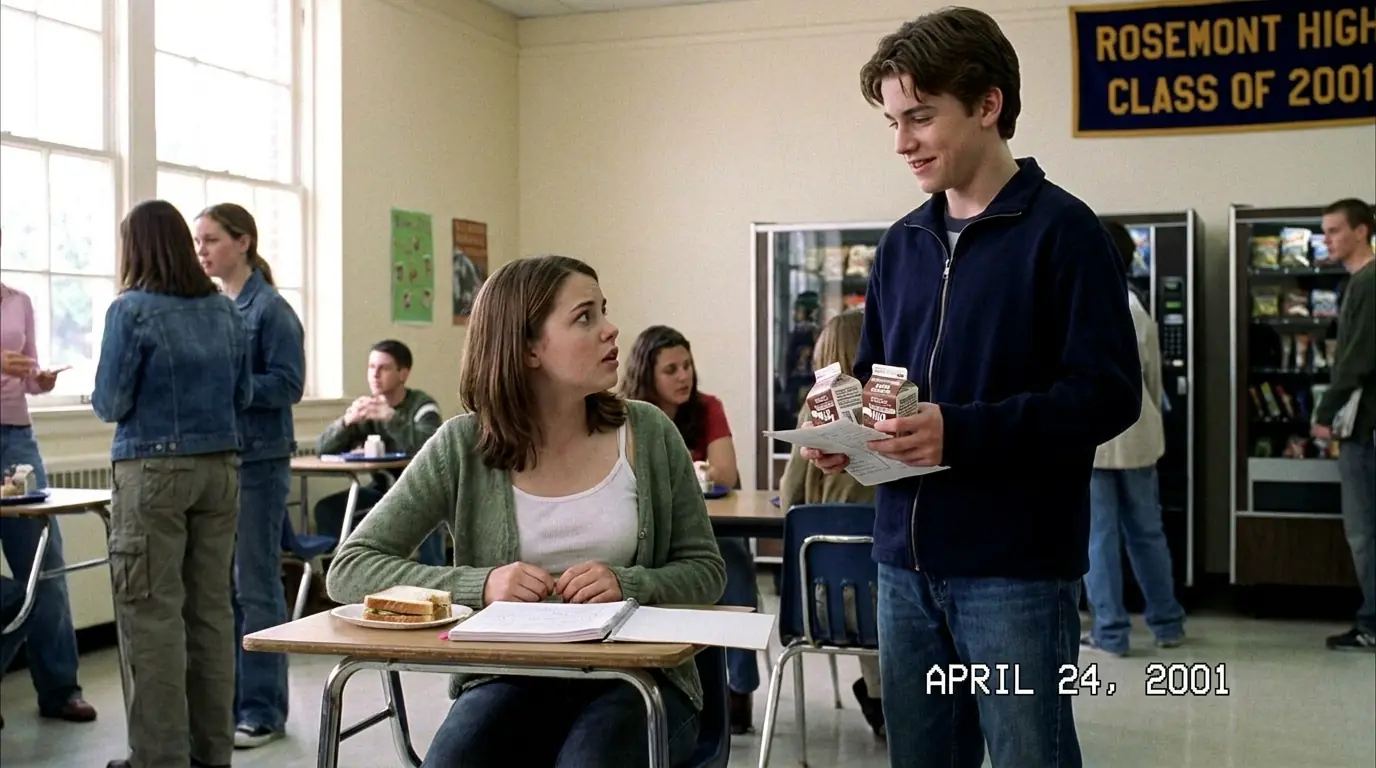
“Because you’re the first person here who doesn’t act like my life is something they want.”
Sophie’s grip tightened on her backpack strap.
Carter continued, voice lower.
“And because when you’re not trying to scare people away, you’re funny. And smart. And honest. And you hear songs differently than anyone I know.”
The hallway felt too quiet.
Sophie wanted to run.
She wanted to believe him.
Believing him seemed more dangerous.
“I don’t know how to do this,” she whispered.
“Do what?”
“Be someone people notice.”
Carter stepped closer, but not too close.
“You don’t have to be someone people notice.”
His voice softened.
“You can just be someone I know.”
The words went straight through every wall Sophie had built.
For one moment, she almost told him everything.
That she hated eating lunch alone.
That she missed having a bedroom that felt permanent.
That she wrote songs because it was the only way to say things without being interrupted.
That when he looked at her, she felt visible in a way that terrified her.
But the warning bell rang.
Students flooded the hallway.
The moment broke.
Sophie stepped back.
“I have to go.”
Carter nodded, though his face fell.
“Yeah.”
She walked away.
This time, he did not follow.
The senior showcase was one week later.
By then, Sophie and Carter had rebuilt a careful version of their partnership.
They met in the library.
They practiced the script.
They avoided anything that felt too personal.
No more rides unless necessary.
No more music arguments.
No more almost-confessions outside the library.
Sophie told herself this was better.
Safer.
But every time Carter smiled at someone else in the hallway, her chest ached.
Every time Madison brushed past her with a smug look, Sophie wanted to disappear and fight at the same time.
On the night of the showcase, Rosemont High’s auditorium buzzed with parents, students, teachers, and too much perfume.
Sophie stood backstage wearing a black dress she had bought for seven dollars at a thrift store and a cropped lavender cardigan June from chemistry had helped her borrow from the costume closet. Her hair was pinned back with two tiny silver clips, and her Converse were clean enough to pass for intentional.
Carter stood beside her in dark jeans, a white button-up shirt, and a navy blazer.
He looked unfairly good.
Sophie tried not to notice.
He looked at her.
“You okay?”
“Fine.”
“Real answer?”
She exhaled.
“Terrified.”
He nodded.
“Me too.”
She looked at him skeptically.
“You? Terrified?”
“I have depth, remember?”
“That remains under review.”
He smiled.
Then his gaze softened.
“You look beautiful.”
Sophie froze.
Her heart reacted before her brain could stop it.
“Don’t say things like that.”
“Why?”
“Because I might believe you.”
Carter looked at her.
The backstage noise faded around them.
“You should,” he said.
Before she could answer, Mrs. Donnelly appeared with a clipboard.
“You’re up next.”
Sophie turned toward the stage.
Her hands were shaking.
Carter noticed.
He reached for her hand, then stopped.
Asking without words.
Sophie hesitated.
Then she took it.
They walked onto the stage together.
The auditorium lights blinded her at first. She could not see individual faces, only shapes in rows. Somewhere in the front, Mrs. Donnelly smiled encouragingly. Somewhere in the back, Madison was probably waiting for Sophie to fail.
Carter squeezed her hand once before letting go.
Their performance began with Carter.
“When people see me,” he said into the microphone, “they think they know the story. Rich kid. Nice car. Easy life. Smile big enough to cover anything.”
A murmur moved through the audience.
Sophie listened.
His voice was steady, but she knew him well enough now to hear the nerves underneath.
“They don’t ask what it feels like when everyone wants your life, but no one asks if you’re lonely in it.”
Sophie’s throat tightened.
Then it was her turn.
“When people see me,” she said, “they think they know the story too. New girl. Quiet girl. Girl sitting alone at lunch, writing things nobody reads.”
Her voice trembled.
She looked toward Carter.
He was watching her with complete focus.
Not pity.
Not pressure.
Just belief.
She kept going.
“They don’t ask how many times you can start over before you stop unpacking your heart.”
The auditorium went quiet.
The script was supposed to continue into their planned dialogue.
But Sophie looked out at the crowd and suddenly thought of every cafeteria table she had avoided, every joke she had swallowed, every song she had hidden.
She changed the words.
Carter’s eyes widened slightly.
But he did not interrupt.
Sophie took a breath.
“I used to think being invisible was safer. If people didn’t notice me, they couldn’t leave me. They couldn’t laugh at the wrong thing. They couldn’t decide I didn’t belong before I even tried.”
Her voice grew stronger.
“But invisibility is not the same as safety. Sometimes it is just loneliness with better hiding places.”
The audience stayed silent.
Sophie looked at Carter.
“And sometimes someone saves you a seat in a place you were afraid to enter. Not because you are helpless. Not because they need to rescue you. But because they want you there.”
Carter forgot his next line.
Sophie saw it happen.
For the first time all night, she smiled.
He recovered.
“When someone lets you be known,” he said softly, “you start realizing maybe the story people tell about you is not the only one.”
They ended together.
“Maybe first impressions are just the rough draft.”
For one breath, nothing happened.
Then the auditorium erupted.
Sophie stood frozen as applause crashed over her.
People were standing.
Mrs. Donnelly was crying.
Even Ben Foster in the back row shouted, “That was actually awesome!”
Carter turned to Sophie, smiling like he could barely believe her.
“You changed the script,” he whispered.
She whispered back, “You kept up.”
“Barely.”
They laughed.
When they walked offstage, Sophie felt lighter than she had in years.
Then Madison appeared backstage.
For once, she did not look smug.
She looked annoyed.
“That was cute,” Madison said.
Sophie held her notebook against her chest.
“Thanks.”
Madison glanced at Carter.
“Very touching. New girl gets a makeover and a boyfriend. Classic.”
Carter stepped forward, but Sophie touched his arm.
This time, she did not need him to answer for her.
Sophie looked at Madison.
“I didn’t get a makeover.”
Madison raised an eyebrow.
Sophie continued, “I got tired of shrinking.”
The words landed.
Madison opened her mouth, then closed it.
For once, she had no perfect reply.
Sophie walked past her.
Carter followed, grinning.
“That,” he said quietly, “was incredible.”
Sophie looked up at him.
“Don’t sound so surprised.”
“I’m not surprised. I’m impressed.”
She smiled.
“I’ll allow it.”
After the showcase, everything changed.
Not all at once.
Real life was not a movie, no matter how much Rosemont High tried to dress like one.
Sophie did not become instantly popular.
Madison did not become kind overnight.
The cafeteria did not suddenly open every table like a magical kingdom of acceptance.
But people started saying Sophie’s name.
Not new girl.
Sophie.
A girl from chemistry asked where she found her cardigan.
A boy from history said her performance made him think about transferring schools in middle school.
Mrs. Donnelly asked if she had ever considered submitting her writing to the school literary magazine.
And Carter began saving her a seat at lunch.
Not at the center table.
Not exactly.
At first, he sat with her near the side doors.
Then Ben joined.
Then June from chemistry.
Then Ashley from yearbook.
Then, one day, Sophie looked up and realized she was not sitting alone anymore.
Carter did not make a big deal out of it.
That was what she liked most.
He did not act like he had saved her.
He simply sat beside her like there was nowhere else he would rather be.
By winter, they were not officially dating.
Everyone assumed they were.
Sophie denied it.
Carter did not.
This annoyed her.
“You could help,” she said one afternoon as they walked past the lockers.
“With what?”
“People think we’re together.”
He looked at her. “People are very intuitive.”
She stopped.
He stopped too, smiling.
“Carter.”
“Sophie.”
“We are not together.”
“Okay.”
“You agree?”
“I agree that you said that.”
She stared at him.
“You are impossible.”
“I’ve been told.”
She walked away, but he caught up easily.
After a few steps, he said, “Do you want me to tell people we’re not?”
Sophie looked down.
That was the problem.
She did not.
She wanted to be braver than denial.
But wanting did not make bravery easy.
“I don’t know,” she admitted.
Carter nodded.
“Okay.”
That was all.
No pressure.
No guilt.
No dramatic hallway speech.
Just okay.
By February, prom posters appeared around Rosemont High.
A Night In Paris.
Sophie thought the theme was ridiculous, mostly because the Eiffel Tower on the posters looked like a bent radio antenna.
Madison was in charge of decorations, which meant everything was pink, glittery, and slightly threatening.
Carter asked Sophie to prom on a Wednesday.
Not with balloons.
Not with a giant sign.
Not in front of the whole school.
He waited outside the library after her literary magazine meeting, holding two paper cups of hot chocolate and a folded piece of notebook paper.
Sophie looked at him.
“What is that?”
“A question.”
“Written down?”
“I wanted to get it right.”
Her heart started beating too fast.
“Carter.”
He unfolded the paper.
On it, in messy handwriting, he had written:
Will you go to prom with me?
No pressure.
No audience.
No glitter.
Just me asking you because I want to go with you.
Sophie stared at it.
Her chest felt painfully full.
“You really wrote ‘no glitter’?”
“I know your values.”
She laughed, but her eyes burned.
Carter’s smile faded a little.
“Is that a no?”
She looked up.
“No.”
“No, it’s not a no?”
“Yes.”
“Yes, it’s not a no?”
She groaned. “You are ruining this.”
“I’m nervous.”
“You’re Carter Hayes.”
“And you’re Sophie Miller.”
That stopped her.
Because he said it like her name meant something.
Not because she was new.
Not because she was quiet.
Because she was Sophie.
She took the paper from him.
“Yes,” she said softly. “I’ll go to prom with you.”
Carter’s face lit up in a way she had never seen before.
Not charming.
Not practiced.
Just happy.
He handed her the hot chocolate.
“Cool,” he said, trying to sound casual.
Sophie smiled.
“You practiced this?”
“Three times.”
“Still landed weird.”
“But successful.”
“Barely.”
He laughed.
Then, for the first time, Sophie reached for his hand in the hallway.
Carter looked down at their joined hands.
Then back at her.
He did not say anything.
Smart boy.
Prom night arrived in May with perfect weather, a pink-orange sunset, and half the senior class taking photos on front lawns across town.
Sophie got ready in her small apartment while her mother cried softly behind her.
“Mom,” Sophie said, laughing. “You’re going to make me cry.”
“I’m allowed,” her mother said. “You look beautiful.”
Sophie looked in the mirror.
Her dress was pale blue, simple, and found on clearance after three stores and one near-disaster with a zipper. June had curled her hair loosely and clipped back one side with silver barrettes. She wore her black Converse under the dress because heels felt like betrayal.
For the first time in a long time, Sophie recognized herself and liked what she saw.
The doorbell rang.
Her mother gasped like she was in a soap opera.
“Mom.”
“I’m fine. I’m normal.”
“You are not normal.”
Sophie opened the door.
Carter stood there in a dark suit with a blue tie that matched her dress better than coincidence could explain. He held a small corsage and looked so stunned that Sophie immediately forgot how to stand.
“Hi,” she said.
“Hi.”
Her mother whispered, “Oh my goodness.”
Carter blinked. “You look…”
Sophie waited.
“Like a song,” he said.
Her mother made a tiny sound.
Sophie’s face warmed.
“That was dangerously smooth.”
“I swear I didn’t practice that one.”
“Good. It would be embarrassing if you had.”
He smiled.
Her mother took too many pictures.
Carter was polite through all of them.
Even when she made him stand near the ficus.
Especially when she made him stand near the ficus.
At prom, the Rosemont Hotel ballroom glowed with pink lights, fake Paris street signs, glittering tables, and a cardboard Eiffel Tower that Sophie still believed looked structurally unsound. Girls in satin dresses posed with disposable cameras. Boys adjusted ties like they were being strangled. Teachers guarded the punch table with unnecessary seriousness.
Sophie entered beside Carter and felt the room notice.
For once, she did not shrink.
Madison stood near the photo backdrop in a silver dress, surrounded by her usual circle. Her eyes moved over Sophie, then to Carter.
For a second, Sophie braced herself.
Madison looked away.
It felt like victory.
Carter leaned closer.
“You okay?”
Sophie smiled.
“I’m good.”
They danced badly.
Carter was worse than expected.
“You played football for years,” Sophie said, laughing as he stepped on her foot.
“Football does not prepare a person for prom choreography.”
“There is no choreography.”
“Then why am I failing?”
She laughed harder.
He smiled like that was the whole point.
Later, when a slow song began, they moved to the edge of the dance floor.
Carter held her carefully, like he still remembered the girl who needed room to decide.
Sophie looked around the ballroom.
At the tables.
The lights.
The ridiculous Eiffel Tower.
The groups of students who had once seemed impossible to enter.
Then she looked at Carter.
“You saved me a seat,” she said.
He frowned slightly.
“At lunch?”
“At everything.”
His expression softened.
“Sophie…”
She took a breath.
“I spent a long time thinking people leaving meant I should stop letting anyone matter. But you mattered anyway.”
Carter’s eyes searched hers.
“I didn’t mean to,” he said softly.
“I know.”
“I just wanted you there.”
She smiled.
“That’s why it worked.”
The song continued around them.
Sophie stepped closer.
“I’m still scared,” she admitted.
“Me too.”
“You don’t act like it.”
“Neither do you.”
She laughed quietly.
Then Carter reached up and tucked a loose strand of hair behind her ear.
“Can I kiss you?” he asked.
The question was so gentle that it almost hurt.
Sophie nodded.
Their first kiss was sweet, nervous, and slightly interrupted by Ben shouting, “Finally!” from three tables away.
Sophie pulled back, laughing into Carter’s shoulder.
“I’m going to throw a centerpiece at him.”
“Understandable.”
Carter kissed her forehead.
She closed her eyes.
For once, being seen did not feel dangerous.
It felt like coming home.
Graduation came three weeks later.
Rosemont High gathered on the football field under a bright June sky. Families waved programs. Seniors sweated under caps and gowns. Madison cried during the choir performance and denied it violently. Ben wore sunglasses through the entire ceremony. June decorated Sophie’s cap with tiny silver stars and the words ROUGH DRAFT, FINAL GIRL.
Sophie’s mother sat in the second row, crying before the speeches even began.
Sophie stood with the literary magazine students near the aisle, holding a printed copy of the final issue.
Inside was her piece.
First Impressions Are Rough Drafts.
Mrs. Donnelly had insisted it belonged on the front page.
Carter found Sophie after the ceremony near the side gates.
His tie was loose, his gown wrinkled, and his smile soft.
“You did it,” he said.
“So did you.”
“Barely. I almost failed economics.”
“I tutored you.”
“Exactly. Barely.”
She laughed.
He reached into his pocket and pulled out a small object.
A guitar pick.
Blue, with tiny silver lettering.
Sophie took it.
Her name was printed on one side.
On the other side were the words:
Play Anyway.
She looked up at him.
Carter shifted nervously.
“I know you don’t have a guitar right now. But you will again. And when you do…”
Sophie’s throat tightened.
“When I do?”
He smiled.
“I want to hear the songs.”
She closed her fingers around the pick.
For years, Sophie had hidden her words in notebooks because songs felt too honest to survive the world.
Now, standing in her graduation gown with Carter watching her like honesty was something worth waiting for, she thought maybe one day she would play them.
Maybe one day soon.
She stepped forward and hugged him tightly.
Around them, Rosemont High blurred into sunlight and noise.
Students cried.
Parents cheered.
Teachers tried to organize photos and failed.
Madison walked by, paused, and said, “Cute cap.”
Sophie smiled.
“Thanks.”
Madison hesitated, then added, “Your article was good.”
It sounded painful for her to admit.
Sophie appreciated it anyway.
“Thank you.”
Madison walked away quickly, like kindness had embarrassed her.
Carter raised an eyebrow.
“Progress?”
“Maybe.”
He took Sophie’s hand.
Across the field, her mother waved for pictures.
Ben shouted something about summer.
June yelled that nobody was allowed to leave before group photos.
The future waited beyond the football field, uncertain and wide.
Sophie did not know exactly what came next.
College.
Work.
Music.
Love.
Maybe more moving.
Maybe finally staying.
But for once, uncertainty did not feel like a threat.
It felt like an opening.
She looked at Carter.
“Do you think first impressions really are just rough drafts?”
He smiled.
“I hope so. Mine made me look like a rich guy with bad music.”
“You are a rich guy with bad music.”
“Harsh.”
“But not just that.”
His smile softened.
“And you were never just the shy transfer girl.”
Sophie squeezed his hand.
“No,” she said. “I guess I wasn’t.”
They walked toward her mother together.
The sun was bright on the field. The air smelled like grass, flowers, and the last day of something they would never get back.
Sophie thought of her first lunch at Rosemont High, sitting alone near the side doors, trying to disappear into a notebook.
Then she thought of Carter saving her a seat at prom.
Not because she needed rescuing.
Because he wanted her beside him.
And maybe that was what love was, at least the kind worth keeping.
Not a grand makeover.
Not a perfect kiss.
Not a popular boy turning the quiet girl into someone new.
Love was being seen before you were ready.
Being waited for without being rushed.
Being handed a seat, a song, a place in someone’s life, and finally believing you deserved to take it.
Sophie looked down at the blue guitar pick in her palm.
Play Anyway.
She smiled.
Then she walked into the future with Carter beside her, not as the new girl anymore, but as herself.