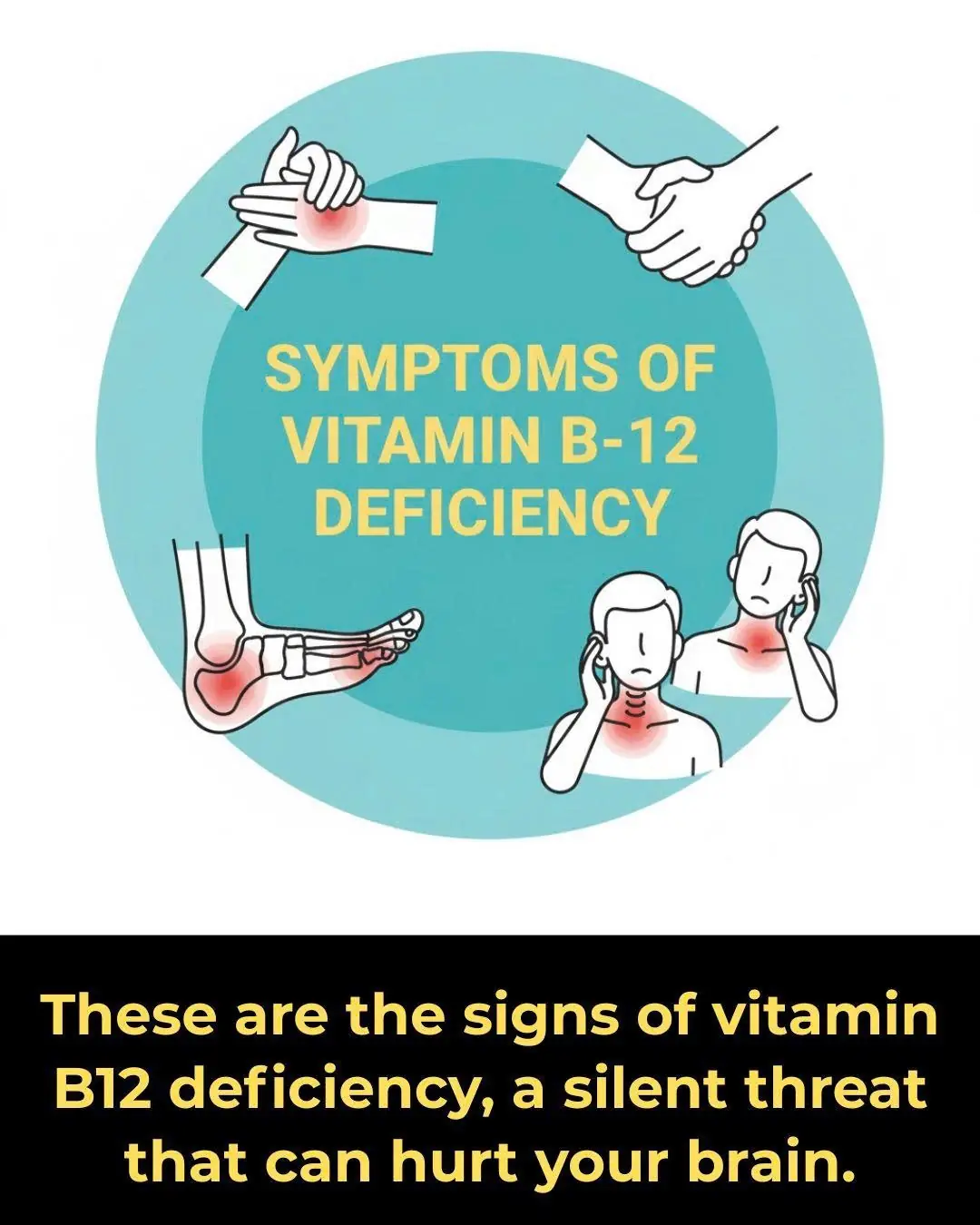
Symptoms of Vitamin B12 Deficiency
News 13/12/2025 19:23
Weird Things That Happen When You Age: What Science Reveals About the Human Body
Aging is a universal biological process, yet many of the changes it brings can feel surprising—or even strange. The infographic “Weird Things That Happen When You Age” highlights several lesser-known physical and sensory shifts that often occur gradually over time. While these changes may seem random, modern science shows that most of them are the natural result of structural, hormonal, and neurological adaptations within the body. Understanding these processes can help normalize the experience of aging and encourage healthier long-term habits.
One of the most unexpected changes is getting shorter with age. As people grow older, the cartilage between the vertebrae in the spine slowly compresses, and bone density may decrease. These changes cause a gradual reduction in height—often noticeable after middle age. Studies suggest many adults lose between 1–3 centimeters over several decades, especially if osteoporosis develops. This process is strongly linked to age-related bone remodeling and reduced collagen production (National Institute on Aging; Journal of Bone and Mineral Research).
Another common change is feeling colder more easily. Aging slows metabolic rate and reduces subcutaneous fat, both of which are important for heat production and insulation. In addition, blood vessels may become less responsive, reducing circulation to the skin. Research in thermoregulation shows that older adults have a diminished ability to maintain core body temperature, especially in cooler environments (Ageing Research Reviews; National Institutes of Health).
Many people also notice they wake up earlier as they age. This shift is driven by changes in the circadian rhythm—the body’s internal clock. Melatonin secretion often decreases with age, causing earlier sleep onset and earlier waking times. Sleep scientists refer to this as a “phase advance” in circadian timing, and it is considered a normal neurological change rather than a sleep disorder (Sleep Medicine Reviews; American Academy of Sleep Medicine).
Sensory perception also evolves over time. Loud sounds may feel sharper or more uncomfortable, even as overall hearing sensitivity declines. This paradox occurs because tiny hair cells in the inner ear degrade unevenly, altering how sound frequencies are processed. As a result, certain noises may seem harsher or more irritating. Audiology research confirms that age-related hearing changes affect sound clarity and tolerance, not just volume (The Journal of Neuroscience; Hearing Research).
Another lesser-known shift involves sweating less. As sweat glands age, they become less active and less responsive to heat signals from the nervous system. While this reduces sweating, it also increases the risk of overheating during exercise or hot weather. Physiological studies show that reduced sweat output is a key factor in heat intolerance among older adults (Journal of Applied Physiology; Environmental Health Perspectives).
Finally, many people report that mental processing feels slower, even though accuracy remains strong. Cognitive aging research shows that reaction time and information-processing speed decline gradually, while reasoning skills, vocabulary, and accumulated knowledge often remain stable. This explains why older adults may think more slowly but make fewer impulsive mistakes. Neuroimaging studies link this change to alterations in white matter connectivity rather than neuron loss (Nature Neuroscience; Psychological Science).
In conclusion, the “weird” changes that accompany aging are not signs of failure but evidence of the body’s ongoing adaptation to time. Height loss, temperature sensitivity, altered sleep patterns, sensory shifts, reduced sweating, and slower mental speed all have well-documented biological explanations. By understanding these processes through a scientific lens, aging becomes less mysterious—and far more manageable.