At twenty-four years old, Emily Carter had learned how to move quietly through other people’s lives.
She cleaned houses for a living.
Not the kind of houses she grew up in, with loose porch steps, old curtains, and kitchens that smelled like canned soup and laundry soap. Emily cleaned the big houses on the north side of Charleston, South Carolina, where driveways curved through perfect lawns and chandeliers hung above tables no one seemed to eat at.
She knew how to polish silver without leaving fingerprints. She knew how to fold towels so they looked expensive. She knew which women wanted the guest room cleaned first, which men pretended not to notice her, and which families talked about money loudly because they assumed she did not matter enough to hear.
Emily was a young white American woman with fair skin, tired blue eyes, and long honey-blonde hair usually twisted into a messy bun. She had a soft, pretty face, but work had carved a quiet seriousness into her expression. She was small, only five-foot-three, with hands that were always dry from soap and disinfectant.
She lived with her younger brother, Caleb, in a cramped apartment above a closed tailor shop. Caleb was seventeen, smart, restless, and angry in the way boys became angry when life handed them too much too early.
Their mother had died three years earlier. Their father had left before Emily finished high school. Since then, Emily had been sister, mother, bill-payer, cook, and shield.
She did not complain.
Complaining never paid rent.
Every morning, she rode the bus across town with a canvas bag full of cleaning supplies, a packed peanut butter sandwich, and a little notebook where she wrote down every dollar she earned and every dollar she owed.
Rent.
Electricity.
Groceries.
Caleb’s school fees.
Their mother’s old medical debt.
A car fund that never grew.
And, written on the last page in careful letters:
One day: open a small cleaning business of my own.
Emily did not know when “one day” would come.
Most weeks, it looked very far away.
That Thursday in September began with heat and ended with thunder.
By noon, the air over Charleston had turned heavy and greenish, the way it did before a serious storm. Weather alerts buzzed on phones. Palm trees bent in the wind. The sky darkened even though it was only afternoon.
Emily was cleaning the final house on her schedule, a large old home at the end of Magnolia Row.
The house belonged to Arthur Whitcomb.
Everyone in the neighborhood knew the Whitcomb house. It was three stories tall, painted pale gray, with white columns, black shutters, and a wraparound porch that looked out toward a row of ancient oak trees. It had once been beautiful in a grand, old-fashioned way, but time had softened its edges. The garden had grown wild. The fountain in front no longer worked. Vines climbed one side of the house like nature was slowly trying to take it back.
Arthur Whitcomb was eighty-one.
He was a retired architect, widowed, wealthy, and almost completely alone.
Emily had cleaned for him every Thursday for six months. She had never seen a visitor. She had never heard a family member call. There were framed photographs on the piano of a younger Arthur beside a beautiful woman with dark hair, but no pictures of children.
Arthur was polite, but distant. He walked with a cane, wore pressed shirts even when staying home, and spoke as if every word had to pass through a locked gate first.
“Good afternoon, Miss Carter,” he always said.
“Good afternoon, Mr. Whitcomb,” she always answered.
He paid on time. He never raised his voice. He never made a mess just because someone else would clean it.
Emily appreciated that.
But there was a sadness in the house she could feel every time she stepped inside.
Some houses were empty because no one lived in them.
Arthur Whitcomb’s house was empty because too much memory lived there.
That afternoon, Emily finished dusting the library when thunder cracked so loudly the windows trembled.
She looked outside.
Rain slammed against the glass in sudden sheets.
Her phone buzzed with another alert.
SEVERE STORM WARNING. FLASH FLOODING POSSIBLE. AVOID TRAVEL.
Emily checked the time.
4:38 p.m.
Her bus came at 5:05.
If she missed it, the next one might be delayed.
She still had to get home, make dinner for Caleb, and help him with a scholarship essay he had been pretending not to care about.
She packed her supplies quickly.
Arthur sat in the parlor near the front window, reading a hardcover book beneath a brass lamp. He wore a navy cardigan, gray slacks, and polished brown shoes. His silver hair was neatly combed, and his lined face looked pale in the storm light.
Emily paused at the doorway.
“I’m finished, Mr. Whitcomb.”
He looked up. “Thank you, Miss Carter.”
“The storm’s getting bad. Do you need anything before I go?”
“No, thank you.”
She hesitated.
The wind hit the house hard enough to rattle the shutters.
“You sure?”
Arthur’s expression tightened slightly, as if concern embarrassed him.
“I have survived many storms.”
Emily nodded. “Okay. I’ll see you next week.”
She had one hand on the front doorknob when the lights flickered.
Once.
Twice.
Then the house went dark.
The parlor lamp died. The hallway dimmed. The only light came from the storm-gray windows and occasional flashes of lightning.
Arthur made a small sound behind her.
Emily turned.
“Mr. Whitcomb?”
He was still in his chair, but his hand gripped the armrest.
“I’m fine,” he said quickly.
His voice said otherwise.
Emily walked back to the parlor.
“Do you have a flashlight?”
“In the kitchen drawer.”
“I’ll get it.”
She found two flashlights, one working, one dead. She also found candles, matches, and a battery radio. By the time she returned, Arthur’s breathing had become uneven.
Not dramatic.
But strained.
Emily had seen that look before in her mother near the end.
Pain hidden under dignity.
“Mr. Whitcomb,” she said gently. “Are you feeling okay?”
“Perfectly.”
“You don’t look perfectly.”
His mouth tightened.
“I dislike storms.”
There was something in the way he said it.
Not dislike.
Fear.
Before Emily could answer, another crash of thunder shook the house. Arthur flinched hard. His cane slipped and hit the floor.
Emily moved toward him.
“It’s okay.”
He pressed a hand against his chest.
“Just the noise,” he said.
But then his face went gray.
Emily’s pulse jumped.
“Are you having chest pain?”
“No.”
“Shortness of breath?”
He did not answer quickly enough.
Emily grabbed her phone.
No signal.
The storm had killed service.
She crossed to the window and raised the phone higher.
Nothing.
Arthur tried to stand.
Emily rushed back.
“Don’t get up.”
“I need my medication.”
“Where is it?”
“Upstairs.”
Of course.
The bedroom was on the second floor.
Emily looked at him, then at the dark staircase.
“What medication?”
“Heart pills. Small white bottle. Nightstand.”
She grabbed the flashlight.
“I’ll get them.”
The upstairs hallway felt colder. Rain hammered the roof. Wind pushed branches against the windows with scraping sounds that made the old house feel alive. Emily found the bedroom and searched the nightstand.
There were six bottles.
She read labels quickly, hands shaking.
Blood pressure.
Cholesterol.
Sleep aid.
Nitroglycerin.
She knew enough from caring for her mother to recognize the emergency bottle.
She brought it downstairs with a glass of water.
Arthur placed one tablet under his tongue with trembling fingers.
Emily knelt beside him.
“I’m calling 911.”
“No hospital.”
“Mr. Whitcomb.”
“No hospital,” he repeated, voice weak but firm.
Emily stared at him.
Outside, the street was already flooding near the curb. Emergency services might not even arrive quickly. But that did not matter. She was not going to sit beside an eighty-one-year-old man having possible heart trouble and do nothing.
She tried her phone again.
One bar appeared.
Then vanished.
“Come on,” she whispered.
She moved toward the front porch, opened the door, and was hit with rain and wind so hard it stole her breath. Water rushed along the driveway. The trees bent violently. Somewhere nearby, a transformer popped, lighting the sky blue for half a second.
Her phone caught one bar again.
She dialed.
The call failed.
She tried again.
Failed.
Then, on the third try, it connected just long enough for her to shout the address and the words “elderly man, possible heart issue,” before the call dropped.
She ran back inside soaked.
Arthur looked at her from the chair.
“You should leave,” he said.
Emily almost laughed.
“In this?”
“The storm will worsen.”
“Then I’m definitely not leaving you alone.”
He closed his eyes.
“I do not require a babysitter.”
“I’m not a babysitter. I’m the only person here.”
That silenced him.
Emily found blankets, moved a small table closer, lit two candles, and placed the flashlight so the beam pointed upward, filling the parlor with soft light. She checked Arthur’s breathing. It had eased slightly after the medication, but he remained pale.
She tried calling again.
No signal.
“Do you have a landline?”
“In the hall.”
The landline was dead.
Emily cursed under her breath, then immediately apologized.
Arthur opened one eye. “My wife cursed much better than that.”
Emily blinked.
Then, despite the fear, she smiled.
“I’ll try harder next time.”
Something like amusement passed across his face.
For the next hour, the storm trapped them inside the old house.
Emily checked the windows for leaks. She placed towels near the back door where water seeped under the frame. She found a battery lantern in the pantry. She made tea on the gas stove and brought Arthur crackers when he admitted he had skipped lunch.
“Why didn’t you eat?” she asked.
“I forgot.”
“You forgot lunch?”
“I was working.”
“On what?”
He nodded toward the library. “Old drawings.”
“You still work?”
“I revise things no one will build.”
“That sounds sad.”
“It is peaceful.”
Emily looked at him over the candlelight.
Sometimes old people said honest things because they were too tired to decorate the truth.
After another thunderclap, Arthur’s hand shook around his teacup.
Emily noticed.
“Were you always afraid of storms?”
He stared at the window.
“No.”
She waited.
For a long while, he said nothing.
Then he spoke quietly.
“My wife died during one.”
Emily’s expression softened.
“I’m sorry.”
“Twenty-two years ago. Hurricane season. She was driving home from the hospital after visiting her sister. A tree fell across River Road.”
His voice thinned.
“I was here, angry that she had gone out in bad weather. I called her reckless. She laughed and told me not to be dramatic. Those were the last words I heard from her.”
Emily sat very still.
Arthur looked down at his hands.
“Every storm since then has sounded like the one that took her.”
The room filled with rain and memory.
Emily wanted to say something wise, but she had nothing wise enough.
So she said what was true.
“That must be awful.”
Arthur’s jaw tightened.
“Yes.”
A few minutes later, he whispered, “Her name was Eleanor.”
Emily smiled gently.
“She’s the woman in the piano photos?”
He nodded.
“She looks kind.”
“She was difficult, impatient, brilliant, and kind when it mattered most.”
“That sounds better than only kind.”
Arthur looked at her.
For the first time in six months, Emily felt as if he was truly seeing her.
“And you, Miss Carter?” he asked. “Do you have family waiting at home?”
“My brother. Caleb.”
“How old?”
“Seventeen.”
“You raised him?”
Emily looked into her tea.
“More or less.”
“That is a heavy thing for someone your age.”
“I didn’t get to pick the weight.”
“No,” Arthur said softly. “Most people don’t.”
The words settled between them.
The storm continued.
By 7:30, emergency services still had not arrived. Roads were flooding across town. Emily finally got enough signal to send Caleb one text.
Storm bad. I’m safe. Helping elderly client. Eat leftovers. Lock door.
A minute later, his reply came through.
Are YOU safe?
Emily smiled faintly.
Yes. Don’t worry.
His answer came fast.
That’s literally impossible but ok.
Arthur watched her expression.
“Your brother?”
“Yes.”
“He worries for you.”
“He pretends not to.”
“Ah,” Arthur said. “A young man, then.”
Emily laughed.
Around 8:15, Arthur’s condition seemed stable, but he was exhausted. Emily helped him move from the chair to the sofa because he refused to go upstairs. He kept apologizing for needing assistance.
Emily finally said, “Mr. Whitcomb, if you apologize one more time for being human, I’m going to make you eat cold canned peas.”
He stared at her.
Then he laughed.
It was rusty, as if the sound had been stored too long and almost forgotten.
Emily smiled.
“There it is,” she said.
“What?”
“You laughing.”
His face softened in surprise.
“I suppose it is.”
The power returned shortly after nine.
Emergency responders arrived at 9:40, soaked and apologetic. They checked Arthur’s vitals, ran a portable EKG, and strongly recommended taking him to the hospital for observation.
This time, Emily stood with her arms crossed and stared at him until he agreed.
Arthur sighed.
“You are very stubborn.”
“So I’ve been told.”
“By your brother?”
“By everyone.”
As the paramedics prepared to take him, Arthur reached for Emily’s hand.
His fingers were cold and thin.
“Thank you,” he said quietly.
“You’re welcome.”
“No,” he said. “Not for the medicine. Not for the call. For staying.”
Emily squeezed his hand.
“You shouldn’t have been alone.”
Arthur looked toward the piano photo of Eleanor.
“No,” he whispered. “I suppose not.”
Emily rode in the ambulance because Arthur asked her to.
At the hospital, she waited until doctors confirmed he was stable. It was nearly midnight when she finally left. Rain had slowed to a mist, but parts of the city were still flooded. A nurse helped her call a cab voucher service.
When Emily got home, Caleb was sitting at the kitchen table, very much awake.
The leftover pasta sat untouched.
He stood so quickly the chair scraped the floor.
“You said you were safe.”
“I was.”
“You were at the hospital.”
“With Mr. Whitcomb.”
Caleb’s anger cracked, revealing fear underneath.
“You could’ve gotten hurt.”
Emily set down her bag.
“I know.”
“Then why didn’t you leave?”
“Because he needed help.”
Caleb looked away. “Everybody needs help. You don’t have to be the one every time.”
The sentence hit her harder than she expected.
Because he was right.
And also because she did not know how to stop.
Emily crossed the kitchen and hugged him. At first, Caleb stood stiffly. Then he wrapped his arms around her.
“You smell like rain and old house,” he muttered.
She laughed into his shoulder.
“You smell like teenage attitude.”
“Rude.”
“Accurate.”
The next morning, Emily called the hospital before work. Arthur had been admitted overnight but was doing well.
She told herself that was the end of it.
It was not.
Three days later, Arthur called her.
“Miss Carter,” he said formally. “I would like to request your assistance.”
Emily was walking home from the bus stop with groceries cutting into her fingers.
“With cleaning?”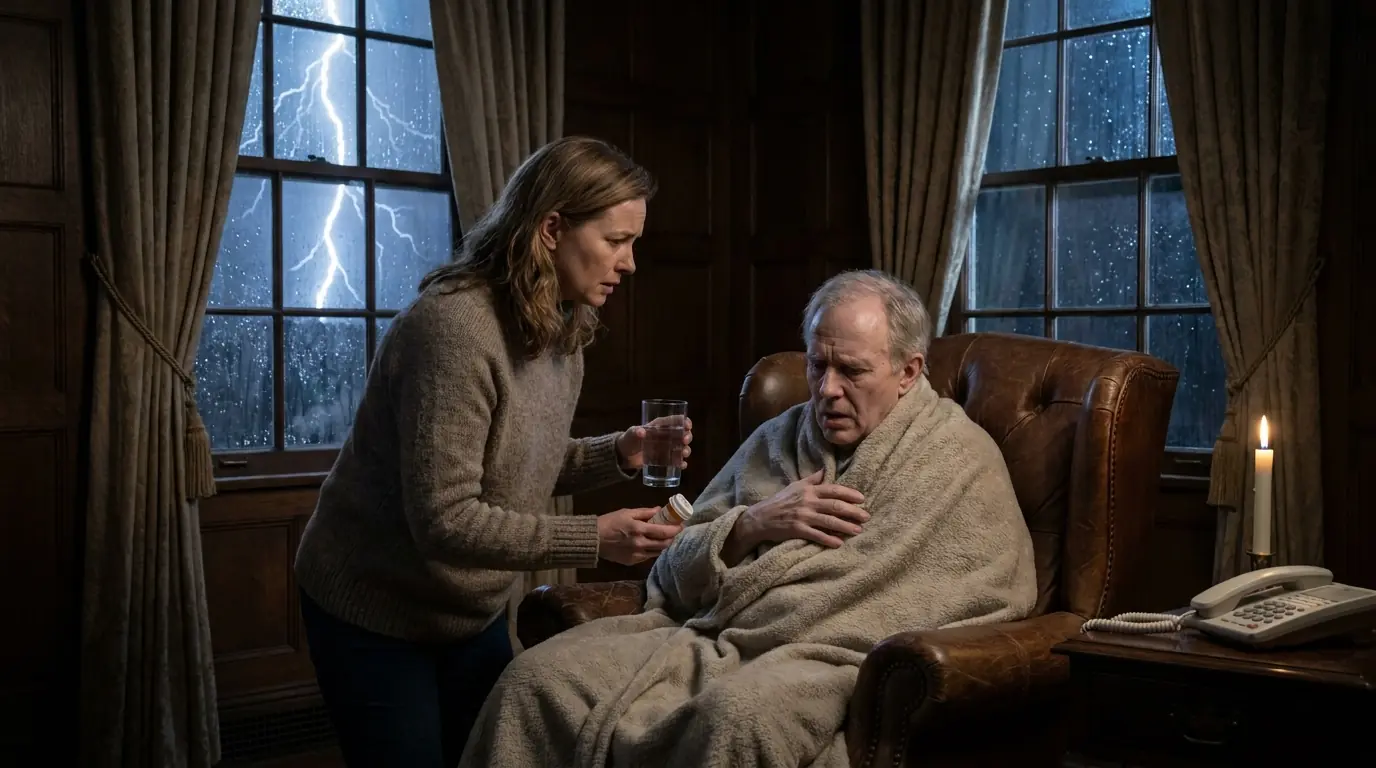
“No.”
“With what?”
There was a pause.
“I need someone to help organize the house.”
Emily frowned. “You have a lot of rooms.”
“Yes.”
“And a lot of stuff.”
“Also yes.”
“Are you asking me to declutter?”
“I am asking you to help me decide what remains of a life.”
Emily stopped walking.
Arthur continued, quieter now.
“The storm made something clear. I have been living inside a museum of grief. I would like to make the house useful again before I am no longer able.”
Emily stood under a dripping awning, holding grocery bags, feeling the weight of his words.
“What do you mean useful?”
“I am not entirely sure yet. That is why I need help.”
Over the next months, Emily began spending Saturdays at the Whitcomb house.
At first, Caleb complained.
“You already work there Thursdays.”
“This is different.”
“Different how?”
“He’s paying me extra.”
That part helped.
But it quickly became more than extra work.
Arthur showed Emily rooms that had not been opened in years. Guest bedrooms with covered furniture. Closets full of Eleanor’s coats. Boxes of old architectural drawings. Shelves of books, letters, records, maps, and photographs.
They worked slowly.
Emily never pushed.
Arthur told stories when he could bear to. He talked about designing libraries, schools, and homes along the coast. He talked about Eleanor painting terrible watercolors and forcing him to hang them anyway. He talked about the child they lost before birth and how silence entered the house afterward.
Emily listened.
In return, she told him about Caleb, about their mother, about the cleaning business she wanted to start one day.
“Why one day?” Arthur asked.
Emily was labeling a box of donated books.
“Because today costs too much.”
He nodded, as if that answer made perfect sense and also saddened him.
Arthur was not easy.
Some days, he snapped at her over small things.
“That vase stays.”
“I didn’t touch the vase.”
“You looked at it like it should go.”
Emily would raise her eyebrows.
“I didn’t know my eyes were that powerful.”
Then he would scowl.
Then apologize an hour later with tea.
Slowly, the house changed.
Not into something new.
Into something awake.
Curtains were opened. Rooms were dusted and used. Eleanor’s paintings were cleaned and rehung in the sunroom. Arthur donated boxes of books to schools and old drafting tools to a local college.
One afternoon, Emily found a locked room at the end of the second-floor hallway.
“What’s in there?” she asked.
Arthur’s face closed.
“Nothing important.”
Which meant everything important.
She did not ask again.
A week later, he handed her the key.
Inside was a room full of models.
Architectural models.
Tiny houses, libraries, community centers, bridges, pavilions, and one beautiful miniature building with tall windows and a wide front porch.
Emily leaned close.
“What is this one?”
Arthur stood in the doorway.
“A home for young people aging out of foster care. Eleanor’s idea.”
Emily looked back at him.
“She wanted a place where they could live while learning work skills. Small apartments. Shared kitchen. Counseling offices. A garden.”
“It’s beautiful.”
“It was never built.”
“Why?”
Arthur’s eyes moved over the tiny windows.
“She died. I stopped.”
Emily looked at the model again.
The building seemed to hold its breath.
“Maybe you don’t have to stay stopped.”
Arthur said nothing.
But the next Saturday, the model had been moved to the library table.
Beside it were old blueprints.
That was how the Eleanor House began.
Not as a building.
As a conversation.
At first, Emily thought Arthur was only revisiting an old dream. But then he began making calls. Lawyers came. City officials visited. A nonprofit director spent two hours in the parlor. Arthur asked Emily to sit in on meetings because, as he put it, “You have practical eyes.”
Emily did not know what that meant.
Arthur explained.
“Most people look at a plan and see what impresses them. You look and ask where the laundry goes.”
“That matters.”
“Exactly.”
The idea became real piece by piece.
Arthur wanted to convert part of his property and funds into a small transitional home for young adults leaving foster care or unstable family situations. It would include housing, job training, counseling, and life-skills support.
Emily thought of Caleb.
Of herself at nineteen, staring at bills she did not understand.
Of all the young people who were told to become adults without anyone teaching them how.
“You should do it,” she told Arthur.
“I intend to.”
“You really mean that?”
“Miss Carter,” he said, “I am old, not decorative.”
She laughed.
But building something meaningful required more than money.
It required trust.
Arthur had spent decades alone. People knew his name, but not him. Some city officials assumed he was eccentric. Some nonprofit leaders worried he would change his mind. Some neighbors objected before understanding anything, fearing “troubled youth” would lower property values.
Emily saw Arthur’s old grief become new frustration.
At one meeting, a wealthy neighbor named Mrs. Hargrove stood in Arthur’s parlor and said, “I simply don’t think this area is appropriate for that kind of population.”
Emily, pouring coffee near the doorway, froze.
Arthur’s face became dangerously calm.
“That kind?”
Mrs. Hargrove smiled tightly. “You know what I mean.”
“No,” Arthur said. “I would like you to say it clearly.”
The room went silent.
Mrs. Hargrove flushed.
Emily looked down, hiding a smile.
After the woman left, Arthur muttered, “Vultures in pearls.”
Emily choked on her coffee.
The project moved forward anyway.
During that year, Emily’s life changed too.
Arthur paid her for administrative help, organizing files, scheduling meetings, and managing donations. It was more money than cleaning alone. For the first time, Emily’s notebook showed a little space between income and bills.
She helped Caleb apply to technical schools. He wanted to study electrical work, though he pretended not to be excited.
Arthur offered to review his scholarship essays.
Caleb refused at first.
“I don’t need some rich old man fixing my words.”
Emily gave him a look.
“He was an architect, not a wizard.”
“I don’t like charity.”
“It’s editing.”
“It’s rich-person editing.”
But eventually, Caleb came to the Whitcomb house.
He arrived stiff and defensive, wearing his cleanest hoodie and a face that dared anyone to pity him.
Arthur greeted him with formal respect.
“Mr. Carter.”
Caleb blinked.
“Nobody calls me that.”
“Perhaps they should.”
That confused Caleb enough to make him polite.
They sat in the library for two hours.
When Caleb came out, he looked shaken.
Emily pulled him aside.
“What happened?”
“He said my essay was boring.”
Emily winced. “Oh.”
“Then he said my life wasn’t boring, so I should stop writing like I was applying to be a filing cabinet.”
Emily burst out laughing.
Caleb tried not to smile.
Arthur and Caleb developed an unlikely friendship.
Arthur taught Caleb how to read old blueprints. Caleb fixed small electrical issues around the house under supervision from a retired contractor Arthur knew. They argued about music, phone addiction, architecture, and whether young people still knew how to write proper letters.
Caleb began showing up even when Emily was not working.
One evening, Emily found them on the porch, Arthur in his cardigan, Caleb in paint-splattered jeans, both eating sandwiches and looking out at the oaks.
Arthur said something Emily could not hear.
Caleb laughed.
A real laugh.
Emily stood in the hallway and cried quietly before either of them could see.
The Eleanor House opened eighteen months after the storm.
It was not the grand building from the model, not yet. Instead, Arthur donated and renovated a smaller carriage house at the edge of his property. It had four bedrooms, a shared kitchen, a common room, office space, and a garden Eleanor would have loved.
The first residents were three young women and one young man, all between eighteen and twenty-one, all carrying their belongings in trash bags or borrowed suitcases.
Emily helped make the beds before they arrived.
She placed fresh towels in each room.
On every pillow, Arthur put a handwritten note.
You are welcome here. Build slowly. Stay steady.
At the opening ceremony, Arthur asked Emily to stand beside him.
She tried to refuse.
“I didn’t pay for any of this.”
“No,” he said. “You did something harder.”
“What?”
“You stayed long enough for me to remember who I wanted to be.”
Emily looked away quickly.
“Don’t make me cry in front of city officials.”
“I believe they will survive.”
Arthur gave a short speech that day.
He spoke of Eleanor. Of grief. Of wasted rooms. Of young people needing more than advice.
Then he turned toward Emily.
“This house exists because one young woman refused to leave an old man alone in a storm,” he said.
Emily’s eyes filled.
“She thought she was only helping me survive a difficult night. In truth, she helped me return to a life I had abandoned.”
People applauded.
Caleb whistled loudly from the back until Emily glared at him.
He grinned.
After the ceremony, Arthur handed Emily a folder.
“What’s this?”
“Your business plan.”
She stared at him.
“My what?”
“You have wanted to open your own cleaning company. I have taken the liberty of drafting a plan.”
“Arthur.”
“Before you become offended, please note I did not finish it. That would be controlling. I simply organized the sections you need.”
Emily opened the folder.
Inside were pages labeled:
Business Name
Services
Startup Costs
Insurance
Client List
Hiring Plan
Community Partnership Opportunities
Her throat tightened.
“I don’t know if I can do this.”
“Yes, you do.”
“I clean houses. I don’t run companies.”
“Then learn.”
She looked up at him.
Arthur’s eyes were firm.
“You are already running more than you think. A household. A brother’s future. My chaos. This project. Your fear is not evidence of inability.”
Emily laughed weakly. “You always talk like a quote on a library wall.”
“I designed three libraries. It has affected me.”
She hugged him.
Arthur stiffened at first, then gently patted her back.
With his guidance, Emily launched Carter Home Care Services six months later.
Not just cleaning.
Home care support.
She hired two women she knew from the bus route, both hardworking mothers who needed stable schedules. They cleaned houses, organized spaces for elderly clients, checked safety hazards, helped with errands, and coordinated with families when seniors needed extra support.
Arthur became her first official client.
Then Mrs. Alvarez from church.
Then a retired judge.
Then two busy families.
Within a year, Emily had six employees.
Within two years, she no longer cleaned every house herself. She trained, scheduled, inspected, and handled clients. She paid fair wages because she knew exactly what unfair wages felt like.
Caleb completed his electrical training and began working for a local contractor. He still visited Arthur every Sunday.
Arthur grew older.
Slowly, then suddenly.
His cane became a walker. His handwriting shook. His heart weakened. He tired easily, but his mind remained sharp enough to correct everyone’s grammar.
On a quiet April morning, Arthur called Emily to the parlor.
He sat by the window, thinner now, wrapped in a gray cardigan, sunlight resting on his silver hair.
“I need to discuss something unpleasant.”
Emily sat across from him.
“You say that before taxes, medicine, and rich people.”
“This is a legal matter.”
She frowned.
Arthur handed her an envelope.
Her name was written on it in his careful handwriting.
“What is this?”
“My will includes provisions for the Eleanor House, the foundation, Caleb’s technical certification fund, and several other matters.”
Emily’s heart clenched.
“Arthur, don’t.”
“I am not dying this afternoon, Miss Carter. Do not be theatrical.”
She almost smiled.
He continued.
“I have also left something to you.”
“I don’t want anything.”
“I know. That is why I had to arrange it properly before you could argue.”
“Arthur.”
He leaned forward slightly.
“You gave me time I did not deserve and honesty I did not request. You helped turn my house into something living again. You helped build Eleanor’s dream. You helped me know your brother. You became family in all the ways that matter.”
Emily’s eyes burned.
“You were already family,” she whispered.
Arthur’s face softened.
“In the envelope is the deed transfer for the small office building on King Street. The one your company rents.”
Emily stared at him.
“No.”
“Yes.”
“No, Arthur.”
“It is already arranged to transfer upon my passing.”
“That building is worth—”
“More than you can afford, yes. That is the point.”
“I can’t accept a building.”
“You can accept a future.”
Emily stood, overwhelmed.
“I didn’t help you for this.”
Arthur’s voice sharpened with old authority.
“Do not insult us both by suggesting I think you did.”
She froze.
He softened again.
“Listen to me. Wealth hoarded too long becomes rot. I know this better than most. That building will give your business stability. It will allow you to hire more people, serve more elderly clients, and build something beyond survival.”
Tears slipped down Emily’s cheeks.
Arthur looked toward Eleanor’s photograph.
“My wife believed homes should protect people. You made that belief real again. Let me do one useful thing before I leave.”
Emily sat back down and took his hand.
“You’ve done more than one.”
Arthur smiled faintly.
“Good. Then allow me one more.”
Arthur Whitcomb passed away that winter, peacefully, in his own bed, during a gentle rain.
Not a storm.
Emily was there.
So was Caleb.
So were two residents from Eleanor House, the nonprofit director, and the nurse who had cared for him during his final weeks.
His last clear words to Emily were, “Keep the doors useful.”
She promised she would.
The funeral filled the old church downtown.
Architects came. Former students came. City officials came. Young adults from Eleanor House came. Neighbors who had once complained came too, quieter now, ashamed perhaps, or simply changed.
Caleb gave part of the eulogy.
He stood at the podium, hands shaking, wearing a dark suit Emily had helped him buy.
“Mr. Whitcomb was the first man who called me mister and meant it,” Caleb said. “He made me rewrite my scholarship essay four times. I hated that. But he also taught me that a blueprint is just hope with measurements.”
Emily cried then.
Not quietly.
After the funeral, the will became official.
Emily received the office building.
She tried to feel only gratitude, but at first the gift terrified her. Ownership was responsibility. Taxes. Maintenance. Decisions. Weight.
Then she remembered what Arthur had told her.
Your fear is not evidence of inability.
So she kept going.
Carter Home Care Services expanded.
The building on King Street became more than an office. Emily turned the first floor into a training center for women rebuilding their lives after hardship. Single mothers. Young women leaving shelters. Former caregivers with no formal resume. People who were good at care but had never been paid fairly for it.
She taught them cleaning skills, client communication, safety checks, scheduling, and financial basics. She partnered with Eleanor House to offer internships. She hired graduates whenever she could.
On the wall near the entrance, she hung a framed photo of Arthur and Eleanor.
Under it were Arthur’s last words:
Keep The Doors Useful.
Five years after the storm, Emily stood outside the King Street building on a bright September morning.
She was twenty-nine now. Her hair was shorter, cut just above her shoulders. She wore black slacks, a white blouse, and the blue blazer Caleb had bought her after his first big electrician paycheck.
A small crowd gathered on the sidewalk.
Employees.
Clients.
Eleanor House residents.
City leaders.
Caleb, now twenty-two, stood near the front with a proud grin.
They were opening the second floor as the Whitcomb Care Training Center.
Emily stepped to the microphone.
For a moment, she looked at all the faces.
Then she began.
“When I first met Arthur Whitcomb, I was hired to clean his house,” she said. “I thought I knew what that meant. Dust the shelves. Mop the floors. Change the sheets. Leave quietly.”
A soft laugh moved through the crowd.
“But Arthur’s house was not really dirty. It was lonely.”
People grew quiet.
“One night, during a terrible storm, I stayed because he needed help. At the time, I thought I was choosing between catching my bus and doing the decent thing. I did not know that one choice would change both our lives.”
She glanced at Caleb.
“I did not know Arthur would become my brother’s mentor. I did not know he would build Eleanor House. I did not know he would help me start my business. I did not know he would leave me the key to a building that would become a door for other people.”
Her voice trembled.
“But that is the thing about helping someone. You rarely know what you are really beginning.”
Emily looked toward Arthur’s photograph near the entrance.
“Arthur used to say homes should protect people. I believe work should too. This center exists because many people are skilled at care, but the world has taught them to undervalue it. We are here to say care is work. Care is dignity. Care is leadership. Care is a future.”
Applause rose.
Emily smiled through tears.
“So today, we open these doors for every person who has ever carried too much and still showed up for someone else. May this place help them build slowly, stay steady, and step into the life they deserve.”
Caleb cut the ribbon with her.
Inside, sunlight filled the newly painted training room. There were desks, supply shelves, a small kitchen, and a bulletin board covered with job postings and handwritten encouragement notes.
The first class of trainees arrived that afternoon.
One young mother stood at the doorway, nervous and embarrassed.
“I don’t know if I belong here,” she whispered.
Emily looked at her and remembered standing in Arthur’s dark parlor, soaked from rain, scared and stubborn and unaware that her life was turning.
“You do,” Emily said gently. “Come inside.”
Years later, people in Charleston would talk about Emily Carter as if she had always been confident.
They would say she built a successful company from nothing.
They would say she helped transform elder care services in the city.
They would say the Whitcomb Training Center gave dozens of women stable work and helped Eleanor House residents build independent lives.
All of that was true.
But Emily knew the real story began in a dark old house during a storm.
It began with an old man too proud to admit he was afraid.
It began with a young woman too tired to stay, but too kind to leave.
It began with medicine from an upstairs drawer, tea by candlelight, and two lonely people discovering that grief did not have to be lived alone.
Emily had thought she was only helping Arthur Whitcomb survive one frightening night.
But Arthur gave her something far greater than money.
He gave her trust.
He gave her belief.
He gave her a blueprint for a future she had been too exhausted to imagine.
And in the end, he gave her a key.
Not just to a building.
To a life where doors did not close quietly on people in need.
To a life where care became power.
To a life where the girl who once cleaned other people’s houses finally built a place of her own.