How to Use Guava for Eye Comfort | Natural Remedies for Healthy Eyes
Health 02/12/2025 00:34
For most of human history, aging has been seen as an unavoidable destiny—a slow, almost poetic unraveling of life’s fabric. Wrinkles deepen, joints stiffen, and once-resilient organs begin to tire. The decline has always felt deeply internal, as if time itself whispered privately to each cell. Scientific research followed that intuition, focusing on molecular breakdowns: shortening telomeres, error-prone DNA, oxidative stress, and failing mitochondria. These discoveries pushed the field forward, yet one fundamental puzzle remained: why does aging unfold across the entire body in such a synchronized way?
A groundbreaking study from Korea University’s College of Medicine, published in Metabolism – Clinical and Experimental, offers one of the clearest answers yet. The researchers discovered that aging doesn’t spread randomly—it travels through the bloodstream via a powerful molecular messenger called High Mobility Group Box 1 (HMGB1). Even more astonishing, when scientists blocked this molecule in mice, they observed effects reminiscent of rejuvenation: enhanced muscle regeneration, reduced inflammation, and lower markers of cellular aging. Suddenly, aging looks less like inevitable decay and more like a systemic conversation—one that can potentially be interrupted or rewritten.
At the heart of this discovery lies a protein with a surprisingly dual identity. Inside the nucleus, HMGB1 acts as a guardian, helping DNA maintain its structure, repair breaks, and fold efficiently. It is essential for genomic stability; without it, cells would be far more vulnerable to damage and mutation.
But HMGB1 doesn’t always stay contained. When cells are stressed, damaged, or dying, they release HMGB1 into the extracellular space and into the bloodstream. Once outside, the protein transforms into a DAMP—a damage-associated molecular pattern. DAMPs send out distress calls that alert the immune system, triggering inflammation and promoting repair.
In small doses, this response is healthy and necessary. But if HMGB1 remains chronically elevated, its message becomes distorted. Inflammation persists. Tissues experience ongoing stress. Aging accelerates.
The Korean researchers found that HMGB1 can exist in multiple chemical states depending on its redox balance—a measure of how electrons are distributed in the molecule. The oxidized form is relatively harmless. But its reduced form, called ReHMGB1, acts like a biological alarm bell that never shuts off.
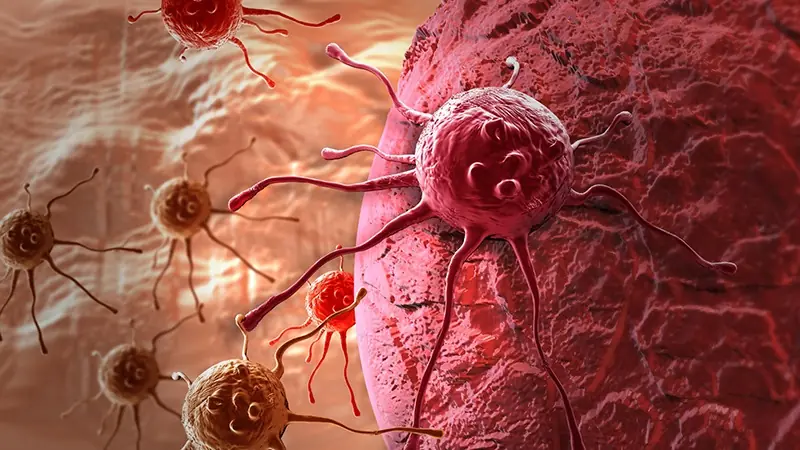
Released by old or stressed cells, ReHMGB1 travels through the blood and induces senescence in otherwise healthy cells. Senescent cells no longer divide; instead, they release inflammatory factors known as SASP, amplifying damage and accelerating decline throughout surrounding tissues. In essence, ReHMGB1 is capable of turning isolated cellular wear-and-tear into a whole-body phenomenon.
This duality makes HMGB1 one of the most intriguing molecules in modern aging research—a molecule capable of preserving youth inside the cell while spreading decline when it escapes.
The Korea University team, led by Professor Ok Hee Jeon, asked a daring question: Can aging actually be transmitted through the bloodstream?
Their experiments say yes.
In cell cultures, exposing young cells to ReHMGB1 from older cells caused the young ones to quickly exhibit classic signs of senescence—halted division, increased p16 and p21 gene expression, and activation of SASP. In live mice, the results were even more dramatic. Young mice injected with ReHMGB1 showed:
accelerated senescence across multiple tissues
weakened muscle regeneration
decreased physical performance
When researchers blocked ReHMGB1 in older mice using targeted antibodies, the opposite happened:
reduced inflammatory signals
faster muscle repair
lower biological “age scores”
improved endurance and tissue function
The implications are profound: aging isn’t just damage accumulation—it’s a broadcast. Once a critical mass of cells becomes senescent, they release ReHMGB1, which pushes more cells into the same state, creating a self-propagating loop of decline.
ReHMGB1 triggers this loop by binding to a receptor called RAGE, activating inflammatory pathways like NF-κB and JAK/STAT. Through this biochemical handshake, one cell’s distress becomes the entire body’s burden.
A single molecular message, repeated endlessly, becomes the voice of aging itself.
If ReHMGB1 is aging’s courier, then neutralizing it could disrupt the message. And the mice studies show exactly that.
Administering anti-HMGB1 antibodies to older mice did not erase age, but it significantly softened its impact:
muscles healed faster after injury
mitochondrial function improved
inflammation fell
endurance and strength increased
Rather than repairing every damaged cell, the treatment simply quieted the molecular noise that kept tissues locked in decline. This marks a pivotal shift in longevity research: instead of trying to fix trillions of cells individually, scientists may target a small set of key systemic messengers.
However, HMGB1 is not purely harmful. It plays vital roles in immune defense and repair. The challenge ahead is precision—targeting only the harmful reduced form (ReHMGB1) without suppressing the protective roles of other forms.
Still, the proof-of-concept is unmistakable: aging is an active, coordinated process, and its signals can be modulated.
This discovery fits into a broader shift in how science conceptualizes aging. The old model viewed aging as the body mechanically wearing out. But new evidence suggests that aging behaves more like a communication failure—a loss of harmony among the body’s interconnected systems.
Experiments like heterochronic parabiosis, which link the bloodstreams of old and young mice, have shown similar results: old mice grow younger; young mice show signs of accelerated aging. It seems that blood carries both rejuvenating and aging signals, and the balance between them shapes biological age.
Molecules like GDF11 once dominated this narrative, but ReHMGB1 adds a new dimension. It strengthens the idea that aging is a dynamic, systemic phenomenon—more like a disrupted conversation than a simple deterioration.
This perspective opens new alliances in anti-aging strategies. Senolytics aim to destroy senescent cells—the broadcasting stations of decline—while ReHMGB1 inhibitors aim to quiet the signals themselves. Used together, they could form a powerful one-two strategy for restoring cellular harmony.
Aging, for the first time, looks negotiable.
If aging truly can be paused or reversed at the molecular level, society faces profound questions.
Who gets access? If such therapies are costly, longevity could become a privilege of the wealthy, deepening inequality.
What are the risks? Over-suppressing HMGB1 could weaken immune responses and slow healing, since HMGB1 plays essential roles in tissue repair.
What is a “natural” lifespan? If aging becomes adjustable, our cultural and philosophical understanding of life stages—from adulthood to elderhood—may shift dramatically.
This research does more than illuminate biochemistry. It challenges how we think about vitality, fairness, and what it truly means to grow old.
The idea that blocking a single blood-borne signal can reverse aspects of aging marks one of the most exciting developments in modern biology. It suggests that longevity may depend less on genetic engineering and more on rebalancing internal communication.
Future research will explore:
what controls HMGB1’s redox state
which enzymes regulate its harmful transformation
how lifestyle factors—diet, stress, exercise—affect its levels
whether other molecules cooperate with ReHMGB1 to orchestrate aging
We may eventually map the full molecular “language” of aging and learn how to influence it with increasing sophistication.
Interestingly, this scientific view echoes ancient ideas found in many cultures. Traditions have long described life force as a circulating energy—qi, prana, or élan vital. Modern biology seems to rediscover this metaphor at the molecular level: vitality truly flows, and when that flow becomes distorted, decline follows.
The Korea University study does not promise immortality. But it does something more revolutionary: it rewrites the narrative.
Aging is no longer a silent destiny. It is a process shaped by signals—signals that can be amplified, quieted, or redirected. Through molecules like ReHMGB1, we begin to understand aging as a systemic imbalance, a conversation that has drifted out of harmony.
And if aging is a conversation, then perhaps we can learn to speak its language.
Science now stands at the threshold of an era where aging becomes adjustable, where healthspan expands, and where the bloodstream is recognized not merely as a carrier of nutrients but as a conduit of biological time.
Understanding it may one day allow us not only to measure the rhythm of aging—but to compose a new one.