Shocking Truth About How Crabsticks Are Made
Facts 06/12/2025 15:48
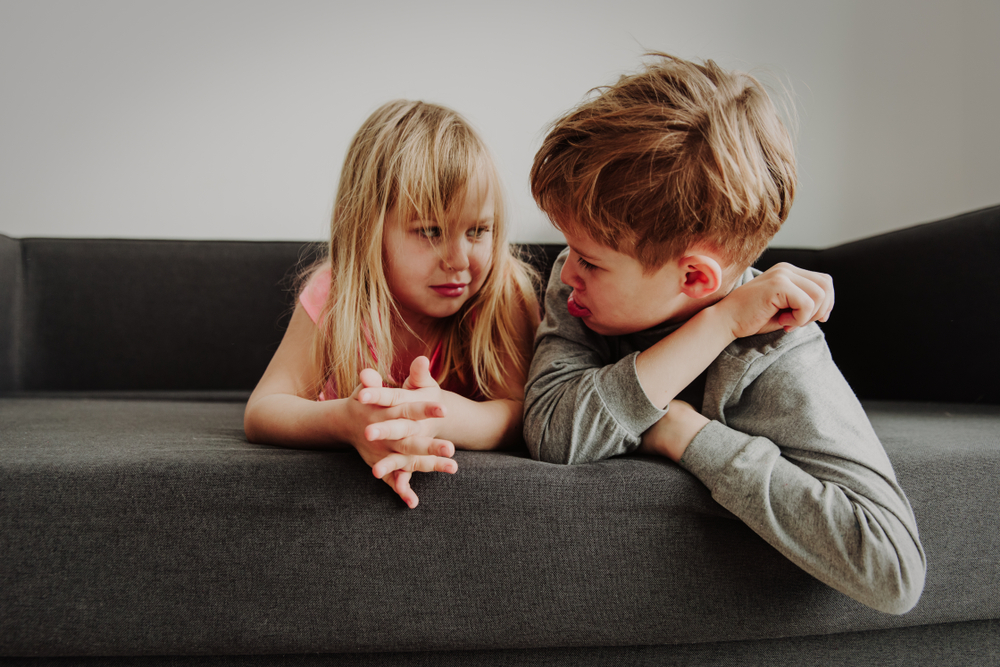
Growing up in the same household often creates the assumption that siblings must have lived nearly identical lives. Yet psychology shows that this couldn’t be further from the truth. Even when siblings share bedrooms, parents, routines, and experiences, their internal worlds can diverge dramatically. Many families only realize in adulthood that, while they lived under one roof, they inhabited emotionally different universes. What seems like a shared childhood may in fact be a collection of parallel but distinct emotional journeys.
Much of this divergence comes from shifting parental stress, birth order, temperament, and the evolving life circumstances into which each child is born. When scientific research is combined with lived experience, the picture becomes clearer: siblings rarely grow up within the same emotional atmosphere. The “family environment” isn’t fixed—it’s constantly reshaping itself as the parents change, struggle, mature, or simply move through different seasons of life.
One man discovered late in life just how different his childhood was from his brother’s, despite living through the same family tragedy. His older brother was seven when their father died of cancer—old enough to remember the long decline, hospital visits, whispered adult conversations, and the suffocating emotional weight that filled their home. The younger brother, only two at the time, had no conscious memory of the illness. Yet the emotional impact of those years shaped him profoundly.
Their mother, only 26 and suddenly widowed with three young children, later said, “A week after the funeral… I had to find a job.” With almost no support system, she was forced to leave her children with cheap babysitters. In one traumatic instance, she returned to find a babysitter passed out on the floor with an empty whiskey bottle while her toddler wandered alone. These early years carved into the younger brother a lifelong sense of “galactic loneliness”—a floating, rootless feeling that no one ever had the capacity to truly see or soothe him.
But his older brother carried a different burden. He had entered the crisis from five stable years of nurturing and one-on-one attention, only to have that stability vanish overnight. Their mother leaned heavily on him for emotional support, hoping he would be her “little man,” and their dying father asked him to visit every day after school—without realizing the emotional weight such a request placed on a child still learning to understand grief.
While the younger brother spent childhood trying to connect with parents who felt distant and overwhelmed, the older brother spent his trying to retreat from emotional responsibilities he was far too young to shoulder. It wasn’t until late-life conversations that they realized how differently they had lived the same events. “You might say we did have different parents,” the younger said. Their story reflects what psychologists describe as a common and deeply rooted reality.
Clinical psychologist Genevieve von Lob explains the core of this phenomenon: “Despite having shared early experiences, it’s not uncommon for siblings to have experienced their childhood in a very different way.” The timing of each child’s birth plays a major role. Each sibling arrives in a different chapter of the parents’ lives—with new emotional states, financial pressures, relationship dynamics, health issues, and work obligations. These shifting circumstances shape how parents show up.
Keneisha Sinclair-McBride notes that “Significant changes in family financial status can impact differences in extracurricular activities, schooling, vacations, and other material aspects of childhood between siblings,” which may feel “unfair” even when caused by circumstances rather than parental preference.
But material differences are only one layer. Emotional availability fluctuates too. As von Lob points out, “Parents may show up very differently for each of their children depending on where they are in their own lives, including their own mental health and stress levels, their significant partnership, support network, work and financial commitments.” What looks like inconsistency may simply be the natural ebb and flow of adult life.
Birth order adds another scientifically supported element. Dr. Kevin Simon explains, “Siblings born years apart are quite literally born from parents who themselves are years apart from who they were during the earlier or later pregnancy.” Parents often behave more cautiously and anxiously with their first child, then more confidently—but sometimes more wearily—with the next. Sinclair-McBride adds, “Some parents are more unsure and cautious with their first child and more sure of themselves with subsequent siblings.”
Parenting educator Laura Linn Knight expands this idea: “Maybe the older sibling was treated more harshly, but the parents readjusted their parenting style and were more compassionate with their parenting moving forward with a younger sibling.” Over time, parents evolve, intentionally or not. This evolution creates distinct emotional climates for each child.
Temperament compounds these differences. Sinclair-McBride reminds us, “All siblings are unique individuals—including twins.” Each child’s personality evokes different responses from their parents. Knight observes that “Parents may relate to a child’s personality more than another child… which can be seen as favoritism,” even when it’s simply about compatibility, not preference. Von Lob adds, “The gender, personality, needs, mannerisms, and behavior of each particular child can trigger parents in different ways,” shaping the parent-child relationship long before either can articulate the dynamic.
Even when siblings live through the same events, they interpret them differently. Clinical psychologist Jenny Yip explains, “It’s just like eyewitness accounts… everyone will interpret the same incident differently.” One child may experience a rural childhood as peaceful and freeing, while another may find it isolating or restrictive. What feels like a fun camping holiday to one may feel boring or uncomfortable to another. These subjective experiences sculpt each sibling’s internal narrative.
Many siblings reach adulthood confused or resentful about perceived inequalities. Dr. Simon emphasizes that these differences are normal, not signs of dysfunction: “It is neither good nor bad… It is a natural result of each sibling’s unique personality, experiences, and perspective.” Still, openly discussing these differences can be profoundly healing.
Sinclair-McBride encourages siblings to share their memories without judgment: “Working through this together can be very beneficial… Giving one’s siblings grace to explain their experiences without defensiveness can help with perspective-taking and compassion.”
When the two brothers in the earlier story finally spoke honestly, they discovered not only divergence but a deeper understanding of each other’s pain. Their conversations became the foundation for their “best sibling discussions” ever. In acknowledging their differences, they found connection.
If you and your siblings remember your childhood differently, that doesn’t mean someone is wrong. It reflects psychological reality. Gently opening conversations—asking questions like, “What was Mom like when you were little?” or “Did you feel X growing up, or was that just me?”—can reveal truths that were invisible for decades.
Sinclair-McBride notes, “Children do not have to be treated exactly the same at all times to be treated equitably,” a reminder that fairness doesn’t always mean sameness. With context—parents’ stress levels, financial struggles, or life changes—long-held assumptions about unfairness often soften.
Recognizing that siblings can grow up in the same household yet experience radically different emotional realities offers a powerful shift in how we interpret our past. Childhood isn’t shaped only by walls, routines, or shared parents—it’s shaped by developmental timing, perception, and the shifting emotional climate of a family.
For many, this realization brings relief. One sibling’s indifference to a traumatic event doesn’t mean the other “overreacted.” One sibling’s joyful memory doesn’t invalidate another’s feeling of isolation. These differences make sense through the lens of psychology. Birth order, temperament, parental mental state, financial stress, and emotional availability all combine to create a unique environment for each child.
When siblings finally understand that their differing memories reflect individualized emotional landscapes rather than faulty recollection, compassion becomes easier. Old resentments soften. Narratives become less about conflict and more about understanding.
Ultimately, this awareness opens the door to richer relationships. When siblings approach each other with curiosity—asking, “What was it like for you?”—they create space for empathy, healing, and deeper connection. While the past cannot be rewritten, the meaning we make of it can evolve into something more compassionate, more connected, and far more human.