A Medical Miracle From Japan: How Stem Cells Helped a Paralyzed Man Walk Again
News 06/12/2025 15:51
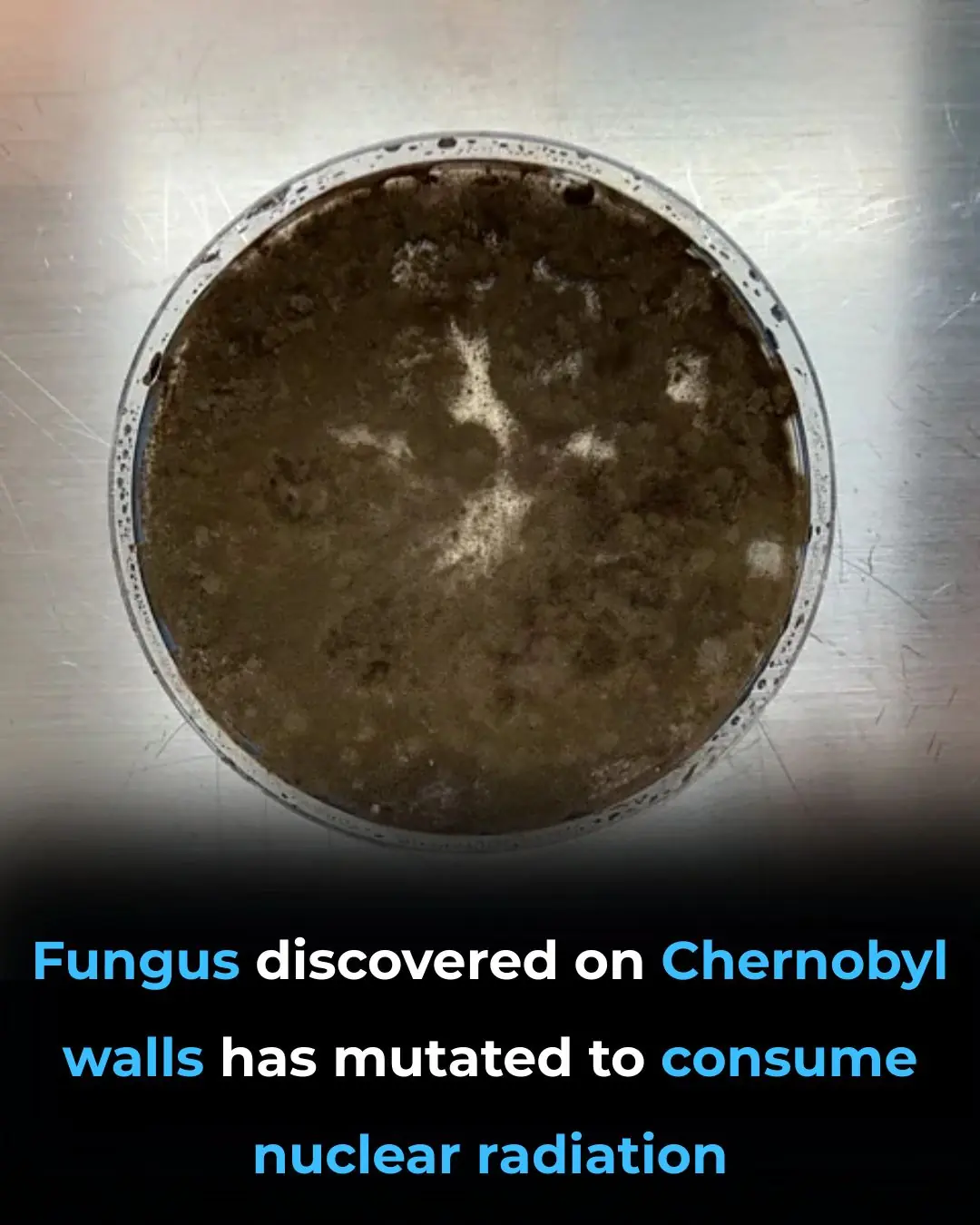
Deep within the abandoned, radioactive remains of Chernobyl, scientists stumbled upon one of nature’s strangest survivors — a black fungus that doesn’t just withstand radiation… it feeds on it.
This organism, Cladosporium sphaerospermum, has stunned researchers for decades. Unlike most life forms that suffer damage when exposed to ionizing radiation, this fungus appears to grow faster in high-radiation environments. Its secret weapon? Melanin — the same pigment that colors human skin, but used here in an entirely different way.
Cladosporium sphaerospermum is packed with melanin, and scientists believe this pigment acts like a biological solar panel.
But instead of absorbing sunlight, the fungus absorbs ionizing radiation — the harmful, high-energy radiation found in nuclear environments and outer space.
This process is known as radiosynthesis.
If photosynthesis converts sunlight into chemical energy, radiosynthesis converts radiation into the biological equivalent of fuel. The fungus essentially “eats” radiation, using it to power its growth.
This remarkable adaptation was first noticed after the Chernobyl disaster. Black, melanin-rich fungi were seen growing on the walls of the Reactor 4 ruins — in places where radiation levels were far too high for humans.
The fungus was first documented in 1991. But from 2007 onward, researchers began to examine it in detail — and the results were astonishing.
The fungus grows faster in radiation-rich environments than in normal conditions.
Melanin changes its electronic structure when exposed to radiation, increasing its ability to absorb energy.
Radiation seems to enhance the fungus’s metabolic activity, similar to how light increases the activity of photosynthetic organisms.
These findings led scientists to consider extraordinary possibilities — particularly for environments where humans struggle to survive.
Scientists eventually sent samples of the fungus to the International Space Station (ISS) to see how it behaved in microgravity combined with cosmic radiation.
The results surprised even the researchers:
The fungus grew rapidly despite the harsh space environment.
A thin layer of it actually reduced radiation levels behind it.
It demonstrated the potential to act as a self-healing, self-replicating radiation shield.
This makes Cladosporium sphaerospermum one of the most promising biological tools for future space exploration.
Because of its unusual abilities, the fungus may one day play an important role in both environmental cleanup and space travel.
Radiation-loving fungi could help:
Break down radioactive materials
Reduce radiation levels in contaminated regions
Assist in bioremediation at hazardous sites like Fukushima and Chernobyl
Instead of using costly machinery, we may someday use living organisms to clean environments humans cannot enter.
Cosmic radiation is one of the biggest threats to missions to Mars and beyond. Traditional shielding is heavy and expensive to launch.
But a thin layer of melanin-rich fungus could:
Absorb radiation
Regenerate itself
Repair damaged areas automatically
Grow using the very radiation it protects astronauts from
Imagine spacecraft or Mars habitats coated in a living, self-sustaining radiation shield.
Researchers are exploring whether melanin could be extracted or engineered to create:
Lightweight radiation-blocking tiles
Protective coatings
New biocompatible shielding materials
Nature may provide solutions more efficient than anything humans have designed so far.
What started as a strange observation in the ruins of Chernobyl has grown into one of the most exciting discoveries in modern biology. A simple black fungus — thriving where life has no business surviving — may offer answers to some of humanity’s biggest challenges:
How to clean our most toxic environments
How to protect astronauts traveling far beyond Earth
How to build sustainable habitats on Mars or other planets
The fungus that “eats” radiation reminds us that evolution can produce unimaginable solutions — and sometimes, the smallest organisms teach us the biggest lessons.
What once seemed like a weird survivor in a nuclear wasteland…
may soon help humanity thrive among the stars. 🚀