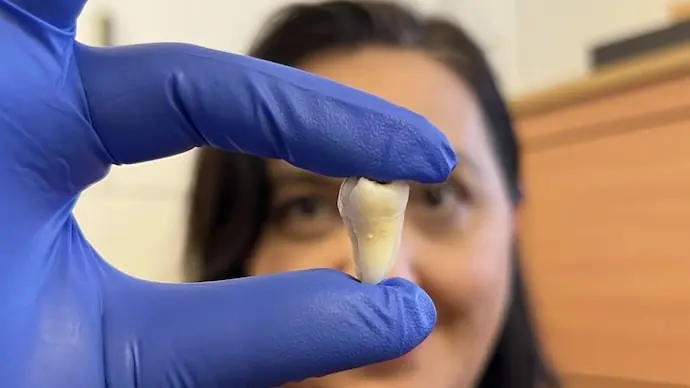
No More Fillings? Scientists Successfully Grow Human Teeth in the Lab
Health 04/12/2025 15:51

Have you ever tried to explain a migraine to someone who has never experienced one? You likely found that simply calling it a "bad headache" does not even begin to cover the severity or complexity of the condition. If you are one of the 15% of people who experience migraines, a condition that affects women more frequently than men, you know that it is not just a headache—it's a full-body, multi-symptom event. A migraine is much more than a mere headache; it is a complex neurological disorder that unfolds in several stages. Understanding these stages is crucial for gaining better control over your condition, identifying triggers, and finding more effective ways to alleviate the pain.
This article takes a deep dive into the four distinct phases of a migraine. By breaking down the biological and neurological processes happening in your body during each stage, you will be better equipped to recognize early warning signs and manage this debilitating condition. We’ll examine everything from the subtle pre-migraine symptoms to the infamous "migraine hangover" phase, giving you the knowledge to better navigate your own experiences with migraines.
Key Takeaways
Migraines are not just headaches; they are complex neurological events that progress through four distinct phases: premonitory, aura, headache, and postdrome.
The first phase can start up to 72 hours before the headache itself: The premonitory phase presents subtle symptoms like fatigue, food cravings, and neck stiffness, making it a crucial time for early intervention.
Triggers are highly personal and potent: Your brain may be more sensitive to specific stimuli. Identifying and avoiding your personal triggers—such as stress, certain foods, or sleep disturbances—is a key strategy for reducing migraine frequency.
The headache pain is referred: The intense, throbbing pain is caused by the activation of the trigeminal nerve, which sensitizes the lining of your brain. Your brain misinterprets this signal as pain in your face, forehead, or the back of your head.
The “migraine hangover” is real: The lingering pain and sensitivity you experience after the main attack, known as the postdrome phase, result from nerve sensitization. These symptoms usually fade within a day or two.
Long before the first throb of pain, your body may give you subtle signals that a migraine is approaching. This is the premonitory phase, which can start anywhere from a few hours to up to 72 hours before the headache itself. Think of it as the "trailer" for the main event. The symptoms may be mild and easy to overlook, but recognizing them early is the first line of defense against a full-blown migraine.
During this phase, you might experience symptoms like unexplained fatigue, irritability, or even mood changes such as depression. You may find yourself yawning more frequently, craving specific foods, or noticing unusual neck stiffness. Some people also become sensitive to light (photophobia). But why do these seemingly disconnected symptoms occur? These changes are thought to be linked to alterations in your body's internal balance, or homeostasis, regulated by a deep brain structure called the hypothalamus.
The hypothalamus is the brain’s control center for regulating automatic processes like hunger, thirst, body temperature, sleep-wake cycles, and hormone release. It plays a significant role in hormonal regulation, which is why women are more likely to experience migraines, especially in relation to their menstrual cycle. If the hypothalamus is disrupted, it can trigger symptoms such as fatigue, food cravings, and mood shifts, making this phase a critical window for intervention.
This phase is also when you're most vulnerable to migraine triggers. Individuals with migraines tend to have heightened sensitivity to various stimuli, such as emotional stress, hormonal changes, skipping meals, sleep disruptions, weather changes, strong odors, neck pain, alcohol, and certain foods. Keeping a migraine diary, where you log your meals, sleep patterns, and emotional state, can be incredibly helpful in identifying patterns and avoiding potential triggers before they set off a migraine.
After the premonitory phase, around one-third of migraine sufferers will experience the aura phase. An aura is a temporary, fully reversible neurological symptom that can precede or sometimes accompany the headache. If you experience auras, they are an unmistakable sign that a migraine is on its way.
The most common type of aura is visual. You might see spots, blurry patches, or shimmering zigzag lines drifting across your field of vision. This is often the final warning to take your migraine medication, as early treatment typically leads to much better outcomes. However, auras aren't always visual. Some people experience sensory auras, which can feel like tingling or numbness on one side of the face or in an arm. Less common, but potentially alarming, are language auras (causing difficulty finding words or speaking clearly) and motor auras (leading to weakness on one side of the body). These can mimic stroke-like symptoms, but there are key differences. Aura symptoms develop gradually over 20 to 30 minutes, whereas stroke symptoms are typically sudden and severe. However, if you experience any of these symptoms for the first time, it’s important to seek emergency medical attention immediately.
The aura phase is thought to be caused by a phenomenon known as Cortical Spreading Depression (CSD). This refers to a wave of intense neuronal activity that spreads across the brain's surface, followed by a period of temporary suppression of neurons. This wave of electrical changes is responsible for the visual, sensory, or other neurological symptoms of an aura. For individuals who don’t experience auras, it is possible that this process occurs in an area of the brain that doesn't produce noticeable symptoms, or it may be too mild to perceive.
This phase is the one most people associate with migraines. It’s characterized by a moderate to severe, pulsating or throbbing pain, usually felt on one side of the head. While some people experience pain on both sides or at the back of the head, the one-sided throb is the classic presentation. This pain can last anywhere from four hours to three days if left untreated.
But the pain is rarely the only symptom. This phase is often accompanied by intense nausea, and sometimes vomiting. Sensitivity to light (photophobia), sound (phonophobia), and even certain smells can become unbearable, forcing you to retreat to a quiet, dark room. A less common but highly unpleasant symptom is cutaneous allodynia, where even the lightest touch, such as your hair brushing against your forehead, can feel painfully intense.
What causes this severe pain? The trigeminal nerve, a large nerve originating in the brainstem, plays a crucial role. During a migraine, this nerve releases inflammatory substances that sensitize the pain receptors in the dura mater—the protective lining of the brain. These pain signals are then misinterpreted by the brain as coming from your forehead, around your eye, or the back of your head, leading to a phenomenon known as referred pain.
After the intensity of the headache phase, the final stage is the postdrome, often called the “migraine hangover.” While the worst pain may be gone, this phase can leave you feeling drained, foggy, and out of sorts for another 24 to 48 hours. You might feel exhausted, confused, and have difficulty concentrating.
Residual tenderness or dull aches may persist in the area where the headache occurred, and sudden movements can trigger brief, sharp pains. This is due to the sensitization of the trigeminal nerve, which remains hyperactive after the main attack. Your nervous system is still raw and overly sensitive, reacting to stimuli that wouldn't normally cause pain.
Although the postdrome phase can be unpleasant, it is temporary. As the nervous system calms down, the symptoms gradually fade, and you will eventually return to normal. Hopefully, you will then experience a long, pain-free period before the migraine cycle starts again.
Conclusion
Migraines are far more than just headaches; they are a cascade of neurological events that can significantly impact your well-being. Understanding the four phases—premonitory, aura, headache, and postdrome—can empower you to become an active participant in your migraine management. With this knowledge, you can better identify your triggers, recognize the early signs, and intervene more effectively. While there is no magic cure for migraines, understanding what is happening inside your body is a crucial step toward reclaiming your life and managing migraines more effectively.