My name is Simone Avery, and I learned early that some people decide your value before they ever ask your name.
Sometimes it happens in a glance.
A quick look at your shoes.
A pause over your skin.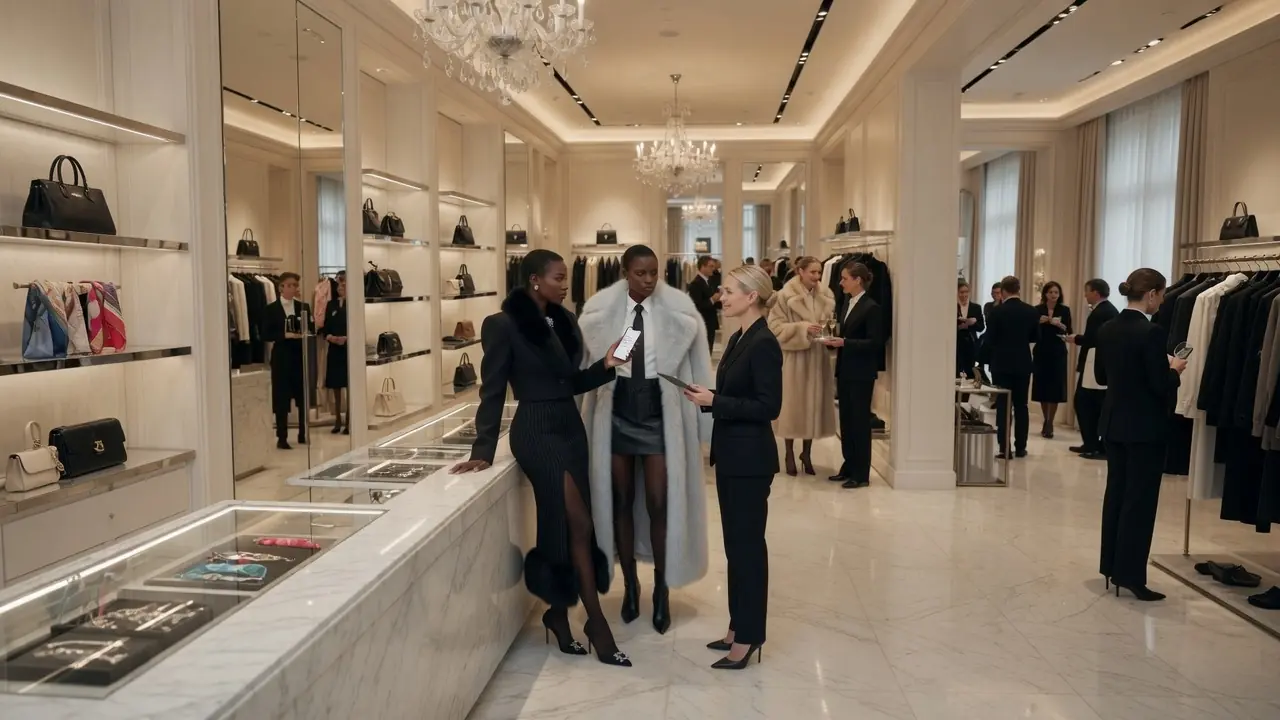
A smile that arrives at the mouth but never reaches the eyes.
My twin sister, Sienna, and I had lived with that kind of look long enough to recognize it the moment it appeared. Still, neither of us expected to meet it on a rainy Thursday afternoon inside one of the most expensive fashion houses in downtown Charleston.
Not there.
Not on the day Sienna was supposed to be celebrated.
Not in a store that had begged for a meeting with her company only three weeks after pretending not to know Black women like us belonged anywhere near their marble floors.
Sienna and I were born four minutes apart.
She came first and carried that fact around like a legal document.
Whenever we argued as kids, she would lift her chin and say, “I’m the oldest.”
And I would say, “By four minutes, not wisdom.”
That usually ended with both of us laughing, unless Mama was nearby, in which case she would tell us that four minutes was long enough for one child to become bossy and the other one to become sarcastic.
She was not wrong.
We looked almost exactly alike growing up.
Same brown skin.
Same thick black curls.
Same dark eyes.
Same dimple on the left cheek that strangers loved to point out as if we had not noticed our own faces before.
But inside, we were different weather.
I was quiet.
Careful.
The kind of girl who noticed when grown-ups lowered their voices before saying the real thing. I listened first, spoke last, and remembered more than people expected.
Sienna was fire.
Not loud for no reason.
Not careless.
Just certain in her own body in a way that made other people either love her or feel challenged by her existence. She could walk into a room where nobody knew her and leave with somebody offering her an internship, a recipe, or their cousin’s phone number.
Mama used to say, “God gave one of you the eyes and the other the lightning.”
I never knew which one she meant.
Maybe both.
By the time we turned thirty, Sienna had built a fashion label from nothing but nerve, needlework, and impossible discipline. The brand was called Harper Vale, named after our grandmother, who had sewn church dresses for half the women in our neighborhood and never once called herself a designer because nobody had given her permission to see the work that way.
Sienna gave herself permission.
She started in her spare bedroom with one secondhand machine and fabric stacked in plastic bins. First came custom blazers. Then small capsule collections. Then online orders from women who said her clothes made them feel seen without feeling displayed.
Within five years, Harper Vale was everywhere in the right circles.
Magazine features.
Boutique collaborations.
Celebrity stylists quietly borrowing pieces before red carpets.
Women in boardrooms wearing her suits like armor.
Sienna did not design clothes for people who wanted to disappear. She designed for women who had spent too long being told to take up less room.
I became a financial strategist, which sounded more glamorous than it felt most days.
Mostly, I helped small businesses survive the gap between vision and invoices. Sienna said I was the reason Harper Vale had not collapsed the first time a supplier overcharged her and a boutique paid sixty days late. I said she was the reason I believed numbers could have a soul if they served the right dream.
We were each other’s first investors.
Before the articles.
Before the buyers.
Before anyone used words like “emerging luxury voice” or “cultural movement.”
Back then, it was just Sienna at the sewing table and me on the floor beside her with spreadsheets open, both of us eating takeout noodles at midnight and pretending we were not scared.
So when Maison Ravelle called, Sienna called me first.
Maison Ravelle was not just a store.
It was the store.
Three floors of polished stone, glass staircases, private fitting salons, champagne appointments, and handbags locked behind glass like religious artifacts. The kind of place where women in linen suits whispered, “Do you have this in Paris?” and employees answered as if Paris were a room in the back.
For years, Sienna had walked past their window displays without going in.
Not because she could not afford one beautiful thing if she saved.
Because some doors have a way of telling you they are not made for you before anyone opens them.
Then Maison Ravelle invited her to discuss carrying Harper Vale’s next collection.
She called me screaming.
Not cute screaming.
Full-volume, somebody-is-being-attacked screaming.
I dropped my pen.
“What happened?”
“They want a meeting.”
“Who?”
“Ravelle.”
I went quiet.
She laughed into the phone.
“Exactly.”
The meeting was scheduled for Thursday at two.
Sienna insisted I come with her.
I told her she did not need me.
She said, “I needed you before they wanted me. That means you come when they do.”
There was no arguing with that.
The morning of the meeting, she arrived at my apartment carrying garment bags over one arm and iced coffee in the other hand. She took one look at my outfit and made the face she made when a seam was crooked.
“No.”
I looked down.
“What’s wrong with this?”
“You look like you’re about to negotiate a mortgage in a storm shelter.”
“It’s a good blazer.”
“It is a sad blazer.”
“Sienna.”
“Simone.”
She hung a cream wool coat over the back of my chair and pulled out a navy silk blouse from one bag.
“You cannot walk into Ravelle dressed like you’re apologizing for being good at math.”
I stared at her.
“I was going for professional.”
“You were going for invisible.”
That sentence stayed in the room for a second.
She did not mean to wound me.
She meant the opposite.
In certain places, invisibility feels safer until you realize it costs you the pleasure of being fully present.
She dressed me the way only a sister can.
Firmly.
Without permission.
With love disguised as criticism.
By noon, we looked like two women who knew exactly where they were going. Sienna wore a structured ivory suit from her own collection, with wide-leg trousers and a jacket that moved like confidence. I wore the navy blouse, the cream coat, and heels I borrowed from her because she said my sensible shoes “lacked ambition.”
We laughed in the cab all the way downtown.
The rain had softened to mist by the time we reached King Street.
Maison Ravelle stood on the corner like wealth had become architecture. Tall glass doors. Gold lettering. Soft light spilling over stone floors. A window display arranged with such precision that even the empty space between dresses seemed expensive.
Sienna took a breath before we went in.
I saw it.
Only because I knew her.
“You good?” I asked.
She smiled.
“I built a company from a bedroom. I can walk into a store.”
Then she pushed open the door.
The first thing I noticed was the scent.
Something floral, clean, and cold.
The second was the silence.
Not total silence.
There was music somewhere, low and tasteful. A register chimed softly. A woman laughed near the jewelry counter in a voice trained never to sound too surprised by prices. But when Sienna and I stepped inside, something in the air paused.
People looked.
They always looked at twins.
We were used to that.
But this was different.
It was not curiosity.
It was assessment.
A sales associate near the handbags glanced at us, then at our coats, then at our faces, then quickly at another employee. The second employee looked too. Their smiles appeared after their judgment, which meant the smiles were only decoration.
Sienna noticed.
Her shoulders did not change.
Mine did.
She leaned close and whispered, “Don’t shrink.”
So I did not.
We walked toward the central desk, where a woman in a black suit stood with a tablet in one hand. Her hair was silver-blonde, cut into a smooth bob that probably cost more than my electric bill. Her name tag read Celeste Ward.
She looked up.
“Can I help you?”
The tone was polite in the technical sense.
Like a locked gate can be beautiful in the technical sense.
Sienna smiled.
“Yes. I’m Sienna Avery. I have a two o’clock appointment with the buying team.”
Celeste blinked.
Not long.
Long enough.
“Avery?”
“Yes.”
“For what purpose?”
Sienna’s smile held.
“Harper Vale. We’re here for the partnership discussion.”
Celeste looked down at her tablet.
Typed.
Scrolled.
Typed again.
Her eyebrows moved slightly.
“Oh.”
One word.
Small.
Heavy.
The kind of word that says the picture in someone’s head did not match the person standing in front of them.
“Yes,” Sienna said. “Oh.”
Celeste looked up again, and this time her eyes moved over us more carefully.
“Are you certain the appointment is at this location? Sometimes brand inquiries are routed to our corporate office.”
Sienna held out her phone.
“The confirmation says Maison Ravelle, King Street location, executive salon, two o’clock.”
Celeste did not take the phone.
“I see.”
She glanced toward another employee, a younger man arranging scarves with more attention than scarves required.
“I’ll check with management.”
“Thank you,” Sienna said.
Celeste walked away.
We waited near the entrance because nobody invited us farther in.
Five minutes passed.
Then ten.
Customers entered and were greeted immediately.
A white woman wearing camel cashmere came in carrying a Ravelle shopping bag, and two employees moved toward her at once. Another woman asked for a personal stylist and was escorted upstairs before her umbrella had stopped dripping.
Sienna checked her phone.
It was 2:18.
I looked toward the back hall and saw Celeste speaking with the scarf employee. They both looked in our direction. Then they looked away too quickly.
At 2:29, the younger employee approached us.
His name tag read Theo.
“Are you ladies waiting for something?”
Ladies.
Better than “girls.”
Still not our names.
Sienna showed him the email.
“We have an appointment with the buying director.”
Theo read it.
His face changed.
He knew the name Harper Vale.
That made the next part worse.
“I’ll go check,” he said.
Celeste returned ten minutes later.
“I’m afraid there seems to be some confusion.”
Sienna put her phone down slowly.
“What confusion?”
“We don’t have a confirmed meeting for you in the salon.”
“That is not true.”
“I understand that you have an email, but sometimes these things are preliminary.”
Sienna’s voice stayed even.
“It says confirmed.”
Celeste smiled with the patience people use when they have decided you are embarrassing yourself.
“I’m sure it feels that way.”
That was the moment my sister stopped smiling.
Not dramatically.
Not with raised voice or pointed finger.
The smile simply left, and what remained was something much harder for Celeste to manage.
Truth.
“Can I ask you something?” Sienna said.
Celeste’s expression tightened.
“Of course.”
“If we had walked in looking like what you expected the founder of Harper Vale to look like, would we still be standing here forty minutes later?”
The store did not go quiet all at once.
It quieted in rings.
First Theo.
Then the woman by handbags.
Then the customer near the perfume counter.
The music kept playing, which somehow made the silence feel stranger.
Celeste’s face flushed.
“I don’t know what you’re implying.”
“I think you do.”
“We treat every guest equally at Maison Ravelle.”
Sienna glanced toward the woman in camel cashmere, now sipping sparkling water on a velvet chair while an associate presented shoes like offerings.
“Do you?”
No one answered.
That was the trouble with a direct question.
It either opens a door or reveals a wall.
Celeste crossed her arms.
“I don’t appreciate being accused of bias.”
“I don’t appreciate having to prove I belong at a meeting your company requested.”
Theo looked down.
Celeste did not.
She was too proud for that.
Or too practiced.
“I think you’re misunderstanding the situation,” she said.
Sienna nodded once.
“People who experience disrespect are often told they misunderstood it.”
That landed.
I felt it land.
So did everyone within listening distance.
Before Celeste could respond, a man appeared from the back hall.
He was tall, early fifties, dark suit, silver tie, calm in the way executives are calm when they enter a problem believing calm itself is authority. His name was Laurent Ravelle, regional director for the company and cousin to the family that owned it.
“Is there an issue here?” he asked.
Celeste turned too quickly.
“Mr. Ravelle, there appears to be some confusion with these guests.”
These guests.
Not Ms. Avery.
Not the founder of the brand.
Not the woman your office invited here.
These guests.
Small language has a long shadow.
Sienna faced him.
“My name is Sienna Avery.”
Laurent’s expression shifted immediately.
He knew the name.
Of course he did.
“Sienna Avery of Harper Vale?”
“Yes.”
He looked at his watch.
Then at Celeste.
“Your meeting was at two.”
“It was,” Sienna said.
“It is nearly three.”
“Yes.”
Laurent turned to Celeste.
“Why was I not informed that Ms. Avery had arrived?”
Celeste opened her mouth.
Closed it.
Then tried again.
“I believed there was an issue with the appointment.”
“What issue?”
The answer did not come.
Because there had never been a real issue.
There had only been an assumption wearing professional clothes.
Laurent looked back at us.
“I sincerely apologize.”
Sienna studied him.
I could tell she was deciding whether the apology belonged to the situation or to the fact that he had been caught inside it.
There is a difference.
The meeting happened.
Technically.
We were escorted upstairs to a private salon with soft gray chairs, fresh flowers, bottled water, and a table covered in lookbooks from designers whose names people used like passwords.
Laurent praised Harper Vale.
He called Sienna’s tailoring “architectural.”
He said the brand’s growth was extraordinary.
He said Ravelle had been watching her closely for months.
But the excitement had gone out of the room for my sister.
I knew her well enough to see it.
This was supposed to be one of those moments we would talk about for years, the day a door opened. Instead, it felt like walking into a party after hearing what the hosts said before they realized you had arrived.
Sienna answered questions.
Professionally.
Clearly.
But she did not glow.
The buyers noticed.
Laurent noticed too.
At the end of the meeting, he folded his hands and said, “Ms. Avery, I want to understand what happened downstairs.”
Sienna reached into her handbag and placed her phone on the table.
“I recorded most of it.”
Laurent’s face changed.
Celeste would have looked afraid.
Laurent looked ashamed.
Sienna continued.
“I did not record because I wanted a scandal. I recorded because I have spent my life watching people rewrite what happened to make themselves more comfortable.”
No one spoke.
She slid the phone toward him.
“I want you to see it without anyone translating it for you.”
We left without signing anything.
In the cab, I waited for Sienna to say something.
She stared out at the rain moving down the window.
Finally, she said, “I thought success would make that feeling go away.”
I knew what she meant.
The feeling of being watched.
Measured.
Questioned.
Allowed in only after the right name appeared.
“It didn’t,” I said.
“No.”
Her voice was quiet.
“It just made the insult more expensive.”
She sent the video to Laurent the next morning.
Not publicly.
Privately.
With one message:
I hope Maison Ravelle becomes a place where people do not need proof of importance before receiving respect.
For two days, nothing happened.
Then a former Ravelle employee reached out.
Her name was Elise Martin.
She had worked at the King Street location for four years and left after what she called “exhaustion with a paycheck.”
“I saw the video,” she told Sienna.
Sienna frowned.
“How?”
“It was shared internally.”
Elise paused.
“Maybe not officially. But people are talking.”
Then she told us what we already feared.
This had not started with us.
Customers of color had been watched more closely. Young Black women were asked whether they needed help more often than anyone else, but not in the helpful way. Latino customers were steered toward lower-priced items. Asian tourists were treated warmly if they looked wealthy and coldly if they did not. Employees had complained quietly, then stopped when nothing changed.
“Why didn’t anyone push harder?” I asked.
Elise gave a tired laugh.
“Because luxury stores survive on making bias feel like taste.”
That sentence stayed with me.
Taste.
Standards.
Brand protection.
Client experience.
So many polite words could be arranged into a fence.
Within a week, three more former employees contacted Sienna.
Then two customers.
Then a stylist who said she had stopped bringing clients to Ravelle because the staff treated certain women like security risks until a famous name appeared.
Sienna had not gone looking for a fight.
But the fight found the video and walked straight toward her.
Laurent called a formal meeting.
This time, Sienna agreed on one condition.
“No private smoothing-over conversation,” she said. “If you want to speak, bring the people who can actually change policy.”
So he did.
Executives.
Regional managers.
Human resources.
Store leadership.
Celeste was there too, sitting at the far end of the table with her hands folded so tightly her knuckles had gone pale.
Laurent opened by apologizing again.
Sienna stopped him.
“With respect, Mr. Ravelle, apology is not the meeting. It’s the door to the meeting.”
The room went still.
Then she played the video.
All of it.
The waiting.
The questions.
The “are you sure this is the right location?”
The difference in how other customers were greeted.
The moment she asked whether we would have been treated differently if we looked different.
The room watched itself fail in high definition.
No one enjoyed that.
Good.
When the video ended, Celeste spoke for the first time.
“I did not intend to discriminate against anyone.”
Sienna looked at her.
“I believe you did not intend to see yourself that way.”
Celeste flinched.
“But intention does not greet a customer,” Sienna continued. “Behavior does.”
That was the first crack.
Not enough.
But real.
The internal review began two weeks later.
Maison Ravelle did not deny the incident.
They tried at first to call it an isolated service failure, but the former employee statements made that impossible. Laurent, to his credit, stopped the language before it became a shield.
The company announced a full service equity audit, a new customer complaint process outside store-level management, changes in appointment verification, and mandatory review of floor behavior patterns.
Some people online mocked it.
They said everyone was too sensitive.
They said luxury stores had a right to be careful.
They said if Sienna was successful, she should have ignored it and taken the deal.
That last one angered me most.
As if success were supposed to make disrespect easier to swallow.
As if money were a pillow you place over your own mouth.
Sienna did not respond to every comment.
She gave one interview.
Just one.
The reporter asked whether she wanted Maison Ravelle punished.
Sienna shook her head.
“I want people to understand that dignity should not be a luxury product.”
That line traveled farther than the video.
Not because it was clever.
Because it was true.
Months passed.
Harper Vale grew without Ravelle.
Sienna released a collection called Threshold, built around the idea of walking into spaces that were never designed with you in mind and refusing to apologize for standing there. The campaign images showed women at doorways, train platforms, office lobbies, church steps, storefronts, and front porches.
Women of different ages.
Different bodies.
Different lives.
All looking straight at the camera.
Not asking permission.
The collection sold out in forty-eight hours.
Maison Ravelle called again.
This time, not for damage control.
For partnership.
Sienna ignored the first email.
Then the second.
On the third, Laurent sent a message himself.
We are not asking you to help us look better. We are asking whether you would consider helping us become better, and we understand if the answer is no.
Sienna read it three times.
Then called me.
“You think I’m crazy if I go back?”
“Yes.”
She laughed.
Then I said, “But crazy is not always wrong.”
She was quiet.
“I don’t want to reward them.”
“Then don’t. Make them earn it.”
So she did.
Her conditions were clear.
Harper Vale would not be used as a public relations shield.
Ravelle would publish the results of its service audit.
Store employees would receive training designed by outside specialists, not branding consultants.
Customer complaint data would be reviewed quarterly.
And the first Harper Vale installation at Maison Ravelle would be called Seen.
Not because people had not looked at Sienna before.
People had looked all her life.
Looking was easy.
Seeing required humanity.
The launch happened almost a year after the rainy Thursday when we first walked through those glass doors.
This time, Maison Ravelle looked different.
Not physically.
The marble still shone.
The lighting was still perfect.
The handbags still sat behind glass like royal secrets.
But the air had changed because people had been forced to stop pretending the old air was clean.
Employees greeted customers by name when they had appointments.
They verified meetings before making assumptions.
They were trained not to follow certain customers more closely under the excuse of “attentive service.”
It was not perfect.
No place becomes decent by memo.
But the effort was visible.
And effort, when attached to accountability, can become change.
Celeste no longer worked at the King Street store.
She had been moved into a retraining and support role after the review found a pattern of complaints under her supervision. Some people thought she should have been fired. Sienna said maybe. But she also said a system that teaches people bias and then only punishes one person for acting out that bias is usually trying to save the system, not fix it.
I did not know if I agreed fully.
I knew I respected how hard she thought about it.
The night of the launch, Sienna stood in the center of the main floor wearing a deep emerald suit from the Seen collection. I stood beside her, in shoes that still lacked ambition according to her, but she had given up trying to fix me completely.
Laurent introduced her.
Not as a rising designer.
Not as an inspiring founder.
As the woman whose work and honesty had forced Maison Ravelle to look at itself.
Sienna walked to the front.
The store was full.
Customers.
Employees.
Reporters.
Former staff members.
Women who had followed Harper Vale from the bedroom days.
Sienna looked across the room and smiled.
Not the polite smile from that first day.
A real one.
“When my sister and I walked into this store last year,” she began, “we were looked at before we were seen.”
The room quieted.
“That is not unique to this store. That is why it matters.”
She glanced at me, then continued.
“Bias often arrives dressed as instinct. As taste. As standards. As caution. It tells itself it is being careful when really it is being unfair.”
No one moved.
“I do not believe every person who makes a biased decision is beyond repair,” she said. “But I do believe every person has a responsibility to notice the moment their assumption starts doing harm.”
She paused.
“That day, I was not hurt because someone failed to recognize success. I was hurt because recognition should not have been required.”
That was the line that made my throat tighten.
Because there it was.
The whole story.
Not revenge.
Not proving we had money.
Not making a luxury store regret underestimating the wrong women.
The point was simpler.
We should not have needed importance to receive respect.
After the speech, the Seen collection opened.
A charcoal wrap coat sold first to an older Black woman who told Sienna she had spent thirty years working in corporate law and still got followed in expensive stores. A cream suit went to a young Latina entrepreneur who cried in the fitting room because she said it was the first luxury piece she had tried on without feeling like she was trespassing. A midnight-blue dress went to a white customer who told Sienna quietly, “I never noticed what I didn’t have to notice.”
That was the work.
Not making everyone feel guilty forever.
Making people notice enough to act differently.
Later that night, after the reporters left and the last customers drifted out into the warm Charleston evening, Sienna and I stood near the entrance where we had waited almost an hour the year before.
She looked down at the same marble floor.
“Do you remember how mad I was?”
“You were not mad.”
She looked at me.
“I was absolutely mad.”
“No,” I said. “You were disappointed. Your mad is louder.”
That made her laugh.
The sound bounced lightly off the glass doors.
A full-circle kind of laugh.
Not bitter.
Not naïve.
Just free.
She turned toward the street.
“I used to think getting into rooms like this meant winning.”
“And now?”
“Now I think winning is making the room less cruel for the next woman who walks in.”
I slipped my arm through hers.
“That sounds like something Mama would say.”
Sienna smiled.
“Mama would have said it better.”
“She would have said it louder.”
We both laughed then.
Outside, King Street glowed with evening lights and wet pavement from a passing rain. People walked by carrying shopping bags, umbrellas, flowers, coffee cups, all the little proof that life kept moving even after a place had been forced to tell the truth about itself.
Years later, people would still ask Sienna why she partnered with Maison Ravelle after what happened.
She always answered the same way.
“Because change that only happens far away from the wound is easy. I wanted to see whether change could happen inside the place that caused it.”
Some understood.
Some did not.
That was fine.
Her work was not built for everyone’s approval.
Harper Vale became bigger than either of us imagined. The Seen collection became a turning point. Maison Ravelle changed not because one video embarrassed them, but because enough people decided embarrassment was not the same as accountability and refused to let the conversation end at apology.
As for me, I still remember that first afternoon most clearly.
Not the launch.
Not the interviews.
Not the clothes selling out.
I remember standing beside my twin sister near the entrance, watching employees decide slowly whether we belonged.
I remember the question hanging over us before anyone dared say it.
Who are you to be here?
And I remember the answer I did not say then, but know now.
We were ourselves.
That should have been enough.
A person should not need a famous brand, a wealthy client list, a perfect outfit, a powerful connection, or a viral video before being treated with ordinary dignity.
Respect should not wait for proof of success.
It should not depend on recognition.
It should not unlock only when someone important walks in from the back office and says, “Actually, we were expecting her.”
Sienna and I walked into Maison Ravelle as two Black women.
That was all they needed to know to treat us well.
They failed.
Then they had to learn.
And maybe that is why the story stayed with people.
Because deep down, everybody knows what it feels like to be looked at and not seen.
Everybody knows there are doors that open differently depending on who is standing in front of them.
But dignity is not granted by a door.
It is not stamped onto an appointment confirmation.
It is not sewn into a designer label.
It is not given by the person behind the counter.
Dignity is the truth you carry in with you before anyone decides whether to smile.
That day, Maison Ravelle looked at us and saw a question.
We looked back and became the answer.