She cleaned her father's barn after his death.
The day her father's will was read, Maya's world collapsed. Her white step-siblings received the mansions, cars, and fortune. She got a rotting barn and laughter in her face.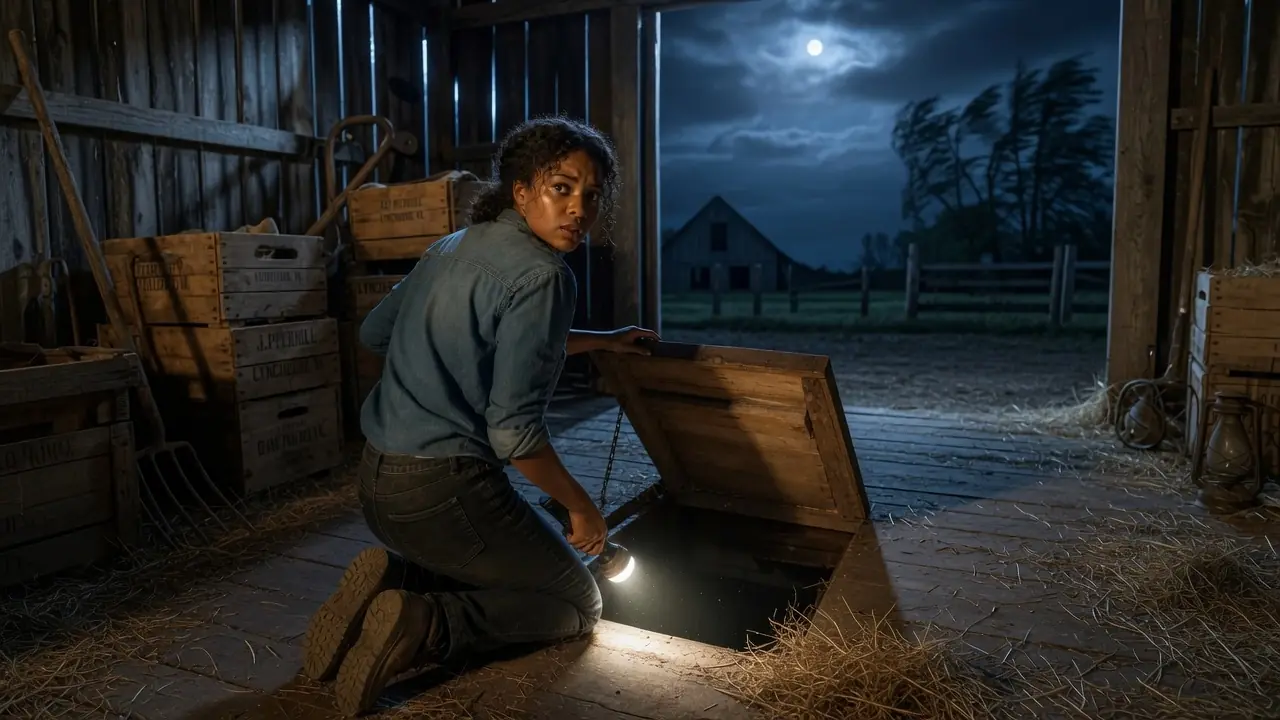
But when she stepped into that dusty silence, something felt off. The floor creaked, the air shifted, and beneath the smell of hay and rust, a secret waited—one her father had left only for her.
The funeral smelled of lilies and rain-damp earth. Maya sat in the second row, her hands clasped so tightly that her knuckles ached. Her father's coffin rested at the front, its mahogany polished to a mirror shine and surrounded by people who had barely known him.
The pastor's voice faded behind the hum of whispers.
“He left the company to the boys, right?” someone murmured.
Another person chuckled softly, thinking she could not hear.
After the burial, the family gathered in the farmhouse's drawing room. The lawyer cleared his throat, the papers trembling slightly in his hands.
“According to the last testament of Richard Thompson...”
Everyone leaned forward.
The first lines sounded like a drumroll of privilege. The mansion, the vineyards, and the fleet of cars were all left to the sons from his first marriage. Their mother, pale and polished, flashed a smile sharp enough to cut glass.
Then came the pause.
“And to Maya Thompson...”
The lawyer hesitated, his eyes flicking toward her.
“The old farmhouse and the adjacent barn.”
Silence.
Then laughter cracked open the room.
One brother muttered, “Guess she gets the hay.”
Another added, “Maybe she'll find a horse to match.”
“It's symbolic,” she purred. “He always said you were earthy.”
The lawyer tried to continue, but the words blurred. Maya stared at the papers in front of her, only two lines long, signed by the same father who had once taught her to plant seeds and count the stars from that very barn roof.
Outside, thunder rolled across the valley.
She rose quietly, her chair legs scraping against the marble floor.
“I'll take what's mine,” she said, her voice steady even though her eyes were wet.
No one stopped her.
As she stepped into the cold evening, the scent of wet soil struck her, raw and grounding. Behind her, laughter returned, muffled through the walls like echoes from a life she no longer belonged to.
By the time she reached her car, the first drops of rain streaked the windshield. She glanced at the folded deed on the passenger seat, creased and smudged, but undeniably hers.
For the first time that day, she smiled—barely.
“All right, Dad,” she whispered. “Let's see what you left me.”
The engine rumbled to life, and the headlights sliced through the downpour as she drove toward the valley, toward the barn everyone else had forgotten.
By the time Maya reached the edge of the property, the rain had slowed to a whisper. The old farmhouse rose from the mist like a memory refusing to die. Its roof sagged, its shutters hung loose, and ivy crawled up its sides as if trying to hold the place together.
She parked near the barn, the headlights cutting across the muddy field. When she stepped out, the smell reached her first: wet hay, rust, and the faint sweetness of oil-soaked wood.
It was the same scent she remembered from childhood afternoons, when her father would whistle while repairing tractors and let her feed the horses. Now, silence pressed down like a heavy coat.
She pushed open the barn door. The hinges groaned, and a wave of dust drifted upward, swirling through thin beams of gray morning light. Cobwebs clung to the rafters like old lace.
She stood there for a moment with her arms crossed, simply breathing it in—loss, memory, and dirt all mixed together.
“Looks like nobody's cared for you in years,” she murmured, her voice echoing softly.
The broom she found near the wall was cracked, but it still worked. Each sweep stirred up ghosts: feed sacks marked with faded initials, rusted buckets, and a broken lantern.
She worked for hours, sleeves rolled up and hair tied back with an old ribbon she had found in the glove compartment. Outside, the sky cleared, revealing streaks of sunlight that made the barn glow like an old photograph.
Sweat gathered at her temples. Her palms blistered, but she kept going.
At one point, she laughed quietly.
“Dad, you really left me a project, didn't you?”
By noon, she found herself staring at a warped beam carved with the initials R.T. + M.T. The small M was hers, etched when she was nine.
Beneath it, the wood had splintered slightly, as though something had once been pried loose. She touched it and felt a soft give, but she did not push farther.
The sound of tires on gravel startled her.
She peeked through a gap in the boards. A white SUV had pulled up. Her stepmother stepped out, perfect as ever in pressed slacks and sunglasses, followed by one of Maya's brothers.
They did not approach the barn. They only stood there surveying the land like vultures circling.
“She can have this dump,” the brother said. “Mom, do you really think Dad meant to leave her anything worth something?”
Her stepmother's voice carried sharply through the air.
“He was sentimental. He always thought pity was a virtue.”
Maya crouched behind a stack of hay bales, her breathing shallow. Their voices faded as they drove away, leaving only the sound of the wind knocking against the barn walls.
When Maya stood again, something inside her had shifted. The humiliation that had followed her from the will reading began to harden into quiet resolve.
She wiped the sweat from her brow and grabbed a rusted toolbox from beneath the bench.
That was when she noticed it.
One of the floorboards near the back corner was slightly raised and uneven. She pressed her boot against it.
It moved.
A hollow echo answered from beneath.
She knelt, her heart thudding, and brushed away the dirt. The board lifted easily, revealing a small compartment.
Inside lay a single brass key wrapped in oilcloth and a folded note yellowed with time.
She unfolded it carefully. Her father's handwriting was unmistakable, strong and slanted.
“Where the earth meets its mirror, truth waits for its keeper.”
The words did not make sense, but the ink looked fresh enough to be deliberate. She sat back, holding the key up to the light, her reflection flashing faintly in the metal.
For the first time since the funeral, her grief felt different. It was no longer hollow. It was alive, carrying a pulse of curiosity that refused to die.
She slipped the key into her pocket, stood, and looked around the barn again—really looked.
This time, something in the air felt heavier. Charged.
“Okay, Dad,” she whispered. “What are you trying to tell me?”
The wind blew through the open doorway, scattering bits of hay across the clean floor, almost like an answer.
That night, the valley lay beneath a sheet of silver mist. The farmhouse groaned with every gust of wind, but Maya could not sleep.
The note burned in her mind like a whisper she could not silence.
Where the earth meets its mirror.
She sat by the window, watching moonlight spill across the barn roof. By two in the morning, she had had enough.
She grabbed a flashlight and her father's old jacket, which was still hanging by the door. The ground was damp beneath her boots as she crossed the field, crickets chirping low and steady.
Inside, the barn was colder than before. Her breath fogged faintly in the air.
She swept the flashlight across the floor, over the hay bales, the workbench, and the place where she had found the key.
Then she noticed something she had missed earlier: a hairline crack in the concrete beneath a stack of crates, just wide enough to look suspicious.
She shoved the crates aside, her heart pounding harder than she expected. The scrape of wood echoed through the silence.
Kneeling, she ran her fingers along the edge. The concrete was slightly raised.
When she pressed her palm down, it moved.
The section lifted like a trapdoor, releasing a stale breath of air that smelled of soil and iron. Beneath it, narrow steps disappeared into darkness.
Her flashlight trembled slightly in her hand.
“Dad,” she muttered under her breath, half afraid of the answer.
She descended slowly. The walls were packed dirt lined with old boards. Cobwebs clung to her hair.
Each step creaked softly beneath her boots until the tunnel opened into a small underground chamber, barely large enough for two people to stand.
Her light landed on shelves filled with metal boxes, sealed and labeled in her father's handwriting.
The first read, “Harvest Logs, 2009.”
Another said, “Company Records.”
But one near the corner bore only a single name.
“Maya.”
Her throat tightened.
She brushed the dust from the lid and unlatched it. Inside were folders tied neatly with twine, old photographs, and documents stamped with the name Thompson Holdings Limited.
The first page listed the company's ownership. Under “Principal Shareholder,” one name was printed:
Maya Thompson.
She sank onto a crate, the papers trembling in her hands.
Her father had not forgotten her. He had hidden everything for her.
He must have known someone would try to take it away.
The next folder contained letters, drafts of a trust, meeting notes, and a recording device.
She pressed play.
Static crackled. Then her father's voice filled the chamber, soft and familiar.
“If you're hearing this, it means I couldn't tell you in time. The company's yours, Maya. I built it under your name years ago. Your stepmother has been trying to move assets for months. This was the only way to keep them safe. Trust the barn. It has always protected what mattered.”
Maya covered her mouth as tears welled in her eyes.
The voice continued, growing faint.
“You were always the one with heart. I knew you'd find this when it mattered most.”
When the recording clicked off, the silence was deafening.
She sat there, letting the weight of every word sink in.
Above her, the first light of dawn began seeping through cracks in the floorboards, tracing faint lines across the dirt ceiling.
She gathered the documents carefully into a box, then took one final look around. There were maps, safes, sealed envelopes, and evidence of years of planning.
As she climbed back up the stairs, a strange calm settled over her.
Every doubt, every insult at the will reading, every laugh suddenly had context.
Her father had not disinherited her.
He had entrusted her.
When she emerged into the barn again, sunlight was spilling through the open door. The dust looked almost golden in the light.
She wiped her face with her sleeve and whispered, “You outsmarted them all, didn't you?”
For the first time since he died, she felt him near—not as a memory, but as a quiet certainty.
She locked the trapdoor behind her, pocketed the key, and looked toward the farmhouse on the hill where her stepmother slept soundly, unaware.
A storm was coming, but this time it was Maya's to command.
By sunrise, the air smelled of rain and rust. Maya stood in front of the farmhouse mirror, the documents spread across the table beside her: company shares, transfer letters, notarized seals, and everything bearing her father's signature.
The realization still felt unreal.
She poured herself coffee with shaking hands, watching the black swirls settle.
Her phone buzzed.
A message from her stepmother read, “Don't embarrass yourself with your little barn. We're meeting with the estate lawyers today.”
Maya smiled faintly as she slipped the papers into a worn leather folder.
“You'll be meeting me,” she murmured.
By ten that morning, the conference room downtown was filled with tension thick enough to taste. Her stepmother sat at the center of the polished oak table, surrounded by her two sons and a pair of attorneys.
The men greeted Maya with polite smirks, the kind that said she did not belong there.
The lead lawyer cleared his throat.
“Miss Thompson, we understand you're contesting the will.”
“Not the will,” Maya replied, placing her folder on the table. “The ownership.”
He frowned. “I'm sorry?”
She opened the folder and began laying out the documents one by one, each stamped, sealed, and dated.
The lawyer leaned closer, his eyes narrowing.
The room fell silent as everyone realized what they were seeing: incorporation certificates naming Maya Thompson as the primary shareholder of Thompson Holdings, the same company that technically owned all the family estates, cars, and other assets.
Her stepmother's face drained of color.
“This is absurd,” she snapped. “Those are forged.”
Maya slid another page forward.
“They're not. These are the original notary stamps from Dad's legal team. You can verify the signatures.”
The younger brother scoffed.
“This doesn't mean anything. The court already—”
“It means,” Maya interrupted softly, “that the will you laughed about was never the whole picture. The company owns everything, and my father made sure I owned the company. You inherited titles, not control.”
For a moment, no one spoke.
The stepmother's lawyer muttered something about verification and excused himself to call the registrar.
Maya leaned back, watching the storm build in her stepmother's eyes.
“This was your father's doing,” the woman hissed. “He always wanted to punish me.”
“He wanted to protect what he built,” Maya replied. “From greed.”
The door opened again. A clerk from the registrar's office entered holding a certified printout.
“All records confirm Miss Maya Thompson as the majority shareholder.”
The lawyer swallowed hard.
“Legally speaking, she owns the controlling interest in the Thompson Group.”
One of Maya's brothers stood abruptly, knocking over his chair.
“You can't be serious. She's not even—”
Maya looked him directly in the eye.
“Not even what?” she asked quietly.
The room froze.
He faltered, glancing at his mother, but she remained silent, one trembling hand pressed to her forehead.
The lead attorney exhaled.
“We'll have to honor this. If we don't, the company could face legal liability.”
Maya gathered her papers calmly while the hum of the air conditioning filled the silence.
“I'm not here to take your homes,” she said, glancing at her brothers. “But this family stops being your mother's puppet today.”
Her stepmother's face twisted with fury.
“You'll regret crossing me.”
“I already did,” Maya replied, standing. “Every time I stayed quiet.”
She turned to leave, her heels clicking sharply against the marble floor.
As she reached the door, the same lawyer who had once read the will called after her.
“Miss Thompson, your father would be proud.”
She paused, nodded once, and walked into the sunlight.
That evening, news spread quickly. The story reached the local papers under a headline about a farmer's hidden plan and a secret heir.
Her stepmother filed an appeal, but the evidence was airtight. One by one, her allies withdrew.
Within weeks, the court's decision was final.
Maya retained full ownership. The company, the land, and every estate were all under her authority.
Standing in her father's barn again, she let the words sink in.
Justice did not roar.
It whispered.
She ran her fingers over the old beam carved with their initials. The wood felt warm now, alive beneath her touch.
“Guess you trusted me after all,” she whispered.
Outside, thunder rolled again, but this time it sounded like applause.
Weeks later, spring rain softened the fields around the farmhouse. Grass had begun growing where the ground had once cracked, and the barn—her father's final gift—no longer felt like a tomb.
Its scent had changed. There was less dust and more renewal.
Maya spent her mornings restoring the property, this time with purpose. She put new paint on the doors, opened the loft to sunlight, and let birds nest above the rafters.
Each nail she hammered felt like the closing of a wound that had remained open too long.
One afternoon, a car pulled up.
Her stepbrothers stepped out. There were no suits and no arrogance, only quiet faces.
The older one held out a box.
Inside was their father's pocket watch, polished and clean.
“He told Mom he'd lost it,” the younger brother said softly. “Guess he just didn't trust her with it.”
Maya smiled faintly.
“He trusted time to show the truth.”
They stood in silence for a moment while the wind moved through the tall grass.
There were no apologies and no speeches, only understanding.
When they drove away, Maya watched until the car disappeared over the hill, the ache in her chest finally easing.
That evening, she sat on the barn steps, the same place where her father had once drunk coffee at sunrise. The air smelled of wet soil and hay.
She held the watch in her hand. Its ticking was faint but steady.
“He didn't leave me a barn,” she murmured, watching the horizon burn gold. “He left me proof that love outlives greed.”
Somewhere deep inside, she could almost hear him laugh again—warm, proud, and free.
The barn doors creaked gently in the wind, closing on the past and opening toward everything ahead.