Tips for cleaning greasy plastic and glass containers without scrubbing.
Tips 19/12/2025 16:36

How to Boil Pork Ears So They Stay White, Fragrant, and Perfectly Crunchy
Pork ears are rich in protein and collagen, with only a thin layer of fat beneath the skin. However, if they are not boiled properly, pork ears can easily become overly soft, lose their signature crunch, turn dark in color, or even develop an unpleasant odor—significantly reducing the appeal of the dish.
Boiled pork ears can be enjoyed on their own or used as an ingredient in popular dishes such as roasted rice powder pork ear salad or fish sauce–marinated pork ears. To achieve pork ears that are white, aromatic, and satisfyingly crunchy, you only need to remember two simple but essential tips.
One important secret when boiling pork ears is to add a mildly acidic ingredient such as vinegar or lemon juice to the cooking water. Simply adding one of these ingredients will help the pork ears look whiter and smell fresher.
The acid in vinegar or lemon juice lowers the pH level of the water. In a mildly acidic environment, the amino groups in proteins contract and stabilize more quickly. As a result, the surface of the pork ears firms up, helping them retain a pale pink-white color instead of turning dark when exposed to air. At the same time, collagen in the pork ears sets just enough to create a pleasant crunch rather than a rubbery or mushy texture.
Additionally, acids help neutralize and reduce the release of sulfur-containing compounds in meat, which are partly responsible for unpleasant odors. When boiling pork ears, adding about one tablespoon of vinegar to the pot is sufficient. This amount will not affect the flavor but is enough to keep the pork ears clean-smelling and visually appealing. Avoid using too much vinegar, as excessive acidity can soften the texture and introduce an odd taste. If you prefer not to use vinegar, freshly squeezed lemon juice works just as well.
For extra aroma, you can also add ingredients such as ginger slices or shallots to the boiling water. These not only enhance flavor but further help eliminate any lingering smell.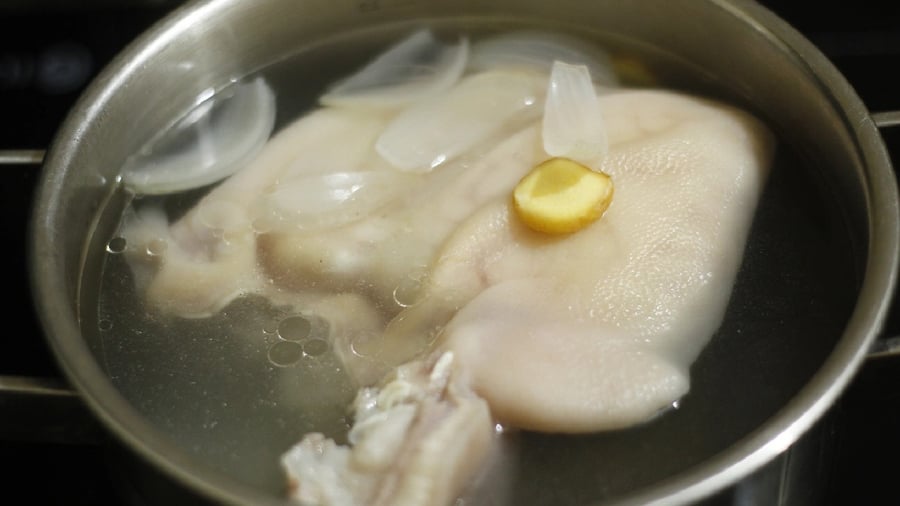
Proper cleaning is just as important as the boiling process. When preparing raw pork ears, you can rub them with coarse salt combined with vinegar or lemon juice. Salt and acidic ingredients help remove dirt, residue, and odors from the surface. Use a knife to scrape off any remaining impurities and fine hairs, then rinse thoroughly with clean water before boiling. This step ensures the pork ears are hygienic and free from unwanted smells right from the start.
Controlling both temperature and cooking time is crucial for maintaining the crunchiness of pork ears.
When boiling, keep the heat at a moderate level and avoid letting the water boil too vigorously. Excessive heat causes collagen to break down too quickly, making the broth cloudy and the pork ears soft. Depending on their thickness, pork ears usually need about 12–15 minutes of gentle boiling.
While waiting for them to cook, prepare a bowl of boiled water that has been cooled and add several ice cubes. You can also squeeze in some lemon juice. This ice bath is used for thermal shocking, which helps the pork ears become crunchier and whiter. The sudden temperature change causes proteins and collagen chains—expanded by heat—to contract immediately. This rapid contraction firms up the pork ears, locks in their crunch, and gives them an attractive pale pink color. The added lemon juice further enhances freshness and prevents discoloration.
If boiled pork ears are left to cool naturally in open air, they will continue cooking from residual heat and gradually soften. At the same time, oxidation can occur, causing the surface to darken. An ice bath prevents these issues and ensures your pork ears remain crisp, clean-tasting, and visually appealing.
With these simple techniques, you can confidently prepare boiled pork ears that are delicious, aromatic, and perfectly crunchy—ideal for a variety of dishes or enjoyed on their own.