The first time Isaiah Bennett saw Mrs. Dorothy Hensley, she was standing in the middle of Oak Street Post Office with a cardboard box in her arms and tears she was trying very hard not to let anyone notice.
Isaiah was eleven years old that spring, tall for his age but still thin, with dark brown skin, close-cropped hair, and quiet eyes that paid attention to things most adults walked past. He wore a faded red hoodie, jeans with one knee patched by his mother, and sneakers that had been cleaned so many times the white rubber had turned soft gray.
In his pocket, folded inside a grocery receipt, was eighteen dollars.
Not just money.
A plan.
For almost two months, Isaiah had been saving for a pair of used basketball shoes from Mr. Calloway’s thrift store on Madison Avenue. They were black with blue stripes, barely worn, and exactly his size. Mr. Calloway had agreed to keep them behind the counter until Saturday if Isaiah could bring the money.
“You got until close,” Mr. Calloway had told him. “After that, I can’t promise they’ll still be here.”
Isaiah had nodded like a businessman.
“I’ll have it.”
He had earned those eighteen dollars slowly. Two dollars for carrying groceries upstairs for Mrs. Lane. Three dollars for helping Mr. Polk sweep leaves from the church steps. Four dollars for washing the front windows of the beauty shop. A handful of coins for taking trash bags to the alley for neighbors who were too tired or too old to carry them.
His mother, Marlene Bennett, had watched him count the money every night at the kitchen table.
“You sure you don’t want to save it?” she asked once.
“I am saving it,” Isaiah said.
“For shoes?”
“For shoes I can play in.”
Marlene had smiled, but there was sadness under it. She worked at a bakery before sunrise and cleaned offices three nights a week. She hated that her son had to save so hard for something other children asked for without thinking.
Still, she never made him feel foolish for wanting them.
“A boy is allowed to want something for himself,” she said.
Isaiah remembered that as he stood in Oak Street Post Office beside his mother, waiting for her to mail a money order to the electric company.
The post office was small, with cream-colored walls, old metal mailboxes, a long counter with glass windows, and a row of blue plastic chairs nobody seemed to trust. A display of envelopes and tape stood near the front. The floor smelled faintly of dust, paper, and rain from people’s shoes. Behind the counter, a clerk named Mr. Daniels moved slowly but not kindly, stamping envelopes and sliding receipts under the glass with the tired face of a man who believed every customer was one question away from ruining his day.
A line stretched toward the door.
People checked watches.
A baby fussed in a stroller.
A man in a delivery uniform sighed every time the line failed to move.
Isaiah stood beside his mother, holding the money order envelope carefully in both hands. Marlene had trusted him with it for exactly two minutes while she searched her purse for the receipt.
“Don’t bend it,” she said.
“I’m not.”
“And don’t lose it.”
“I’m standing right here.”
“That’s what people say before they lose things.”
Isaiah smiled a little.
Then the old woman stepped forward.
She had been sitting in one of the blue chairs with a cardboard box balanced carefully on her lap. Isaiah had noticed her earlier because the box looked too heavy for her arms, and because she kept checking the address label as if she expected the words to move around.
She was Black, elderly, and small, with warm brown skin, silver hair tucked beneath a soft yellow hat, and a long beige coat buttoned neatly over a lavender dress. Her shoes were polished, though the heels were worn. She wore white gloves even though it was not church, and she carried herself with quiet dignity, the kind that seemed to come from years of standing straight even when life leaned hard.
When she reached the counter, she lifted the box with both hands.
It was not a clean new box. It had old tape marks, crossed-out writing, and careful brown paper wrapped around one side. On the top, written in blue ink, was an address in California.
Mr. Daniels looked at it over his glasses.
“Shipping?”
“Yes, sir,” the old woman said. “To Oakland, California. I would like it to arrive safely.”
“You want tracking?”
“Yes, please.”
“Insurance?”
The old woman hesitated. “Is that expensive?”
“Depends what it’s worth.”
She looked down at the box.
To anyone else, it was just cardboard.
To her, clearly, it was not.
“It is worth more than I can explain,” she said.
Mr. Daniels typed on the computer.
The scale beeped under the weight of the box.
“That’ll be twenty-six dollars and forty cents with tracking. More with insurance.”
The old woman blinked.
“Oh,” she said softly.
Isaiah saw her fingers tighten around her purse.
Mr. Daniels waited.
The line behind her shifted.
The delivery man sighed again.
The old woman opened a small coin purse and removed folded bills.
A ten.
A five.
Three ones.
Then coins.
She counted carefully.
Eighteen dollars and seventy-five cents.
Isaiah noticed because he was good with numbers, especially when money was involved.
“I thought it would be less,” she said.
Mr. Daniels shrugged. “It’s the weight.”
“Could it go slower?”
“That is slower.”
“Oh.”
The word sounded very small.
She looked at the box again.
“I need it to go today.”
Mr. Daniels tapped the counter.
“Then you need twenty-six forty.”
“I have eighteen seventy-five.”
“You’re short.”
“I understand that.”
The clerk looked past her at the line. “Step aside if you need to figure it out.”
The old woman’s face changed.
Not loudly.
Not dramatically.
It was worse than that.
Her mouth pressed together. Her eyes lowered. Her shoulders pulled inward just a little, as if she was trying to make herself take up less space.
Isaiah hated that.
He had seen his mother do it once at a grocery store when a card machine rejected a payment even though the money was there. He had seen older people do it at bus stops when drivers pulled away too quickly. He had felt it himself when kids asked why his shoes looked “tired.”
The old woman tried to lift the box off the scale.
It was awkward and heavy.
Isaiah moved before he fully decided to.
“I can help,” he said.
Everyone turned.
The old woman looked down at him.
“Oh, no, sweetheart. I have it.”
But she did not.
The box tipped slightly, and Isaiah quickly caught the side with both hands.
Marlene stepped closer. “Isaiah.”
“I’m just helping with the box, Ma.”
The old woman gave him a grateful look.
“Thank you.”
Isaiah helped her set it on the side counter where people filled out forms.
Mr. Daniels called, “Next.”
The line moved around them as if the old woman had become a chair in the room.
Isaiah stayed.
Marlene watched carefully, but she did not pull him away.
The old woman stood beside the box, staring at the address label.
Isaiah looked at the package.
“What’s inside?” he asked.
“A quilt,” she said.
“What kind?”
Her face softened.
“A wedding ring quilt. Yellow, blue, and white. I made it for my granddaughter.”
Isaiah looked at the box again with new respect.
“You made a whole blanket?”
“A quilt is not exactly a blanket,” she said gently.
“What’s the difference?”
“A blanket keeps you warm. A quilt remembers who loved you.”
Isaiah did not know what to say to that.
The old woman touched the top of the box with her gloved hand.
“My granddaughter is graduating from college next week. First person in our family to do so. I cannot travel that far, but I promised her something made by my hands would be there.”
Marlene’s expression softened.
“What’s your name, ma’am?” she asked.
“Dorothy Hensley.”
“I’m Marlene Bennett. This is my son, Isaiah.”
Mrs. Hensley smiled at him.
“Isaiah. A beautiful name.”
“Thank you,” he said.
She looked back at the box.
“I should have checked the price before coming,” she said. “That was my mistake.”
Isaiah frowned.
“It shouldn’t cost so much to send love.”
Mrs. Hensley looked at him, surprised.
Then she smiled sadly.
“No. It should not.”
Isaiah turned toward the display shelves.
There were boxes there. Flat-rate boxes, padded envelopes, mailing tubes, labels, tape. He had seen the commercials before. If it fits, it ships. He had also helped his teacher mail classroom supplies once, and she had explained that sometimes the right box cost less than the wrong one.
He walked over to the display and picked up a large flat-rate box.
Mr. Daniels glanced from behind the counter.
“That won’t fit,” he said.
Isaiah looked at the old box, then the flat-rate box.
“Maybe if it’s folded different.”
Mrs. Hensley looked alarmed.
“The quilt is wrapped carefully.”
“I won’t mess it up,” Isaiah said quickly. “I mean, I can help you check. Only if you want.”
The delivery man behind them muttered, “Kid running the post office now.”
Marlene turned her head slowly toward him.
He stopped muttering.
Mrs. Hensley looked at the flat-rate box, then at Isaiah.
“You think it could work?”
“Maybe.”
Marlene checked the price printed on the display.
“Flat rate is nineteen ninety-five.”
Mrs. Hensley’s eyes widened.
“I am still short, but not by so much.”
Isaiah reached into his pocket.
His fingers closed around the folded grocery receipt.
Eighteen dollars.
Basketball shoes.
Saturday deadline.
Black with blue stripes.
He thought about running in them.
He thought about Mr. Calloway putting them back on the shelf if he did not come.
Then he looked at Mrs. Hensley’s gloved hand resting on the box.
A quilt remembers who loved you.
He pulled out the folded money.
Marlene saw it immediately.
“Isaiah,” she said quietly.
He looked up at her.
She knew what the money was for.
He knew she knew.
That made it harder.
But Mrs. Hensley had already started to put her coins away. She was preparing to carry the box home, to miss the mailing date, to call her granddaughter and explain something that would sound small but feel heavy.
Isaiah placed his money on the counter beside the flat-rate box.
“I can cover the rest.”
Mrs. Hensley stared at the bills.
“No,” she said.
“It’s only a little.”
“It is not only a little.”
“It’s for something important.”
“Yes,” she said. “Your something.”
Isaiah shrugged, though his chest hurt.
“Shoes can wait.”
Marlene closed her eyes for one second, then opened them.
She did not stop him.
Mrs. Hensley’s voice trembled.
“I cannot take a child’s shoe money.”
Isaiah swallowed.
“You said your granddaughter is the first person in your family graduating college.”
Mrs. Hensley nodded.
“Then the quilt should be there.”
The old woman looked at Marlene.
Marlene’s eyes were wet, but her voice was steady.
“He means it.”
Mrs. Hensley pressed her lips together.
“I will pay you back.”
“You don’t have to.”
“I will,” she said with a firmness that made Isaiah stand straighter. “But today, I will accept help.”
They bought the flat-rate box.
At the side counter, Mrs. Hensley carefully opened the old cardboard box. Inside was a quilt wrapped in tissue paper and tied with yellow ribbon. Even folded, Isaiah could see pieces of fabric in blue, white, and gold, stitched together in rings that curved and crossed like promises.
Mrs. Hensley’s hands trembled a little as she lifted it.
“May I?” Marlene asked gently.
Together, Marlene and Mrs. Hensley refolded the quilt with careful hands while Isaiah held the new box open. He placed the letter on top when Mrs. Hensley asked him to.
The letter was addressed to Keisha.
Mrs. Hensley pressed her palm over it before closing the lid.
Then Isaiah helped tape the box.
He wrote the address again because Mrs. Hensley said her handwriting had grown less steady that day. He printed slowly, making every letter clear.
When they returned to the counter, Mr. Daniels said nothing about the delay.
He scanned the box.
“Nineteen ninety-five.”
Mrs. Hensley paid eighteen seventy-five.
Isaiah added two dollars.
Marlene added the remaining coins before he could count.
The clerk printed the receipt and tracking number.
Mrs. Hensley took it in both hands.
For a moment, she looked as if she had received more than proof of shipping.
She looked as if a door had opened.
Outside, rain had begun to fall softly against the post office windows.
Mrs. Hensley turned to Isaiah.
“What did you say your last name was?”
“Bennett.”
“Isaiah Bennett,” she repeated.
She opened her purse and took out a small square of fabric. It was blue cotton with tiny white stars.
“I carry scraps sometimes,” she said. “Old habit.”
She placed the fabric in his hand.
“This is not payment. It is a reminder.”
“A reminder of what?”
“That even scraps can become something beautiful when someone takes time with them.”
Isaiah looked at the fabric.
It was soft and worn.
“Thank you.”
“No,” Mrs. Hensley said. “Thank you for helping my love get where it needed to go.”
On the walk home, Isaiah was quiet.
His mother walked beside him under her black umbrella, the money order receipt tucked safely in her purse. Rain tapped above them. Cars passed. Somewhere nearby, the bakery on Oak Street was closing for the day, and the smell of warm bread drifted through the damp air.
“You sad about the shoes?” Marlene asked.
Isaiah kicked a pebble along the sidewalk.
“A little.”
“That’s allowed.”
“I know.”
“You did a kind thing.”
“I know that too.”
“But kind things can still cost something.”
He looked up at her.
She always knew how to say the truth without making it hurt worse.
“I really wanted them,” he admitted.
Marlene nodded.
“I know, baby.”
“I’m not sorry though.”
She stopped walking and touched his cheek.
“That’s how you know your heart chose right.”
Saturday came.
Isaiah went to Mr. Calloway’s thrift store even though he already knew.
The shoes were gone.
Mr. Calloway looked genuinely sorry.
“I held them till noon, Isaiah. A woman bought them for her grandson.”
“It’s okay,” Isaiah said.
“It ain’t okay when you wanted them.”
Isaiah shrugged.
“They fit somebody.”
Mr. Calloway studied him.
“You got old eyes for a young boy.”
Isaiah smiled faintly.
“My mom says that too.”
For a few weeks, life returned to normal.
School.
Chores.
Bills.
Rainy bus rides.
Homework at the kitchen table.
Isaiah kept the blue fabric scrap folded inside his drawer. Sometimes he took it out and rubbed it between his fingers. He liked the tiny white stars.
Then, one afternoon, a letter arrived.
The envelope was addressed to Isaiah Bennett in careful handwriting.
Inside was a photograph.
A young woman in a graduation cap and gown stood smiling with a quilt wrapped around her shoulders. Behind her were balloons, a dorm room wall, and a bright window. She held a sign that said:
Thank you, Grandma. Thank you, Isaiah.
Isaiah stared at it.
Marlene leaned over his shoulder.
“Oh my goodness.”
There was also a note from Mrs. Hensley.
Dear Isaiah,
The quilt arrived the day before Keisha’s graduation. She called me crying so hard I could barely understand her. She said she wore it around her shoulders all evening after the ceremony.
I told her about the young man who helped me mail it.
She asked me to send you this photograph.
You gave up something you wanted so something I loved could arrive on time. That is not a small thing.
Please visit me one day if your mother allows. I would like to show you how scraps become quilts.
With gratitude,
Dorothy Hensley
Isaiah read the note three times.
His mother read it once and smiled.
“You want to visit?”
“Can I?”
“We’ll go together.”
Mrs. Hensley lived in a small yellow house on Benton Street, not far from the church where Isaiah sometimes helped set up chairs. The front porch had two rocking chairs and flowerpots full of red geraniums. Inside, the house smelled like tea, starch, cotton fabric, and something sweet baking in the oven.
But what Isaiah remembered most was the sewing room.
It had shelves stacked with folded fabric in every color he could imagine. There were wooden spools, jars of buttons, measuring tapes, pincushions, patterns, ribbons, and a large sewing machine near the window. A quilting frame stood in the center of the room, holding a half-finished quilt made of green and cream pieces.
Isaiah stepped inside and stopped.
Mrs. Hensley smiled.
“Most people see clutter.”
Isaiah shook his head.
“I see pieces.”
Her face lit up.
“Yes,” she said. “Exactly.”
That afternoon, she taught him how to thread a needle.
He was not good at it.
The thread kept bending away from the needle’s eye. His fingers felt too big. He frowned so hard his forehead hurt.
Mrs. Hensley did not laugh.
She simply said, “Slow hands learn faster than proud hands.”
He tried again.
The thread went through.
He grinned.
Marlene watched from the doorway, smiling.
After that, Isaiah visited Mrs. Hensley twice a month, then every Saturday when school and chores allowed. At first, his mother stayed. Later, after she knew Mrs. Hensley well and trusted the house, she allowed Isaiah to visit alone, as long as he called when he arrived and before he left.
Mrs. Hensley taught him sewing the way some people teach prayer: carefully, patiently, with respect for every small motion.
She taught him how to sew a straight line.
How to knot thread.
How to match colors.
How to press seams.
How to replace buttons.
How to mend torn pockets.
How to hem pants.
How to listen to fabric.
“Fabric talks?” Isaiah asked once.
“Everything does if you stop dragging it where it does not want to go.”
He laughed.
She taught him that quilts were not only covers for beds. They were maps. Families. Histories. Old dresses, work shirts, curtains, baby clothes, church fabric, pieces of lives stitched together so memory could keep someone warm.
Isaiah loved that.
He loved the logic of measuring and cutting.
He loved the quiet rhythm of needle and thread.
He loved the way a messy pile of scraps became a pattern when someone cared enough to arrange it.
At school, boys teased him when they found out.
“You sewing now?” Andre asked, not cruelly, but loudly enough for others to hear.
Isaiah lifted his chin.
“Yeah.”
“That’s old lady stuff.”
Isaiah looked at his friend’s jacket sleeve, where the cuff was half torn.
“Your old lady stuff needs fixing.”
Andre looked down.
“You can fix that?”
“Probably.”
The next day, Andre brought him the jacket.
Isaiah repaired it at Mrs. Hensley’s house, using thread that nearly matched. Andre wore it the following week without saying much, but when someone asked about the sleeve, he said, “Isaiah fixed it. Looks better than before.”
That changed things.
Slowly, kids began asking Isaiah to fix small things.
A backpack strap.
A torn pocket.
A loose button on a school shirt.
A split seam in a coat.
Isaiah charged fifty cents sometimes, a dollar if the job took longer. Sometimes he did it for free if he knew the person did not have money.
Mrs. Hensley made him keep a notebook.
Date.
Name.
Item.
Repair.
Payment.
“Why?” Isaiah asked.
“Because people take work more seriously when you take your own work seriously.”
By fourteen, Isaiah had a small box of sewing supplies under his bed. By fifteen, he could hem trousers neatly enough that Mr. Calloway from the thrift store asked if he wanted to help with donated clothes that needed small repairs before selling.
“I can pay you a little,” Mr. Calloway said.
“How much is a little?”
“More than nothing. Less than you deserve.”
Isaiah laughed and took the job.
He spent Saturday mornings in the back of the thrift store, repairing seams, replacing buttons, sorting clothes, and learning how many good things people gave away because of tiny flaws.
He thought about that often.
Tiny flaws.
Big consequences.
A coat missing one button became useless to someone who could not sew. Pants too long stayed unworn. A shirt with a torn cuff sat in a donation bin for months. But with thread, time, and care, those things became useful again.
Mrs. Hensley loved hearing about the thrift store.
“You are learning restoration,” she said.
“I thought I was learning sewing.”
“Sewing is one kind of restoration.”
“What else is?”
She looked at him with that gentle seriousness he had come to trust.
“Encouragement. Listening. Feeding people. Teaching children. Forgiving when it is wise. Holding memories. Many things.”
Isaiah wrote that sentence down.
When he turned sixteen, Mrs. Hensley began teaching him tailoring basics. How to pin fabric properly. How to measure shoulders, sleeves, inseams, waistlines. How to see the difference between clothes that fit and clothes that merely stayed on the body.
“Fit is dignity,” she said.
Isaiah understood.
He had worn clothes too big because they were meant to last. He had worn shoes too worn because there was no money yet. He knew how different he felt when something fit right.
At seventeen, he made his first jacket from a thrifted wool coat and fabric pieces Mrs. Hensley helped him choose. It was not perfect. One sleeve pulled slightly when he raised his arm. The lining bunched near the shoulder. But when he wore it to school, even the boys who used to tease him stared.
Andre said, “Man, you made that?”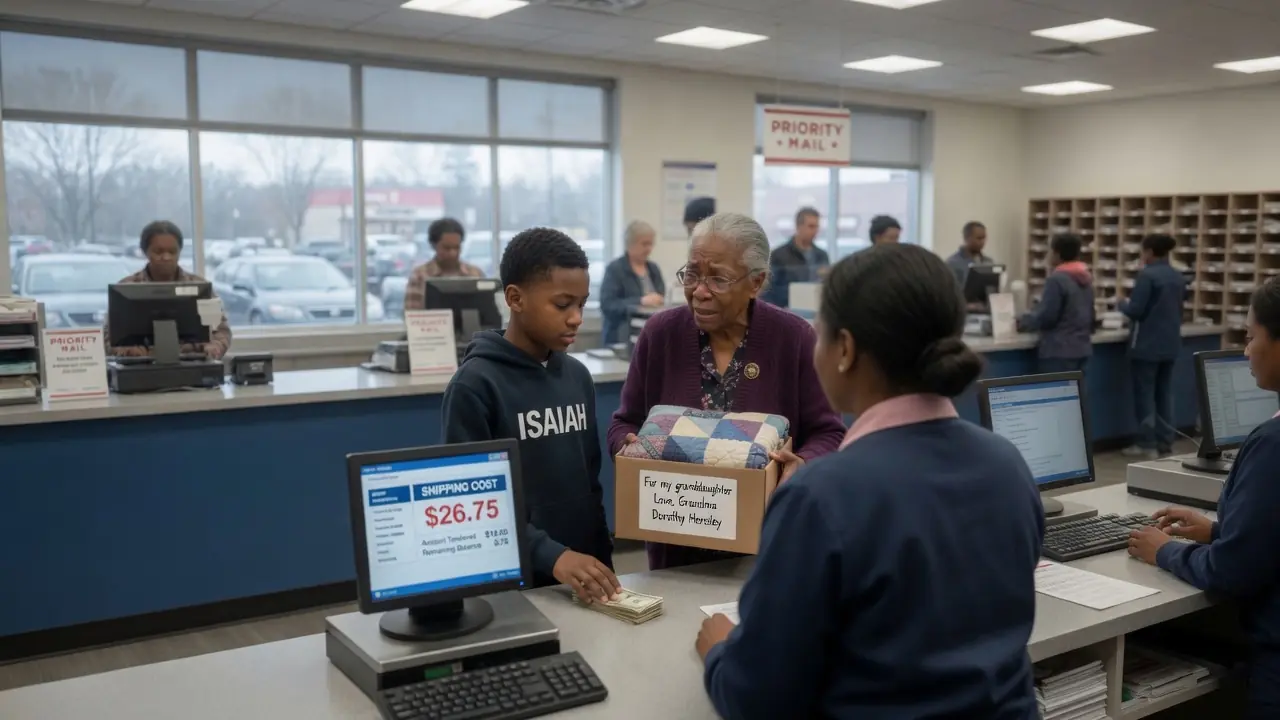
Isaiah tried to act casual.
“Yeah.”
“You could sell those.”
The thought stayed with him.
Not just repair.
Create.
By high school graduation, Isaiah had built a small reputation in the neighborhood. People brought him clothes before job interviews, church events, school dances, and family pictures. He altered thrift-store suits so young men could attend graduations looking sharp. He adjusted dresses for girls who could not afford expensive tailoring. He mended coats for elders before winter.
He never forgot what Mrs. Hensley said.
Fit is dignity.
Mrs. Hensley came to his graduation wearing a blue dress and a white cardigan with tiny pearl buttons. Marlene sat beside her in the auditorium, both of them clapping when Isaiah crossed the stage.
Afterward, Mrs. Hensley gave him a small wrapped box.
Inside was a silver thimble, old but polished.
“This was my mother’s,” she said.
Isaiah looked up quickly.
“I can’t take this.”
“You can.”
“It’s family.”
She smiled.
“That is why I am giving it to someone who understands family is larger than blood.”
His throat tightened.
“Thank you.”
She touched his hand.
“You have careful hands, Isaiah Bennett. Use them well.”
Isaiah enrolled in a local community college for business and design while continuing to work at the thrift store and take repair jobs. He wanted more than a sewing table in the corner of his room.
He wanted a studio.
A place where people could bring clothes for alterations, repairs, and custom pieces. A place where teenagers could learn sewing and design. A place where elders could bring old garments and tell the stories behind them. A place where a young man who could not afford a new suit could walk out looking ready for the life he wanted.
He drew the sign in his notebook.
Bennett Stitch Studio.
Repairs. Alterations. Custom Work. Community Classes.
But a studio required rent.
Equipment.
Licenses.
Insurance.
Fabric storage.
Machines.
Money.
Always money.
By twenty-two, Isaiah was working long days and saving what he could. He had bought two used sewing machines and a sturdy cutting table. He had clients. He had skill. He had a business plan that his college instructor called “impressive and emotionally grounded,” which Isaiah took as a compliment after looking up emotionally grounded.
But every storefront he found cost too much.
The neighborhood was changing. Old shops were being replaced by expensive cafés and offices with glass doors. Rents rose. Familiar businesses closed. Mr. Calloway’s thrift store struggled.
One afternoon, Isaiah visited Mrs. Hensley and found her sitting by the sewing room window, looking at a stack of fabric but not touching it.
She was older now, slower. Her silver hair had thinned. Her hands still moved gracefully, but they tired quickly. She had begun asking Isaiah to lift heavier fabric bolts and thread the machine when her eyes were tired.
“You okay?” he asked.
“I am thinking.”
“That sounds dangerous.”
She laughed softly.
“It often is.”
He sat across from her.
She looked around the sewing room.
“I used to have a shop,” she said.
Isaiah blinked.
“You did?”
“Before you were born. Hensley Alterations & Quilt Work. A narrow little place on Mason Street, between a shoe repair shop and a bakery.”
“Why didn’t you tell me?”
“I suppose I was waiting until the memory did not ache.”
Isaiah stayed quiet.
She continued.
“My husband helped me open it. After he passed, I kept it going for years. Then the neighborhood changed. My knees changed. My energy changed. I closed the shop and rented the space to a storage company for a while.”
“You still own it?”
Mrs. Hensley looked at him.
“Yes.”
Isaiah sat very still.
“It is not pretty,” she said. “The floor needs work. The back room is dusty. The window sign is faded. The heating system complains in winter.”
Isaiah’s heart began to pound.
“Mrs. Hensley…”
She lifted one hand.
“Let me finish.”
He closed his mouth.
She smiled.
“You have been very patient with old women. Be patient now.”
He nodded.
“I have watched you grow from a boy who gave up shoe money in a post office into a young man who understands that repair is a form of respect. You do not treat torn things as worthless. You do not treat people with limited money as less deserving of beauty. That matters.”
Isaiah looked down.
“I just sew.”
“No,” she said. “You restore dignity with thread.”
The room grew quiet.
A car passed outside.
The sewing machine near the window gleamed in the afternoon light.
Mrs. Hensley reached into the drawer beside her chair and took out a key on a blue ribbon.
“I want you to use the shop.”
Isaiah stared at the key.
“I can’t afford Mason Street rent.”
“I did not ask if you could afford rent.”
“I can’t just take your building.”
“You are not taking it. I am choosing what becomes of it.”
His eyes burned.
“It’s too much.”
“So was your shoe money when you were eleven.”
“That was different.”
“How?”
He had no answer.
Mrs. Hensley placed the key in his palm.
“The agreement will be proper. My niece helped with papers. You will use the space rent-free for two years while you build the business. After that, you may buy it slowly at a fair price if the studio is steady. If not, we will adjust. I am old, Isaiah, not careless.”
He laughed through the tightness in his throat.
“I don’t know what to say.”
“Yes, you do.”
He closed his fingers around the key.
“Thank you.”
Mrs. Hensley nodded.
“And?”
He smiled because he knew her lessons never ended at thank you.
“And I’ll use it well.”
“Good.”
The shop on Mason Street looked exactly as she had described and somehow better.
The faded sign still read Hensley Alterations in peeling gold letters. Dust covered the front window. The floorboards creaked. The back room smelled like cardboard and time. A cracked mirror leaned against one wall. Old hooks lined the fitting area. In the corner sat a heavy wooden counter with scratches worn smooth by years of hands.
Isaiah stood inside with the key in his hand and felt something settle in him.
Marlene came with a broom, cleaning gloves, and the face she wore when she was about to work harder than anyone else in the room.
“Well,” she said, looking around, “it has bones.”
Isaiah smiled.
“Good bones?”
“Good enough to argue with.”
They cleaned for weeks.
Mrs. Hensley supervised from a folding chair when she could visit, wrapped in a blue shawl, giving instructions with the authority of a queen.
“No, not that shelf. The thread needs light.”
“Pressing table near the outlet.”
“Customers should see the mirror before they see the mess.”
“That fabric is not trash, Isaiah Bennett. That is potential.”
Mr. Calloway donated clothing racks. Andre, now working construction, helped repair the floor. Marlene painted the front wall a clean cream color. Neighborhood kids washed the window. A retired electrician from the church updated the lighting at a discount after Isaiah repaired his favorite jacket.
The new sign was the hardest decision.
Isaiah wanted to call it Bennett Stitch Studio.
Mrs. Hensley insisted otherwise.
“Hensley-Bennett,” she said.
“No, ma’am. Your name has been on the building long enough. This is my business.”
“And my building.”
“That is not fair.”
“Business rarely is.”
Marlene laughed from the paint ladder.
Isaiah shook his head.
Mrs. Hensley smiled.
“Names can share space, child. People should learn that sooner.”
So the sign painter made it:
Hensley-Bennett Stitch Studio
Repairs. Alterations. Custom Work. Community Classes.
Opening day came on a bright Saturday morning in early May.
Isaiah was twenty-three.
He wore the first jacket he had ever made properly: deep navy, clean lines, blue star fabric stitched inside the lining where only he knew it was. The same star fabric Mrs. Hensley had given him years ago had been too small for the lining, of course, but he had found more like it and sewn the original scrap inside the inner pocket.
Marlene stood beside him, dressed in a green dress he had altered for her himself. She looked proud and nervous and beautiful.
Mrs. Hensley arrived in a car driven by her niece, wearing a white hat and lavender blouse. Isaiah hurried to help her out.
“Don’t fuss,” she said.
“I’m fussing.”
“I see that.”
He offered his arm.
She took it.
The sidewalk filled with neighbors, customers, former classmates, church members, thrift store regulars, elders, teenagers, and children pressing their faces near the glass.
Isaiah stood near the door and tried to speak.
For a moment, he could not.
Then he looked at Mrs. Hensley.
She nodded once.
He breathed in.
“When I was eleven,” he began, “I wanted a pair of basketball shoes.”
People laughed softly.
“I had saved eighteen dollars. I carried it like treasure. Then I came to Oak Street Post Office with my mother and saw Mrs. Dorothy Hensley trying to mail a quilt to her granddaughter’s graduation. The box cost more than she had.”
The crowd grew quiet.
“I gave up my shoe money. At the time, I thought I was helping a quilt get to California. I didn’t know I was being handed the first thread of my future.”
Marlene wiped her eyes.
Isaiah continued.
“Mrs. Hensley taught me that a quilt remembers who loved you. She taught me that scraps can become something beautiful. She taught me that fit is dignity. This studio exists because she saw something useful in a boy who only thought he was helping at the post office.”
Mrs. Hensley’s eyes shone.
Isaiah looked at the crowd.
“This place is for repairs, yes. Alterations, yes. Custom work, yes. But it is also for dignity. Bring the coat you thought was finished. Bring the pants that almost fit. Bring the dress with a story. Bring the child who wants to learn. We will look again before throwing anything away.”
Applause rose across the sidewalk.
Mrs. Hensley handed him the key.
“Open it,” she said.
He unlocked the door.
The little bell above it rang.
He had installed that bell himself because he liked the sound of arrival.
Mrs. Hensley was the first person inside.
She walked slowly through the studio, touching the counter, the sewing machines, the fabric shelves, the fitting mirror. When she reached the back wall, she stopped.
Isaiah had hung a framed photograph there.
It showed Keisha at her graduation, smiling with the quilt around her shoulders and holding the sign thanking her grandmother and Isaiah.
Beside the photograph was the small blue scrap of fabric Mrs. Hensley had given him, framed under glass.
Under it, a plaque read:
The First Scrap.
Mrs. Hensley covered her mouth.
“You kept it.”
Isaiah smiled.
“I keep important things.”
The studio grew slowly.
At first, customers came because they knew Isaiah. Then they came because his work was good. He repaired coats before winter, altered suits before interviews, hemmed dresses before weddings, replaced zippers, patched jeans, restored old quilts, and created custom jackets that carried hidden pieces of family fabric inside the lining.
He started Saturday classes for children and teenagers.
The first class had four students.
The second had nine.
By the end of the year, he had a waiting list.
He taught them the same way Mrs. Hensley taught him.
Slow hands learn faster than proud hands.
Measure twice.
Respect the fabric.
Fit is dignity.
Even scraps can become something beautiful.
One boy, twelve years old and restless, complained during the first lesson.
“This is hard.”
Isaiah smiled.
“Good. That means it’s teaching you.”
Another student, a shy girl named Tiana, brought in her grandmother’s old dress and asked if it could become something new.
Isaiah touched the fabric gently.
“We’ll look closer first.”
That became the studio’s unofficial motto.
Look closer first.
Years passed.
Hensley-Bennett Stitch Studio became a neighborhood fixture. Brides came with dresses. Young men came before job interviews. Elders came with garments too full of memory to throw away. Parents came with school uniforms. Teenagers came with sketches and ambition. Isaiah hired Andre’s younger sister to manage appointments. He brought in two apprentices from the Saturday classes.
Marlene eventually stopped cleaning offices at night and handled the studio’s bookkeeping part-time, though she claimed she was only doing it because Isaiah’s receipt system “looked like a paper storm.”
Mrs. Hensley grew frailer, but she came every Friday afternoon as long as she could.
She sat in the chair near the window, wearing a shawl, watching the machines run and the young people learn.
Customers greeted her like family.
“Mrs. Hensley, does this color match?”
“Mrs. Hensley, is this stitch straight?”
“Mrs. Hensley, Isaiah is being too picky.”
She always answered with perfect seriousness.
“Isaiah is exactly picky enough.”
When she could no longer visit often, Isaiah visited her at home every Sunday. Sometimes he brought soup. Sometimes he brought fabric samples. Sometimes he brought students’ finished pieces for her to inspect.
Once, he brought a quilt made by the Saturday class from scraps donated by families in the neighborhood.
Mrs. Hensley ran her hand over it.
“This one has many voices,” she said.
“That’s good?”
“That is the point.”
When Mrs. Hensley passed peacefully at the age of eighty-nine, the studio closed for three days.
Not because Isaiah could not work.
Because the whole place needed to grieve.
At her memorial, Keisha came from California with the wedding ring quilt folded carefully in her arms. She was grown now, a college professor, and she hugged Isaiah like he was family.
“Grandma said you made sure this got to me,” she said.
Isaiah looked at the quilt.
“She made sure I got where I needed to go too.”
After the service, Keisha gave him a letter Mrs. Hensley had left.
Dear Isaiah,
If you are reading this, I have moved beyond needles, thread, aching knees, and stubborn sewing machines.
Do not let sadness make you forget your work. Grieve, then stitch.
You once helped me mail a quilt when I could not afford to send my love where it needed to go. You gave up shoes, and in return, life gave you a path. That is how kindness sometimes works. Not like payment. Like planting.
I have arranged for the Mason Street building to become fully yours under the terms we discussed. Do not argue. I will not be available to listen.
Keep my name on the sign only if it serves the work. Names matter, but living hands matter more.
Teach children.
Honor elders.
Repair what can be repaired.
Create what is missing.
And keep one drawer for scraps too small for anyone else to believe in.
With love,
Dorothy Hensley
Isaiah read the letter in the back room of the studio, sitting beside the old cutting table.
Then he opened the drawer where he kept small fabric pieces.
Blue stars.
Yellow cotton.
Green silk.
Denim.
Flannel.
Lace.
Scraps from hundreds of lives.
He placed the letter there for a moment and let himself cry.
Then, as Mrs. Hensley had instructed, he stitched.
On the tenth anniversary of the studio’s opening, Isaiah held a community show in the shop and on the sidewalk outside.
Students displayed jackets, quilts, repaired garments, bags, and small fabric art pieces. Elders told stories about clothing they had saved. A wall of photographs showed before-and-after repairs: torn coats restored, old dresses remade, suits fitted, quilts patched, school uniforms made ready for another year.
Above the main display was a sign:
Nothing Worth Loving Is Too Small To Repair.
Isaiah stood near the front window, now in his thirties, broad-shouldered and calm, wearing a charcoal jacket lined with blue star fabric. His mother stood beside him, silver beginning to show in her hair. Keisha had flown in for the event. Mr. Calloway came too, leaning on a cane but still wearing his thrift store hat.
At the end of the evening, a boy approached the counter.
He was Black, maybe eleven, with serious eyes, a too-big hoodie, and sneakers worn thin at the sides. He held a school blazer in both hands.
“My grandma said maybe you could fix this,” he said.
Isaiah took the blazer gently.
A seam had opened near the shoulder.
“Sure,” he said. “What’s your name?”
“Caleb.”
“You need it for something?”
“School concert. Tomorrow.”
Isaiah examined the seam.
“Easy fix.”
Caleb looked nervous.
“How much?”
Isaiah noticed the way the boy’s fingers tightened around the fabric.
Careful eyes.
Hungry children had careful eyes, Mrs. Whitfield had once said in another story; but Isaiah had learned that children short on anything had careful eyes too.
“First repair is free for students,” Isaiah said.
Caleb blinked.
“For real?”
“For real.”
“My grandma said don’t ask for charity.”
“This isn’t charity. It’s a studio tradition.”
Caleb looked relieved but still unsure.
Isaiah leaned closer.
“You want to learn how I fix it?”
The boy looked up.
“I can?”
“Of course.”
Isaiah took him to the worktable, threaded a needle, and showed him how to hold the seam together.
“Slow hands,” Isaiah said.
Caleb frowned in concentration.
“Learn faster than proud hands?”
Isaiah smiled.
“You heard that before?”
“My grandma says Mrs. Hensley used to say it.”
Isaiah looked toward the framed blue scrap on the wall.
“Yes,” he said softly. “She did.”
Together, they repaired the blazer.
Caleb’s stitches were uneven at first, then better. When they finished, he touched the seam with pride.
“I did that?”
“You did.”
Caleb stood taller.
The bell above the door rang as his grandmother entered, breathless from hurrying.
“I’m sorry,” she said. “The bus was late.”
“No problem,” Isaiah said.
Caleb held up the blazer.
“I fixed it with Mr. Bennett.”
His grandmother’s face softened.
“Well, look at that.”
Isaiah watched them leave together, the boy holding the blazer carefully, as if it were no longer just clothing but proof.
After they were gone, Isaiah stood alone in the studio for a moment.
Machines hummed in the back.
Students laughed near the fabric shelves.
His mother was explaining receipts to someone.
Keisha was standing by the quilt display, telling a child about her graduation quilt.
The bell over the door rang again.
More people came in.
More stories.
More repairs.
More pieces waiting to become whole.
Isaiah reached into his jacket pocket and touched the original blue star scrap sewn inside.
He thought of Oak Street Post Office.
A heavy box.
A clerk’s impatient voice.
An old woman trying not to cry.
Eighteen dollars folded in a grocery receipt.
Shoes he never bought.
A quilt that arrived on time.
A life that unfolded from one small choice.
Then he looked around Hensley-Bennett Stitch Studio, at the bright window, the shared name on the glass, the young hands learning, the old memories being honored, and the scraps waiting in their drawer.
He smiled.
Some people thought kindness disappeared after the moment passed.
Isaiah knew better.
Kindness was a thread.
It moved forward quietly.
It stitched one life to another.
And sometimes, years later, if someone kept working carefully, it became strong enough to hold a whole room together.