According to The Guardian
Facts 14/12/2025 13:16
Cryopreservation: The Hope for Life After Death or a Futuristic Fantasy?
Cryopreservation is a highly experimental and speculative process in which the body of a legally dead person, or in some cases just their brain, is cooled to extremely low temperatures—around –196°C—using liquid nitrogen. The main idea behind cryonics, the field dedicated to this practice, is the hope that advances in medical technology, possibly in the distant future, will allow for the revival of the preserved individual and provide treatments for the condition that caused their death.
Cryonics is not a widely accepted or scientifically proven field, but it has garnered a dedicated following, primarily in the United States. Organizations such as the Alcor Life Extension Foundation and the Cryonics Institute, both based in the U.S., offer cryopreservation services. These companies claim to preserve the human body with the intention of bringing the person back to life when medical advancements are sufficiently advanced to reverse death or cure the original condition that led to the person’s passing.
The cost of cryonics can be astronomical. For full-body preservation, the prices range from approximately $28,000 to over $200,000, with the higher end of the scale ($208,000) typically covering preservation at top-tier cryonics facilities. For those opting for neuro-preservation, which involves preserving only the brain or head, the cost is generally around $80,000.
Cryonics must be arranged prior to legal death, with many individuals using life insurance policies to fund this costly procedure. After the person’s legal death is declared, the process begins by replacing the body’s blood with cryoprotective agents. These substances prevent ice crystals from forming inside the cells, which could otherwise cause irreparable damage. Following this, the body is cooled to an ultra-low temperature where it is then stored indefinitely, often in large tanks of liquid nitrogen, awaiting future revival.
Despite decades of interest and attempts to perfect the process, no human or animal has ever been successfully revived after cryopreservation. This fact casts a shadow of skepticism over the practice, as there is currently no scientific evidence or proven method for bringing a preserved body back to life. The underlying idea, while intriguing, remains purely theoretical and faces significant scientific challenges. One of the major obstacles is the cellular damage caused by the freezing and thawing processes. Even if future technology is able to cure the original cause of death, it would still face the monumental task of reversing death and repairing any structural damage to the body—issues that are far beyond the scope of today’s technological capabilities.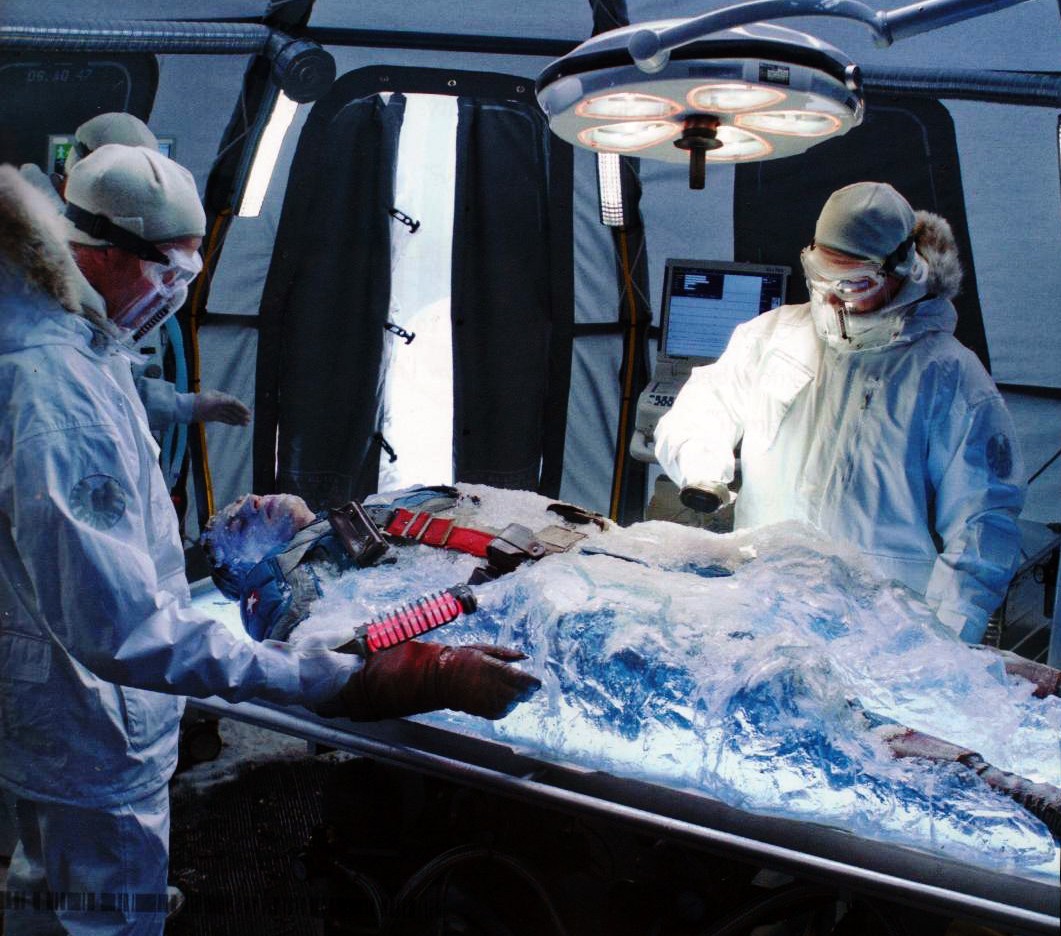 '
'
Most of the scientific community remains highly skeptical about cryonics, with many experts describing it as speculative, philosophical, and largely unproven. Cryonics enthusiasts, however, remain hopeful. They believe that breakthroughs in technologies like nanotechnology, regenerative medicine, and brain-computer interfaces could eventually make revival a reality. Nanotechnology, for instance, could potentially repair cell damage caused by freezing, and advances in regenerative medicine might offer the possibility of reversing aging and curing previously untreatable diseases. Brain-computer interfaces, meanwhile, could enable the mind to be preserved or even “uploaded” in the future.
While the idea of revival after death remains purely theoretical, it continues to captivate the imagination of people around the world. The idea that someone could be preserved in the hope of future revival is a concept that blurs the lines between science fiction and reality, inspiring a blend of optimism and caution in equal measure. As technology continues to advance, some proponents of cryonics remain optimistic that future breakthroughs will provide the answers that seem so elusive today.
In summary, cryonics is a field that operates on the hope of what might be possible, rather than what is known to be feasible with today’s technology. Despite the extraordinary cost and the theoretical nature of the practice, it continues to attract individuals who are willing to take the gamble that, one day, their preserved bodies may be brought back to life. The reality, however, is that cryonics faces overwhelming scientific and ethical challenges. Until major advances in medicine and technology occur, cryonics remains an experimental and speculative practice, straddling the line between hope and fantasy.
Sources:
Alcor Life Extension Foundation: https://www.alcor.org
Cryonics Institute: https://www.cryonics.org
Journal of Medical Ethics – Cryonics and Its Ethical Implications: https://journals.sagepub.com/home/med
National Institutes of Health – Advances in Cryopreservation Technology: https://www.nih.gov