In the summer of 1971, a county agricultural report listed the most productive farm in Fresno County, California. It spanned 640 acres, boasting the highest yield per acre in the district three years running, zero debt, paid-for equipment, and soil in better condition than when the operation started. The report listed the owner's name, causing the county clerk to pause and read it again. She recognized the name, as did everyone in the county. Twenty-six years earlier, that same name had been on a different list—a government list nobody wanted to be on.
The farmer who owned the most productive operation in Fresno County had once been a prisoner of his own country. Meanwhile, the man who told him he'd never farm again was still selling tractors down the road. On the morning of March 29th, 1942, a 13-year-old boy named George Hayashi stood in the yard of his family's farm outside Parlier, California, and watched his father cry for the first and only time in his life. His father, Takeshi Hayashi, was 46 years old and had farmed 80 acres in the San Joaquin Valley since 1924.
He had spent 18 years growing grapes, peaches, and vegetables on land he had cleared and irrigated himself. Having come to California from Hiroshima Prefecture in 1919 at age 23 with just $40, Takeshi possessed a willingness to work that made American-born farmers look lazy by comparison. Because of the alien land laws, which prohibited land ownership by Japanese immigrants, Takeshi couldn't own land in his own name. Therefore, the deed was in the name of George, who was born in Parlier and was an American citizen.
His father, who had built the farm from bare dirt, was legally considered an alien. None of that mattered on March 29th, 1942, as Executive Order 9066 had been signed five weeks earlier. Every person of Japanese ancestry on the West Coast, citizen or not, was being removed. The Hayashis had 72 hours to pack what they could carry and report to the Fresno Assembly Center. Takeshi walked through his farm that last morning while the peach trees were in bloom and the grapevines he'd trained for 15 years were just starting to bud.
The vegetable fields were planted and waiting for spring rain, but everything was alive, growing, and about to be abandoned. A neighbor, a white farmer named Bill Dawson who owned the adjacent 200 acres, stood at the fence line watching the Hayashis load a truck. Bill said, "Takeshi, I'm sorry about this; I'll keep an eye on your place." Takeshi bowed and replied, "Thank you, Bill, we'll be back," though they both knew it might be a lie.
Two other neighbors stood across the road, offering no help. One of them, a man George would remember for the rest of his life, said loud enough for the family to hear, "Good riddance; should have sent them back years ago." George and his father heard it, but neither responded. Takeshi finished loading the truck, put his family inside, and drove to the Assembly Center without looking back, placing them behind barbed wire by nightfall.
Bill Dawson kept his word for about four months by watering the peach trees, maintaining the irrigation lines, and keeping an eye on the property. Then Bill caught pneumonia and was bedridden for six weeks. While he was down, the vultures moved in, and neighbors who had smiled at Takeshi for years stripped the farm. Equipment disappeared, including a tractor, a disk, hand tools, and irrigation pipe.
The unharvested peach crop rotted on the trees, and someone broke into the packing shed, taking everything inside. By the fall of 1942, the Hayashi farm was a skeleton. When Bill recovered and saw what had happened, he was ashamed. He wrote a short, honest letter to Takeshi at the Gila River Internment Camp in Arizona. In it, he apologized for failing them, explaining that most equipment was gone, the crop was lost, the house was broken into, and he should have done more.
Takeshi read the letter in a tarpaper barracks in the Arizona desert, surrounded by dust, barbed wire, and the sound of other families trying to survive with dignity in a place designed to strip it away. He folded the letter, put it in his pocket, and carried it for three years. The Hayashis were finally released in January 1946. George was then 17 years old.
They drove back to Parlier with $120 in savings, which was everything the family had after three and a half years in camp. The farm was destroyed, and the house had been vandalized with broken windows, damaged walls, and stolen or destroyed personal belongings. The peach trees, untended for three years, were diseased and half dead, the grapevines had gone wild, and the irrigation system was dismantled because someone had stolen the pipe for scrap metal. All of the equipment was gone, and George stood in the same yard where he had watched his father cry four years earlier, realizing nothing else was the same.
Takeshi walked every row of every field, touched the sick peach trees, looked at the broken irrigation lines, and counted what was left, which was almost nothing. Then he turned to George and said something in Japanese that George later translated for his own children: "They took everything except the dirt, and the dirt is enough." Two days later, George drove 12 miles into Selma to buy supplies, seeds, hand tools, and basic materials to start repairing the irrigation. His last stop was Patterson's John Deere, the only equipment dealer in the area.
George walked in as a 17-year-old, tall for a Japanese-American kid, wearing work clothes and boots. The dealership was busy with several farmers browsing equipment, a parts man behind the counter, and the owner, Howard Patterson, talking to a customer near a new Model A tractor. George walked to the parts counter and waited, but the parts man looked at him and then looked away. The parts man helped other customers who had arrived after George, forcing him to wait 15 minutes before he finally spoke up to ask for hand tools and irrigation fittings.
The parts man glanced at Howard Patterson, who then walked over. Howard was in his mid-50s, tall, with a ruddy face, wearing a John Deere cap and a western shirt with pearl snaps. He looked at George the way you'd look at something stuck to your boot. Howard coldly stated, "We don't sell to Japs."
The dealership went quiet, the other farmers stopped browsing, and everyone looked on. George felt the heat rise in his face and said, "I'm American, and I was born here, 12 miles from where you're standing." Howard leaned on the counter and replied, "I don't care where you were born; your people bombed Pearl Harbor and got locked up for a reason." He added that he wasn't going to sell equipment to a Jap so he can farm land that should have gone to real Americans when his family got shipped out.
Howard snapped in front of the whole store, "Now, get out of my dealership before I call the sheriff." George left, drove home, and told his father what happened. Takeshi listened, nodded once, and said, "Then we don't need him." He added, "We never needed anyone who didn't need us."
George and Human rebuilt the farm without a dealer, without loans, and without help from anyone except Bill Dawson. Bill donated a broken-down Farmall F-20 he had sitting in his barn since the 1930s. He told them it hadn't run in years, but the engine was not seized and might be fixable. Takeshi had never been a mechanic, but he had watched and learned, and he had a 17-year-old son with quick hands and a memory that held everything it touched.
George rebuilt that Farmall F-20 in six weeks using parts salvaged from scrapyards and equipment dumps across the valley. When the engine turned over for the first time, Takeshi stood beside the tractor, put his hand on the hood, and closed his eyes. That Farmall became the foundation of everything. They planted vegetables first for the fastest return, focusing on tomatoes, peppers, squash, and lettuce. George drove the Farmall while Takeshi worked behind it on foot, planting by hand because they had no planter.
They rebuilt the irrigation system with salvaged pipe, hand-dug ditches, and a water pump George fabricated from parts of a junked truck engine. The first harvest came in the fall of 1946. They sold everything at the Fresno Produce Market, making $1,800, which was enough to survive the winter and buy seed for spring. By 1948, they had the 80 acres back in full production, and about 40 of the original 80 peach trees that could be saved were pruned and treated.
The grapevines were retrained, and the vegetable operation expanded to 25 acres. George had also added a second tractor, a 1940 Farmall H, bought at an auction for $190. Howard Patterson heard about the Hayashis, as did everyone else, noting that the family was back farming again and selling at the market. Howard's reaction was the same as it had been in 1946, claiming they wouldn't last and that the land should have been sold to a white farmer when they were in camp. He even argued that the Governor should have made sure they never came back.
But the Hayashis lasted, and they more than lasted. Takeshi Hayashi farmed until 1958, when a stroke left him partially paralyzed at age 62. He had rebuilt the 80 acres from nothing and turned it back into one of the most productive small farms in the Parlier area. He died in 1963, never having become a U.S. citizen.
The naturalization laws didn't change for Japanese immigrants until 1952. By then, Takeshi was tired of asking a country that had imprisoned him to accept him. George took over full-time at age 29, having already farmed for 13 years alongside his father. He knew every row, every tree, and every vine, understanding the soil by touch, smell, and how it held water.
George possessed something his father never had: the legal right to own land in his own name without restriction. The alien land laws had been struck down in 1952, so George could buy property, sign deeds, and take out loans if he wanted to. However, he did not want loans, having seen what happened when you depended on systems that could turn on you overnight. Even though his family had been American citizens and legal residents, the government had still taken everything.
George saved the way his father had saved, putting every dollar that didn't go to seed, fuel, or family into the bank. By 1960, he had accumulated $42,000 and bought 160 acres adjacent to the family farm from Frank Medina, a retiring grape grower, paying entirely in cash. When George came to sign the papers, Frank explained that Takeshi had helped him fix an irrigation pump back in 1939 without accepting payment. Frank told George that he had been waiting 20 years to repay that kindness, selling the land at 10% below asking and refusing any argument.
George didn't argue and accepted the generous deal. By 1965, he added another 120 acres, paying in cash again. By 1968, he bought 280 acres from an estate sale, marking the largest single purchase in his family's history, also paid in cash. Not everyone was happy about it, as some farmers in the valley still carried the prejudice that had put the Hayashis behind barbed wire.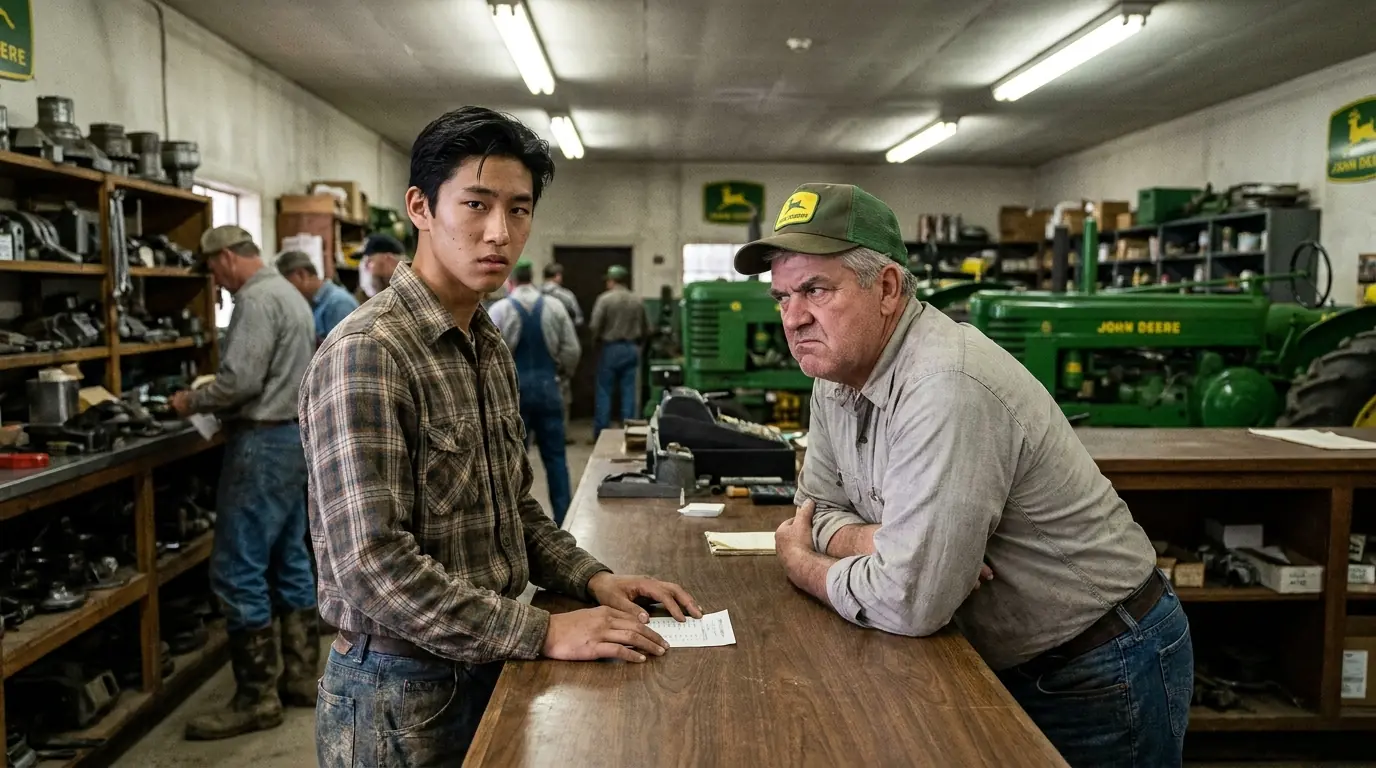
A petition circulated in 1961 asking the county to investigate whether George's land purchases were legitimate. The county looked into it, found everything legal, and filed the complaint away. George never knew who started the petition and didn't want to know, telling his wife that if he spent his time worrying about people who didn't want him there, he'd never get the planting done. By 1970, George Hayashi owned 640 acres free and clear at 41 years old.
He employed 12 workers year-round and as many as 30 during harvest. He paid above the going rate and provided housing because he remembered what it felt like to have nowhere to live. Bill Dawson, the neighbor who had given the family the broken Farmall in 1946, was still farming next door in his 70s and slowing down. In 1969, George drove over and offered to help Bill with his harvest, saying, "Bill, you helped my family when nobody else would; let me help you now."
Bill tried to refuse, but George wouldn't let him. For three years, George ran Bill's harvest alongside his own. When Bill finally retired in 1972, he sold his 200 acres to George at the same 10% discount Frank Medina had given. When George protested the price, Bill said, "Your father would have done the same for me, and I'm just finishing what he started."
By 1972, George owned 840 acres, but the number that mattered most to him wasn't the acreage—it was the yield. Howard Patterson's dealership was still open, selling John Deere equipment, and remained the only dealer in the Parlier area. Howard was in his late 70s now, with his son Richard running most of the operation. George had never gone back once in 26 years, choosing instead to buy all his equipment at auctions, salvage yards, and private sellers who would sell to him without commentary on his ancestry.
In the spring of 1971, the Fresno County Agricultural Commission published its annual productivity report. The most productive farm in the county, measured by yield and net profit per acre, was the Hayashi operation. It consisted of 640 acres of grapes, stone fruit, and vegetables, achieving the highest yields in the district three years running. The report was published in the Fresno Bee, putting George's name in the paper—the exact same name that had been on the internment list 29 years earlier.
Richard Patterson, Howard's son, read the article at breakfast and showed it to his father. Howard, now 80, read it in silence. The most productive farm in Fresno County was owned by the boy he had thrown out of his dealership in 1946. This was the same boy he had called a name in front of five customers and told to leave before he called the sheriff. Howard Patterson died in 1974 without ever speaking to George Hayashi, apologizing, or acknowledging what he had done.
Some doors close and never open again, not because the person outside can't open them, but because the person inside can't face what's on the other side. George didn't need the apology, having stopped needing anything from Howard Patterson the day his father said, "They took everything except the dirt, and the dirt is enough." In 1975, George established the Hayashi Agricultural Scholarship at Fresno State University. It provided full tuition for students of Japanese-American descent studying agriculture.
He funded it from farm profits, starting at $5,000 a year initially and growing to $15,000 by the 1990s. By 2020, the scholarship had helped 63 students earn agricultural degrees. The first recipient was a young woman named Karen Nakamura, whose grandparents had lost their farm in Salinas during internment and never recovered. Her grandfather drove a produce truck for the rest of his life, but Karen used the scholarship to study plant science. She now manages 400 acres of organic vegetables near Watsonville, and though she has never met George Hayashi in person, she writes him a letter every year.
George also did something quieter between 1978 and 1995 by helping nine Japanese-American families return to farming. Some were children of internment survivors who had lost their farms and never recovered, while others were new immigrants from Japan with agricultural experience but no American connections. George leased them land, lent them equipment, and taught them the valley under the same terms for everyone: fair rent payable after harvest. If the crop failed, they owed absolutely nothing.
One of those families was the Tanaka family. Ken Tanaka's father had been a strawberry farmer in Watsonville before the war, lost everything during internment, and worked in a cannery for 30 years afterward, never farming again. Ken grew up hearing his father talk about the strawberry fields he had lost. In 1982, Ken was 26 years old with $3,000 in savings and no land. George leased him 40 acres and a tractor to farm strawberries.
Their first year was a disaster because the variety Ken chose wasn't right for the soil. George drove over, walked the rows, pulled up a plant, and examined the roots. He advised Ken that it was the wrong variety for the drainage and told him to plant Chandlers next year because they would hold in the clay. Ken planted Chandlers, and they held.
By 1990, Ken owned 120 acres, which expanded to 280 acres by 2000. Today, his operation is larger than George's, and Ken's son is studying agricultural engineering at UC Davis on a Hayashi scholarship. Seven of those nine families still farm in the San Joaquin Valley today, with three running operations larger than George's. The ripple effect of one man's generosity, rooted in his own family's dispossession, created a farming community that didn't exist before George Hayashi decided that what happened to his family should never happen to anyone else's.
In 1988, when the U.S. government formally apologized for internment through the Civil Liberties Act and offered $20,000 in reparations to surviving internees, George accepted on behalf of his mother, who was still alive at 82. She donated the entire $20,000 to the scholarship fund. She told George that the money didn't fix anything, but maybe it would help someone's grandchild become something they weren't allowed to be. Richard Patterson, Howard's son, heard about the donation.
Richard had taken over the dealership fully after his father's death in 1974. He was not his father, having grown up uncomfortable with what Howard had done, though he had never said so publicly. In 1990, Richard drove out to the Hayashi farm while George was in the packing shed sorting peaches. He introduced himself as Richard Patterson, Howard's son.
George looked at him and said nothing. Richard admitted he knew what his father had done and said in 1946, explaining he had been ashamed of it his whole life. He added that while he couldn't undo it, he wanted George to know the dealership was open to him, as it always should have been. George studied the man for a long time.
Then he said, "I appreciate you coming out here, Richard; that took courage." He continued, "But I've been buying equipment without your family's help for 44 years, and I don't need the dealership." He stated that what he had needed was for someone to treat his father like a human being in 1946, and nobody could give that back. Richard nodded, didn't argue, and left.
George went back to sorting peaches, but that night, he told his wife about the visit. He noted that while the father never apologized, the son did, reflecting that progress sometimes works one generation too late but still counts for something. George Hayashi is 96 years old now, having stopped farming in 2012 at age 83. His son, David, runs the 840-acre operation.
His granddaughter, Emily, holds a degree in agricultural engineering from UC Davis, was a Hayashi scholarship recipient, and is developing water-efficient irrigation systems for Central Valley farms. The Farmall F-20 that Bill Dawson donated in 1946 sits in a glass case at the Fresno County Historical Museum. The plaque reads: "This tractor rebuilt a family. Donated by Bill Dawson to the Hayashi family, 1946. Restored by George Hayashi, age 17." George still visits it once a year, touching the hood the way his father did the day the engine first turned over and closing his eyes the same way.
When a documentary filmmaker asked George in 2019 what he wanted people to remember about his family's story, he thought for a long time. He explained that his father came to this country with $40 and built a farm from nothing, only for his own country to take it away because of how he looked. He recalled that when they returned, a man told his son to get out because of how he looked. Despite that, they built it all back again, not to prove anything to anyone, but because the dirt was still there.
George emphasized that his father taught him that the dirt is enough, and that laws, names, locked doors, and lists are all temporary. He declared that the dirt is permanent, and if you take care of it, it takes care of you. Right now, somewhere, someone is being told they don't belong, not because they can't do the work or lack the skill, but because someone decided they're the wrong kind of person. The dealer had told a 17-year-old American to get out of his store, humiliated him in front of strangers, and claimed the land his family built should have been given to someone else.
Twenty-five years later, that boy owned the most productive farm in the county. The dealer's name was forgotten, while the farmer's name was in the newspaper. George understood what his father taught him standing in a ruined yard with nothing left but 80 acres of California dirt. They took everything except the dirt, but the dirt is enough.