Never Clean Your Light Switches with Water! Here’s a Safe Trick to Make Them Spotless
Tips 04/12/2025 22:54

If you don’t know how to prepare taro stems (also called doc mung) properly, you may experience an itchy or burning sensation when eating them. To avoid this unpleasant issue, follow the method below for safe and effective preparation.
Taro stems are commonly used in sour soups, noodle dishes, and pickled vegetable mixes. While they add a refreshing, crunchy texture, the most important step in any recipe is the pre-processing. If handled incorrectly, taro stems can cause irritation or itchiness when eaten.
Taro stems can cause itching on the skin during preparation and create a burning or tingling feeling in the mouth when eaten. This happens because their outer layer contains calcium oxalate and oxalic acid crystals. These tiny needle-shaped crystals have sharp edges that can irritate the skin, lips, and oral mucosa, leading to discomfort or a stinging sensation. Depending on the concentration, the irritation may be mild or quite intense.
In addition, taro stems naturally contain saponins, a compound that may cause numbness of the lips, tongue, or jaw when consumed in large amounts. At higher concentrations, saponins can even disrupt red blood cells and become toxic to certain cold-blooded animals, especially fish. They also have a slightly bitter, pungent taste that can trigger sneezing upon contact.
Fortunately, all these substances can be safely removed or neutralized through proper processing and cooking.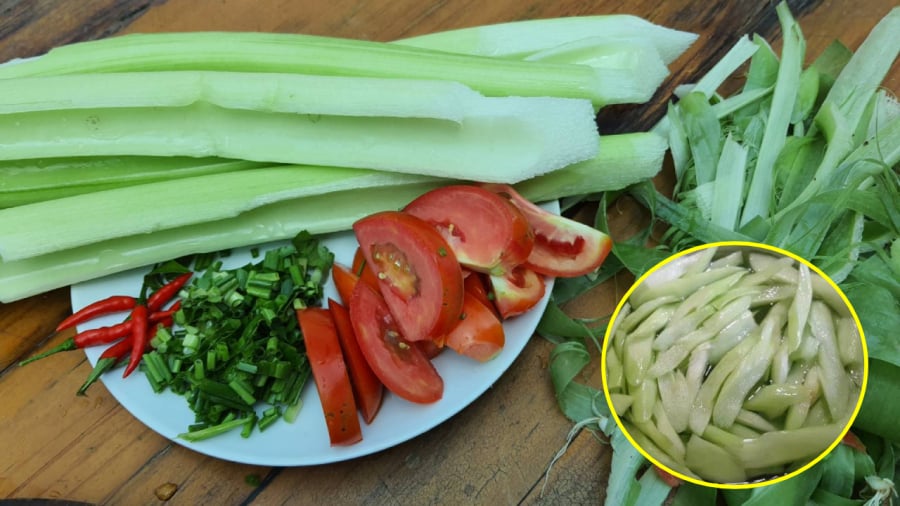
When handling raw taro stems, it’s best to wear gloves to avoid skin irritation.
Clean the stems
Rinse thoroughly to remove all dirt and mud from the surface.
Peel off the outer layer
Strip away the tough, dark green skin and use a knife to trim the curved inner side of each stem.
Slice into pieces
Cut the stems diagonally into bite-sized slices. Diagonal cuts help the stems absorb seasoning more effectively.
Salt the stems
Mix the sliced stems with a generous amount of salt and let them sit for about 15 minutes. This step helps draw out the irritating compounds that cause itchiness.
Rinse and squeeze
Transfer the salted stems to a bowl of cold water. Rinse thoroughly while squeezing and kneading the pieces with your hands to wash away any remaining irritants.
After this step, the stems will shrink to about one-fourth of their original volume.
Blanch quickly
Bring a pot of water to a boil, add the taro stems, and blanch them briefly. As soon as the water returns to a boil, remove the stems and immediately place them in cold water to keep their texture crisp.
After blanching, the taro stems are ready to use in soups, stir-fries, or any other dish you prefer. Properly processed stems will be completely safe to eat and will no longer cause itching.
If you accidentally consume improperly prepared taro stems and experience irritation, here are some quick remedies:
Rinse your mouth and drink lots of water. This helps your body flush out the remaining irritants and reduces discomfort more quickly.
Use a mild salt-water solution or physiological saline to rinse your mouth. Salt water helps remove lingering irritants from the oral mucosa and can ease the itchy or tingling sensation.
If the discomfort persists, you can also suck on ice cubes or drink cool liquids to soothe the irritated area. Most symptoms will fade on their own once the irritants are diluted and washed away.