🚫 5 Dangerous Items You Should NEVER Store Under Your Kitchen Sink (One Could Poison Your Family)
Tips 17/01/2026 15:37
Human history is not only recorded in dates and events but also reflected in the generations that live through them. Each generation represents a unique chapter in the human story—shaped by wars and peace, scarcity and abundance, innovation and disruption. Together, these generations form a living bridge between the past, present, and future.
Generations are more than age brackets. They are collective identities molded by shared experiences, cultural norms, economic realities, and technological change. Understanding generational differences helps us better appreciate how societies evolve and why people from different age groups often see the world in profoundly different ways. In an era where multiple generations coexist at home, in the workplace, and online, this understanding has never been more important.
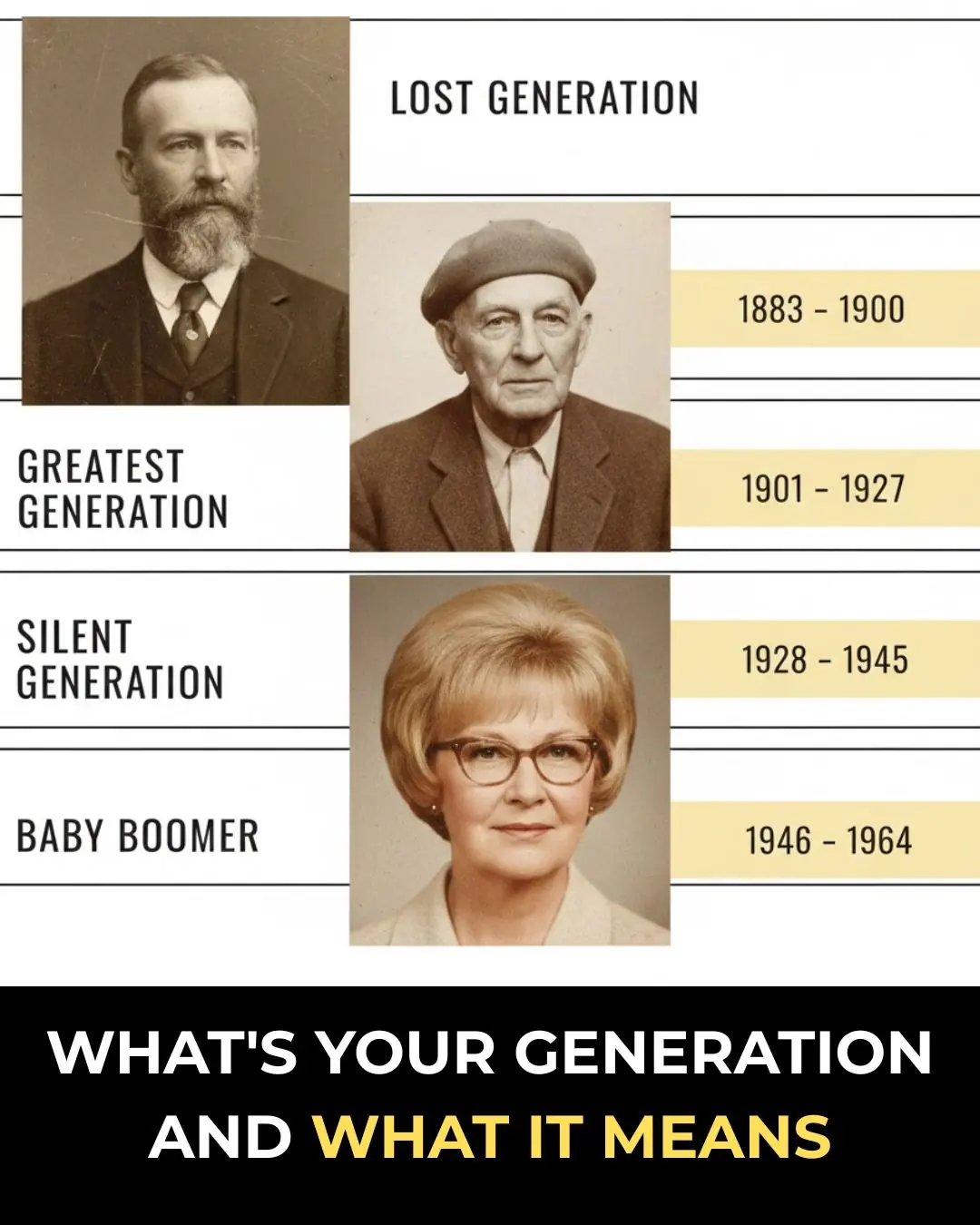
Born roughly between 1883 and 1900, the Lost Generation came of age during World War I—a conflict that shattered traditional beliefs about honor, progress, and authority. Exposed to the brutality of modern warfare and the emotional aftermath that followed, many members of this generation struggled with a deep sense of disillusionment.
Immortalized by writers such as Ernest Hemingway and F. Scott Fitzgerald, the Lost Generation challenged conventional values through modernist literature and art. Their skepticism toward institutions and rejection of old moral frameworks helped redefine culture in the early 20th century. In questioning the meaning of life and identity, they laid the intellectual foundation for modern philosophy, literature, and artistic expression.
The Greatest Generation, born between 1901 and 1927, endured two defining global crises: the Great Depression and World War II. Economic hardship and global conflict forged a generation defined by endurance, discipline, and collective sacrifice.
This generation played a central role in defeating fascism and rebuilding nations after the war. Their commitment to hard work and civic responsibility led to the creation of strong democratic institutions, international alliances, and economic systems that fueled decades of prosperity. Their legacy is one of unity, perseverance, and belief in the common good.
Those born between 1928 and 1945 grew up amid uncertainty, shaped by war, economic restraint, and political tension. Known as the Silent Generation, they were often cautious and conformist in their early years, influenced by Cold War anxieties and social expectations.
Despite their reputation for quietness, this generation became a powerful force for change. Many were key figures in the civil rights movement, legal reform, and cultural transformation. Their impact was not loud, but lasting—reshaping laws, institutions, and social norms in ways that continue to influence modern society.
Born between 1946 and 1964 during a period of post-war economic growth, Baby Boomers grew up in an era of optimism and expanding opportunity. They benefited from rising living standards, affordable education, and a growing middle class.
At the same time, Boomers became known for questioning authority and challenging the status quo. From civil rights and anti-war protests to environmental activism and gender equality movements, they reshaped cultural and political landscapes. As they move into later life, Baby Boomers continue to influence public policy, healthcare systems, and economic trends.
Generation X, born between 1965 and 1980, grew up during economic uncertainty, rising divorce rates, and rapid social change. Often described as self-reliant and adaptable, many learned independence early as “latchkey kids.”
This generation witnessed the shift from analog to digital life, playing a key role in the rise of personal computing and the internet. Gen Xers are known for their pragmatic outlook, entrepreneurial spirit, and ability to balance tradition with innovation. Though smaller in size than surrounding generations, their influence on business, technology, and culture is substantial.
Millennials, born between 1981 and 1996, came of age alongside the internet and social media. As the first truly digital generation, their communication, work habits, and social engagement are deeply intertwined with technology.
Millennials tend to value purpose, flexibility, and social impact over traditional markers of success. Highly educated yet economically challenged by student debt and financial crises, they have redefined careers through freelancing, remote work, and the gig economy. Despite obstacles, Millennials remain committed to social progress, sustainability, and inclusivity.
Born between 1997 and 2012, Generation Z has never experienced life without smartphones, social media, or instant access to information. They are the most diverse generation to date and place strong emphasis on identity, inclusion, and mental health.
Pragmatic and financially cautious, Gen Z has learned from the struggles of Millennials. They are entrepreneurial, socially conscious, and skilled at using digital platforms to organize movements and amplify voices. For Gen Z, technology is not just a tool—it is a fundamental part of identity and activism.
Generation Alpha, born from 2013 onward, is growing up in a world defined by artificial intelligence, automation, and global challenges such as climate change. As children of Millennials, they are immersed in technology from an early age and are expected to become the most educated generation in history.
This generation will face unprecedented challenges, but also unprecedented tools. Their creativity, adaptability, and digital fluency position them to redefine education, work, and innovation. The full impact of Generation Alpha is yet to be seen, but their potential influence is immense.
Generations are shaped by shared moments—economic shifts, technological breakthroughs, and cultural movements that leave lasting impressions. These experiences influence values, communication styles, and expectations, especially in environments where multiple generations interact.
Understanding generational differences is essential in workplaces, communities, and families. It promotes empathy, reduces conflict, and allows people to leverage the strengths of each age group. When organizations and societies recognize and respect generational diversity, they become more resilient, innovative, and inclusive.
Technology, work culture, and social values often highlight generational gaps, but they also provide opportunities for collaboration. Older generations bring experience and institutional knowledge, while younger generations contribute innovation, adaptability, and fresh perspectives.
By moving beyond stereotypes and focusing on shared goals, we can build stronger connections across age groups. Appreciating generational diversity enriches our understanding of humanity and helps us navigate an increasingly complex world—together.