Is it better to sleep on your right or left side? Here's what science says
Health 22/01/2026 17:34
They are not dangerous, but their presence can say a lot about your health and lifestyle. Here we explain everything you need to know.
👁️ Introduction
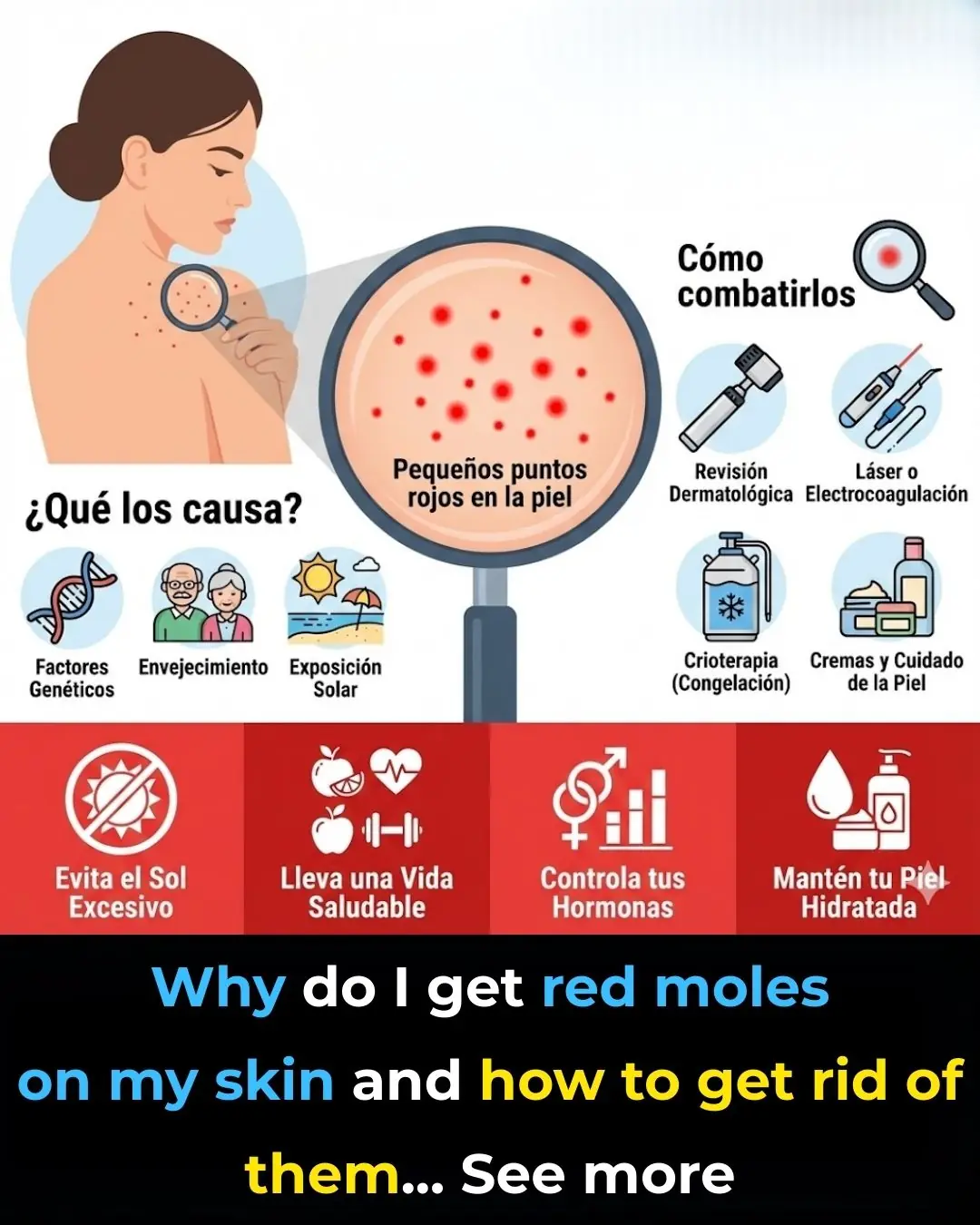
Have you noticed small red dots on your skin that look like moles? They are called cherry angiomas or ruby spots. Although their appearance may cause concern, the truth is that, in most cases, they do not represent a serious health risk.
In this article, we explain what they are, why they appear, when you should consult a specialist, and how you can take care of your skin naturally.
🍒 What are red moles or cherry angiomas?
Cherry angiomas are small, bright red bumps formed by dilated blood vessels. They are benign, meaning they are not cancerous and are not directly associated with serious diseases.
They can vary in size from less than 1 mm to several millimeters and usually appear on the trunk, arms, neck, or face.
🧬 Common causes of their appearance
Although science has not identified a single cause, the factors most commonly associated with their appearance include:
🧓 Aging
They increase with age, especially after 30.
They are more common in people over 40.
🌞 Sun exposure
Ultraviolet radiation can weaken capillary blood vessels and promote their dilation.
🧬 Genetics
Some people are more prone to developing them due to family inheritance.
🧪 Hormonal or metabolic changes
They have been associated with pregnancy, liver alterations, and hormonal imbalances.
🧴 Chemical products
Prolonged use of creams with certain ingredients or harsh products can sensitize the skin.
⚠️ When should you see a dermatologist?
In most cases, ruby spots do not require treatment. However, you should pay attention if they:
Change size rapidly
Bleed frequently
Have irregular borders or varying colors
Cause itching, pain, or discomfort
👉 In these cases, a medical check-up is important to rule out other dermatological lesions.
🌿 Natural skin care to prevent and soothe
Although they cannot always be prevented, there are natural ways to care for your skin and reduce their appearance:
✅ Protect yourself from the sun
Use sunscreen with SPF 30 or higher.
Avoid sun exposure between 11:00 a.m. and 4:00 p.m.
✅ Apply natural oils
Rosehip oil, aloe vera, and jojoba oil deeply nourish and help soothe the skin.
✅ Take care of your diet
A diet rich in antioxidants (fruits, vegetables, seeds) protects your blood vessels.
Avoid excessive consumption of alcohol, refined sugar, and ultra-processed foods.
✅ Daily hydration
Drink at least 1.5 liters of water per day.
Apply moisturizers with natural ingredients.
🧘 Can they be removed?
Yes, but it is not necessary if they do not cause discomfort or suspicious changes. For cosmetic purposes or medical recommendation, procedures include:
Vascular laser treatment
Electrocauterization
Cryotherapy
These should always be performed by certified dermatology professionals.
🧡 Conclusion
Red moles on the skin may seem alarming, but in most cases they are simply part of aging or the result of external factors such as sun exposure.
The key lies in prevention, self-care, and mindful observation of any changes in your skin.
Remember: your skin speaks for you. Listen to it and care for it with respect and awareness 🌿