How to pickle sweet and sour shallots to eat with vegetables to add flavor to rice every day
Tips 08/12/2025 12:27
To effectively remove impurities and unpleasant odors from pork ribs, simply blanching them in boiling water is not enough. Pork ribs are a versatile ingredient loved by both adults and children, and they can be used to prepare a wide range of delicious dishes such as rib soup, sweet and sour stir-fried ribs, deep-fried ribs, and more. Because of this, the preparation stage plays a crucial role. If the ribs are not handled properly from the start, they can develop an undesirable smell that negatively affects the flavor of the entire dish.
Many people rely on blanching ribs in hot water to clean them. However, even after blanching, the smell sometimes remains. So how can you completely eliminate this issue?
When pork ribs are plunged directly into boiling water, the high temperature causes the meat to tighten. This traps the blood and impurities inside instead of allowing them to escape. As a result, the ribs may still carry a strong, unpleasant odor even after being blanched. To fix this problem, an extra step is needed before blanching.
Select rib pieces that are pale pink, fresh-looking, and slightly moist. The rib bones should be wide—preferably over 2 cm—which indicates the pig was healthy and not too young or too old. Check that the meat is elastic and firm to the touch, not slimy, and carries no sour or spoiled smell. Using good-quality ribs not only improves the taste of the dish but also shortens the cooking time and enhances the overall texture.
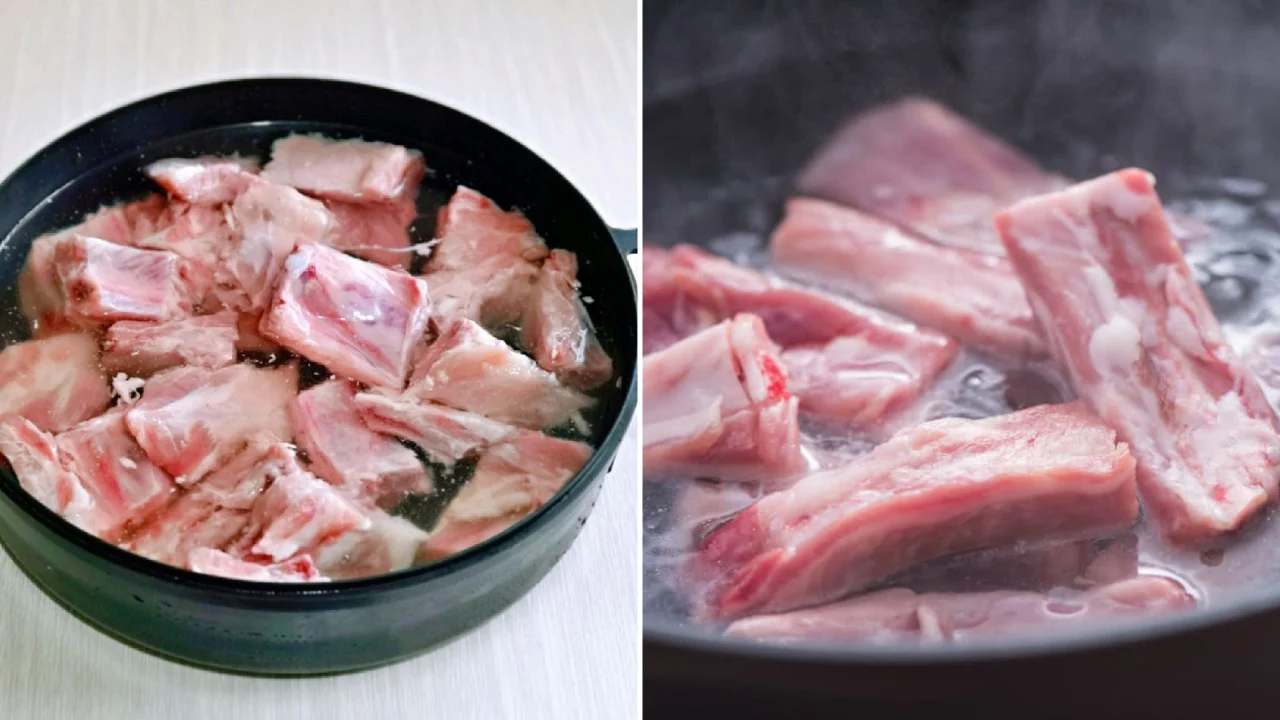
After bringing the ribs home, rinse them briefly to remove dust, loose hairs, and surface impurities. Then place the ribs in a large bowl and pour in enough water to completely submerge them. Add one tablespoon of baking soda and stir to dissolve. Let the ribs soak in this solution for about 30 minutes before rinsing again.
Baking soda helps soften the meat fibers, allowing the internal blood to loosen and come out more easily during blanching. This simple step significantly reduces any gamey or unpleasant smell from the ribs.
Some people soak the ribs in salted water instead. However, salt causes the outer layer of the meat to tighten, trapping the blood inside. This can make the ribs tougher and prevents impurities from being released, leading to a stronger odor during cooking.
Place the ribs into a pot and add enough water to cover them. You may add a few slices of ginger, some green onion, or a splash of cooking wine to help remove odors and enhance fragrance. Heat the pot over high heat until the water comes to a rolling boil. Let it boil for 2–3 minutes, skimming off any foam that rises to the surface. Continue simmering for an additional 1–2 minutes before turning off the heat and removing the ribs.
An important step many people overlook is rinsing the ribs after blanching. Since the ribs have released a significant amount of blood and impurities into the water, their surface may still carry some residue. Rinsing them under warm water—not cold water—helps clean them thoroughly while preventing the meat from tightening and becoming tough. Using warm water makes it easier to wash away remaining impurities and ensures the ribs are perfectly clean before cooking.
Properly prepared ribs will smell fresh, cook more evenly, and produce a tastier, clearer broth or sauce—whether you're making soup, stew, or stir-fried dishes. Taking a few extra minutes in the preparation process can greatly improve the quality of your final dish.