Uterine Fibroids May Signal Increased Risk of Heart Disease, New Research Suggests
Health 22/12/2025 12:47
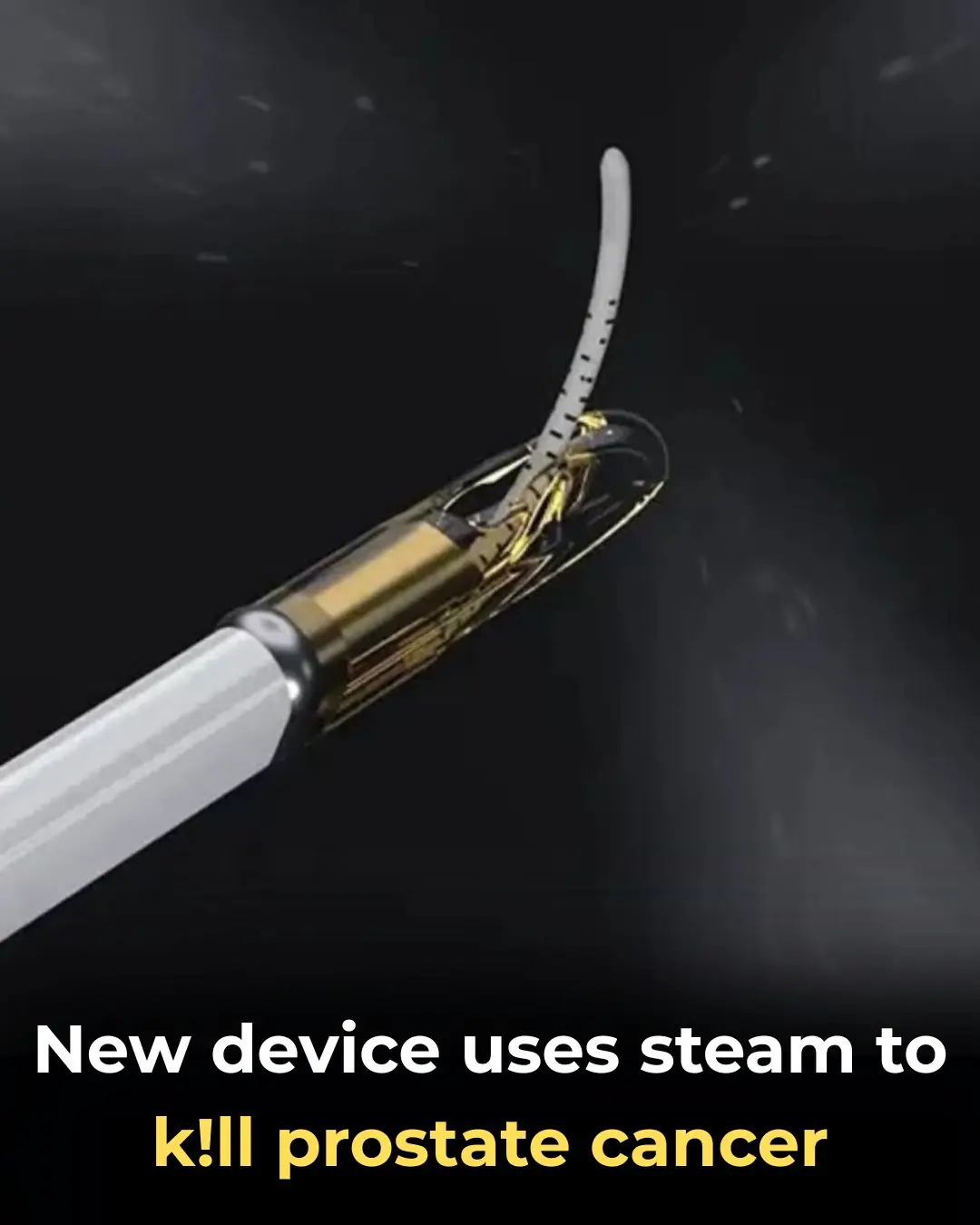
The U.S. Food and Drug Administration (FDA) has approved a novel medical device designed to treat prostate cancer using water vapor, or steam, marking a new step in the evolution of minimally invasive cancer therapies. The device, known as the Vanquish Water Vapor Ablation System, was developed by Francis Medical, Inc. and aims to destroy prostate tumors through targeted thermal energy.
While the approval represents a significant technological milestone, experts caution that the clinical effectiveness of the device in fully eliminating prostate cancer has not yet been definitively established, according to the manufacturer itself.
The Vanquish system is a minimally invasive ablation device that delivers controlled bursts of high-temperature steam directly into prostate tissue. When the steam condenses inside the targeted area, it releases thermal energy that causes cell death, effectively destroying tumor tissue.
This approach builds on principles already used in other urologic treatments, such as steam-based therapies for benign prostatic hyperplasia (BPH), but applies the technology specifically to prostate cancer tumors.
Precise delivery of water vapor to targeted prostate tissue
Short treatment times
Minimal incisions or invasive surgery
Potential for reduced recovery time compared with traditional treatments
Steam ablation works by exploiting a basic physical principle: when steam condenses back into water, it releases a large amount of energy. This rapid energy transfer can cause localized tissue destruction without relying on radiation or freezing, as seen in other ablation techniques.
In theory, this allows clinicians to:
Target cancerous tissue while sparing surrounding structures
Reduce damage to nerves involved in urinary and sexual function
Offer a treatment option for patients seeking alternatives to surgery or radiation
FDA approval of the Vanquish system confirms that the device met regulatory standards for safety and technical performance. However, approval does not necessarily mean that the device has been proven to cure prostate cancer.
According to Francis Medical, Inc., the efficacy of the system in completely eliminating prostate cancer has yet to be fully established. This distinction is critical, as prostate cancer outcomes are typically measured over many years, with long-term data needed to assess recurrence rates, progression, and survival.
Early studies and feasibility trials suggest that steam ablation can successfully destroy targeted prostate tissue. However, several key questions remain unanswered:
Does the treatment reliably eliminate all cancer cells in the targeted area?
How does it compare to established treatments such as prostatectomy, radiation therapy, or focal therapies like HIFU and cryotherapy?
What are the long-term cancer control outcomes?
How often does cancer recur after treatment?
Until large-scale, long-term clinical trials are completed, these questions will remain open.
If future studies confirm its effectiveness, the Vanquish system could offer meaningful advantages for certain patients, particularly those with localized, low- to intermediate-risk prostate cancer.
Potential benefits may include:
Reduced treatment-related side effects
Lower risk of urinary incontinence
Less impact on erectile function
Shorter recovery and outpatient treatment
These potential advantages are especially appealing given the quality-of-life concerns that often accompany traditional prostate cancer treatments.
As with any new medical technology, steam ablation is not without limitations. Possible concerns include:
Incomplete tumor destruction
Damage to nearby healthy tissue if not precisely targeted
Lack of long-term data on cancer control
Uncertainty regarding ideal patient selection
For now, experts emphasize that the technology should be considered investigational in terms of cancer cure, despite its regulatory approval.
Prostate cancer treatment is increasingly moving toward personalized and less invasive approaches, particularly for patients with early-stage disease. The approval of the Vanquish Water Vapor Ablation System reflects this broader trend and highlights ongoing innovation in urologic oncology.
However, clinicians and patients alike must balance innovation with evidence. Until more robust data are available, steam-based ablation should be viewed as a promising option under evaluation, rather than a proven replacement for established therapies.
The FDA approval of the Vanquish Water Vapor Ablation System represents an exciting technological development in prostate cancer treatment. By using steam to destroy tumor tissue, the device offers a novel, minimally invasive approach that could potentially reduce side effects and improve patient experience.
Yet, as the manufacturer acknowledges, its ability to definitively eliminate prostate cancer has not yet been proven. Ongoing clinical trials and long-term follow-up studies will be essential to determine whether this innovative technology can fulfill its promise.
For now, the device stands as a reminder that in medicine, approval is often the beginning of the story — not the final verdict.