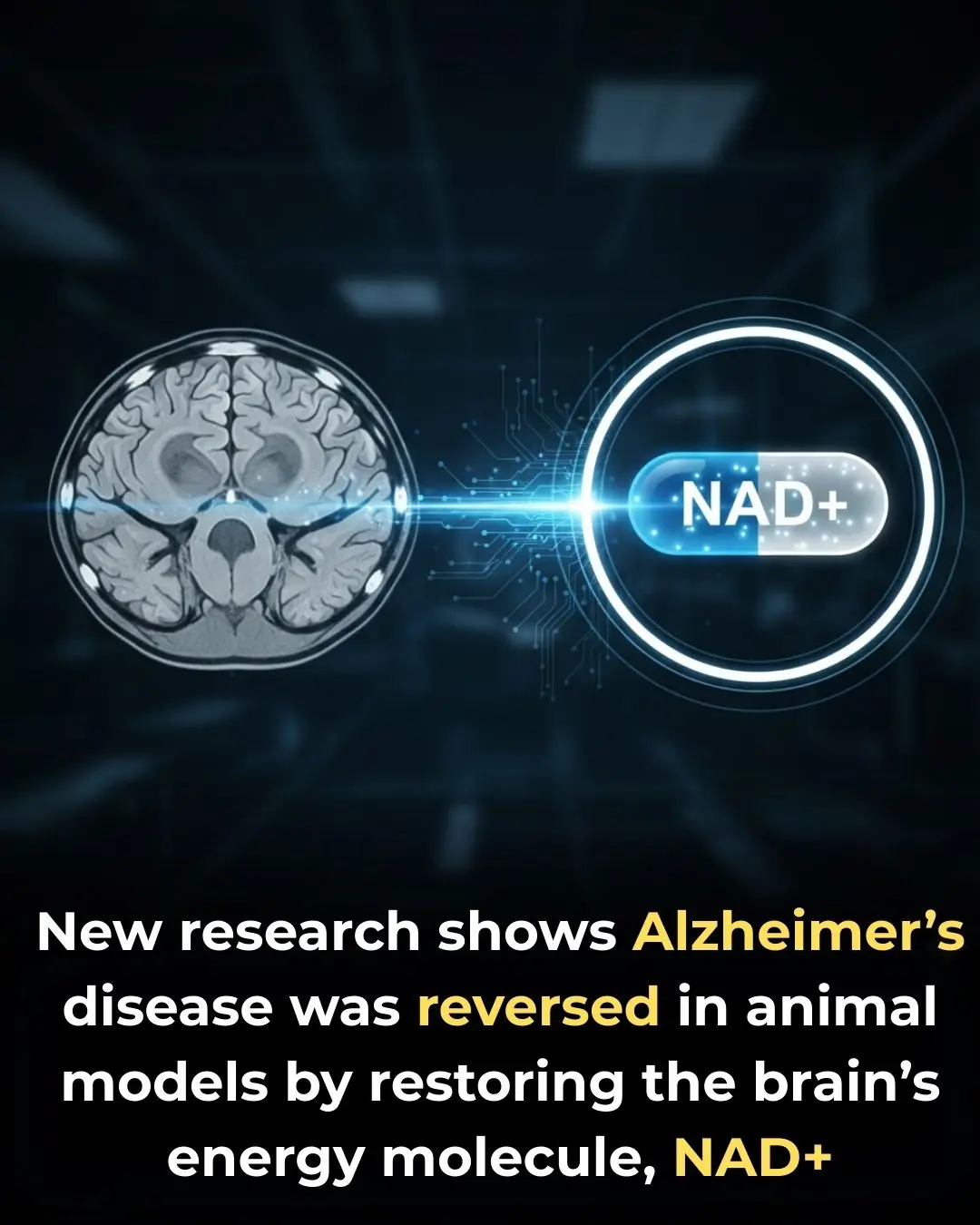
Restoring Brain Energy Reverses Advanced Alzheimer’s Pathology in Preclinical Models
Health 15/01/2026 21:08
Scientists have uncovered a discovery that could fundamentally change how we understand aging and tissue repair. At the center of this breakthrough is a protein known as HMGB1 (High Mobility Group Box 1), which researchers now believe plays a pivotal role in driving chronic inflammation and age-related tissue damage. Remarkably, when scientists blocked the activity of this single protein in experimental models, damaged tissues began to repair themselves in ways that resemble youthful regeneration.
HMGB1 is normally involved in DNA organization and cellular signaling, but under conditions of stress, injury, or aging, it is released outside cells and acts as a powerful inflammatory signal. As people age, persistent release of HMGB1 contributes to chronic low-grade inflammation — often referred to as “inflammaging” — which interferes with normal healing, accelerates tissue degeneration, and impairs organ function. Researchers found that excessive HMGB1 effectively keeps the body locked in a constant state of damage response, preventing proper repair.
In recent studies, scientists observed that inhibiting HMGB1 signaling allowed tissues to exit this inflammatory state and re-enter regenerative pathways. Muscles, connective tissues, and organs showed improved structural repair, reduced scarring, and enhanced cellular renewal. Instead of merely slowing degeneration, the intervention appeared to restore the body’s own ability to heal itself, suggesting that aging may be driven less by irreversible damage and more by disrupted repair signals.
This finding challenges the long-standing view that aging is simply the accumulation of wear and tear. Instead, it supports the idea that aging is, at least in part, a regulatory failure — a condition in which the body retains the capacity to regenerate but is actively prevented from doing so by inflammatory signaling molecules like HMGB1. By targeting this protein, scientists may be able to shift tissues from a chronic damage state back into a repair-oriented mode.
The implications for medicine are profound. If these mechanisms translate safely to humans, therapies aimed at modulating HMGB1 could one day improve recovery from injury, slow age-related diseases, and enhance tissue regeneration without genetic modification. Such treatments could impact conditions ranging from muscle wasting and cardiovascular disease to neurodegeneration and organ fibrosis. Importantly, this approach focuses on restoring balance rather than forcing artificial regeneration, potentially reducing side effects.
Researchers caution that this work is still in experimental stages, and aging is a complex, multi-factorial process involving genetics, metabolism, immune function, and environmental factors. Blocking HMGB1 alone is unlikely to be a universal cure for aging. However, it represents a powerful proof of concept that aging processes may be reversible at the signaling level, not fixed at the structural level.
Leading research institutions and scientific journals have increasingly highlighted HMGB1 as a critical regulator of inflammation, tissue repair, and aging. Findings from the National Institutes of Health, Nature Aging, Cell, Science Translational Medicine, and The Journal of Clinical Investigation support the growing view that controlling inflammatory signaling pathways may unlock new strategies for regenerative medicine and healthy longevity.
This is not science fiction, but it is still science in progress. Even so, the discovery reframes aging from an inevitable decline into a biological state that may be adjustable, treatable, and partially reversible. Rather than merely extending lifespan, future therapies inspired by this research may focus on extending healthspan — the years of life spent in good physical and cognitive health.
Bottom line: HMGB1 may act as a master switch that suppresses the body’s natural repair systems during aging. Blocking this protein has revealed the potential to restore regenerative capacity, opening a new frontier in aging and regenerative medicine.