There is a category of audacity that transcends ordinary entitlement. Ordinary entitlement is someone who parks in your space and acts put out when you ask them to move. Ordinary entitlement is someone who uses your shared fence as a trellis without asking. Ordinary entitlement is the minor daily friction of people who have slightly miscalibrated their sense of where their rights end and other people's begin. What I am describing is something beyond that category.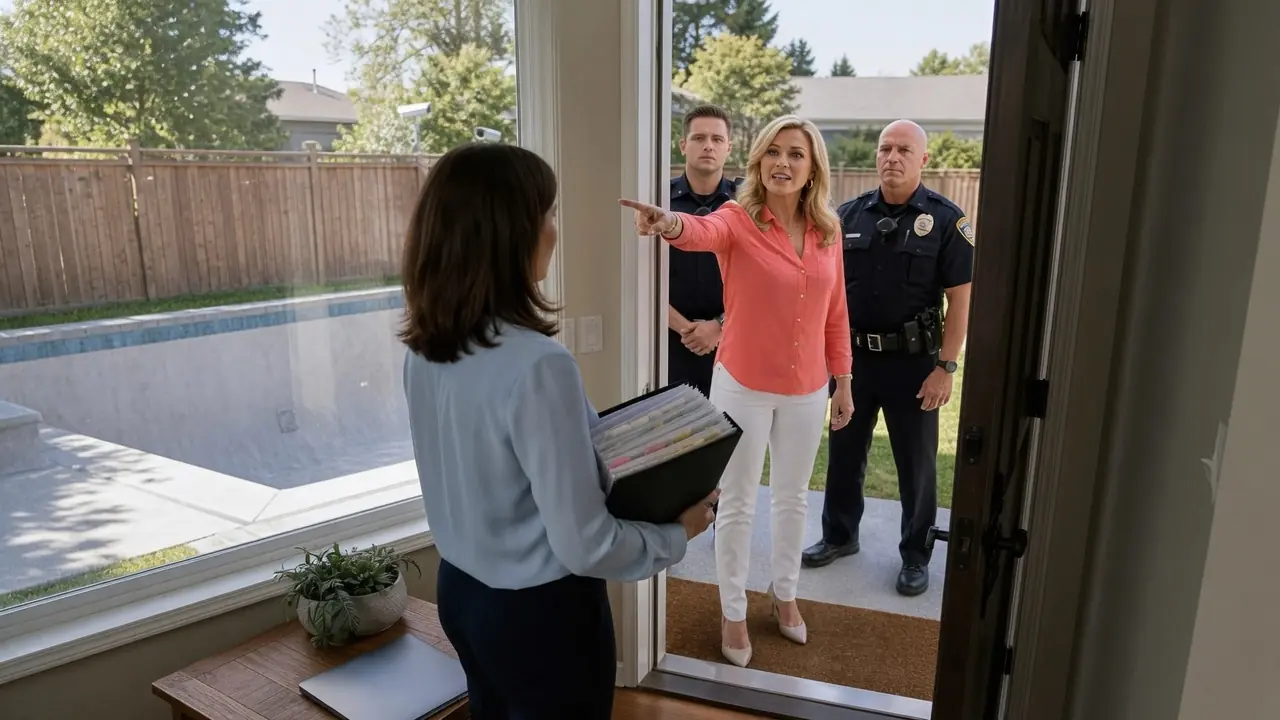
What I am describing is someone who, after 7 months of using another person's pool without permission, returns to that pool with two police officers and states, without apparent irony or hesitation, that the pool is hers and that the person who built and paid for and maintained it for 7 years had no right to drain it. That is not a miscalibration of entitlement. That is a complete departure from the relationship between believing something and it being true. That is a person who has confused what they want with what exists and who has made that confusion formal by bringing law enforcement to witness it. The police officers, to their considerable credit, did not accept the confusion as fact.
What they did instead was stand in my backyard and ask questions in the methodical way that police officers ask questions when they are trying to determine what is actually happening rather than what the person who called them believes is happening. And what they found when they asked those questions was a documentation file that I had been building for 7 months and that answered every question they might have asked about the ownership, the installation, the permits, the maintenance records. And the specific sequence of events that had led to this moment in which a drained concrete pool sat in my backyard and a woman named Sandra Fielding was telling two uniformed officers that I had destroyed her property. I will tell you about the documentation file. I will tell you what was in it and why it was there and how it came to be organized the way it was.
But first, I need to tell you about the pool because the pool is not incidental to this story. The pool is the story. My name is Rachel Pemberton. I am 47 years old. I'm an accountant by profession and a methodical person by disposition, which means I keep records the way some people breathe, not because I am thinking about it, but because not keeping records is a condition I am incapable of sustaining.
I bought my house at 14 Cloverfield Road 15 years ago. The house had no pool when I bought it. I wanted a pool. 3 years after I moved in, I had a pool installed. The pool is an in-ground concrete pool, 22 feet by 44 feet with a tile border at the waterline and a concrete coping around the edge.
It was installed by a company called Aqua Design Solutions, permitted through the county, and has been maintained by a pool service company every week since installation. The installation cost was significant. The annual maintenance cost is something I budget for. The pool is in the inventory of things I own and care about, one of the more significant items, not the most valuable, but the one that has produced over 12 years of summer evenings and weekend afternoons, and the particular pleasure of having cold water available on hot days, a quality-of-life return that no spreadsheet could capture. Sandra Fielding moved into the house at 16 Cloverfield Road, directly adjacent to mine, sharing my eastern fence line, 9 years after I bought my house.
She came to my door on a Saturday morning in June and said the children would love to swim, and she wondered if I would mind if they used the pool occasionally. I said I would think about it. I did think about it, and what I thought was that occasional supervised access was not something I objected to in principle, and I said so when she knocked again 2 days later. I said yes, occasionally with her supervision was fine. The word occasionally is doing a lot of work in that sentence, and I should have been more specific about it.
What I understood by occasionally was once every couple of weeks, maybe on weekends when I was around and the weather was good, and it was a natural thing for the children to come over and swim. What Sandra understood by occasionally was apparently significantly more frequent than that. By July, she and the children were in my pool 4 days a week. By August, it was 5 days a week, and she had begun bringing guests, her sister, her sister's children, a rotating cast of people I had not met. By September, when the season was winding down, she had brought people to swim in my pool on 17 occasions when I was not home, and had apparently used a key to my gate that I could only conclude she had obtained when I left it briefly accessible during a maintenance visit.
I addressed this in September with a direct conversation, calm, clear, in the kind of tone that conveys both the seriousness of the message and the preference for resolution over conflict. I said the original arrangement had been for occasional supervised swimming, and that what had happened over the summer was significantly beyond that. I said I was not comfortable with the volume of people who had been using the pool and with the access that had been obtained without my knowledge. I said the arrangement was going to be more limited going forward. Sandra said she understood and that she had thought I was more open to sharing than I apparently was.
The tone of that sentence, I had thought you were more open to sharing, was worth noting. It suggested a perspective in which my pool was a resource to be shared and my desire to control access to it was a character failing rather than a property right. I noted the tone and did not comment on it and went back inside. For October and November, the pool season being essentially over, nothing happened. I added a new lock to the gate.
The following April, when the weather began warming and I started opening the pool for the season, Sandra came to my door again. She said she and the children were looking forward to another summer and wanted to discuss arrangements. I said there were no arrangements to discuss because I was not offering pool access this year. She said that seemed unfair given how much the children had enjoyed it last summer. I said I understood the children had enjoyed it and that my decision was final.
She left. She was not happy. The following three months—May, June, and July of the second year—were the period in which the situation became something I could not ignore. It started with the fence. The fence between my property and Sandra's was a standard six-foot wooden privacy fence that had been there since before either of us owned our respective properties.
In late May, I noticed that two boards in the section of fence adjacent to my pool had been loosened, not by weather or decay, which produces a different kind of loosening, but by someone pushing or prying at them from the other side. The boards could be pushed inward, creating a gap approximately 18 inches wide. Sandra's property was on the other side. I repaired the boards. I added additional fasteners.
I nailed the boards in a pattern that would be obvious if they were tampered with again. In June, I came home from a week-long work trip to find evidence of pool use that had clearly happened during my absence. The pool's chemistry was off. The chlorine had been depleted in the way it is depleted when there has been significant bather load, and there was a forgotten flip-flop at the pool's edge that did not belong to me. The fence boards I had reinforced had been forced again.
The additional fasteners pulled out. The gap reopened. I installed a security camera. Not just one, four cameras covering every angle of the pool and the fence perimeter. Motion-activated, night-capable, logging to cloud storage with timestamps.
July was when I started building the documentation file. The camera footage over the course of July was comprehensive. Sandra and her children entered my pool area through the fence gap on 11 separate occasions. She brought guests on four of those occasions. On three occasions, she entered in the evening after I had gone to bed, which the camera captured clearly.
On two occasions, she used pool equipment, floats, a brush, the skimmer, without apparent concern about what she would say if I came out and found her. I watched this footage every morning. I saved every clip, labeled with date and time, organized in a folder on my cloud storage. I was not watching it to generate anger. I was watching it to build a record that would be unambiguous and complete when it needed to be.
I also, in July, pulled together the full documentation of my pool's ownership and installation, the original contract with Aqua Design Solutions, the building permit from the county, the final inspection certificate, 12 years of maintenance records from my pool service company, the insurance declaration showing the pool on my homeowner's policy, the photos from the installation, a tax document showing the pool as a capital improvement on my property, everything. In early August, I had the fence gap permanently repaired by a contractor. The boards were replaced with new boards set in steel post connectors and secured with exterior grade screws in a pattern that could not be removed without visible damage that the cameras would capture. The repair cost was documented and the invoice was added to the file. I sent Sandra a formal written notice on the same day the fence repair was completed.
The notice said I had documented evidence of unauthorized access to my pool through the fence, identified the specific dates and times, stated that the access was trespass and unauthorized use of private property, and demanded that it cease immediately. I said further unauthorized access would result in a police report and civil action. The notice was sent certified mail. The certified mail receipt came back signed by Sandra 4 days later. For 3 weeks after the notice, the cameras showed no activity.
The fence was intact. I thought the matter was resolved. Then on a Saturday morning in September, I came downstairs at 7:30 a.m. to make coffee and looked out the kitchen window at the pool and saw Sandra and three children I did not recognize swimming in it. I stood at the kitchen window for a moment, then I went outside. Sandra looked up when I came out.
She had the expression of someone who had been caught but had prepared a response. "Good morning," she said, adding that the children had been looking forward to one last swim of the season and that she hoped I did not mind. I said I did mind and that she needed to leave immediately. She said she thought we could come to an arrangement. I said there was no arrangement to discuss and that she needed to leave my property now.
She gathered the children and left through the fence gap, which she had reopened again. The children filed through. Sandra followed. She looked at me as she went through the gap and said she thought I was being unreasonable. I went inside and called the police.
Officer who came was professional and thorough. I showed him the camera footage from that morning, the footage from July, the certified mail documentation, the formal notice I had sent. He said what he was seeing was documented trespass and that he was going to speak with Sandra. He went to her door. I could not hear the conversation, but it lasted about 15 minutes.
He came back and said Sandra had indicated she believed she had a right to access the pool based on a prior arrangement. He said he had advised her that prior arrangements for pool access were revocable and that a written notice demanding cessation constituted a clear withdrawal of any prior permission and that any further access was a criminal trespass matter. He said he expected she understood the situation now. I thanked him and he left. I drained the pool the following week.
Not as a punishment, not as a performance, for the practical reason that the season was ending and because the pool's chemistry had been significantly disrupted by the unauthorized access over the summer and because the correct approach at the end of a compromised pool season is to drain, clean, inspect, and start fresh in the spring. I drained the pool. I had it professionally cleaned and inspected. I documented the cleaning and inspection. The documentation went into the file.
I also, while the pool was drained and the concrete was exposed, had a contractor install a new layer of waterproofing on the pool shell and repaint the interior. This was maintenance that needed to happen and the timing was right. The contractor's invoice went into the file. Sandra knocked on my door the day after the pool was drained. She said she had seen the water level dropping and asked why I was draining the pool.
I said the season was over and the pool needed maintenance. She said she thought draining it seemed extreme. I said it was my pool and my decision. She left. For a week, nothing happened.
Then Sandra returned with two police officers and told them the pool was hers. I want to describe this moment precisely because it is the moment the story turns on and because the precision matters. I heard the knock at the front door and opened it to find Sandra flanked by two uniformed officers. The officers introduced themselves as Officer Martinez and Officer Chen. Both had the professional composure of people who had heard a variety of complaints and were suspending judgment until they understood what they were looking at.
Sandra said, standing at my front door, that I had drained her pool and she wanted it restored. Officer Martinez said they had received a complaint that property had been damaged at this address. "Would you please come in?" I said.
They came inside. I brought them to the kitchen, which faced the backyard. I showed them the drained pool through the window. Then I opened my documentation file. The documentation file was organized the way I organize everything chronologically with a clear index, each item labeled with its date and category.
I had been building it for 7 months and it was thorough in the way that an accountant's documentation is thorough, which is to say there was nothing in it that was approximate or impressionistic. Every item was specific, dated, and sourced. I walked Officers Martinez and Chen through the file in the order I had organized it. I started with the pool's history. I showed them the original contract with Aqua Design Solutions.
I showed them the building permit. I showed them the county inspection certificate with my name on it as the property owner. I showed them the insurance declaration. I showed them 12 years of maintenance records from my pool service company, each invoice in my name for a pool at my address. Then I showed them the camera footage.
I had the footage organized by date on my laptop, and I showed them the complete July record, all 11 unauthorized entry events with timestamps. I showed them the September morning footage. I showed them Sandra and the children entering through the fence gap with the timestamp clearly visible. I showed them the formal notice I had sent in August and the certified mail receipt showing Sandra's signature. I showed them the contractor invoice for the fence repair.
I showed them the cleaning and inspection invoice from after I drained the pool, both in my name for my property. Officer Martinez looked at the documentation for a long time. He was methodical about it in the way that a person with a law enforcement background looks at documentation, not accepting it at face value, but reading it carefully, checking for consistency, noting the specific details. He asked me several questions. He asked how long I had owned the property.
I said 15 years. He asked when the pool was installed. I said 12 years ago. He asked whether Sandra had ever been given ownership or co-ownership of the pool. I said no.
He asked whether there was any document, agreement, or instrument of any kind that gave Sandra any ownership interest in the pool. I said there was not, and he was welcome to look at the full file for any such document. He looked at the full file. There was no such document. Officer Chen had been speaking with Sandra in the hallway.
I could hear pieces of the conversation. Sandra was explaining her position. Her position, as I understood it from what I could hear, was that she had been using the pool regularly for two summers and that she had put her own supplies in the pool. She mentioned float devices and a pool brush she had brought and that the pool had become, through this sustained shared use, effectively a shared resource. She said she had invested time and care into the pool area.
Officer Chen asked her if she owned the property. She said she owned 16 Cloverfield Road. He asked if the pool was on that property. She said the pool was next door. He asked if she had a deed or title document showing ownership of the pool or the land it was on.
She said the arrangement was more informal than that. The conversation in the hallway was quiet for a moment. Officer Martinez came back to the kitchen. He looked at me and said he wanted to ask me a direct question. He asked whether Sandra had any ownership interest in my pool under any arrangement, formal or informal.
I said she did not. I said she had been given revocable permission to use the pool on an occasional basis and that the permission had been revoked in writing eight months ago and that she had continued to access the pool after the written revocation through an unauthorized entry point in the fence. He asked if I had the written revocation. I showed him the certified mail notice and the receipt. He nodded and went back to the hallway.
I heard Officer Chen say something to Sandra in a low voice. I heard Sandra say something that I could not make out clearly. Then there was a pause. Officer Martinez came back to the kitchen one more time. He said the situation was clear from the documentation and that there was no ownership dispute here.
The pool was mine. The draining had been maintenance on my own property, and Sandra had no legal claim to the pool or to its restoration. He said he had advised Sandra of this, and that if she had further concerns about property rights, she was welcome to consult an attorney, but that this was not a matter for law enforcement. He thanked me for the documentation. He said it was some of the more organized documentation he had seen in a property complaint call.
I said I was an accountant. He said that explained it. They left. Sandra did not come back to my door that day. I watched from the kitchen window as the police car pulled away, and Sandra walked back to her house and went inside.
I sat at the kitchen table and looked at the drained pool in the backyard. The concrete was pale and dry in the September light. The pool brush marks visible in the cleaning work the contractor had done. The pool looked empty and inert and entirely mine. I called my attorney, a woman named Diana Powell, who had handled my property legal matters for eight years, and told her the full story.
She listened carefully, and then said she wanted to send Sandra a formal letter documenting the incident, the police response, and the full history of the unauthorized access and the formal notice, and stating clearly that any future contact from Sandra regarding the pool, any claim, any assertion of rights, any further entry attempt would be met with immediate civil action. Diana sent the letter. The letter was comprehensive, and the legal analysis it contained was clear, and the tone was the specific tone of a letter from an experienced property attorney who has reviewed a complete documentation file and is telling the recipient exactly what their legal position is, which in Sandra's case was that she had no legal position. Sandra did not respond to the letter. I had the pool refilled in April after the winter.
The service company opened it, adjusted the chemistry, cleaned the tile, and confirmed that the maintenance I had done in the fall had left the pool in excellent condition. I used the pool that summer for the first time in two seasons without the persistent background awareness that someone might be in it when I was not home. The cameras were still installed. They did not capture anything noteworthy that summer. I want to describe something that happened in May of that year, 2 months after the pool reopened.
It is not a dramatic event, but it is the event that I think best captures the full resolution of the situation. I was in the backyard on a Saturday afternoon doing some garden work when Sandra came to the fence, not through the fence. The fence was intact and she stood on her side of it. "Excuse me," she said.
"Yes?" I replied. She said she wanted to apologize for what had happened. She said she had gotten carried away with the idea of the pool access and had lost sight of the fact that it was my property and not a shared resource. She said she regretted bringing the police to my door and that she understood why I had the cameras and the documentation and that she should not have put me in a position where those things were necessary. I want to be clear about how that apology landed because the honesty of the landing matters.
It landed well, not because I was waiting for it or because it resolved something that needed resolving. The documentation file and the police response and Diana's letter had resolved the practical situation completely. It landed well because it was genuine. Sandra was not apologizing to get something. She was apologizing because she had processed the sequence of events and had arrived at an honest assessment of her own conduct and was saying so.
That kind of apology is rarer than the strategic kind and more worth receiving. I said I appreciated it and that I accepted it. She said she had consulted an attorney after the police visit as Officer Martinez had suggested. She said the attorney had explained her legal position very clearly. I said I imagined he had.
She said she hoped we could be normal neighbors going forward. I said I hoped so, too. We have been more or less normal neighbors for the 2 years since that conversation. We wave when we see each other. We have had brief conversations over the fence, not about the pool, about the neighborhood, about the weather, about the ordinary subjects that neighbors who coexist without friction discuss.
Her children are older now and have less interest in pools than they did at 7 and 9. The dynamic that had made my pool an object of sustained desire has simply passed as the children grew. The pool is still there. I use it on summer evenings and weekend afternoons, and the particular pleasure of it has returned fully now that the pool is just a pool again, not a contested resource, not a documented trespass site, not the subject of a police complaint. Just a pool in a backyard—22 by 44 feet, with a tile border, concrete coping, and careful maintenance.
The documentation file is still on my computer. I have not deleted it, not because I expect to need it, but because the habit of documentation is not one I abandon once a situation is resolved, and because there is a specific satisfaction in having a file that is complete, that tells a story from beginning to end with every item in its place and every date accounted for. The file tells the story of a pool and a fence and 7 months of unauthorized access and a certified mail notice and a camera system, and a drained pool, and two police officers at my front door, and a documentation presentation that answered every question before it was asked. The last item in the file is the contractor invoice from the spring refill dated April, pool service company, my name, my address. The pool is mine.
The documentation is complete. The season is good. Diana Powell called me the summer after the resolution to check in on an unrelated property matter and asked in passing how the pool situation had concluded. I described the summary. She said the documentation file was what had made the difference.
She said most people do not document. She said most people wait until they need documentation and then try to reconstruct it, and the reconstruction is always incomplete and often inadmissible and never as good as contemporaneous records. She said she had never had a client who had documented a situation like I had documented that one. I said I was an accountant. She said yes, she knew, and that it showed.
She added that she wished more of her clients were accountants. I said the pool was lovely this summer. She said she was glad. It was.