What are you doing? Stop. Stop. Oh my god.
Oh my god. No. I'm going to call the police. Call the police.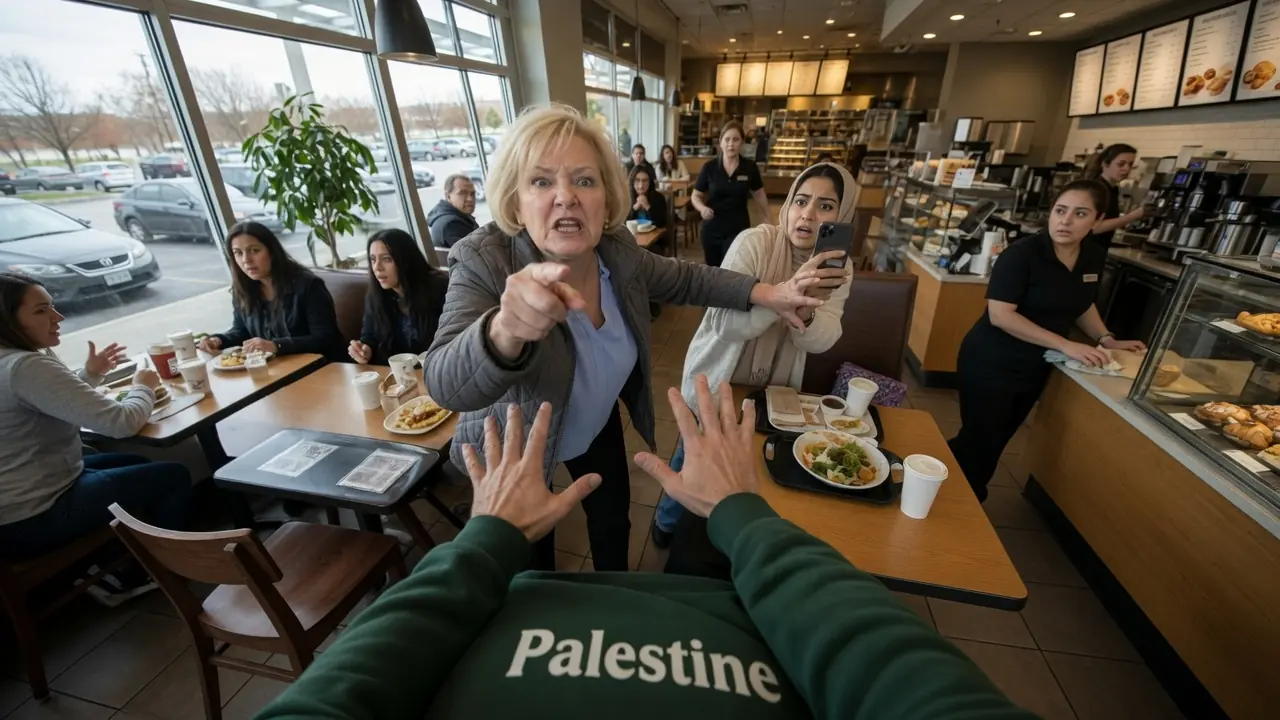
You're going to hit the woman. No. Get away from my wife. The hell is your problem?
Can you call the police? Get away from your problem. Can you get away from me? I am going to punch you.
I'm going to fight you. Okay. What the hell? In November 16th, 2024, law enforcement officers in Downers Grove, Illinois, executed a planned arrest operation at a private residence following a volatile altercation inside a Panera Bread the previous day.
This incident serves as a profound case study in the intersection of political expression, constitutional rights, and criminal liability, illustrating how quickly a verbal dispute over a piece of clothing can metastasize into serious felony charges. Understanding the mechanics of this interaction is vital for any citizen, as it dismantles the common misconception that being a law-abiding person with no prior record provides immunity when emotions override judgment in a public space. Contact with the other individual. Hi, Alexandra.
Hi. How's it going? I just got to have a couple of words with you real quick. Okay.
Sure. Go ahead. Okay. So, here's the situation.
Okay. So, yesterday you had an incident up in air. Correct. Right.
So, due to that, there are charges for battery that are placed against you. Okay. Against me. Against you.
Okay. So, what I'm going to have to do is I'm going to have to place you under arrest for battery. That being said, I will be more than happy to read your Miranda rights now before I do any other further questioning. Are you good with discussing this in front of your husband?
Of course. Okay. Fine. Okay.
You're trying to arrest me. So, the person that you made contact with yesterday, did you know what he did? Watch I watched the video cuz there's videos of it. Okay.
Right. There's videos of it. And then we also have video footage of the female manager who had video recording inside the Panera. Okay.
So, per their manager and per the video that we watched. Okay. It shows you as the initial aggressor. Okay.
I didn't do anything. I I I just just he he he just just just, you know, stepped in front of me and I said, "Well, I I I don't like what you're wearing." Okay. So, again, we have more than we'll be going back to the PD and I will have more than we'll have a further discussion on it. Okay?
No, her wife was was recording. Recording you. Yes, correct. So I said stop recording because I'm talking to him.
I didn't attack her. I I didn't they have I didn't Did you attempt Did you attempt to grab the phone? Yes. Okay.
So, she's allowed to record you. It's a public area. It's as as unfortunate as it is, you're allowed to record people in a public area. Okay.
So, you can't be grabbing people's phones. Okay. I didn't. I understand.
Okay. So, again, just for the sake of everything right now, I'm going to read you I'm going to read you your Miranda rights. Okay. After that, we are going to be placing you under arrest for battery.
Okay. What? What do you mean? We're going to be placing you under arrest for battery.
What does this mean? Okay. So, in the state of Illinois, a battery is anything. No.
No. What do you mean by arrest? I'm I'm going to go to Okay. We'll be transporting to the Downers Grove Police Department.
We will be booked and processed. Okay. That doesn't mean that you're going to jail. Okay.
But it does mean that we do have to take you back to the police department. We have to go through the procedures that we have. Okay? And then a state's attorney will decide what happens next.
Okay? So, right off the bat, you have the right to remain silent. Any statement you make can be used against you in the court of law. You have the right to an attorney and to have an attorney present with you during any questioning.
If you cannot afford an attorney, one will be appointed to you, represent you before any questioning. Uh, you have the right to terminate this interview at any time. Okay. Do you understand the rights that I've read to you?
Yes. Okay. I just need an acknowledgement on I understand that you say it, but do you understand the rights? No, I I really I I will in terms just in regards Just regards to this in layman's terms.
Okay. You have the right to an attorney. Okay? You do not have to give a statement.
Okay? And you have a right to an attorney. And that attorney can be present with you when we go back to the police department. How do I get up early?
I you know I I never was in in the in the problem with with the law. So if you do not have an attorney, he you know this guy attacked me and and if you don't if you if you do not have an attorney, we can find an attorney for you right now. If you know of an attorney if you would like. Well, does she need one?
That is up to because you started talking and you still didn't tell me what exactly happened. What does the video show? The video shows that your wife attempts to take a phone from a female. The husband of that female gets in between them because she does he does not want her to be taking the phone at that point.
He was between us. He he was all the time and I understand that because he did not want you taking his wife's phone. Okay. There was a small tussle because in the video it shows you looking like you're about to throw coffee.
But I didn't. Correct. Okay. Okay.
The coffee was not spilled on that person. Right. However, the coffee was spilled on me. However, however, after you had the tussle with the coffee, you made contact with the left side of his face.
You swung at his face. He He did because he threatened me. Did Did she show you that? He Yes, he he said, "I'm going to hit you.
I'm going to hit you. I'm going to hit you." You said several times that you were going to hit him. No, I'm going to hit you. Okay.
So, again, that's essentially what happened. She made contact with the left side of his face. Okay. No, I I want to see that video because I was so nervous that I I I just don't and that's fine.
You have a right to see that video. I'm just telling you from what we've watched, that is what happened. Okay? And the video and the manager of the Panera who reviewed their video footage informed me that you were the one that started the altercation between the two.
Okay? So again, my main question at this point, because I read you your rights, I want to make sure that you understand. Okay? here.
You know, just for sake of transparency, I have the video. This is on social media. This is on an app called Reddit. Okay.
So, I'm going to This is just from the beginning of what they did. The phone. I I I see. Oh my god.
Because he poured coffee on me. What else should I do? Well, like I said, I'm just showing I'm just showing you you all this. Just in the sake of full transparency, this is publicly available on multiple social media.
Great. Great. Let's see what they did. Let people see what they did.
So, so he he he started it because he he put coffee on me. He and then I said, "Okay, it's not worth it. I'm not going to put truffle with some terrorist." Why would you call that person a terrorist? Because he he threatened me.
So, so it's he pushed me again. Do you see that that he kept pushing me? I understand. But the problem is is this whole incident was provoked by them alleging that you and pardon my language, but this is what they claim you said that you walked up to them and said Palestine because they had the word Palestine on the back of their jack uh their shirt.
That is what provoked this. That's what would make this you the primary aggressor on this. Then I say, well, why are you making this political statement killing the Jew? But the point the point being is is that's what started all they can say kill the Jews and and we cannot I'm not agreeing or disagreeing with that.
We are not taking any political stance on anything that's happening right now. The only thing that we are here to discuss is the battery that occurred at Panera. So you you you see that that he was he was pushing he was pushing me all the time. If if he would just just let me go it it it would just be over.
So again, I I freedom of speech, right? There is freedom of speech in this country. So they can say what they want, and I can say what I want and again, I'm not taking anything away from your civil rights. I'm not saying anything against their civil rights.
The only thing that we are here to discuss right now is the battery and disorderly conduct that occurred at Panera. Okay? The reason I read you Miranda rights is because if you do, are you going to arrest him? That that is my question because he he was he was actually charging at me.
I I just said I I I can send what whatever I want. But but he was charging at me and he said, "Yeah, I'm I'm going to hit you. I'm going to hit you." I I felt threatened. He he he terrorized me.
So at what time did he say he was going to hit you? Because if it was during that video Oh, she I'm I'm sure she she she got rid of this. I I was I was wondering if that's why So did that occur prior to you pointing at them and saying what you said? or did it happen after the fact in between?
After after um you know at some point we were already you know like like in in this agreement so so I just you know he I don't know exact moment but but but I I I know we were like in um I think he I don't know if it was before or or after he poured the coffee on me but but but he he threatened me. I I I used the word I mean okay so again I just want to clarify because I want to make sure that it's for our purposes and for the purposes further. Did you understand what I explained? I did.
Okay. Can you explain it to her so that way she would understand it? Well, don't say anything anymore. You read the rights that you have the right to the attorney and you don't have to say anything whether you guilty or not guilty.
You don't have to say anything. Okay? because they're going to use everything against you. Injustice.
Well, it is injustice obviously, but that's how they do stuff. So, so again, I've read you your Miranda rights. I will do so again once we get back to the police department. Okay.
At this time though, okay, whatever belongings that you do not want coming with you, I suggest you leave with your husband. We will then have to place you under arrest and we will be taking you back to the police department. Can I go with her or You can go to the PD. You can't go with her in one of our squads, but you're more than welcome to go to the station.
You would just have to drive there yourself. I can't. We can't take you in this way. Oh, I always wanted to.
Where is Where is Where is the police station? So, it's at 850 Curtis in Downer Grove. Do you know where downtown is kind of best way to get there is you're going to take Fair View north. Okay.
And then you're going to take a lefthand turn onto Maple. And you will take maple until uh Beldin. I'm freaking out and hungry. I I I need to drink something.
I mean, it's it's ridiculous. I I can't. And then Beldin will tee into Curtis and you'll see our new build. You'll see.
You'll see. I mean, guys, do you see Can she Can she get ready at this? You guys can go inside the house. It's like you need to surround the house, right?
Like surrounding the house. That's why I said if there's anything that she needs to leave with you, she's more than welcome to. Okay. Well, I'm going to go after you.
But unfortunately, at this point right now, she's being detained and eventually going to be arrested. So, she cannot leave where we're at. That's my point. She can go to the bathroom.
That's why I said you guys should go to the house. She has a washroom as soon as we get to the station. Yes, we have facilities at the station that she was more than welcome to use. Okay.
And if she is thirsty, we have water. We'll provide her with water. If she would like a snack, we can provide her with a snack. We're not just going to let her go to the PD and then let her starve and be dehydrated.
We're going if she would like water, we can get her water. If she would like something to eat, we can get her a snack to eat. Okay. So, that's what I was saying.
If there's anything that she doesn't want brought there, she can leave it with you and then we will place her under arrest. We'll take her back to the police department and then you can either you can follow us to the police department or you can meet us there. This is this is I will I will follow since I can go with you guys. This can I can I get dressed up?
Yes, you can. You can get dressed. Unfortunately, your wife has to sit here. I we will wait until you get back.
Yeah. Why don't you give your husband your purse? I mean, you don't need it. I do need it.
Okay, that's fine if you want to bring it. If you want to bring it. It's just like I said, it's just if it's extra stuff if you don't want. Doesn't she need like ID and stuff?
Because then you're going to ask for ID and she won't have ID. So, then you're going to say like, "Oh, you have already have her identification." But if if if you bring your purse with you, we have to search that entire purse and all its contents. So, I'm just trying to help with your privacy. So, if you don't want us to go inside your purse, you can bring your wallet and your phone if you want.
That's fine. just leave the rest for our policy at the department. If she brings a bag, we So they so the people basically copied the license plate. That's how this thing started.
I mean, how did they know her name and address and everything and suddenly four cops show up here? So we were able to get her information um via our computer. Okay. But computer is not so smart.
Somebody had to input the information in the computer. So I'm asking So a third party person a third party person informed us of her information. Of course. Okay.
Let me let me Yes. Go ahead and get changed. What should I take? Just take take the wallet.
You would like to just take your wallet. So they won't accuse you that you're walking around without ID. Exactly. You your guys are really I mean don't say anything.
Don't say anything. Don't say anything. Okay. My daughter is so sick and she she lives in Boston.
I I I need to aim to talk to her and you we'll let you make phone calls when we get to the station. Okay. We will we will allow you to make any phone call you need to make at the police. Why don't we just do it in front?
Yeah, fine. All right. So, ma'am, we do have to put you in handcuffs. Okay.
We won't we will not put you in the squad car until your husband returns. But that'll make you feel more comfortable. Okay. But for for the purposes of this incident for for Did you arrest him?
I I want to see him arrested for for what he did. I still have coffee on on my I was looking at this. My my hair was wet but was wet. My face I know.
had you not had you not made the comment that you made and kept on going on with it because he he he if he wouldn't react you know how many people attack me okay be because you have silly accent or something so I I'm going to go after them I can't make any comment on that man because I'm not in your shoes the only thing that we can make comments on are what we know and if what you're telling me is the truth that if someone makes fun of your comment you or your you're your accent and you don't do anything about it, I applaud you for your restraint. The problem is is in this situation, you were the one who made the initial contact between that couple and yourself by the comment that you made and that devolved the situation into where we're at now.
Okay. I know that you're doing your job, but this is crazy. I thought you were so sorry. But I look like like like a offender or or something.
I I I just go after my life people. I mean there is there's so much you know wrong going on in the world and the people who are really attacking others and I I I just because I I made some comment and and uh and he he reacted. He actually rather okay he he he could say I I don't know he he he could he he he just you know again unfortunately ma'am just due to the circumstances of this all right because you have been because you have been identified as the main aggressor in this situation and you attempting to grab his wife's phone out of his hand was something that she's allowed to do and I understand it's frustrating but he is she is not I mean because I I knew if if she she's going to probably delete some parts of the video where where he was the the you know aggressor and if that's if that is the case then that will be the state's attorney's job to figure that out.
Okay. But off of what we have right now this is what we have to do. Okay. So, what we're going to do, so what we're going to do is to make it more comfortable for you, I will cuff you in front.
So, it will not be behind your back. It'll be in front. Okay. So, the other officer here will hold on to your property.
Okay. And just put your hands kind of like that. Yeah. Okay.
Put your stuff in your pocket. We have to hold on to it because we've had people crawl and record with phones in the past. So, we have to put the stuff in the front of the car. Well, so what's wrong if she's recording is if she got recorded at Panera and you're saying it's it's perfectly legal.
So it's like double standard now. Well, we're actually recording in the car itself. But again, it's just our policy that I'm making the front of the vehicle or the rear of the vehicle, not with the person that's in the vehicle. So not going to go looking through any of this.
I'm not going to try to unlock your phone, nothing like that. It's just going to go right into the front seat of my partner's car. Sit tight real quick cuz I'm going to double lock this so they don't tighten on you when you're sitting inside the vehicle. Okay.
I'm sorry. I'm so sorry. And we'll try to keep you as up to date as we can, but sometimes this is a little bit of a hurry up and wait cuz we have to make phone calls to the state attorney's office and then they got to call us back and then they're going to ask for information and then we got to get that information. So, I'm just telling you.
So, we're going to go on the other side of the vehicle here. Oh my god. Where's my phone? I have it right here.
Right here. We will allow you to talk to your daughter as soon as you get to the police department. Okay. This is Chelsea.
And just so you know, man, there's a camera on in That's good. That's good. I'm not gonna do anything. I'm not Do you know how long it's going to take?
I don't, but we will try to get the situation taken care of as quickly as possible. But but I mean like I wish I could give you an exact time frame but unfortunately I cannot you know what I never had any anything any I mean I'm just citizen law abiding citizen here. I didn't come here to to you know to make some crimes like a lot of people do. My god.
I I go after my business and I got I got actually, you know, really harassed. I mean, this is you you're taking me to unknown because I I have no idea what's what's what's going to happen there. I mean, can you at least give me a heads up that Yeah. So, we have to go through the booking procedures at the police department.
Uh-huh. Uh-huh. Those booking booking procedures, those booking procedures includes fingerprinting. Okay.
Okay. And completing complaint paperwork. Uh-huh. Uh-huh.
Okay. Once that is completed and we get off the phone with the DuPage County States Attorney's Office, right, that is when we will determine what will happen after that. Okay. So that's why I can't give you a full I cannot give you a exact time frame of how long this is going to take.
All I can say is that we're going to try as work as quickly as possible. Okay. Okay. Like I'm not offended.
I I I never did anything wrong. I mean I have no records, guys. I'm just just, you know, wife and mother. I'm sorry.
I I talk too much. I I like where is freedom of speech? You know that that that's I I mean if he would wouldn't attack me I I and and his wife was and she was actually taping me. Well, I was trying to take I mean I I can't be you know shaken right because he he started attacking me.
And you really can do with me anything what you want because I I don't know my rights. I I'm not, you know, career offender or something. So I I have no idea what my rights are. So that's why I explained it to you with the Miranda rights.
Yes. Yes. But but I it was so fast. I I I you know like you know I'm I'm speaking English is not make sure I I will make sure that I read them again to you.
Okay. Okay. Sorry. Okay.
It's like I have nothing against you guys. It really it it just I mean it's such a shock especially he wasn't fun though. Oh my god. The foundation of this legal encounter is unique because it operates on a delay.
Unlike many police interactions where officers arrive in the heat of the moment to separate combatants. This arrest was calculated, researched, and executed after the adrenaline had faded. This distinction is legally significant because it removes the heat of passion defense often used in immediate on-scene arrests. By the time the police arrived at the suspect's door, they were not there to investigate or mediate.
They were there to execute a decision that had already been made based on probable cause established through video evidence and witness testimony. This creates a dynamic where the suspect believes she is in a negotiation phase while the officers are strictly in an enforcement phase. From a constitutional perspective, this case is a masterclass in the boundaries of the First Amendment. The suspect repeatedly invokes freedom of speech as a shield for her actions, seemingly believing that her right to express her opinion about the word Palestine on a hoodie extends to her physical interactions with the wearer.
It is essential to understand that the First Amendment is robust, but it is not absolute. It protects the right to hold offensive views, and it protects the right to voice those views in public spaces. However, the legal protection of speech evaporates the microsecond that speech is accompanied by physical conduct that is insulting, provoking, or harmful. The police here are not criminalizing her opinion on the Middle East.
They are criminalizing the actus reus, the physical act of lunging, grabbing a phone, or making contact with another person. This distinction is often lost on individuals in high stress moments. The law distinguishes between pure speech and conduct. If the suspect had stood 5 ft away and shouted her disapproval of the hoodie, she likely would have been asked to leave by the store manager and perhaps trespassed if she refused.
But she would not be facing felony hate crime charges. The moment she bridged the physical gap to touch the victim or their property, she crossed the Rubicon from protected speech to criminal battery. In the eyes of the law, the phone in a person's hand is an extension of their person. grabbing it constitutes battery just as surely as a slap to the face.
The specific charge of battery in Illinois and in many jurisdictions does not require the victim to be injured or hospitalized. It simply requires that the contact be insulting or provoking. This is a low bar for prosecutors to clear. When a stranger approaches a couple eating dinner, screams at them, and physically engages them, the insulting and provoking nature of the contact is inherent in the act.
The suspect's defense that he threatened me or he was aggressive struggles against the objective reality captured on video which shows her as the initial aggressor. This introduces the concept of self-defense which is legally unavailable to the person who instigates the physical conflict unless they have clearly and effectively withdrawn from the fight which did not happen here. One of the most critical legal elements in this scenario is the application of the hate crime statute to the lay person. A hate crime often implies a violent premeditated attack by a member of an extremist group.
However, under the law, a hate crime is essentially a sentencing enhancement applied to an underlying offense. You cannot be charged with a hate crime for thoughts alone. There must be a base crime, such as battery, assault, or criminal damage to property. Once that base crime is established, prosecutors look at the motive.
If the motive for the battery was the victim's actual or perceived race, religion, or national origin, the charge is elevated. In this case, the suspect provides the evidence against herself. She admits both in the store and to the police that the entire confrontation was sparked by the word Palestine on the victim's clothing. By explicitly linking her physical aggression to the victim's national identity or political affiliation associated with a specific group, she hands the state the necessary element of intent to upgrade a misdemeanor battery to a felony hate crime.
This is a catastrophic legal error on her part driven by a compulsion to explain her side. She believes that by explaining the political context, she is justifying her anger. Legally, she is doing the exact opposite. She is confessing to the specific bias motive required for the felony enhancement.
This brings us to the behavioral psychology on display during the arrest at her home. The suspect exhibits a classic form of cognitive dissonance often seen in respectable defendants who have never been in trouble with the law. She views herself as a good person, a mother, a wife, a citizen with no record. In her mind, criminals are people who rob banks or sell drugs, not people who get into arguments at Panera.
Because she defines herself by her general character rather than her specific actions on that day, she cannot process the reality that she is being arrested. She argues with the officer, asking, "What does this mean?" And you're trying to arrest me as if it is a theoretical possibility rather than a happening reality. This psychological barrier leads to the most damaging behavior a suspect can exhibit, the refusal to remain silent. The officer reads her the Miranda rights.
He explains them. He even offers a layman's translation. Yet, she continues to talk. Why?
Because human beings have a deep-seated need to control the narrative. She believes that if she can just make the officer understand why she was upset, that the man was terrorizing her, that she felt threatened, the officer will agree with her and the charges will disappear. She fails to understand the procedural posture of the officer. He is not a judge.
He is not a jury. He is not a mediator. He is a functionary of the state executing a decision based on evidence. Nothing she says on that front porch can unring the bell of the arrest warrant.
It can only provide more ammunition for the prosecutor. The officer's strategy is worth analyzing. He employs a tactic often called concessive policing. He is polite.
He is patient. He allows her to vent. He even validates her feelings to a degree, saying things like, "I understand it's frustrating." This is not because he agrees with her. It is a tactical choice to keep the situation calm and compliant.
By allowing her to speak, he avoids a physical struggle on the porch, but he also gathers massive amounts of self-incriminating data. Every time she admits to being there, admits to the argument, and admits to the motive, she is corroborating the video evidence. Defense attorneys often call this talking yourself into a conviction. If she had simply stepped out, said, "I am invoking my right to remain silent, and I want a lawyer," and said nothing else, the arrest would still have happened, but her defense attorney would have a clean slate to work with.
Instead, she provides a recorded confession to the motive. The concept of probable cause, in this case, was constructed remotely. In the digital age, police investigations often happen in reverse. In the past, officers might have had to rely on he said, she said accounts at the scene.
Here, the investigation utilized what we call open- source intelligence, OSINT. The officer mentions that the video is on Reddit and social media. The police reviewed bystander footage and store surveillance before ever knocking on her door. This means the investigation phase was largely complete before the interview phase began.
When the officer asks what happened, he is not asking because he doesn't know. He is asking to see if her story matches the objective reality of the video. When her story deviates, claiming she was the victim when the video shows her lunging, her credibility is destroyed. The suspect's repeated request to see the video is a common stall tactic, though often subconscious.
She hopes that by reviewing the evidence, she can find a loophole or a specific frame that justifies her actions. The officer denies this correctly because the discovery phase of a trial is not conducted on a front porch. Legally, she has a right to see the evidence against her, but that right is exercised through her attorney during the court process, not during the arrest. The officer's refusal to engage in a frame by frame debate preserves the integrity of the arrest and prevents the suspect from tailoring her story to fit the footage.
There is a profound lesson here regarding the victim offender overlap. The suspect genuinely feels terrorized. She describes the man as a terrorist and claims he threatened to hit her. However, the law looks at the initial aggressor doctrine.
You cannot start a fight, escalate it to physical contact, and then claim self-defense when the other person reacts aggressively. If you poke a bear, you cannot claim to be the victim of a bear attack when it roars back. The video evidence showing her advancing while the man retreats or stands his ground nullifies her claim of fear. A person in genuine fear for their safety retreats.
They do not advance, lunge, or grab at the source of the danger. Her actions betray her words. She was not acting out of fear. She was acting out of moral indignation and entitlement, which are not legal defenses for battery.
The role of the husband in this interaction is also legally noteworthy. He stands by relatively passive while his wife incriminates herself. In many domestic arrest situations, the presence of a spouse can be a volatile variable. Here, the police effectively separate them psychologically by focusing entirely on the wife.
They allow her to give him her purse, which serves a dual purpose. It acts as a gesture of goodwill to keep her calm, but it also prevents the need for an inventory search of the purse, which creates less paperwork for the officers unless they suspect the purse contains evidence. The officer's explanation that if she brings the purse, it must be searched, is a subtle way of managing the environment. It keeps the husband occupied and removes a potential variable from the transport vehicle.
As the situation moves from the porch to the squad car, the suspect enters the bargaining phase of grief. She asks about the timeline, the booking process, and what will happen next. The officer provides procedural answers, but avoids making promises. This is crucial because any promise made by an officer, you'll be out in an hour, can be used by a defense attorney to claim the suspect was coerced or misled.
The officer stays strictly within the bounds of procedure. You will be booked, processed, and the state's attorney will decide. This transfer of responsibility to the state's attorney is a standard police tactic to deflect anger. It tells the suspect, "I am just the messenger.
The decision maker is someone else." The hot mic inside the squad car is a silent trap that catches many defendants. Most people assume that when the officer steps out or is driving silently, the interaction is paused. Legally, there is no expectation of privacy in the back of a police vehicle. Everything she mutters, every frantic plea to her husband, if he were there, or to herself is admissible evidence.
In this case, her continued monologue about being a law-abiding citizen, and her disbelief at the situation paints a picture of someone who refuses to accept accountability. To a jury or a judge, this lack of remorse or insight can be a devastating factor during sentencing. It suggests that the defendant does not understand the gravity of their actions and is therefore a risk to reoffend. The escalation to a felony hate crime charge is the most significant legal pivot in this narrative.
A misdemeanor battery might result in court supervision, a fine, or community service. A felony hate crime conviction carries the potential for prison time, a permanent felony record, and the utter destruction of one's professional and personal reputation. This escalation was not inevitable. It was a direct result of the specific words she chose to use and the specific target she chose to engage.
If she had gotten into a fight over a parking spot, it would be battery. Because she fought over a national identity, it is a hate crime. This highlights a critical reality of modern law. Motive matters.
The law punishes bias motivated violence more severely because it is viewed as a harm not just to the individual victim but to the community and the protected group as a whole. The suspect's ignorance of the law I don't know my rights is a plea for leniency that falls on deaf ears legally. The maxim ignorantia juris non excusat ignorance of the law excuses no one applies strictly here. You do not need to know the specific statute number of battery to know that you cannot grab a stranger in a restaurant.
Her claim of being a layperson is an attempt to lower the standard of behavior expected of her. But the standard for battery is universal. It is based on what a reasonable person would do. A reasonable person does not confront strangers over their clothing and initiate physical contact.
By violating the social and legal contract, she subjects herself to the full weight of the criminal justice system. We must also consider the role of the digital witness. In the past, this might have been a he said, she said incident that resulted in both parties being asked to leave. Today, the ubiquity of highdefinition cameras in everyone's pocket means that public behavior is perpetually audited.
The suspect's attempt to grab the phone was an attempt to suppress evidence, an act that ironically generated the most damning evidence against her. It demonstrates a consciousness of guilt. She knew the recording would look bad for her, so she tried to stop it. That attempt to stop it became the battery.
It is a self-fulfilling prophecy of criminal liability. The delay in the arrest, waiting until the next day, also serves a strategic purpose for the prosecution. It allows the state's attorney to review the footage and approve the felony charges before the arrest is made. In many jurisdictions, police can arrest on probable cause for felonies, but getting prosecutorial sign off beforehand strengthens the case and ensures the charges stick at the initial bond hearing.
It prevents the catch and release scenario where a suspect is arrested on a heavy charge that gets downgraded immediately. When these officers knocked on her door, they were armed with a charging decision that had already been vetted by legal professionals, making the arrest a formality rather than an investigation. The suspect's fixation on her daughter and her need to make a phone call highlights the collision between personal life and legal consequences. The system is indifferent to your personal obligations once you enter its gears.
The officer's assurance that she can make a call at the station is standard, but it marks the loss of autonomy. For a person who has lived a life of autonomy and control, the sudden stripping away of the ability to use a phone, to use a bathroom without permission, or to move freely is psychologically shattering. This shock is evident in her demeanor. She is not just afraid of jail.
She is experiencing the trauma of total institutional control for the first time. At what moment did this become legally irreversible? One could argue it was the moment she walked over to the table at Panera. But legally, the point of no return was the physical contact.
You can shout, you can argue, you can be rude, but the millisecond your hand touches another person in anger, you have handed your fate to the police, the prosecutor, and the court. There is no undo button for battery. Furthermore, would silence have changed the outcome? It would not have prevented the arrest, as the warrant was likely already active or imminent based on the video.
However, silence would have prevented the confession to the hate crime element. By explaining that Palestine was the trigger, she did the prosecutor's job for them. A competent defense attorney could have perhaps argued that the altercation was about the filming or about the rudeness or about a misunderstanding of personal space. By explicitly tying her actions to the political speech on the hoodie, she eliminated those defense avenues.
Silence is the only tool a defendant has to preserve their options for trial. The practical lessons from this incident are stark. First, impulse control is a legal survival skill. The ability to feel anger without acting on it is the primary barrier between a citizen and an inmate.
Second, the good person fallacy is dangerous. Believing that your background protects you from consequences leads to overtalking and self-incrimination. The police investigate acts, not biographies. Third, in any interaction with law enforcement where you are the target of an investigation, the only correct words are, "I am invoking my right to remain silent, and I would like an attorney." Everything else is evidence.
This case also serves as a warning about the toxicity of modern political discourse when it bleeds into real world physical confrontations. The internet has normalized aggressive rhetoric, but the physical world still operates under strict laws regarding bodily autonomy. Bringing internet level aggression into a Panera Bread results in real world felony charges. The suspect forgot that she was not in a comment section.
She was in a jurisdiction with a criminal code. In conclusion, the arrest of this woman is not a tragedy of circumstance. It is a tragedy of choice. It is the result of a series of decisions to approach, to engage, to touch, and then to confess that systematically stripped away her legal defenses.
It underscores the immense power of video evidence to cut through subjective narratives and the relentless machinery of the justice system once a line is crossed. For the viewer, the takeaway is clear. In a world of high tensions and recording devices, the ultimate power move is not to win the argument, but to walk away with your freedom intact. The cost of speaking your mind with your hands can be a lifetime of regret, a felony record, and the loss of the very citizenship status the suspect so proudly claimed.