The kitchen was the warmest room in the great cold house, and it was also the lowest. Martha Webb had long ago stopped wondering why the two things went together, why the warmth of a house should live in the one room its masters never entered. It was past midnight and the rest of Elby Court slept its grand cold sleep above her. Forty bedchambers and a long gallery and a state dining room where dukes had dined for two hundred years. And down here in the deep stone heart of it.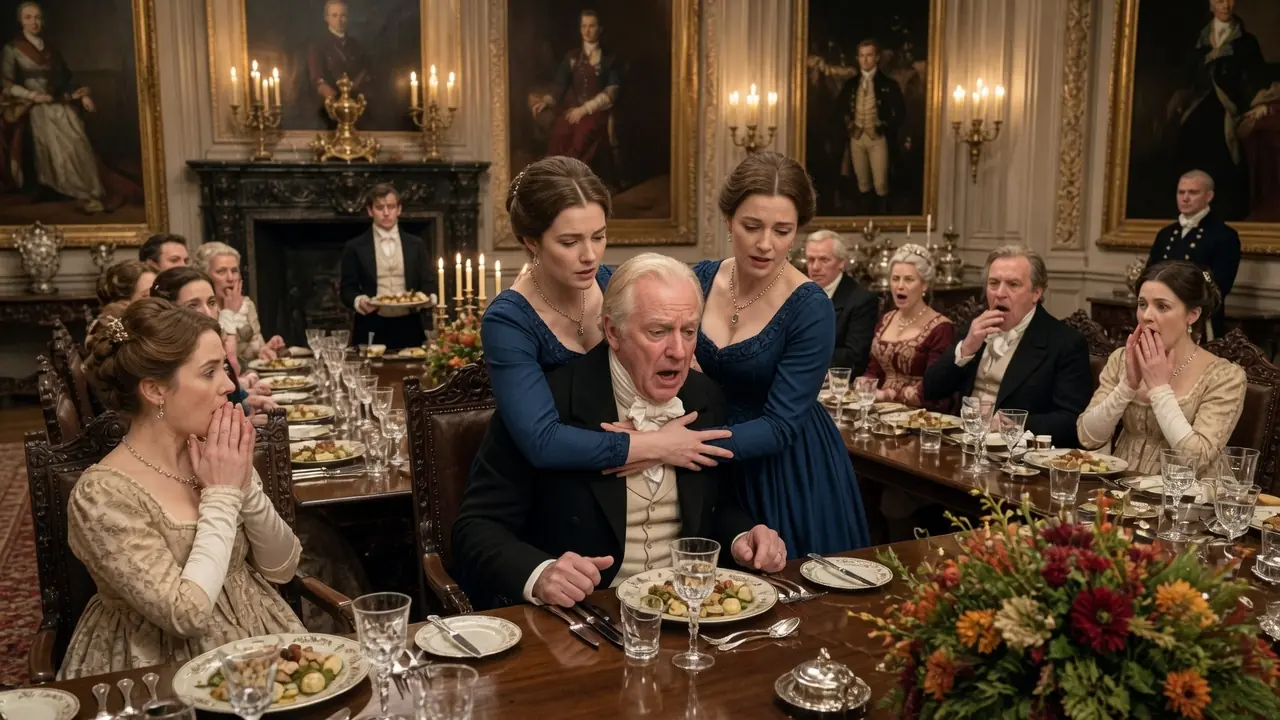
Martha sat alone at the scrubbed table with a single rushlight and a pot of stock going quietly on the banked fire. And she was content, which was a thing she had taught herself to be the way other people teach themselves the pianoforte by long practice, beginning young. She had come to Elby Court at nine years old, a scullery child, an orphan parish girl with nothing in the world but a strong back and a quick eye set to scour pots in water cold enough to crack the skin. She was three-and-twenty now, and she was the cook, the whole cook, the youngest the house had ever had, raised up over older women's heads because she had a gift.
And the gift was this.
She understood that food was not fuel but mercy.
That a good broth was a kind of prayer you could put in a bowl. That the body in its troubles could be coaxed and comforted and very often healed by the patient application of clean water and right herbs and a warm hand. When all the grand physic only bled it and purged it and hurried it toward the grave. She knew sickness the way some women know scripture by heart and by feel from the long bad years in the parish house where the children died in winters like flies.
And the one old woman who kept them had taught Martha before she herself died. Every herb that grew in an English hedge and what it was good for. Martha had nursed half the servants' hall through one egg or another. She had pulled the second footman back from a putrid sore throat the doctor had given up on below stairs.
They said only half jest that you were safer with Mrs. Webb and her broth than with any physician in the county.
And Mrs.
Webb, they called her, though she had never married, because a cook is Mrs.
By courtesy.
The one scrap of rank the kitchen is allowed.
She had seen the Duke perhaps a dozen times in fourteen years, always at a distance, a tall, dark figure crossing a courtyard. A name spoken with awe and with the particular resentment servants keep for masters who are neither cruel enough to hate cleanly nor kind enough to love. The Duke of Elby was said to be a cold man, a proud man, a man who had been a duke since he was a boy, and had the stiffness of it set into him like a bone set crooked.
He had never once spoken to Martha Webb.
He did not know she existed.
He ate what came up the stairs, and never thought about the hands that made it, which was, Martha understood, without bitterness, simply the nature of the arrangement, the great silent bargain of a great house, that the people at the head of the table must never be troubled to think about the people at the bottom of the stairs. That was the order of the world, and Martha had made her peace with it. As she had made her peace with most things, she made her peace with the great many unfair things. Until the night they brought the Duke of Elby down to death's door, and the grand physicians set about to push him the rest of the way through.
It began with a hunting fall and a gash in the thigh that should have been nothing and turned to something, the way such wounds do when they are stitched dirty and dressed worse. By the third day, the leg had gone hot and angry, and the Duke was in a fever, and Sir Crispin Mallory had been sent for from Bath at a great price, and Sir Crispin Mallory had done what fashionable physicians did, which was to bleed him. Martha heard the whole of it below stairs, where the whole of everything is always heard. She heard that the great man had taken twenty ounces of blood from the Duke on the first day and 20 more on the second to cool the fever.
She heard that he had dosed him with calomel until the Duke could not keep so much as water down. She heard that the leg was worse, and the fever higher, and that Sir Crispin spoke gravely of mortification and the danger to the constitution, and that the Dowager Duchess walked the long gallery half the night, wringing her hands. Not, the housemaids said unkindly, over her son so much as over the succession, the Duke being unmarried, and the next heir a cousin she despised, and Martha, sending up the invalid food that came back down untouched day after day, the calf's-foot jelly, and the barley water, and the thin gruel, all of it returned cold and whole, began to be angry and then to be more than angry because she knew with the certain knowledge of fourteen years of sick rooms exactly what was happening up in that grand bed chamber.
They were not curing the Duke of Elby.
And they were calling it treatment.
And the man was going to die of the cure long before the wound could finish him. On the sixth night, when the word came down that Sir Crispin had bled him again, and did not expect him to see the morning, Martha Webb did a thing that could have got her turned out into the road without a character.
She made a broth.
Not the genteel invalid slop that came back uneaten, but a true broth, the broth she had pulled the footman back to life with, rich and clear, and salted right, with the things in it she knew a sinking body needed, and could not name in Latin. And she carried it up herself up the back stairs and through the green baize door into the grand cold upper world where she had no business to be. And she walked into the Duke of Elby's bed chamber, past the dozing nurse as though she had every right, because she had learned long ago that the surest way to be permitted a thing is to do it as though permission were absurd. The room was hot and close and stank of sickness and of blood.
The Duke lay in the great curtained bed, gray as ash, his dark hair stuck to his forehead, his lips cracked, his breath coming shallow and quick. A young man, younger than she had thought, perhaps thirty, with the fever burning the last of him away. And there was a bowl by the bed half full of his blood and a basin of the dreadful calomel. And Martha looked at the whole grand murderous apparatus of his dying.
And she made up her mind.
"No more of that," she said to the startled nurse low and level, nodding at the bleeding bowl.
"Not tonight. Not one more drop. He has nothing left to give it. You take that away and you bring me clean water and clean linen and you say nothing to anyone. And if the great doctor asks, the Duke was sleeping and not to be disturbed. Go on. I will sit with him." And the nurse, who was exhausted and frightened, and glad past measure to have someone speak as though they knew what to do, went.
Martha sat with him the whole of that night.
She would not let them bleed him.
She bathed the fever heat from him with cool cloths patiently, hour upon hour. She got the broth into him a spoonful at a time between his cracked lips, waiting, coaxing, a drop, and then a drop. The slow, grim feeding of the very ill that no grand physician would ever lower himself to do. She unwrapped the foul dressing on his leg, and she cleaned the wound the way the old parish woman had taught her, with clean water and a poultice of the right herbs to draw the poison, and she bound it fresh.
And somewhere in the blackest hour, when his breathing changed and she thought she had lost him after all, he opened his eyes, dark and enormous in his wasted face, and looked at her, a strange woman in a cook's apron, sitting in the Duke's own chamber in the dead of night.
And he did not ask who she was.
He said in a thread of a voice, ""Am I dying?"" Not tonight, said Martha Webb.
Not if I have anything to say to it.
Drink this.
And he drank because there was something in her plain, steady voice that a dying man could lean on. And he slept, truly slept, for the first time in days, and his breathing eased. And toward dawn the killing heat began at last by degrees to break. Sir Crispin Mallory came again in the morning, expecting to find a corpse, and found instead his patient sleeping easy, with the fever broken, and his first feeling was not relief, but a front, for he learned very quickly that his orders had been overturned in the night by a servant, and a great physician does not suffer that gladly. ""Who stopped the bleeding?"" he demanded of the trembling nurse.
And the nurse, too frightened to lie, said it had been the cook. And Sir Crispin Mallory drew himself up to the whole height of his fee and his fashion, and declared that he had never in his life been so insulted, that a kitchen drab had laid hands upon a ducal patient, and overthrown the considered treatment of a physician known and trusted in three counties. And that the creature must be turned off that very hour or he would wash his hands of the case and let the world know the reason why the Dowager Duchess was sent for and came and the thing was fought out in the cold gallery outside the sick room door.
The great Dr.
White with professional outrage on the one side and Martha Webb in her cook's apron on the other and the Dowager Duchess Almeria between them torn for she cared nothing whatever for the cook but she cared a very great deal what Bath would say if it were known she had crossed the famous Sir Crispin and lost her only son in the crossing "Turn her off, madam," said Sir Crispin this hour or I cannot answer for his grace's life.
"You could not answer for it yesterday, sir," said Martha, before the dowager could speak quietly and without heat, looking the great man full in the eye, as no servant ever should.
When you bled him gray and gave him over to the grave, I do not say it to shame you.
I say it because it is true.
And her grace may go in and look at her son this very minute and judge for herself which of the two of us has had the right of it.
He is sleeping.
He has taken broth and kept it down.
The leg is cleaner this morning than it has been since the fall. You may dress all of that up in Latin and call it your own doing, sir, and I will not contradict you before the county, but you will not bleed him again. For the next bleeding will finish him, and I believe in your heart, you know it, and I believe that is the true reason you are so very angry with me. There was a silence in the gallery, the particular silence of a man who has heard an unanswerable thing and cannot afford to admit it.
And the Dowager Duchess Almeria, who was a hard woman but never a stupid one, went into the room and stood and looked at her son living where the great doctor had promised her a corpse and came out again and made the only choice a frightened mother could make.
She kept the cook.
Sir Crispin Mallory took his fee and his outrage back to Bath and told the tale ever after in a shape that suited him better, in which he had snatched the Duke of Elby from death against the ignorant meddling of a servant. And Martha let him have it so, because the credit was nothing to her, and the man was alive. She had her foot in the door now, and she kept it there. So Martha Webb became for the space of a month the unlikely keeper of the Duke of Elby.
And it was in that month, in the long quiet hours of his mending, that the thing happened which neither of them had any business letting happen, and which changed the whole course of both their lives. He was not, when you got him out from under the duke of him, the cold, proud man the house believed in. That was the first thing she learned, sitting with him through the long convalescent days, while he was too weak to be anything but himself.
The coldness she came to see was not the man.
It was the armor the man had grown because he had been a duke since he was eleven years old since the day they put the whole weight of Elby on a boy and told him a duke does not weep and a duke does not lean and a duke trusts no one because everyone who comes near a duke is reckoning what they can get. He had been alone, she understood, in the particular way that only the very great are alone, surrounded his whole life by people, and never once in it spoken to as a man. And Martha Webb spoke to him as a man, because she did not know how to do otherwise, because the kitchen had never taught her to be afraid of anybody, and because a person she was nursing was a person she was nursing, duke or footman, the same fever and the same broth, and the same human creature underneath, frightened of the same dark.
She scolded him when he would not eat.
She told him the truth when he asked for it, which no one else in his life had ever dared to do. When he was low in the gray afternoons, when the fever weakness pressed the spirit down, she sat by him and talked of the kitchen and the garden and the parish children and the old woman who had taught her ordinary things. A whole warm ordinary world he had never been allowed to enter.
And he listened the way a starving man eats.
And he talked in his turn more than he had ever talked to anyone of the loneliness of his boyhood, of a father who had taught him to be a duke and forgotten to let him be a son. Of the strange truth that a man might have four thousand acres, and not one single soul who would sit with him in the dark and not want anything.
"You want nothing from me," he said to her once, wondering late in the mending when he was strong enough to sit up against the pillows and watch her change the dressing on his leg with her clever, gentle hands.
Do you know I have been turning it over and I believe you are the first person in my whole life of whom that is true.
Everyone has always wanted something.
My mother wants the succession.
My cousins want the reversion.
The women I am paraded before want the diamonds.
Even my servants want their place which is fair and their wages which is fairer. And you sat up three nights and saved my life and went back to your kitchen and asked for nothing.
Not money, not advancement, not so much as my thanks.
Why?
"Because you were sick," said Martha simply, knotting the clean bandage.
And I knew how to mend you, and it would have been a wicked waste to let those fools finish you off when I had a broth that would not.
There is no great mystery in it, Your Grace.
You do not let a thing die that you know how to save.
It is not kindness even.
It is only sense and a hatred of waste which a person raised in a kitchen has bred in the bone. He looked at her a long moment, the dark eyes that had been a dying man's a month gone now, clear and alive, and fixed on her, with an attention that made her for the first time in the whole business, aware of herself as something other than a nurse. "Gabriel," he said, "Your Grace, my name is Gabriel. You have had your hands on every part of me this month. You have seen me weep and rave and beg. You have fed me like an infant and cleaned my wounds. And you go on your gracing me as though we had been introduced across a ballroom. I find I cannot bear it. To you of all the souls on this earth, I should like to be Gabriel. Will you? Only when we are alone. I know what the world is. But here in this room where you have seen the whole truth of me and saved it, "Gabriel." And Martha Webb, against every grain of sense she owned, said it. Gabriel. And the saying of it changed the room, the way salt changes a dish, one small thing that alters the whole. And they both heard it. And neither of them said anything more about it because there was nothing to say that would not have been the beginning of something that could not must not be begun. But it had begun. They both knew it had begun. A duke and his cook, which was not a thing the world had any room for at all. He recovered. That was the cruelty of it in a way. The mending that she had worked for was also the ending of the only time the two of them would ever be permitted to be simply Gabriel and Martha in a quiet room. He got his strength back. And with it the whole apparatus of his rank came back too, the valet and the steward and the letters and the duties. And Martha went back down the stairs to her kitchen where she belonged, and the green baize door swung shut between their two worlds, as it had always swung. And that, she told herself firmly, scouring a pot she had no need to scour, was that, a month out of the ordinary, a thing to keep, nothing that could go anywhere, because there was nowhere for it to go. She was wrong because she had reckoned without the one thing she did not know about Gabriel, Duke of El, which was that a man who has been given his life back and his self back by one honest pair of hands is not a man who goes meekly back to dying by inches in his cold grand solitude once he has tasted the alternative. He came down to the kitchen. It was unheard of. Dukes did not come to kitchens. The kitchen was the one place in his own house a great man never set his foot. But three weeks after he had left his sick room on a wet evening, the green baize door opened, and the Duke of Elby came down the worn stone steps into the warm, low, firelit room, where Martha sat at her scrubbed table, and the scullery girl dropped a dish. And Martha rose, and he stood there tall and dark and entirely out of place among the hanging coppers, and said, ""I could not think where else I might find you, where we might speak. Send the girl away, Martha. I have something to say to you and I have been a month working up the courage to say it which is a thing no one would believe of me and which is your doing entirely. She sent the girl away. Her heart was going hard. She knew the way you know weather coming what was about to be said and she knew it could not be allowed. And she stood by her own kitchen fire and braced herself to refuse a duke. "I have been alone my whole life," Gabriel said he did not come to her. He stood by the steps, turning his hat in his hands like a boy. The great Duke of Elby made awkward as a plowman in his own kitchen. I did not even know that I was alone until a woman came up the back stairs with a bowl of broth and sat in the dark with me and treated me as though I were a man and not a monument. You gave me back my life, Martha. Not only the breath in my body, though that too. You gave me back the part of me my father buried under the duke when I was a child. I have been Gabriel for one month of my whole existence. And it was the month I spent dying and mending in your hands. And I find I cannot go back. I cannot go back to being only the Duke, to the cold and the counting and the great empty rooms full of people who want things. I want to be Gabriel. And the only place in the world I have ever been, Gabriel, is wherever you are. So I have come to ask you, knowing exactly what I am asking, and exactly what the world will say of it, to marry me. The kitchen was very quiet. The fire spoke. The rain ran on the high windows. And Martha Webb, who loved him, who had known she loved him for three weeks and had told no one, not even herself, out loud, did the hardest and the most loving thing of her whole hard life. She refused him. ""No," she said.
He went white.
"Martha, no, Gabriel, and you will hear me out, because I love you too well to let you do this to yourself, and that is the truth, and I will say it plainly." either once and then never again.
She gripped the table edge.
I am a parish orphan.
I was scouring your pots at nine years old.
I have not a drop of gentle blood, nor a penny of fortune, nor the smallest notion how to be a duchess, which fork and which curtsy and which precedents. And the world you live in will not see in me what you see.
They will see the cook.
They will see the kitchen.
They will whisper it in every drawing room in England.
That the Duke of Elby took leave of his wits in a fever and married his cook.
And they will never once let you forget it.
And worse, far worse, they will never let me forget it. And worst of all, they will use me to wound you every day for the rest of your life.
I will be the stick they beat you with.
I will be your ruin and your shame in their eyes.
And I love you far too well to be that.
You have only just got your life back.
I will not let your gratitude to me cost you everything else you have.
Go and marry some Earl's daughter who knows the forks.
Be the Duke.
I will keep your kitchen and I will be glad I knew you. And that will have to be enough because it is the only ending to this that does not end in your ruin.
It was, she thought, the right thing.
It was the noble thing, the sensible thing, the thing that protected him. She had braced for him to be persuaded by it, to see the sense of it, to grieve and to go.
She had not braced for him to be angry.
"How dare you," he said very low.
And there was something in his quiet that she had never heard. The steel under the gentleness, the thing that had made him a duke, after all.
How dare you decide my ruin for me, Martha Webb?
How dare you sit there and reckon up what the world will think and weigh it against the one true thing either of us has ever found and hand me back my own happiness with the kitchen forks as your reason. Do you think I do not know what they will say?
I have thought of nothing else for a month.
I know exactly what they will say, and I have discovered that I do not care. That I would rather be Gabriel with you and damned by the whole of society than be the Duke of Elby alone in my cold great house for fifty more years, which is the only other future on offer, and which is a slower death than the fever was.
You call yourself my ruin.
You are the only thing that has ever saved me.
And you do not get to refuse me out of love.
Because that is a coward's nobility, Martha.
It is sacrificing the both of us to spare yourself the hard thing, which is to be brave enough to be happy in the teeth of a world that will hate you for it.
I am asking you to be brave, not safe.
Brave.
I have done safe my whole life and it nearly killed me. Marry me and let us be hated and be happy anyway because the happiness is real and the hatred is only noise. And Martha Webb, who had been so sure she was being noble, looked at the truth of it, as he held it up to her, and saw that he was right, that her refusal was indeed the coward's road, dressed up as kindness, that she had been protecting herself as much as him, protecting herself from the terror of wanting a thing so far above her station, and reaching for it, and being struck down and she was ashamed.
And then she was not ashamed.
She was something else.
Something that rose up in her like the warmth rising off her own fire, fierce and frightening and alive.
"If I do this," she said slowly.
I will not pretend.
I want that understood before anything.
I will not pretend I am other than I am.
I will not be ashamed of the kitchen.
Gabriel, not for your mother, not for the king himself.
I came up out of the scullery, and there is no shame in it. And I will not spend my life apologizing for it, nor hiding it, nor playing the fine lady I am not. If you want a duchess who will blush for her own hands, you must look elsewhere. But if you want me, the whole of me, kitchen and all, with my plain speech, and my parish manners, and my hands that know an honest day's work, then she stopped.
Her own daring frightened her.
Then, yes.
God help us both.
Yes." And the Duke of Elby crossed his own kitchen at last, and took the cook's two work-roughened hands in his, and that was the whole of his answer, and she knew it. They were married within the month, quietly in the small church on the Elby land, and the storm broke over them exactly as Martha had foretold. Society could speak of nothing else. The Duke of Elby, one of the great matches of the kingdom, had married his cook, his actual cook, a parish orphan who had scoured his pots, and the drawing rooms of three counties rang with it, with the delicious horror of it. And the wits made their jokes, and the cartoonists their cartoons, and the great hostesses debated whether the new duchess could possibly be received. It was everything Martha had said it would be. And Gabriel bore it exactly as he had said he would, which was to say he did not care. He walked through the whole roaring scandal with his wife on his arm and his head up and a look on his face that dared any man living to say one word to him. And very few did because a duke is still a duke. And four thousand acres buy a great deal of silence even from people who are laughing behind their fans. But there was one person who would not be silent and who could not be walked past and who held a power in the house that even the Duke could not simply override and that was his mother. The Dowager Duchess Almeria had not come to the wedding. She had taken to her rooms when the banns were read, and she had stayed in them in a cold fury that frightened the servants more than any rage would have. And when at last she consented to receive her son's wife three days after the marriage, she did it in a manner calculated to wound to the bone. She kept the new duchess standing. She looked her up and down through a raised glass slowly, the way one examines a horse one has been cheated over, and she said nothing for a long, deliberate, dreadful while. And then she said in a voice like cut glass, ""So you are the kitchen wench my son has seen fit to make the eighth Duchess of Elby. I will tell you once and once only what I think of it and then I shall not lower myself to discuss it again. I think you are a calculating creature who saw a sick man at her mercy and snared him. And I think you have dragged a great and ancient name through the gutter you crawled out of. And I think that every day you sit in my dead husband's house, wearing a title you have no more right to than the scullery cat. You are a living insult to two hundred years of better women than you will ever be. You may have the name. The law gives it you and I cannot prevent it. But you will never have my countenance and you will never have this county's respect. And you will never, whatever my son in his madness pretends, be anything but what you are, which is a cook who got above herself. Now get out of my sight." It was as cruel a thing as Martha had ever had said to her, and she had heard cruel things. The parish house had not been gentle, and she stood and took the whole of it without flinching, her chin up, her eyes steady on the old woman's face. And when it was done, she did not weep, and she did not rage, and she did not flee. She only said quietly, ""You are entitled to your opinion of me, Your Grace, and I will not argue you out of it, for I can see it is the only comfort you have left, and I would not take it from you.
But I will tell you one thing in return, since we are speaking plainly, I did not snare your son.
I refused him.
I refused him to his face for the very reasons you have just thrown at me because I knew the world would hate me and I did not want to be the cause of his unhappiness.
He would not be refused.
So you may blame me for many things, but not for that. And if you want someone to be angry at for this marriage, be angry at him, for he is the one who would not let it go. And you raised him to be that stubborn, so in a manner of speaking, it is your own doing." And she curtsied, a plain, honest kitchen bob of a curtsy, and walked out and left the Dowager Duchess Almeria, staring after her with an expression that was not quite what it had been, though it was a long way still from kind. It was in those same hard weeks, while the county laughed and the dowager schemed, that the new Duchess of Elby did the thing that began quietly to turn the tide that mattered, though she did it for no such reason, but only because a child was dying, and she knew how to mend it. The child was the gatekeeper's youngest, a boy of four, and it was the croup that took him, the dreadful winter strangling that fills a small throat with a membrane and stops the breath. And the gatekeeper's wife came screaming up to the house in the black middle of the night because the child was blue and could not draw air. And Sir Crispin had been sent forth to Bath and would not stir for a gatekeeper's brat at that hour for any fee. And the household stood about wringing its hands as households do. And the new duchess heard the screaming, and came down in her shift with a wrapper thrown over it, her hair loose, no more a duchess in that moment than the scullery girl she had been. And she took one look at the child going blue in his mother's arms, and she did not hesitate. She had the boy carried to the kitchen, to her kitchen, the warmest place in the house, and she had the great kettles set boiling, and she filled the low stone room with steam until the air ran wet on the walls, for she knew from the parish house and the old woman's teaching that steam will sometimes soften what is strangling a child, where all the doctor's instruments will only frighten it. And she held the boy upright in the steam against her own shoulder through the worst of it, and worked his throat with her clever fingers, and got a spoon of the right syrup into him between the dreadful crowing breaths, and talked to him low and steady the whole time, as she had once talked to a dying duke. And she did not let go and she did not give up because you do not let a thing die that you know how to save. Toward dawn the membrane loosened and the child drew a long whistling whole breath and then another and then began blessedly ordinarily to cry the strong cross squalling of a little boy who was going to live. And his mother fell on her knees on the kitchen flags and wept. And the servants who had gathered in the doorway to watch the cook-duchess work. Half of them come down to sneer stood silent, and something shifted among them in that steaming kitchen at dawn that no drawing room sneer would ever shift back. They had seen her do it. They had seen the kitchen wench, their betters laughed at, hold a dying child to her shoulder all night, and breathe it back to life with her own two hands. And a household that has seen such a thing does not afterward despise the woman who did it. Whatever the county says, the story of it went out among the tenantry the way such stories go, faster and surer than any scandal. And the poor of the Elby land, who had no seat at any table, and cared nothing for the forks, began from that dawn to speak the new duchess's name, with a warmth the drawing rooms would have found incomprehensible. It would be a long time telling, but it had begun in a steaming kitchen with a gatekeeper's son, and it would matter in the end more than all the dowager's schemes. The dowager did not give up. She changed her weapon, that was all. Open cruelty had not broken the girl, so she turned to a colder and a cleverer one. And she found her occasion in the great autumn dinner. It was the first grand dinner of the Elby season, the night the whole fashionable county came to the court. Two-and-thirty at the long table in the state dining room under the two hundred years of painted Elby Dukes, and it was by every rule of the house, the new duchess's first appearance as mistress of it. Almeria had planned it before the marriage as a showcase for a different girl entirely for Lady Octavia Frayneyne, an Earl's cold, correct daughter whom the Dowager had marked out for her son, and she had not cancelled it. She had merely, with the patience of real malice, repurposed it. If she could not stop the marriage, she would use the dinner to show the whole county, beyond any possible doubt, that the new duchess was exactly what she said she was, a cook who did not belong, who could not manage the forks, nor the talk, nor the precedents, who would shame herself and her husband before the assembled quality so thoroughly that no amount of stubborn ducal pride could paper over it. Martha understood the trap perfectly. She was not a fool, and the housekeeper, who had begun watching the new duchess to come quietly over to her side, had warned her. She knew the long table was set as a snare, the bewildering ranks of silver, the dishes she had cooked a thousand times, but never eaten at table. The precedents that would seat her among people coached to slight her. She knew the dowager meant to sit her down in the midst of the county's cruelty and let her drown in it. And Martha Webb thought about it the night before alone, the way she thought about everything plainly, and she came to a plain decision, which was her own, and which she told no one, not even Gabriel. She would not try to pass. That was the trap. She saw the whole mechanism of it. That she would try to ape the fine lady and be caught out. That her fear of the forks would do the dowager's work for her. So she would not be afraid of the forks. She would be exactly what she was openly with her head up and let them make of it what they would. The kitchen was not her shame. It was the one thing in that whole glittering cruel house that was honest, and she would not betray it to please people who were not worth the betraying. The dinner was a slow torture, and she bore it. She was seated by the dowaggers's arrangement, not at the foot where the mistress of the house belonged, but partway down the table among the lesser guests, a calculated slight that every soul at the table marked and understood. The conversation went on over her head and around her in the bright cruel code of the fashionable, full of references she was not meant to follow and names she was not meant to know. And now and then a pause, a turned head, a too sweet question designed to expose her ignorance before the table. Lady Octavia Frayne, seated in the place of honor at the Duke's right, that should by rights have been his wife's, was particularly gracious in the way of a woman being gracious to an inferior for an audience. And Martha did not pretend. When she did not know a thing, she said so plainly without shame. When a sneering young buck asked her loudly whether she found the turbot to her taste, or whether it was perhaps not done, as they did it in the servants' hall, she looked at him and said evenly, ""It is done very well, though the sauce wants a little more salt, and was let stand too long off the heat before it came up, which I would have had words with the kitchen about in my day. But you would not notice that, sir, never having stood over a sauce in your life. There is no shame in not knowing how a thing is made. There is only shame in sneering at the people who know. And there was a silence. And a few of the older guests who had earned their bread once somewhere back before the family got grand looked at the cook-duchess with something that was not contempt. It was at that point in the evening, with the table at its cruelest, and the new duchess bearing it with her chin up, that the thing happened which no one had planned, the dowager least of all, and which turned the whole night on its hinge. Old Sebastian Frayne, Lady Octavia's grandfather, a heavyset gentleman of 70, who had dined too well and too fast, as he had dined too well and too fast for 50 years, made a sudden strange sound in his throat. Half a cough and half nothing at all, and put his hand to his collar, and went first scarlet, and then a dreadful dark blue, and rose half out of his chair, with his eyes starting, and his mouth working, and no sound coming, and pitched forward across the table among the silver, choking, a wedge of meat lodged fast in his windpipe, and the breath stopped dead in him. For a moment the whole brilliant table simply stared, frozen in its finery, two-and-thirty people of the first fashion in the county. And not one of them moved, because not one of them in their whole gilded lives had ever been taught what to do when a man cannot breathe, that being knowledge for the lower sort. A lady screamed. Lady Octavia half rose white, her hands fluttering uselessly at her face. The old man's lips were going from blue to gray. And the new Duchess of Elby was out of her chair and down the length of the table before anyone else had so much as risen. The parish orphan, the cook who had seen children choke in the bad winters, and knew to the bone that a stopped throat kills in the time it takes to say a prayer. She did not stand on ceremony, and she did not ask leave. She hauled the great heavy old man up off the table by main strength, got behind him, locked her strong, kitchen hardened arms about him below the ribs, and drove her clasped fists up into him hard once, twice, with a whole force of a body that had hauled coppers and kneaded dough for fourteen years. And on the third stroke the wedge of meat shot from his throat and clattered onto his own plate. And Sebastian Frayne dragged in a vast whooping shuddering breath, the sweetest sound a drowning man ever makes. And another and sagged back into his chair, alive, purple and streaming and gasping but alive. His heart going and his lungs filling. Saved. The new duchess steadied him in his chair until his breathing came even, her hand on his shoulder, plain and competent, and entirely unhurried now that the danger was passed. And then she fetched him water with her own hands, and held it to his lips, the way she had once held broth to a dying duke. And the table sat in a silence of a wholly different order from the cruel, attentive silence of a moment before. The silence of two-and-thirty fashionable people who have just watched the kitchen wench they were sneering at save a man's life with her bare hands, while every well-born soul among them sat frozen in their chairs. And who do not in that moment know quite where to put their faces. Into that silence, the Dowager Duchess Almeria, who had watched the whole of it with a face like a shut door, spoke her stroke anyway, because she had built her cruelty to be spoken, and could not now unbuild it, and because rage and fear had carried her past the point, where she could see how the ground had shifted beneath her, she had built the stroke for the end of the dinner. For the drawn cloth and the sweet course and the whole table at its most attentive. And she delivered it now into the worst possible silence she could have chosen, and did not have the wit left to see was the worst, as such cruelty is always delivered quietly, so that the quiet would make the table strain to hear. She leaned a little toward the new duchess down the length of the table, and she said in a whisper pitched with the art of a lifetime to carry to every ear in the room, ""Do you know, my dear, I have watched you all evening, and I have come to a conclusion, and I shall share it with you as a kindness. You should have stayed in the kitchen. You were somebody there. Here you are, nothing and everyone can see it. And the kindest thing you could do for all of us and for yourself is to go back down where you belong and leave the table to those who were born to it. The whisper carried exactly as she had built it to carry. The table went still. Two and thirty faces turned, some hateful, some pitying, some merely waiting to see the kitchen wench crushed at last, to see whether she would weep or rage or flee, to see the public breaking the dowager had promised them with her eyes all evening. And in that stillness, before Martha could answer, before she could decide whether to take this blow, as she had taken all the others, the Duke of Elby rose to his feet at the head of his table. He did not raise his voice. He did not need to. The whole room was already silent and hanging on the moment. He stood at the head of the long table under the two hundred painted years of his ancestors, and he looked down the length of it, past the silver and the candles, and the assembled quality of the county to where his wife sat among the lesser guests, where his mother had placed her to shame her, and his face was not cold now. It was something far more dangerous. It was a man who had been brought back from death and did not intend to waste the second life he had been given on the good opinion of fools. ""My mother is right about one thing," he said into the silence.
And the table held its breath.
"My wife was somebody in the kitchen. She was, in point of fact, the only somebody in this entire house who was worth a damn, which I learned when I was dying in my bed. And not one of you, not the great physician, not my anxious mother, not a single one of my four thousand acres or my two hundred years of name could do the smallest thing to save me. Do you know who saved me? She did. The cook, the kitchen wench my mother would send back below stairs. She came up the back stairs in the dark when the great doctor had given me over to die, and she fed me back to life with her own hands with a broth out of that kitchen you all sneer at. And she asked nothing for it. And she went back down to her place and would have stayed there and did stay there and refused me when I asked her refused a dukedom out of love for me which not one woman at this table would have the greatness of soul to do. He paused. No one moved. So let me be very clear, the Duke of Elby said before the whole of this county, so that there can never after this night be the smallest doubt of where I stand, since my mother has been so good as to raise the question publicly. The head of this table belongs to the mistress of this house. It does not belong to the woman with the longest pedigree, nor the coldest blood, nor the most ancient name. It belongs to the woman I married, the woman who gave me my life and then was brave enough to share it. The eighth Duchess of Elby, who is worth every other soul in this room put together, and whom I will thank you all to honor as such, or to leave my house tonight and not come back." and he looked down the table, past his white and rigid mother, past the gracious Lady Octavia, gone suddenly pale, to Martha. And he held out his hand, and his voice, when he spoke again, was not the Duke's voice at all. It was Gabriel's, low and certain, and meant for her alone, though the whole room heard it. "Martha," he said, "come and sit at the head of the table where you belong. You have fed this house from the bottom of it long enough. Come and sit at the head of it now beside me, where I should have seated you the first night, and would have if I had half your courage. The room did not breathe. One second. Two, three. And Martha Webb rose from among the lesser guests, in the plain good gown that was the fjest she would let him buy her, with her work-roughened hands, and her parish manners, and her chin up exactly as it had been, up when the dowager flayed her three days before, and she walked the long length of the great table, past the staring quality, past the two hundred painted dukes, past Lady Octavia, and passed the Dowager Duchess Almeria, sitting frozen and disbelieving in her place. And she did not hurry, and she did not falter. And she came to the head of the table where her husband stood with his hand held out, and she took it. And she sat down in the mistress's chair at the head of the Elby table, the cook, the parish orphan, the somebody from the kitchen in the highest seat of one of the great houses of England. And it was the Dowager Duchess Almeria in the end who had to rise and move down, for there is only one head to a table. And her son had given it away before the whole county to a woman who had scoured his pots. And the old woman rose white as the cloth and moved to a lesser place. And the thing was done, and could not be undone. And every soul in that room knew they had witnessed something they would be telling their grandchildren. That might have been the whole of it. The triumph and the reversal and the gossips made it so when they told the tale. But Martha Webb, who was the Duchess of Elby now, in fact, and not only in law, was not a woman to take a triumph and let it curdle into a feud. And there was a thing about the Dowager Duchess Almeria that she had begun, even through the cruelty, to see. She went to the old woman some days after in the cold rooms where Almeria had shut herself up again in her defeat, and she went alone. And she did not go to gloat. "I did not come to crow over you, Martha said to the rigid, hostile back.
I came because I have been thinking about you, Your Grace, the way I think about a sickness, to find the root of it.
For there is always a root.
And I do not think you hate me because I came from the kitchen. I think you hate me because you came from somewhere not so very far from it yourself and have spent your whole life terrified that someone would see it. The dowager turned and her face was terrible, and Martha knew she had struck the bone.
I have made inquiries, Martha said gently.
It is wonderful what the old servants remember, the ones who were here before you came as a bride.
You were not so very grand yourself, were you?
Your Grace, when the seventh duke married you.
A merchant's daughter, new money, and not so very much of it, married up into all this for your face and your father's gold, and made to feel every day of your first years exactly what I have been made to feel these last weeks. The not good enough of it, the whispers, the sense of the great cold name closing over you and never quite letting you belong. And you survived it the only way you knew, by becoming harder and prouder and more ele than the Elbys. By guarding the gate, you barely got through more fiercely than anyone born inside it ever would.
Because the convert is always the cruelest at the door.
You have spent forty years terrified that the kitchen in your own blood would show. And then my son brought an actual kitchen into the family and held it up where everyone could see it unashamed. And it was unbearable to you because I will not hide what you have spent your whole life hiding.
And my not hiding it shames the hiding.
The Dowager Duchess Almeria stood very still, and her terrible face worked, and something went out of it, some longheld, rigid thing. And for a moment, just a moment, she was not the cold gatekeeper of two hundred years, but an old, frightened, tired woman who had been afraid for forty years and was very weary of it.
He never knew, she said.
Low, not to Martha so much as to the air.
My son, he never knew where I came from.
I made sure of it.
I buried it so deep.
And you have dug it up in three weeks.
I have not told him, said Martha.
And I will not, if you would rather, he did not know.
For it is your story and not mine to tell.
But I will tell you this.
I am not your enemy, Your Grace.
However you have used me, I think we are under it all very nearly the same woman, you and I. Two girls who came up from below into all this cold grandeur, and had to find a way to bear it. You chose to bear it by hiding and guarding and growing hard. I mean to bear it by not hiding at all, which is the opposite road.
But it sets out from the very same place.
We need not be friends.
But we need not tear each other to pieces either.
Two women who know the same fear in a house big enough for both of us.
I would rather we did not.
I have had enough of being torn at, and so I think have you for a great deal longer. And the Dowager Duchess Almeria did not embrace her and did not weep and did not become all at once a kind woman. For that is not how forty years of fear are undone in life, whatever the stories pretend.
But something between them changed in that cold room.
Some long war quietly laid down, and in the months that followed, the old woman was seen now and then to speak to her son's wife without contempt, and once astonishingly to defend her sharply to a sneering visitor, with the particular ferocity of a woman defending through another the girl she had herself once been and never been allowed to be.
It was not love.
It was something rarer and, in its way, harder: an old, proud, frightened soul making a late, partial, and grudging peace.
The world did not stop talking.
The world never does.
But a duke is a duke and a duchess who sits unashamed at the head of the table. Who knows the county's children by name and the county's sicknesses by their cures. Who feeds the poor of the parish out of the same kitchen she rose from and is not too proud to go down to it herself when a tenant's child is dying and the grand physician has given up. Such a duchess wins in the end a thing the drawing rooms cannot give and cannot take away which is the love of the people who are not at the table at all.
And that love spreading slowly has a way of silencing the laughter at last because it is hard to go on sneering at a woman the whole county has come to bless.
It was not a triumph without cost.
Martha never forgot the cost, having been raised to count things honestly. There were doors that never opened to her, friendships of Gabriel's that quietly fell away, a whole glittering world that received her coldly to the end of her days, and let her feel it.
The world did not give back the belonging it withheld.
Some tables she would never be asked to sit at, however high she sat at her own. But she found as the years went on and the children came and the great cold house of Elby grew slowly warm in a way it had not been in living memory that she minded it less and less. The cold high world that would not have her because she had stopped somewhere along the way wanting a seat at its table at all. She had her own table now, and at the head of it sat a man who had come down to the kitchen for her, who called her Martha in the dark, and Your Grace before the world, and meant the first one with his whole soul.
And around it in time sat their children who would grow up knowing because their mother made very sure of it exactly where they came from on both sides, the dukes and the cooks alike, and taught to be no prouder of the one than of the other. The kitchen had always been the warmest room in the great cold house and the lowest, and Martha Webb had spent half her life believing that the warmth must stay down there below the stairs behind the green baize door, while the cold grandeur rained above. That the people at the head of the table must never think about the hands at the bottom of the house.
She had been wrong about that.
As it turned out, she had carried the warmth of the lowest room up the back stairs one night with a bowl of broth to save a dying man, and the warmth had not stayed below, after all. It had risen the way warmth does all the way to the head of the table, and it had thawed in the end the coldest house in the county, because the truest nourishment a great house ever gets comes up, always from its lowest room, made by the hands that no one at the table ever troubles to think about.
And it made all the difference.