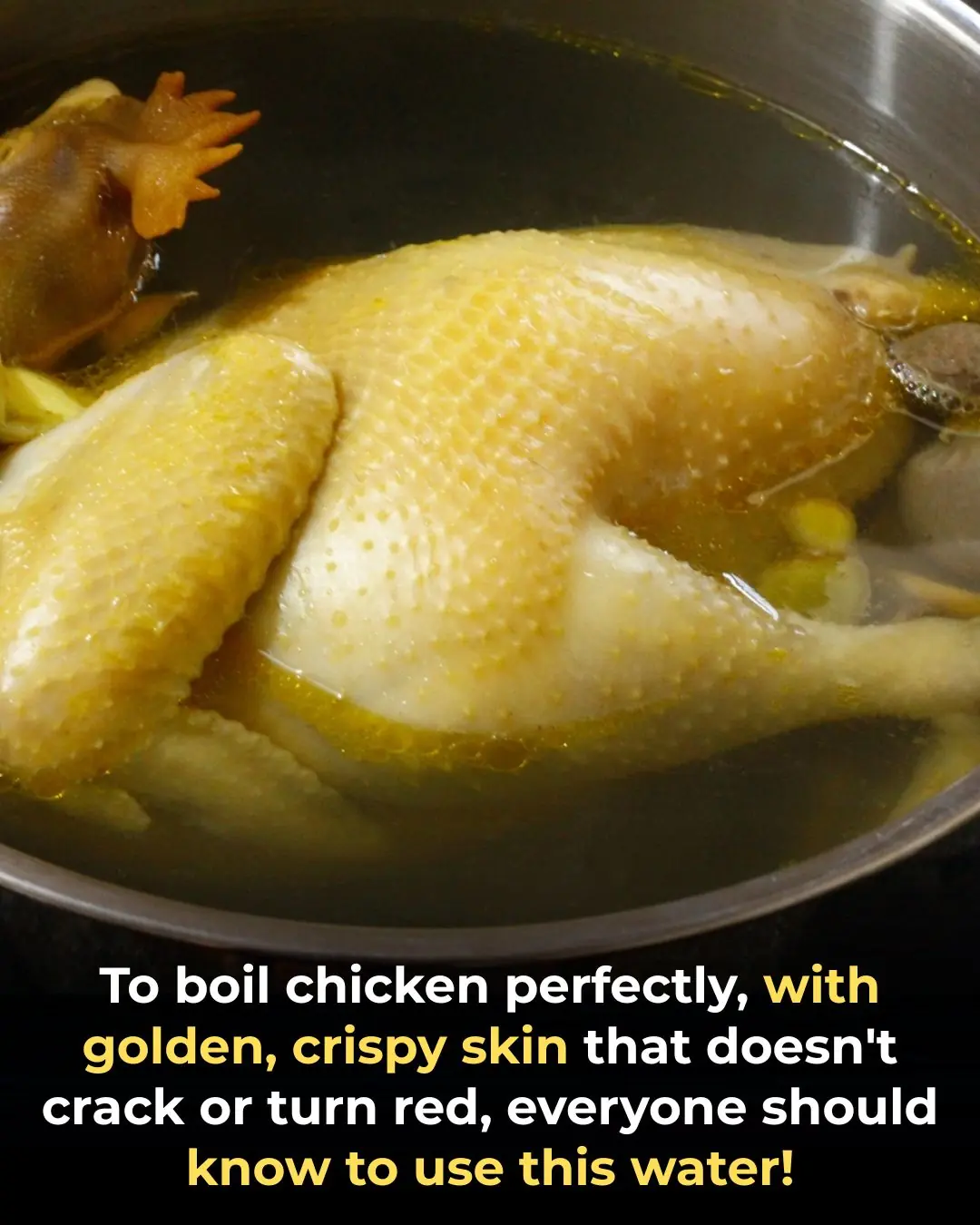
To boil chicken perfectly, with golden, crispy skin that doesn't crack or turn red, everyone should know to use this water!
Tips 24/01/2026 16:47
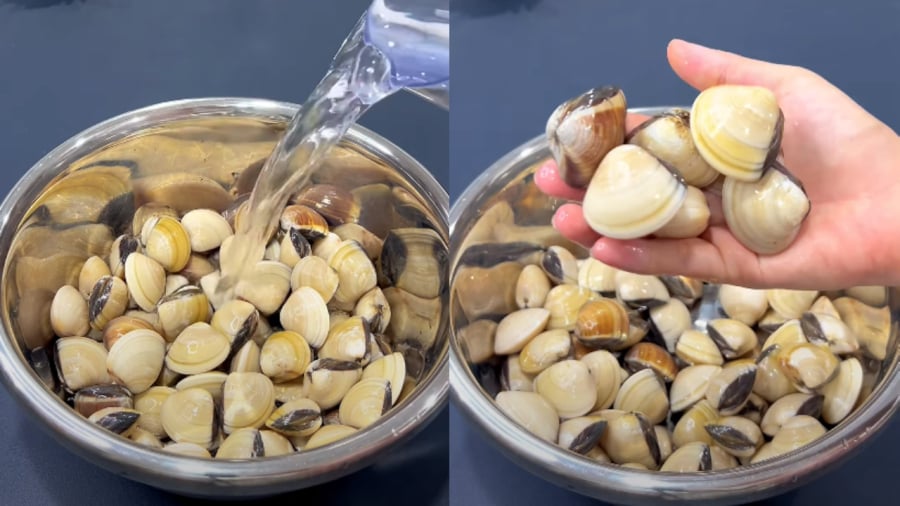
When buying clams, it is important to select ones with bright, intact shells that are hard and free from cracks or damage. Fresh clams usually feel heavy in your hand, which indicates that they are full of water and still alive. You can also test their freshness by gently tapping two clams together. If they produce a clear, sharp sound, it means the clams are alive. On the other hand, if the sound is dull or barely audible, the clams may already be dead.
Another reliable way to check freshness is by smell. Fresh clams should have a clean, mild scent of seawater. If you notice any strange or unpleasant odor, it is best to avoid buying them, as this is a sign that the clams are no longer fresh.
Timing also plays an important role when shopping for clams. The best time to buy them is early in the morning, when seafood has just arrived at the market and is at its freshest. Clams sold late in the afternoon are often leftovers from the morning, which means they may not be as fresh or flavorful. For the best quality, try to visit the market early in the day.
Clams, along with other shellfish such as mussels, oysters, snails, and cockles, live in water environments and often contain sand and mud inside their bodies. Proper soaking is an essential step in cleaning them before cooking. This process not only helps remove sand and impurities but also helps keep the clams fresh and healthy.
For freshwater shellfish like snails, cockles, and mussels, soaking them in rice-washing water is a popular and effective method. Adding a metal spoon and a few slices of chili can further stimulate these shellfish to release sand more quickly.
However, clams live in saltwater environments with a higher salinity level. If they are soaked in plain freshwater, they may struggle to release sand and can lose their freshness. Therefore, it is recommended to soak clams in lightly salted water that mimics seawater conditions.
To help clams release sand faster while maintaining their freshness, you can use warm salted water. Mix warm water by combining hot and cold water at a ratio of about 1:5, making sure the temperature is only slightly warm, not hot. The water should be enough to fully cover the clams. Dissolve some salt in the water, then add a few chopped chili peppers to encourage the clams to open their shells and expel sand more efficiently.
Clams and other shellfish are very sensitive to noise and movement. Even small disturbances can cause them to tightly close their shells, preventing them from releasing sand. For this reason, place the soaking bowl in a quiet area and avoid touching or shaking it during the soaking process.
When using warm salted water, clams usually release most of the sand within about 30 minutes. If you have more time, soaking them for 1 to 2 hours can result in even cleaner clams, ensuring that all remaining sand and impurities are fully removed before cooking.