4 "cancer culprits" lurking in your home, many people are exposed to daily without knowing it
Tips 20/12/2025 14:35
The liver is often referred to as a “silent” organ because it lacks pain-sensing nerves and possesses a remarkable ability to regenerate. As a result, when obvious symptoms appear, liver disease is often already at an advanced and serious stage.
According to Academician Li Lanjuan (China), when the liver encounters problems, warning signals are often manifested in distant parts of the body. Careful observation of the following five changes in the feet may help us detect early liver deterioration, or even recognize the silent progression of liver cancer:
Foot edema caused by liver disease has a distinct and more severe pathological mechanism than ordinary swelling. This sign is commonly seen in patients with advanced-stage cirrhosis and indicates that the liver is already severely exhausted.

The primary mechanism lies in impaired liver function, which affects the synthesis of albumin in the blood. Albumin plays a crucial role in maintaining fluid within blood vessels. When albumin levels decrease, oncotic pressure drops, causing fluid to leak from capillaries into surrounding tissues. This leads to swelling and edema in lower parts of the body such as the feet. Additionally, liver dysfunction disrupts hormonal balance and increases vascular pressure, resulting in ascites in the abdomen and edema in the feet.
Abnormal coloration of the soles is a direct indicator that blood filtration and circulation have been severely compromised. Yellow soles reflect excessive accumulation of bilirubin in the blood due to the liver’s inability to eliminate it effectively.
Bilirubin is a yellow waste product generated during the breakdown of red blood cells. If yellowing of the soles is accompanied by itching, skin darkening, and weight loss, it may indicate the silent progression of liver cancer. In contrast, unusually pale soles may result from reduced blood production or vascular obstruction, leading to insufficient blood supply to the extremities—commonly seen in patients with severe liver failure.
Skin itching is one of the most distressing symptoms of chronic liver disease. When the liver’s detoxification function declines, waste products and toxins cannot be effectively eliminated and instead accumulate in the body. This itching is often most pronounced in areas with thinner skin, such as the palms and soles.

The primary cause is the accumulation of bile acids beneath the skin. When liver function is impaired, bile acids are not properly excreted and instead deposit in the skin, triggering itching and sometimes redness or rashes.
Spider angiomas—also known as spider nevi—are small red lesions with a web-like appearance. If they appear on the feet, this may signal severe liver damage.
Their formation is associated with elevated estrogen levels in the blood. A healthy liver metabolizes and inactivates estrogen. When liver function declines (due to cirrhosis or liver cancer), estrogen cannot be effectively processed, leading to vasodilation of capillaries and the formation of spider angiomas. These lesions are most commonly found in areas rich in capillaries, such as the face, neck, and feet.
Healthy toenails are typically pink and smooth, without streaks. When the liver is severely damaged, the toenails may also exhibit notable warning signs.
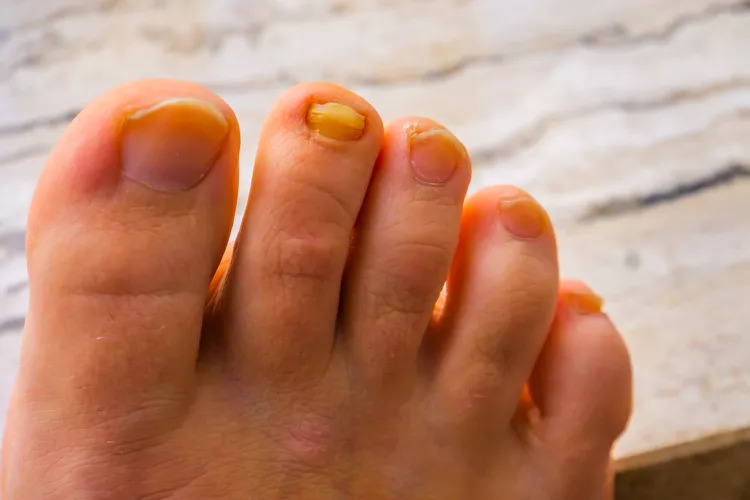
Impaired liver function prevents bilirubin from being fully eliminated, causing toenails to take on a yellowish hue. In addition, people with severe liver damage may develop abnormal white vertical lines on their toenails, or nails that appear pale and dull. This is related to reduced blood production and nutritional deficiencies caused by the liver’s inability to properly metabolize or store nutrients, leading to fragile, brittle nails.