The conference room windows stretched floor to ceiling, offering a view of downtown Richmond that most people would never see from this height. Clare Donovan stood at the head of the mahogany table, laser pointer tracing red circles around quarterly projections that made even the skeptical board members lean forward. Her voice carried the practiced confidence of someone who’d spent a decade proving she deserved the title her last name had handed her. $43 million in cost reductions, 17% margin improvement, six new supplier contracts that would reshape the entire Mid-Atlantic automotive parts distribution network.
The numbers glowed on the screen behind her. Each one was a small victory against the whispers that still followed her through industry conferences. Daddy’s girl. Lucky inheritance. Pretty face in an expensive suit. She was three slides from the conclusion when the double doors opened.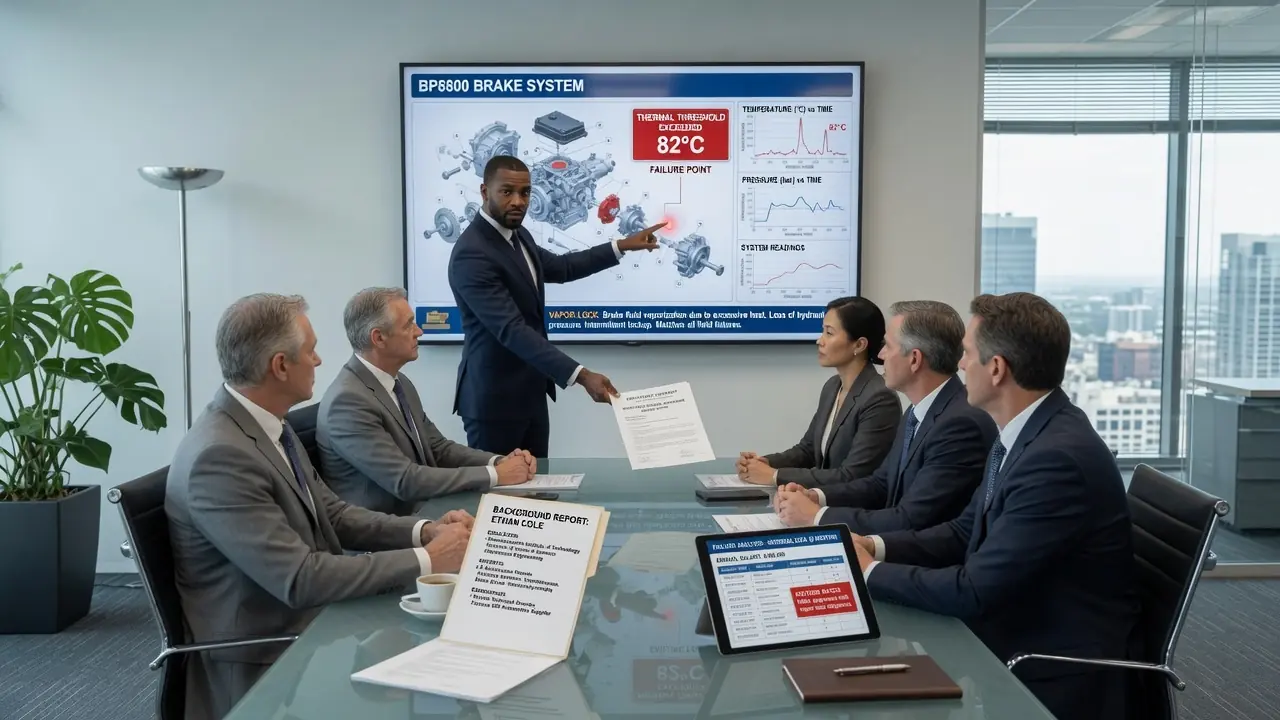
The man who entered wore a charcoal suit that fit him the way expensive things fit people who understand quality. He carried a leather briefcase in one hand, reading glasses tucked into his breast pocket. His shoes caught the recessed lighting as he walked, each step measured and deliberate. Clare’s presentation stumbled mid-sentence.
Richard Harrington, the board’s most senior member, half rose from his chair. His coffee cup rattled against the saucer. Someone in the back row whispered words that carried further than intended. That’s the mechanic from the mountain road.
The room crystallized into something fragile. Clare felt the projector’s heat against her back, heard the ventilation systems quiet hum, noticed for the first time how the light from outside cast shadows across every face turned toward the door. The man set his briefcase on the table without asking permission. When his eyes met hers, something flickered there that she couldn’t name.
Recognition, maybe, or the careful blankness people adopt when they’re deciding whether to speak truth or preserve comfort. She tried to find words that made sense of the moment, but her throat had gone dry. The screen behind her faded to black as the presentation timer expired. three months earlier, Ethan Cole woke to the specific kind of silence that precedes a child’s bad dream.
His daughter hadn’t cried out yet, but her breathing had changed rhythm three seconds earlier, he had learned to hear these things the way other fathers learned to fix leaking faucets or assemble furniture from cryptic instructions. The digital clock cast blue numbers across the ceiling. 4:47 a.m. 13 minutes before his alarm, Maya stirred in the bunk bed across their shared bedroom, one small hand reaching for the stuffed elephant that had survived four years of fierce affection. Her fingers found it.
The breathing steadied. Crisis averted without her ever fully waking. Ethan allowed himself another two minutes horizontal, staring at water stains that formed continent shapes on the ceiling. The building superintendent had promised repairs in November.
That was seven months ago. The stains had grown, developing new peninsulas and island chains that Ethan sometimes named during nights when sleep refused to come. He rose without sound, feet finding the cool spots on the worn linoleum. The kitchen was three steps from the bedroom in an apartment that real estate listings would call cozy and honest people would call cramped.
The table held bills arranged in order of urgency. Rent notice printed on yellow paper. Electric company’s final warning before disconnect. Maya’s school supply list for second grade with required items his paycheck couldn’t yet cover.
The numbers told a story he didn’t need to calculate twice. $875 due in 12 days. His bank account held $43.27. Next paycheck came in nine days.
It would cover rent and maybe groceries if he could convince the electric company to accept a partial payment and a promise. His reflection appeared in the darkened window above the sink. 35 years old. MIT diploma in a box under his bed because the frame had cracked and replacing it felt like admitting he’d need to prove something he’d already proven.
Three patents sold to pay medical bills that arrived after his wife died. Technical expertise that repair shop customers didn’t want from someone they decided should know his place. The coffee maker gurgled and spat, filling the apartment with a smell that Maya once said reminded her of Sunday mornings when her mother had still been alive. Ethan didn’t correct her.
Sarah had hated coffee. But if the smell brought comfort, truth could wait. Maya appeared in the doorway, dragging her elephant, curls compressed on one side from the pillow as her voice came out sleep-thick. Is it school day?
It’s school day. Can we have the pancakes? The good pancakes required ingredients he’d buy on Friday. He measured out instant oatmeal instead, added water, let the microwave hum while she climbed into the chair that wobbled because one leg was shorter than the others.
A phone book under the short leg had worked for 3 weeks before Maya’s homework shifted it during dinner. She ate slowly, swinging legs that didn’t quite reach the floor. Between bites, she offered information that seemed random, but followed the 7-year-old logic he’d learned to track. Carson’s dad is a lawyer.
You fix their cars. Ethan spooned oatmeal into his mouth. buying time against the conversation he felt approaching. Maya’s next words came quieter.
But when I told about the hydraulics you taught me for my science project, Ms. Peterson asked if you really understood hydraulics or just watched videos. The oatmeal lost flavor. Ethan set his spoon down carefully, the way he did when checking engine timing. Precision prevented mistakes.
His daughter watched him with eyes that had started seeing things he wished she didn’t have to notice yet. What did you say? he asked. I said you used to teach engineers before Mama got sick. But Carson said his dad said people who fix cars don’t teach engineers.
The wobbling chair leg chose that moment to slip. Oatmeal sloshed near the bowl’s edge. Ethan caught it, studied everything, met his daughter’s gaze across seven years of love and four years of loss and a future that kept shrinking in ways she shouldn’t have to measure. Some people, he said, voice level, make decisions about other people based on what they see instead of what’s true.
That doesn’t make them right. It makes them lazy. Maya absorbed this with the seriousness of someone adding to an internal catalog she’d apparently started building. Okay, she said, but her smile had dimmed.
The garage bay doors stood open to morning air that promised heat by noon. Harris Auto Repair occupied a brick building that had been three different businesses before automotive work proved the only thing that stuck. Oil stains on the concrete floor mapped decades of slow leaks and rushed services, and the smell never quite left Ethan’s clothes, no matter how many times he washed them. He clocked in at 7:53, seven minutes early, the way he’d been raised to show respect for other people’s time.
Mr. Harris was already in his office, visible through glass that needed cleaning. 6two years old, three ex-wives, a drinking problem he’d conquered, and a smoking habit he hadn’t. Good with customers who matched his background, nervous around ones who didn’t. Ethan pulled his first work order, transmission flush on a Ford that probably needed a full rebuild, but whose owner could only afford maintenance.
He could finish it in 90 minutes if nothing else broke. The day proceeded in the rhythm of work that required competence without conversation. Ethan diagnosed problems, repaired what could be fixed, or documented issues that needed customer approval before proceeding. He moved through tasks with efficiency that came from understanding systems the way other people understood language.
At 11:15, Mr. Harris appeared beside the lift where Ethan was finishing brake pad replacement. Got a customer complaint, he said. Ethan lowered the vehicle, wiped his hands, waited. Lady who picked up the Camry yesterday.
Said you were quote, uppity about explaining what was wrong. The words landed without surprise. Ethan had learned their shape and weight through repetition. I explained the cooling system leak and recommended replacing the hoses before they failed completely.
He said she felt talked down to. I used technical terms because she asked technical questions. Mr. Harris shifted his stance looking everywhere except directly at Ethan. Just maybe next time keep it simpler.
People don’t always want to know how things work. They want to know the price and when it’ll be done. The thing Ethan couldn’t say pressed against his teeth. That he had spent three years designing cooling systems that now ran in 40,000 vehicles across six countries.
That he’d published papers on thermodynamics that graduate students still cited. that he could teach a master class on automotive engineering, but couldn’t convince a repair shop customer that he understood their car’s problem. What he did say was, Yes, sir. Mr. Harris nodded, relief visible in his shoulders dropping half an inch.
He retreated to his office. The coworker at the next bay, a 23-year-old named Derek, whose father had been Mr. Harris’s fishing buddy for 30 years, didn’t look up from the oil change he was performing. His voice came casual, practiced. They don’t like it when you show you know more than them.
Ethan had learned that some truths don’t require acknowledgment to be understood. He finished the break job in silence. The mountain road had exactly three places where cell service appeared and disappeared like a promise the universe couldn’t keep. Clare Donovan had discovered this 40 minutes into what should have been a 90-minute drive from Richmond to the supplier meeting in Charlottesville that would determine whether her cost reduction strategy survived the next board review.
Her car had died in the gap between towers 2 and three. She’d tried the ignition six times with results that progressed from disappointing to insulting. The engineering degree she’d earned before business school offered enough knowledge to understand she was stranded and insufficient expertise to fix it. The irony of running an automotive parts company while sitting helpless beside a malfunctioning vehicle wasn’t lost on her.
The sun had started its afternoon descent, painting the valley below in shades that would photograph beautifully and provide zero practical assistance. When the pickup truck appeared, relief arrived before caution. The vehicle looked like it had survived decades through repairs performed by someone who understood function mattered more than appearance. Primer gray patches covered rust spots.
The bed carried a toolbox that had seen weather and work, and the man who emerged moved with the economy of motion that separated people who worked with their hands from people who thought about working with their hands. tall, broad-shouldered, wearing coveralls that bore the specific stains of automotive labor. He approached her disabled luxury sedan with an expression that gave nothing away. His voice came calm, professional. Engine trouble.
Clare heard herself respond with the clipped efficiency she used in conference rooms. It won’t start. I don’t know what’s wrong. Mind if I take a look?
She stepped back, phone still useless in her hand, watching as he opened the hood with the confidence of someone who’d performed this specific action thousands of times. His hands moved through the engine compartment like a surgeon’s, detaching components with just enough pressure to test connections without disturbing anything that didn’t need disturbing. Clare found herself on a conference call she had forgotten to end, her assistant’s voice tinny from the phone speaker. The Charlottesville people are asking when you’ll arrive.
She killed the call without explanation. The mechanic straightened, meeting her eyes for the first time. Something in his gaze suggested he registered more than the situation’s surface details. Battery terminals are loose on your CT4700 system, he said.
German engineering, good design, but the connections can work free under sustained vibration. The specificity stopped her. Most mechanics she’d encountered through her company’s supplier network spoke in generalities that kept customers dependent. And this man had identified not just the problem, but the exact system designation.
You’re familiar with CT4700 architecture somewhat. He returned to his truck, retrieved a multimeter and precision wrench set that looked professional grade. The repair took 3 minutes. His movements had the rhythm of expertise.
Each action flowing into the next without wasted motion. When he told her to try the ignition, the engine caught immediately. Clare stepped out, reaching for her purse with the automatic assumption that service required payment. The day had already cost her the Charlottesville meeting.
At least she could compensate competence. What do I owe you? Nothing. I insist. Your time is worth something. His face shifted into something that might have been amusement or might have been something sadder.
It took two minutes. I’m not taking money for tightening a bolt. The refusal felt like judgment, though his tone carried no accusation. Clare pulled out a business card instead, the expensive kind with embossed lettering that had seemed important when she’d ordered them.
At least take this if you ever need anything. He accepted the card with the careful politeness of someone honoring social convention without expectation. His eyes tracked across the text. The subtle change in his expression when he read the company name and title suggested recognition that went deeper than casual interest.
Donovan Automotive Parts, he read aloud, then looked at her with new calculation behind professional courtesy. Well, I hope your drive goes smoother from here. The formality had increased. Clare noticed but couldn’t decode it.
She watched his truck pull back onto the road, tail lights disappearing around curves that would take him toward whatever small town had produced someone who knew German automotive systems and refused payment for expertise. The business card felt inadequate in her hand. She’d given out hundreds of them at conferences and supplier meetings. This was the first time one had seemed like an apology for something she couldn’t name.
The drive to Richmond took 90 minutes through mountain roads that turned gold in the settling dusk. Clare’s mind kept returning to the mechanic’s hands. The precision of his work, the way he’d identified the CT4700 system without consulting a manual. Donovan Automotive supplied parts for that exact system to dealerships across six states.
The knowledge required to diagnose it casually suggested either extensive training or natural mechanical aptitude that went beyond standard certification. Her penthouse apartment welcomed her with the silence of expensive square footage that nobody else occupied. floor-to-ceiling windows offered a view of Richmond’s skyline that real estate agents called priceless and Clare called lonely. She poured wine she wouldn’t finish, opened her laptop to emails that could wait until morning and found herself googling CT4700 battery systems with the vague notion of understanding what the mechanic had understood automatically.
The technical specifications filled three screens. Voltage requirements, thermal expansion coefficients, German engineering standards that most American mechanics would never encounter. She’d approved contracts for these components without investigating the complexity they represented. Her phone showed a text from her assistant.
Charlottesville meeting rescheduled for next week. They weren’t happy. Clare typed a response, deleted it, tried again. The words felt hollow against the day’s accumulating weight.
She’d built a career on efficiency and results, on squeezing margins and optimizing supply chains. Somewhere in that optimization, she’d stopped seeing the people who made the systems function. The mechanic’s face returned to her thoughts, the quiet dignity in his refusal of payment. The way he’d looked at her business card with something that wasn’t quite surprise, but wasn’t quite acceptance either.
She pulled the duplicate card from her purse, the one she’d kept, and stared at her own name embossed in silver. Clare Donovan, chief executive officer, titles that meant everything in conference rooms and nothing on mountain roads where competence mattered more than credentials. Sleep came late, interrupted by dreams of engines she couldn’t fix and questions she couldn’t answer. Maya’s school sat three blocks from their apartment, close enough that Ethan walked her each morning and afternoon.
The building had been constructed in the 1970s with the optimistic architecture of a decade that believed education could solve problems that money and policy had created. 40 years of deferred maintenance had worn the optimism down to pragmatic survival. He arrived at 3:15 for pickup, joining the cluster of parents and guardians who formed predictable social groups based on income and race and the invisible lines that American communities drew and pretended didn’t exist. Ethan had learned to stand alone without appearing to notice the space others maintained around him.
Maya emerged at 3:22, dragging her backpack, her expression carrying the specific weariness of a 7-year-old who’d encountered something that confused more than it hurt. They walked in silence for half a block before she spoke. We had career day planning. What career are you planning?
I said engineer. Carson said girls can’t be engineers. Miss Peterson said, Girls can be anything. But then she asked if I was sure I wouldn’t rather be a teacher or a doctor.
Ethan’s stride didn’t break, but something in his chest compressed. His daughter was cataloging another entry in the invisible ledger she’d started keeping. Each small dismissal, every coded doubt, the accumulating weight of a world that kept telling her to shrink her ambitions to match its limited imagination. What did you tell her?
I said you were an engineer and you taught me hydraulics, so probably I could learn it, too. That’s accurate. Maya’s hand found his small fingers wrapping around his palm. She asked if you really were an engineer or if you just fixed cars. The question hung between them like smoke.
Ethan measured his response against his daughter’s need for truth balanced with her need to believe the world made sense. I did both, he said finally. I designed systems that made cars safer. Now I repair the systems other people designed.
They both require engineering knowledge, but she didn’t believe me. What she believes doesn’t change what’s true. They reached the grocery store that marked the halfway point between school and home. Ethan needed milk and bread and the cheap protein that would stretch across three dinners.
Maya wanted the science magazine near the checkout that cost $6 he budgeted for other things. The store was moderately crowded. the late afternoon rush of people acquiring ingredients for meals that would happen in kitchens nicer than his. Ethan collected items with practice efficiency.
Maya trailing behind with questions about why certain foods cost more than others and whether expensive meant better or just meant expensive. At the checkout, they ended up behind a woman in business casual examining her phone with the absorption of someone whose thoughts existed entirely elsewhere. The cashier, a white woman in her 60s whose name tag read Dorothy, glanced past Ethan and Maya toward the woman behind them. Ma’am, I can ring you up here if you’re in a hurry.
The woman looked up, startled, her eyes tracked from Dorothy to Ethan to Maya and back. They were here first, she said. Dorothy’s smile held the rigidity of social convention, encountering unexpected resistance. Oh, I just thought you look busy.
They look busy, too. The moment crystallized into something sharp. Ethan felt Maya’s grip on his hand tighten. Felt his own careful neutrality settle over features that had learned not to react to these small cuts that added up to a larger wound.
The woman stepped forward slightly, inserting herself into the interaction with the confidence of someone accustomed to being heard. Ring them through, please. Dorothy’s hands moved to the register with mechanical precision, scanning Ethan’s items while color climbed her neck. The transaction completed in silence that felt louder than conversation.
Ethan gathered his bags, met the woman’s eyes briefly. Recognition struck like lightning in a clear sky. The business suit had been replaced with casual clothes, the mountain road with fluorescent grocery store lighting, but the face was unmistakable. Clare Donovan looked at him with dawning recognition that matched his own.
Her mouth opened, shaped words that didn’t emerge, closed again. Maya tugged his hand. Dad, we need to go. He nodded to Clare with the same polite acknowledgement he’d given on the mountain road, then guided his daughter toward the exit.
Behind them, he heard Dorothy begin scanning Clare’s items with excessive chattiness that couldn’t disguise the discomfort everyone pretended not to notice. Outside, Maya’s voice came small. Why did that lady tell the cashier to ring us up? Ethan adjusted the grocery bags, buying seconds against complexity he couldn’t simplify.
Because she saw something unfair and decided to fix it. Like you fix cars, something like that. They walked home through lengthening shadows, Maya’s questions gradually shifting to safer topics. But Ethan’s mind stayed in the grocery store, replaying Clare Donovan’s expression when she’d recognized him.
She was the CEO of the company that supplied 90% of his employer’s parts inventory. The woman whose supplier contracts he’d researched after seeing her business card. The stranger who’d witnessed Dorothy’s casual dismissal and chosen intervention over comfortable silence. The complexity of the encounter would take hours to fully process.
For now, he focused on getting Maya home, starting dinner, maintaining the routines that kept their small world stable. His phone buzzed as they climbed the apartment stairs. Unknown number. He let it go to voicemail. The voicemail notification appeared at 9:43 p.m. long after Maya had surrendered to sleep with her elephant clutched tight.
Ethan sat at the kitchen table surrounded by bills that refused to reorganize themselves into solvency no matter how many times he shuffled the stack an unknown number. He let it sit for 30 seconds, studying the glowing notification like it might reveal intent before he pressed play. The voice belonged to a woman whose professionalism couldn’t quite mask underlying uncertainty. Mr. Cole, this is Allison Park, VP of operations at Donovan Automotive Parts.
Miss Donovan asked me to reach out regarding a technical consulting opportunity. She mentioned you demonstrated familiarity with CT4700 systems and would like to discuss some engineering challenges we’re facing. The consultation would be Thursday afternoon if you’re available and she’s authorized a payment of $5,000 for approximately two hours of your time. Please call back when convenient.
The message ended. Ethan’s phone screen showed his bank balance beneath the voicemail icon. $43.27. The proximity of those numbers felt designed by a universe testing his capacity for bitter humor. $5,000 would eliminate the rent crisis, would buy Maya’s school supplies and the science camp application fee she’d mentioned with careful casualness that meant she wanted it desperately, but had learned not to ask for expensive things.
It would create space to breathe in a life that had forgotten the sensation of financial breathing room. But something about the offer scraped against instincts he developed through years of watching people make calculations about him based on incomplete data. Clare Donovan had encountered him exactly twice. once on a mountain road where he’d refused payment for two minutes of work.
once in a grocery store where she’d witnessed casual racism and intervened. Now she wanted to pay him $5,000 to discuss engineering specifications. People didn’t hand mechanics that kind of money without wanting something specific in return. Ethan opened his laptop, the machine’s fan whirring to life with the labored effort of hardware past its optimal lifespan.
He typed Clare Donovan’s name into the search bar and watched results populate with the speed of public information readily available. Forbes profile from two years ago. Clare Donovan takes the wheel at family automotive empire. Photographs of her at industry conferences, ribbon cuttings, charity galas where tickets cost more than his monthly rent.
LinkedIn showing MIT undergrad followed by Harvard Business School. board memberships, speaking engagements, and the carefully curated digital presence of someone whose life had unfolded along paths smoothed by inherited wealth and institutional access. He clicked through to recent news articles, found one from three months prior. Donovan Automotive restructures supplier network promises enhanced efficiency.
The business journalism translated to layman’s terms revealed price cuts averaging 40% across regional contracts. Small shops quoted anonymously about struggling to maintain operations under new terms. One supplier association representative suggesting the efficiency gains came at human cost. The article didn’t quantify.
Ethan navigated to consumer complaint forums where mechanics gathered to discuss industry developments with the blunt honesty that came from shared struggle. It’s found references to Donovan Automotive scattered through threads about supplier relationships gone sour. one comment from six months ago. They negotiate hard, smile while doing it, then squeeze until you’re choosing between employee wages and keeping the lights on.
Another from 2 months prior. Donovan bought out Martinez Auto Supply after their Donovan contract made them insolvent. Paid 30 cents on the dollar for inventory and customer lists. Now they’re my only part supplier and they know it.
The pattern emerged through repetition, aggressive contract terms, small suppliers struggling, acquisitions at depressed valuations, efficiency that extracted profit by compressing the margins of people who lacked leverage to negotiate alternatives. He pulled up Harris Auto Repair’s supplier relationships. He found what he’d already known from watching Mr. Harris handle vendor calls with increasing desperation. 90% of their parts came from Donovan Automotive.
The most recent contract renegotiation had cut Mr. Harris’s margins by 35%. He’d laid off one mechanic and reduced hours for the remaining staff. Ethan stared at Clare Donovan’s Forbes photograph. She looked competent, confident, exactly like someone who’d been trained since childhood to run large organizations with maximum efficiency.
The picture offered no evidence of malice, just the practiced neutrality of someone comfortable with power. He thought about her face in the grocery store, the way she’d looked at Dorothy’s casual dismissal of him and Maya, the intervention that had come without hesitation. Whatever else she might be, Clare Donovan had demonstrated the capacity to notice injustice and choose action over comfort. Maybe that made her better than most people with her resources.
Or maybe it made her more dangerous because the appearance of conscience provided cover for systemic harm. His phone waited for a response. $5,000 waited for a decision. Ethan looked at Maya’s door, thinking about the teacher who’d questioned his engineering knowledge, about Mr. Harris and the customer complaints, about the accumulating weight of being dismissed by people who decided his competence couldn’t possibly match their assumptions.
Maybe Clare Donovan genuinely needed technical expertise. Maybe she’d offer him a path back toward the work he’d trained for and the identity he’d lost when Sarah died. And survival became the only available ambition. Or maybe this was charity dressed in professional language, pity packaged as opportunity, another well-meaning person who’d looked at his circumstances and decided he needed rescue.
The only way to find out was to accept the meeting and watch for which story revealed itself as true. He typed carefully, Available Thursday afternoon. Thank you for considering me. The response arrived within 3 minutes. Wonderful.
2:00 p.m. at Donovan Headquarters downtown. Ask for Allison at reception. We appreciate your time. Professional courtesy that revealed nothing about intent.
Ethan set the phone down and returned to his bills with the knowledge that $5,000 would arrive soon, but the larger questions remained unanswered. Sleep came slowly, interrupted by thoughts that circled between hope and caution. The Thursday morning arrived with Maya’s questions about why he was wearing the suit that usually stayed buried in the closet behind winter coats she’d outgrown. I have a meeting with people who expect certain kinds of clothing.
She studied him with 7-year-old seriousness that seemed to expand every time he noticed it. Is it about fixing cars? It’s about engineering, which includes understanding how cars work. Will they pay you more than Mr. Harris?
The question landed with precision that suggested she’d been tracking their economic reality more carefully than he’d hoped. Ethan crouched to her eye level, smoothing wrinkles from the tie she’d selected because its blue matched her favorite shirt. I don’t know yet what this meeting means, but whatever happens, we’re going to be okay. Maya wrapped small arms around his neck.
fierce and trusting. I know you always fix things. The weight of her faith settled across his shoulders as he walked her to Rose’s apartment three doors down. The older woman took one look at his suit and raised knowing eyebrows that required no verbal translation.
Big meeting? Consulting work. Should only be a few hours. Rose held his gaze with the directness of someone who’d survived enough years to recognize evasion with fancy people who pay enough to require fancy clothes. Something like that.
Be careful, mijo. People with money don’t give it away without taking something back. Her words followed him to his truck, playing counterpoint to the hope he was trying to keep controlled, and the drive downtown took 25 minutes through Richmond traffic that thickened as he approached the revitalized district, where old industrial buildings had been converted into expensive real estate. Donovan Automotive Headquarters occupied 12 floors of glass and steel that reflected morning sun with aggressive brightness.
Ethan had driven past this building a hundred times without imagining he might enter it as anything other than a delivery driver or janitor. The lobby’s marble floors and abstract art installations spoke a language of wealth so fluent it didn’t require translation. He approached reception acutely aware of being observed by security whose job involved categorizing visitors into acceptable or suspicious based on rapid visual assessment. Ethan Cole. I have a 2:00 with Allison Park.
The receptionist’s professional smile engaged without reaching her eyes. One moment, please. She spoke quietly into a headset, then gestured toward seating arranged with geometric precision. Ms. Park will be down shortly.
Ethan remained standing, unwilling to settle into furniture that cost more than his monthly rent. He had learned through experience that occupying space in buildings like this required either belonging or performing invisibility, and he’d never mastered the art of pretending not to exist. Allison Park appeared within 90 seconds, moving with the confidence of someone whose competence had been proven too often to require further demonstration. Korean-American, mid-40s, carrying herself with the careful poise of a woman who’d navigated corporate hierarchies by being undeniably excellent.
Her handshake matched his grip exactly, neither deferential nor aggressive. Mr. Cole, thank you for coming on short notice. She led him through security checkpoints that verified his identity with facial recognition and temporary badges into elevators with lighting designed to make everyone appear healthier than reality warranted. The eighth floor opened onto research and development spaces showcasing innovation through carefully staged visibility.
The conference room offered windows that reminded visitors they’d risen above street level in every sense. Ethan cataloged details professional habit made automatic: ergonomic chairs, presentation technology, the subtle power dynamics embedded in seating arrangements. Clare Donovan stood when they entered. She’d transformed from the grocery store encounter into business formal that probably cost what he made monthly.
But her handshake carried the same directness he’d noticed on the mountain road. Her eyes held something that looked like nervousness hidden behind professional courtesy. Mr. Cole, thank you for making time on such short notice. Allison gestured toward chairs arranged to suggest collaboration rather than hierarchy.
Can I get you anything? Coffee? Water? Water is fine, thank you.
What followed felt like theater both women needed to perform before reaching actual purpose. Allison explained the company’s supplier network with practiced fluency. Clare outlined recent expansion into European automotive systems, and they spoke with the rehearsed ease of people who delivered similar presentations enough times to make them sound spontaneous. Ethan listened, tracking subtext beneath stated facts.
They were establishing credentials before asking him to reveal his. Clare finally set her tablet aside and met his eyes with directness that suggested she’d been delaying this moment. The CT4700 system you diagnosed on the mountain. Most certified mechanics wouldn’t recognize it without documentation.
Our service training program requires 40 hours of instruction before technicians can work on that architecture. The underlying principles aren’t particularly complex once you understand thermal dynamics. Our engineers needed 2 days to diagnose a similar fault last month. Silence settled between them.
Ethan recognized it as space being created for him to offer explanation, but he’d learned that volunteering information often meant handing people ammunition they’d use in ways you couldn’t predict. Clare’s expression shifted fractionally, revealing discomfort with the pause. I hope you don’t mind, but I had Allison run a background check. Given the nature of what we’d be discussing, we needed to verify credentials.
That’s reasonable due diligence. Allison slid a folder across the table with movements suggesting reluctance. Ethan didn’t need to open it to know what it contained. MIT transcript, patent registrations, auto tech employment history, the public record of a professional life that had taken turns the documents couldn’t explain.
Clare’s voice softened in ways that made him more cautious and not less. You hold three patents in automotive thermal dynamics. One of them is now standard in over 40,000 vehicles. You were technical director at a Fortune 500 company before you turned 30.
So, I need to understand. She paused, choosing words carefully. I need to understand why someone with your qualifications is working for $18 an hour at a repair shop. The question hung between them with all its implications.
Ethan recognized it as the moment that would determine whether this meeting represented genuine opportunity or well-intentioned condescension. He could offer the sanitized version that protected everyone’s comfort. vague references to life changes and career pivots that happen to successful people sometimes. Or he could offer truth that forced people to see systems they’d rather ignore.
My wife was diagnosed with stage 4 cancer six months after our daughter was born, he said, voice level and clear. She fought for three years. Medical debt reached $140,000. I sold my patents to pay it off.
She died anyway. Autotek went bankrupt during her final hospice stay. I moved here to be near her family because Maya needed stability and I needed support I couldn’t afford to pay for. The only job I could find that offered immediate employment and flexible hours for single parenting was Harris Auto Repair.
So that’s where I work. The conference room absorbed his words into silence that felt heavier than the omitted details. Clare’s expression cycled through emotions too rapidly to name individually. Allison looked down at hands folded carefully in her lap.
I’m very sorry, Clare finally said, where in the words carried weight, suggesting she meant them beyond social obligation. It’s what happened. I’m not looking for sympathy. Then what are you looking for?
The question felt genuine in ways that surprised him. Ethan considered it against the backdrop of bills waiting on his kitchen table and Maya’s careful questions about why people doubted what he knew and the future that kept narrowing in ways a 7-year-old shouldn’t have to measure. Honestly, I’m looking to keep my daughter fed and housed while she grows up believing that competence matters more than other people’s assumptions. This $5,000 moves me closer to that goal.
So, whatever technical questions you need answered, I’m here to answer them. Something in Clare’s posture relaxed fractionally, more like he’d passed a test she’d been administering. We’re having critical issues with the BP8800 brake system. Pressure readings are inconsistent under sustained thermal load.
three months of testing hasn’t isolated the failure point. Our engineers are stuck. She opened a laptop, displayed engineering schematics that would look like abstract art to most people, but read like a language Ethan still spoke fluently despite years away from design work. He studied the diagrams with attention they deserved, watching patterns emerge from data the way his mind had been trained to recognize them.
The flaw revealed itself within 90 seconds. Obvious once you understood thermal expansion coefficients and how European engineering optimized for ideal conditions that real-world driving rarely provided. Your simulation assumes optimal temperature at 80°C, he said, touching the screen to highlight specific data points, but sustained braking in mountain terrain pushes it to 82°C, sometimes 83°C under extreme conditions. At that threshold, your brake fluid’s boiling point drops below system operating pressure.
You’re experiencing vapor lock that disappears when the system cools, which is why it’s intermittent and hard to replicate in controlled testing. The room went silent in ways that felt different from the earlier pauses. Allison pulled up additional data, fingers moving rapidly across her tablet, cross-referencing Ethan’s assessment against months of testing results. Her expression transitioned from professional skepticism to visible shock.
That’s it, she said quietly. That’s exactly it. Yeah, every failure occurred during extended braking scenarios. How did you identify that in 90 seconds?
Because I spent 5 years designing systems that account for thermal variability. You can’t rely on ideal conditions in real-world applications. You have to engineer for worst-case scenarios and hope for average performance. Clare was staring at him with intensity that suggested fundamental recalculation happening behind her eyes.
She looked at Allison with unspoken communication passing between them, then back to Ethan with decision made. We’d like to hire you, not as a consultant. Full-time position: director of quality assurance. base salary $180,000, comprehensive benefits, equity options after year one.
The number landed like physical impact. Ethan’s expression didn’t change, but his hands tightened fractionally against the table’s edge, seeking stability against sudden vertigo. Why? Because in 90 seconds you solved a problem that’s cost us three months and approximately $2 million in delayed production.
Because you see things that our trained engineers miss. And because Clare paused, something vulnerable crossing her face. Because yesterday I watched someone dismiss you and your daughter based on assumptions that had nothing to do with who you are or what you know. I’d like to be part of building systems that don’t allow that to keep happening.
Ethan studied her face for evidence of performance, for the careful empathy that successful people sometimes deployed when it served strategic interests. And what he saw instead looked uncomfortably like genuine recognition, struggling against institutional conditioning. I need time to think about it. Of course, take whatever time you need.
The offer stands. He stood, shook hands that felt less like business formality and more like the beginning of something he couldn’t yet define. The walk back through the building’s carefully designed beauty felt longer than the entry. His truck and visitor parking looked shabby against BMWs and Mercedes that represented the normal vehicles occupying this space.
The drive home took 30 minutes through afternoon traffic. His mind circled between $180,000 and $18 an hour and whether accepting the offer meant selling something beyond technical expertise. Whether Clare Donovan’s intervention at the grocery store represented genuine transformation or temporary guilt that would fade once he became another employee making her quarterly numbers look good. Rose’s apartment welcomed him with the smell of cooking that made his stomach acknowledge he’d skipped lunch.
Maya was at the kitchen table with homework spread before her like a challenging puzzle she was determined to solve. She looked up when he entered. Did they like your suit? I think so.
Are you going to work there? I’m still deciding. Rosa caught his eye over Maya’s head. questions visible in her expression that she wouldn’t ask in front of his daughter.
He collected Maya’s materials, thanked Rosa with genuine gratitude that went beyond simple child care, and walked home through streets made familiar through repetition. And that evening, after Maya surrendered to sleep with the elephant she’d named after her mother, Ethan sat at the kitchen table with his laptop open to searches he’d started that morning. He pulled up the supplier complaint forums, reading through grievances with new attention now that he understood his potential role in the organization creating them. Seventy-three complaints scattered across 6 years.
Small shops describing contract terms that squeezed margins until survival became impossible. Acquisitions that followed bankruptcies with suspicious timing. patterns that suggested efficiency came at human cost. The quarterly reports wouldn’t quantify.
One comment from a shop owner in North Carolina. They’re brilliant business people. I’ll give them that. But brilliance without conscience is just sophisticated cruelty.
Another from Virginia posted four months ago. Harris Auto Repair is next. Watch. Their Donovan contract just got renegotiated. Give it six months and they’ll either close or sell to Donovan at pennies on the dollar.
Ethan stared at that second comment until the words blurred. Mr. Harris, the man who’d hired him when MIT credentials meant nothing against immediate need. the shop that had given him flexibility to be Maya’s father while earning barely enough to survive. His phone buzzed.
Unknown number transforming into Clare Donovan’s name as the text appeared. Mr. Cole, I wanted to add something I didn’t say in the meeting. My father built this company by being ruthless in ways I didn’t question until recently. I’m trying to figure out how to run it differently.
If you take this job, I need you to tell me when I’m wrong, especially when it’s uncomfortable. No pressure on the decision. Just wanted you to know that. He read the message three times, parsing it for manipulation or performance.
found something that looked like honesty, struggling against institutional inheritance she hadn’t chosen but had accepted. A second text arrived. Mr. Cole, your daughter is fortunate to have you. Ethan typed a response.
I’ll have an answer by tomorrow. The reply came immediately. Thank you. That’s all I can ask. He set the phone down and pulled his MIT diploma from the box beneath his bed where it had lived for four years.
Looked at his name in formal script beneath the university seal. remembered the person who’d earned it and the person who’d sold the patents that knowledge made possible and the person who now existed in the space between those identities. The choice felt more complex than accepting or declining a job offer. It felt like deciding whether to believe that systems built on extraction could be reformed from within, whether Clare Donovan’s apparent conscience represented genuine transformation or temporary discomfort that would fade under quarterly pressure to maximize shareholder value.
Whether he could take her money and her title while working to expose the harm her company had caused to people like Mr. Harris, who’d shown him kindness when credentials meant nothing. His laptop still displayed the complaint forums. 73 shops, 73 families, 73 stories of competence crushed by contract terms designed to optimize profit without counting human cost. Ethan opened a new document and began taking notes.
company structure, board composition, supplier contract standard terms, the architecture of a system he might be able to change from inside if he was strategic and patient and willing to risk the security that $180,000 would provide. Or he could refuse the offer, stay at Harris Auto Repair, watch the shop slowly die under Donovan contracts, and know he’d chosen pride over the possibility of systemic change. The decision kept him awake long after midnight, staring at ceiling stains that had grown familiar through four years of economic struggle and single parenthood, and the slow erosion of identity that came from being dismissed by people who decided his circumstances defined his worth. By morning, he’d made his choice, not because it was easy or comfortable or certain, but because Maya deserved a father who believed competence mattered more than assumptions, and because 73 families deserved someone inside Donovan Automotive who remembered what it felt like to be on the other side of efficiency calculations that didn’t count human cost.
He’d take the job, but not for the reasons Clare Donovan imagined. He’d take it to fix a system that needed more than good intentions to become something worth