Adding a few slices of fresh lemon to your boiled eggs: Amazing benefits many people are unaware of.
Tips 15/12/2025 00:23
Most homeowners are used to the soft, steady hum of a refrigerator running in the background. As long as food stays cold, we rarely think about how hard the appliance is working. However, when that familiar hum suddenly turns into a loud or constant noise, it is often a warning sign that something is not working efficiently.
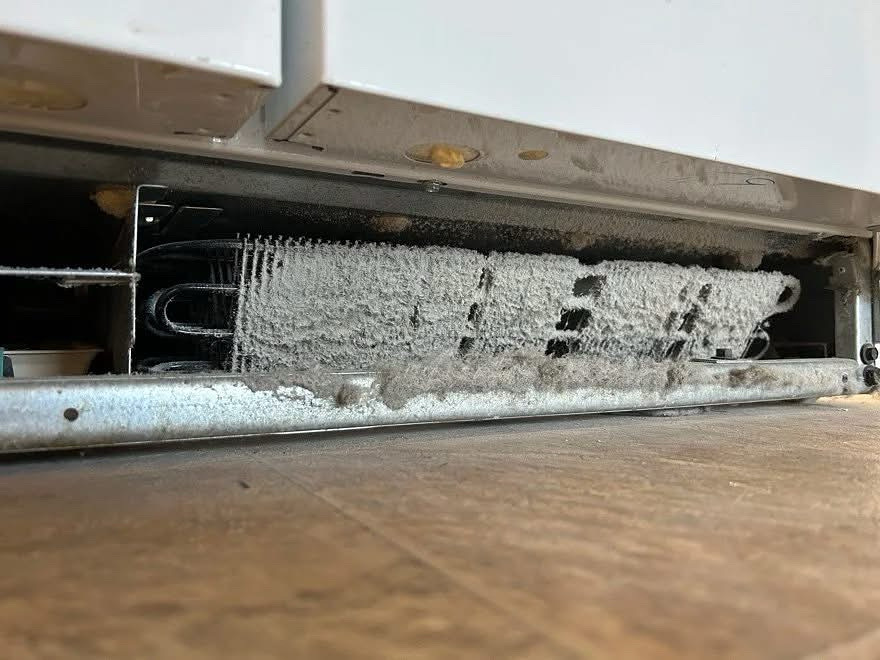
One of the most common—and most neglected—causes of a noisy refrigerator is dirty condenser coils. These coils are essential to the cooling process, and when they are clogged with dust and debris, your fridge has to work much harder than it should. Over time, this can lead to noise, higher energy bills, and even mechanical failure.
Under normal conditions, a refrigerator produces a low-level sound as the compressor cycles on and off to maintain the correct temperature. Most refrigerators operate at around 32–47 decibels (dB). When the noise level rises above 55 dB, it becomes clearly noticeable and often indicates inefficiency.
A louder fridge usually means the compressor or cooling fans are under extra strain. This strain often occurs when heat cannot escape properly from the appliance, forcing internal components to run longer and harder than designed.
Understanding how your refrigerator works helps explain why dirty coils cause noise. Refrigerators rely on a closed-loop cooling system that uses refrigerant to move heat:
Evaporator coils inside the fridge absorb heat from stored food
Condenser coils outside the fridge release that heat into the surrounding air
The compressor circulates refrigerant between these coils
When condenser coils are clean, heat is released efficiently. When they are covered in dust, heat becomes trapped inside the system.
Condenser coils are typically located on the back or underneath the refrigerator. Their main job is to release heat collected from inside the fridge. Dust, pet hair, and debris act as insulation, preventing heat from escaping.
As a result:
The compressor runs longer
Cooling fans spin faster
Noise levels increase
Energy consumption rises
Over time, this extra workload can shorten the lifespan of your refrigerator.
Yes—absolutely. When condenser coils are clogged, the refrigerator compensates by increasing compressor activity. This leads to louder humming, buzzing, or even rattling sounds. Fans may also become noisier as they struggle to push air across dirty coils.
This noise is often accompanied by inconsistent cooling, warm spots inside the fridge, or frequent cycling on and off.
Besides increased noise, watch for these warning signs:
Food spoiling faster than usual
The fridge feels warm on the outside
Rising electricity bills
Excessive heat near the back or bottom of the appliance
If you notice multiple symptoms, dirty coils are likely the cause.
In most cases, a noisy fridge is not immediately dangerous, but ignoring the issue can lead to serious problems. An overworked compressor may eventually fail, leading to expensive repairs or full replacement.
In rare situations, excessive heat buildup can increase the risk of electrical damage. Routine maintenance greatly reduces these risks.
According to energy efficiency studies, dirty condenser coils can increase refrigerator energy consumption by up to 30%. Since refrigerators account for roughly 13% of household electricity use, this inefficiency can significantly impact your utility bills.
Cleaning the coils helps restore efficiency, reduce costs, and improve overall performance.
Many popular coil-cleaning methods actually work well when done safely:
Use a vacuum cleaner with a hose attachment to remove loose dust
Use a coil-cleaning brush for stubborn debris
Compressed air can help reach tight spaces
Always unplug the refrigerator before cleaning.
Unplug the refrigerator
Locate the condenser coils (back or bottom)
Remove dust using a vacuum or coil brush
Wipe remaining debris with a damp cloth
Allow coils to dry completely before plugging back in
Experts recommend cleaning coils every 6–12 months, or more often if you have pets or live in a dusty environment.
If cleaning the coils does not reduce noise or improve performance, the problem may involve worn fans, motors, or the compressor itself. In that case, a professional technician should inspect the appliance.
For older refrigerators with frequent issues, replacing the unit with a newer energy-efficient model may be more cost-effective in the long run.