The night Elijah Carter became someone’s shelter, he was twelve years old and carrying a basket of wet laundry that was almost bigger than he was.
Outside BrightSpin Laundromat, snow moved sideways across the street in thick white sheets. The wind pushed against the glass windows so hard that the neon sign in the front buzzed and blinked, turning the word OPEN into O EN every few seconds. Cars crept through the road with their headlights glowing through the storm. The sidewalks had nearly disappeared beneath fresh snow, and every person who came inside brought a burst of cold air with them.
Elijah stood beside washer number seven, wearing an old black hoodie, faded jeans, and sneakers that had been patched twice with glue. His dark brown skin was still damp from the snow that had melted on his face, and his close-cropped hair had tiny drops of water along the edges. He was tall for twelve but thin, with serious eyes that made adults say he looked older than he was.
His mother, Yolanda Carter, was folding towels at the long metal table near the back.
She had just finished a double shift cleaning offices downtown, and her shoulders looked heavy under her winter coat. Her hands moved quickly even when she was tired, smoothing each towel, folding it in thirds, placing it in a neat stack. Elijah knew she was counting time in her head. Laundry first. Bus ride home. Dinner if there was still energy. School clothes ready for morning. Work again before sunrise.
“Elijah,” she called without looking up, “check the dryer. Don’t let those uniforms sit in there and wrinkle.”
“Yes, ma’am.”
He dragged the laundry basket toward dryer number three. The heat from the machines filled the laundromat with a soft, damp warmth. The air smelled like detergent, dryer sheets, wet wool, and the coffee someone had spilled earlier near the vending machine.
BrightSpin was not fancy. Half the chairs were cracked. One washer shook like it was trying to escape. The television in the corner only showed local news with fuzzy sound. But on winter nights, the place felt almost safe. Bright lights. Warm machines. People minding their own business. The rhythm of washers turning and dryers humming.
Elijah opened the dryer and checked his mother’s work uniforms.
Still damp.
He sighed and looked at the little pile of quarters in his palm.
Only four left.
Those quarters mattered.
His mother had given them to him carefully after counting the laundry money twice. They still needed one more dryer cycle, and after that, if there was enough left, Elijah was allowed to buy a hot chocolate from the vending machine.
He had been thinking about that hot chocolate for twenty minutes.
Not because it was amazing. It came out too sweet and watery in a paper cup that burned your fingers.
But it was hot.
And outside, the snow kept falling.
Elijah dropped three quarters into the dryer and started another cycle.
One quarter remained.
He closed his fingers around it.
Across the laundromat, Mr. Vince stood behind the small counter near the entrance, watching the storm through the window. He owned BrightSpin, or at least managed it like he owned it. He was a heavy man with gray hair, a tired face, and a voice that always sounded annoyed before he even said anything.
“Closing early if this gets worse,” he muttered to no one in particular.
A young woman near washer two looked up. “You can’t close early. My clothes are still washing.”
“I said if it gets worse.”
“It is already worse.”
Mr. Vince tapped the counter with two fingers and looked back outside.
Elijah followed his gaze.
That was when he saw her.
At first, she looked like part of the storm.
A small shape near the bus stop across the street, half-hidden behind blowing snow. She stood under the shelter, but the shelter barely helped because the wind pushed the snow in from the side. She wore a long gray coat, a knitted hat, and dark gloves. One hand held a cloth bag close to her chest. The other gripped the bus stop pole.
She was old.
Even from across the street, Elijah could tell by the way she stood, careful and stiff, as if every movement had to be planned before it happened.
The bus stop was empty except for her.
No bus came.
No one stood with her.
Elijah watched as the old woman leaned forward to look down the road. The wind pushed at her coat. She took a small step back and held the pole tighter.
Something tightened in his chest.
He turned to his mother.
“Ma.”
Yolanda was folding one of his school shirts. “Hmm?”
“There’s an old lady outside.”
“In this weather?”
“At the bus stop.”
His mother looked through the window.
Her face changed immediately.
Not surprise. Not panic. Something quieter.
Recognition.
The look of a woman who knew what it felt like to be outside when the world did not care that you were tired.
“Is the bus still running?” Elijah asked.
Mr. Vince answered from the counter. “News said delays. Some routes suspended.”
Elijah looked back at the woman.
She was still standing there.
A gust of wind blew snow across the street, and for a moment she disappeared completely.
Then she came back into view.
Smaller than before.
Elijah moved toward the door.
“Elijah Carter,” his mother said. “Where are you going?”
“To ask if she’s okay.”
Yolanda set down the shirt. “You don’t cross that street alone in this storm.”
“I’ll stay on this side and wave.”
His mother gave him a look.
He knew that look.
It meant, I raised you to be kind, but I also raised you to be careful.
She walked to the door with him.
Mr. Vince frowned. “Don’t hold that door open too long. Heat’s expensive.”
Yolanda ignored him.
She opened the door just enough to call across the street.
“Ma’am! Are you okay?”
The wind swallowed half her voice.
The old woman turned her head slowly.
Elijah stepped beside his mother and waved both arms.
“Do you need help?” he shouted.
The woman looked uncertain, then lifted one hand weakly.
Yolanda’s jaw tightened.
“Elijah, stay right here.”
“No, Ma, let me help.”
“I said stay right here.”
But then the old woman tried to take a step away from the bus stop, and her foot slipped in the snow. She caught herself against the pole, but the cloth bag fell from her arm onto the ground.
Elijah moved before thinking.
“Elijah!”
He pulled his hood up and ran.
The cold hit him like a wall.
Snow stung his face. His sneakers slid on the sidewalk. A car horn sounded somewhere far away. He heard his mother calling his name behind him, but he kept his eyes on the old woman and crossed only when the nearest car had stopped.
By the time he reached her, his hands were already numb.
“You okay?” he asked, breathless.
The old woman looked down at him with wide, watery eyes.
“I dropped my bag,” she said.
Her voice trembled, not from fear exactly, but from cold and embarrassment.
“I got it.”
Elijah picked up the cloth bag. It was heavier than it looked. Inside, he could see a small loaf of bread, a pill bottle, a paperback book, and a folded blue scarf.
“Thank you,” she whispered.
“You should come inside,” Elijah said. “It’s warm over there.”
“I’m waiting for the number 16.”
“I don’t think it’s coming.”
“It must come,” she said, but her voice sounded as if she no longer believed it. “I need to get home before the building locks the side entrance.”
Elijah looked at the road.
No bus lights.
Only snow.
“My mom’s inside,” he said. “Come warm up first. Then we can figure it out.”
The old woman hesitated.
“I don’t want to cause trouble.”
“You’re not trouble.”
People said that a lot when they wanted to sound nice.
Elijah meant it.
The old woman studied him for a second, then nodded.
“My name is Mrs. Lillian Price,” she said.
“I’m Elijah.”
He offered his arm because he had seen men do that in old movies his grandmother liked. Mrs. Price looked surprised, then placed her gloved hand lightly on his sleeve.
They crossed slowly.
Yolanda had come halfway to meet them, her coat open and worry sharp on her face.
“Boy, you nearly stopped my heart,” she said, grabbing Elijah’s shoulder as soon as he was close.
“I’m sorry.”
She looked at Mrs. Price.
“Come on, ma’am. Let’s get you inside.”
The laundromat door opened with a blast of warm air.
Mr. Vince threw up his hands.
“Now we’re bringing people in from the street?”
Yolanda shot him one look.
He stopped talking.
Mrs. Price stepped inside, snow melting on her coat and hat. Her cheeks were pale from the cold. She held the cloth bag with both hands as if she was afraid someone might take it, though nobody tried.
Elijah guided her to a plastic chair near dryer number five.
“Sit here,” he said. “This one’s not cracked.”
Mrs. Price lowered herself carefully.
“Thank you, young man.”
Yolanda crouched in front of her.
“Were you waiting long?”
“I’m not sure,” Mrs. Price said. “Long enough, I suppose.”
“Do you have someone we can call?”
Mrs. Price’s face tightened.
“My phone died.”
She pulled a small flip phone from her coat pocket and pressed the button. Nothing happened.
“I was at the pharmacy,” she said. “Then the bus was delayed. I thought I could wait. I have waited for buses my whole life. But tonight…”
Her voice faded.
Elijah stood beside her, still holding the last quarter in his hand.
Mrs. Price’s gloves were wet.
Her coat was wet too.
The bottom edge dripped onto the floor.
He looked at the dryers.
Then at the quarter.
Then at his mother’s uniforms turning behind the round glass door.
One quarter could not buy a full drying cycle.
But it could start one for a few minutes.
Maybe enough to warm something.
He went to his mother.
“Ma,” he whispered, “her gloves are wet.”
Yolanda looked at the old woman’s hands.
“I see.”
“Can we dry them?”
His mother looked at the machines, then at the few damp towels left in the basket, then at Elijah’s face.
“We don’t have extra quarters.”
“I have one.”
“That was for your hot chocolate.”
“I know.”
Yolanda’s eyes softened.
“You sure?”
Elijah nodded.
Hot chocolate suddenly seemed very small.
He went to Mrs. Price.
“Can I dry your gloves and scarf?”
“Oh, sweetheart, no. They are fine.”
“They’re wet.”
“They will dry.”
“Not if you keep wearing them.”
Mrs. Price looked at him.
He held out his hand.
After a moment, she removed her gloves and pulled the blue scarf from her bag. Her fingers were thin and stiff. Elijah took the gloves and scarf to an empty dryer, placed them inside, dropped in his last quarter, and started the machine.
The dryer began to turn.
Mrs. Price watched it as if he had performed some great kindness.
It made Elijah uncomfortable.
“It’s only a quarter,” he said.
“No,” she replied softly. “It is not.”
Mr. Vince came from behind the counter with a mop.
“You people better not drip all over the floor.”
Yolanda stood slowly.
“Excuse me?”
Mr. Vince cleared his throat. “I’m just saying. I got to close soon.”
Mrs. Price’s shoulders curled inward.
Elijah noticed.
He hated the way grown-ups could make old people shrink with one sentence.
“She’s waiting inside because it’s cold,” he said.
Mr. Vince looked down at him. “And I’m running a business, kid.”
Elijah’s mother touched his shoulder before he could answer.
“We understand you’re running a business,” Yolanda said, her voice controlled. “We are paying customers. Our clothes are still drying. She is sitting quietly. There’s no problem.”
Mr. Vince muttered something and went back to the counter.
Elijah looked at Mrs. Price.
“You can stay until our clothes are done,” he said.
She gave him a tired smile.
“You are very brave for someone with snow in his eyelashes.”
He wiped his face quickly.
“I don’t have snow in my eyelashes.”
Yolanda smiled despite herself.
Mrs. Price’s phone would not turn on, even after Elijah borrowed a charger from the young woman near washer two. The storm had worsened. The number 16 bus no longer appeared on the transit app someone checked. Mrs. Price knew her building address, but no one answered the front desk number. She lived alone in a senior apartment complex six blocks away.
Six blocks did not sound far on a normal day.
That night, it might as well have been another city.
Yolanda called a cab company.
No cars available.
She tried a rideshare app.
Prices were too high, and then the nearest driver canceled.
The laundromat grew emptier as people finished their laundry and hurried out. The young woman with the washing machine problem left with two garbage bags of damp clothes. A man with a baby stroller wrapped the baby in blankets and rushed into the storm. The fuzzy television announced school delays for the next morning.
By nine o’clock, only Elijah, his mother, Mrs. Price, and Mr. Vince remained.
Mr. Vince turned off the OPEN sign.
The laundromat looked different without it.
Quieter.
Less safe.
Yolanda checked the dryer.
“Uniforms still a little damp,” she said, frustrated.
Mr. Vince appeared from the back room in his coat.
“Time to wrap it up.”
Yolanda turned. “Our clothes aren’t dry.”
“Machines don’t care about weather.”
“We paid.”
“And I stayed open. Now I’m closing.”
Mrs. Price gripped her cloth bag.
“I can go,” she said quickly. “Please don’t argue on my account.”
Elijah stared at her.
The idea of Mrs. Price stepping back into the snow alone made something inside him rise hot and angry.
“No,” he said.
Everyone looked at him.
His voice shook, but he kept going.
“She can’t go out there. You saw the news. Buses stopped. She’s old. She’s cold. She can sit right there and not bother anybody.”
Mr. Vince’s face hardened.
“Kid, I said I’m closing.”
Elijah stepped forward.
His mother caught his sleeve, but he did not stop speaking.
“You got all these dryers making heat. You got lights. You got a roof. She’s not asking for money. She’s asking to not freeze at a bus stop.”
The word freeze made Yolanda’s hand tighten on his sleeve.
Not because he was wrong.
Because he was too young to have to say it.
Mr. Vince looked at the old woman.
For a second, the hard look slipped.
Mrs. Price sat very still, her wet hat in her lap, trying to look like she did not need anything.
Elijah knew that kind of stillness.
It was pride wrapped around fear.
Mr. Vince looked away first.
“I’m not responsible if anything happens,” he muttered.
Yolanda’s voice softened slightly. “Nobody’s asking you to be responsible for the whole world. Just let us wait until we can find a safe way.”
Mr. Vince rubbed his face.
“Thirty minutes.”
Elijah breathed out.
“Thank you,” Mrs. Price whispered.
Mr. Vince pointed toward the back. “And nobody touches the machines after I shut them off.”
Yolanda nodded.
The next thirty minutes became one hour.
The storm did not calm.
No cab came.
Mrs. Price’s building still did not answer.
Yolanda called a coworker who lived nearby, but her car was stuck behind a snowplow route. She called a neighbor, then another, then finally Aunt Marsha, who said she would try to come with her husband’s truck but warned it might take time.
Mrs. Price began to shiver again.
Elijah noticed before anyone else.
The dryer had finished warming her gloves and scarf. He brought them back to her, but her coat was still damp around the shoulders. She said she was fine. Elijah did not believe her.
He opened his backpack and pulled out his school sweatshirt, the one he used for gym class. It was not thick, but it was dry.
“Here,” he said.
Mrs. Price shook her head. “No, child.”
“You can put it over your lap.”
“You need your clothes.”
“I got my hoodie.”
“You are a growing boy.”
“You’re a cold lady.”
Yolanda covered her mouth, trying not to laugh.
Mrs. Price looked offended for half a second, then laughed softly too.
“I suppose that is accurate.”
She accepted the sweatshirt and placed it over her lap.
Elijah sat in the chair beside her.
“You like books?” he asked, nodding toward the paperback in her bag.
Mrs. Price’s face brightened.
“I was a librarian for thirty-eight years.”
“Really?”
“At the East Marlowe Branch. Before they closed it.”
Elijah knew that building. It was on the other side of the neighborhood, boarded up now, with faded letters over the door.
“My school passed it on a field trip,” he said. “I thought it was empty.”
“It is empty now. Once, it was full of children, mothers, students, old men reading newspapers, teenagers pretending not to like poetry, and people who needed a quiet place to be human.”
Elijah liked that sentence.
“A quiet place to be human,” he repeated.
Mrs. Price looked at him.
“Yes. Libraries can be that.”
“I like reading,” Elijah admitted. “But not when teachers make us read out loud.”
“Why not?”
“People laugh if you mess up.”
Mrs. Price’s eyes softened.
“Then people have forgotten what learning sounds like.”
Elijah looked down at his hands.
No teacher had ever said it that way.
Mrs. Price opened her cloth bag and took out the paperback. It was old, with a cracked spine and a cover showing a boy standing near a river.
“This was for my neighbor’s grandson,” she said. “He asked for an adventure story. I was going to leave it by his door.”
She handed it to Elijah.
“You may borrow it first.”
“I can’t take your book.”
“You are not taking. You are borrowing. There is a noble difference.”
Elijah smiled.
“What’s it about?”
“A boy who thinks he is ordinary until he is forced to be brave.”
Elijah turned the book over in his hands.
“Sounds like every book.”
“Perhaps because every child needs to be told bravery may already be inside them.”
He looked up at her.
The laundromat lights hummed above them.
Snow pressed against the windows.
For a while, Mrs. Price told Elijah stories about the library.
She told him about summer reading contests, lost library cards, children hiding between shelves, and the old wooden desk where she stamped due dates. She spoke of books as if they were people she had loved.
Elijah listened.
He had not planned to care so much about an old library.
But the way Mrs. Price described it made him see the building alive again.
Warm lights.
Full shelves.
Children sitting on the floor.
Old people reading newspapers.
A place where nobody had to buy anything to belong.
By the time Aunt Marsha’s husband arrived in his truck, it was nearly midnight.
He was a big man named Uncle Ray, though he was not Elijah’s real uncle. Everyone called him Uncle Ray because he showed up when people needed him and complained the whole time.
He opened the laundromat door wearing a thick coat and snow boots.
“This weather is disrespectful,” he announced.
Yolanda gathered their laundry, still slightly damp, into baskets.
Mr. Vince looked deeply relieved that everyone was leaving.
Uncle Ray helped Mrs. Price into the truck. Yolanda sat beside her in the back, keeping one arm around her shoulders for warmth. Elijah squeezed into the front with the laundry basket against his knees.
The drive to Mrs. Price’s building took twenty slow minutes.
Snow covered everything. Street signs were hard to read. Twice, Uncle Ray had to stop and wait for the windshield to clear.
Mrs. Price’s senior building stood at the end of a narrow street, brick and plain, with a small ramp leading to the front door. The side entrance was locked, just as she had feared, but the front buzzer finally worked after Uncle Ray pressed it six times.
A sleepy building attendant opened the door.
“Mrs. Price?” he said. “We wondered where you were.”
Mrs. Price looked at him over the top of her glasses.
“I was at the bus stop during a snowstorm. Wondering is not the same as checking.”
Uncle Ray coughed to hide a laugh.
Yolanda helped Mrs. Price inside while Elijah carried her cloth bag.
Her apartment was small but neat. Books were everywhere. Stacked on shelves, on tables, near the window, beside an armchair with a knitted blanket over it. The room smelled faintly of paper, peppermint tea, and lavender soap.
Elijah placed her bag on the kitchen table.
Mrs. Price removed the sweatshirt from her lap and handed it back.
“Thank you, Elijah.”
“You can keep it until I see you again.”
She looked surprised.
“Will you see me again?”
He shrugged.
“You got my book.”
She smiled slowly.
“So I do.”
Yolanda wrote their phone number on a notepad by the telephone.
“Call us tomorrow so we know you’re all right,” she said.
Mrs. Price touched the paper.
“I will.”
Before they left, Mrs. Price reached into a small dish on the table and took out a library card.
It was old, laminated, and slightly yellow around the edges.
“This is not active anymore,” she said. “The library is closed. But I kept a few blank cards for children who loved books.”
She wrote Elijah’s name on the card in careful blue ink.
Elijah Carter.
Then she handed it to him.
“A card does not make you a reader,” she said. “Your curiosity does. But sometimes a person needs a card to remind him he belongs in rooms full of books.”
Elijah held the card carefully.
“Thank you.”
“No,” Mrs. Price said. “Thank you for giving an old woman shelter.”
On the ride home, Elijah fell asleep against the laundry basket with the library card in his pocket.
The next morning, school was canceled.
Elijah woke to sunlight reflecting off snow, damp laundry hanging over chairs, and his mother in the kitchen making oatmeal. His shoes were drying near the heater. His hoodie smelled faintly of laundromat air.
He reached into his pocket.
The library card was still there.
He looked at his name written in Mrs. Price’s careful handwriting.
For reasons he did not fully understand, it felt more important than money.
Mrs. Price called that afternoon.
Then she called again the next week.
Then Elijah and his mother began stopping by her apartment after laundromat trips. At first, it was only to return the adventure book. Then Mrs. Price gave Elijah another book. Then another.
She did not simply hand them to him.
She chose them.
A mystery when he wanted something fast.
A biography when he asked about inventors.
A poetry book when she said his sentences were “trying to become taller.”
Elijah did not understand that, but he liked it.
Every time he visited, Mrs. Price asked him what he noticed.
Not what the book was about.
What he noticed.
“I noticed the main character lies when he’s scared,” Elijah said once.
Mrs. Price nodded. “Excellent. Fear often wears a disguise.”
“I noticed the town treats the old man like he’s useless, but he knows the most.”
“Very true.”
“I noticed the author keeps talking about the river like it’s alive.”
“Now you are reading with both eyes open.”
Elijah began carrying books in his backpack. Some kids teased him.
“You reading library books from a closed library?” one boy asked.
Elijah looked at him calmly.
“Books don’t close.”
The boy had no answer for that.
By thirteen, Elijah was helping younger students at school with reading assignments. Not because he was the best reader in class at first, but because he remembered what it felt like to be scared of reading out loud.
When a classmate stumbled over a word, Elijah waited.
He did not laugh.
He did not rush.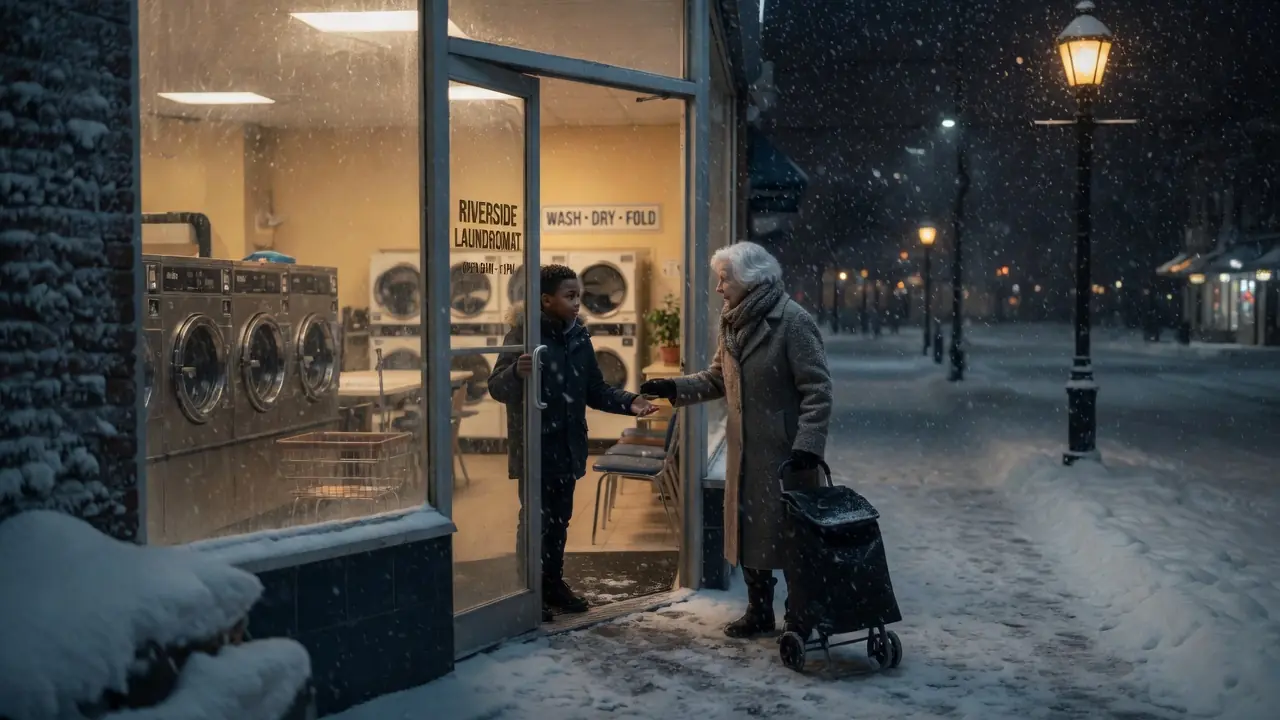
He simply said, “Try it again. You almost had it.”
At fourteen, he started spending Saturday mornings with Mrs. Price, helping her organize boxes of books she had saved from the old East Marlowe Branch when it closed. She had bought some at library surplus sales, rescued others from donation bins, and kept many in labeled boxes in her apartment storage room.
Children’s Fiction.
History.
Poetry.
Science.
Reference.
Black Authors.
Local Stories.
“These belong somewhere,” she said one afternoon, running her hand across a box marked Folktales.
“Where?” Elijah asked.
“In the hands of people who need them.”
“Couldn’t you donate them?”
“I could,” she said. “But donation is not always the same as restoration.”
Elijah was learning that Mrs. Price’s sentences often had hidden rooms inside them.
“What do you want to restore?”
She looked toward the window.
“The idea that a neighborhood deserves a place to read, think, gather, and rest without being asked to buy something.”
Elijah thought of the old library building, boarded up and forgotten.
“You mean East Marlowe?”
Her face became still.
“Yes.”
“Can it reopen?”
Mrs. Price sighed.
“Buildings are easier to close than reopen. There are city budgets, property transfers, repairs, politics, and many people who say kind things while doing nothing.”
Elijah nodded.
He had met adults like that.
“But you still saved the books,” he said.
Mrs. Price smiled.
“Hope sometimes looks like a storage room full of boxes.”
Years passed.
Elijah grew into a tall young man with broad shoulders, thoughtful eyes, and a habit of carrying notebooks everywhere. He worked part-time at a grocery store in high school, helped his mother with bills, and visited Mrs. Price twice a week.
When he graduated, she sat beside Yolanda in the school auditorium wearing a pale blue coat and a pearl pin shaped like a book. She clapped with both hands when Elijah’s name was called.
After the ceremony, she gave him a wrapped gift.
Inside was a leather-bound notebook and a fountain pen.
On the first page, she had written:
For Elijah Carter,
who learned that shelter can be a roof, a book, a voice, or a boy brave enough to cross a snowy street.
Write what you notice.
Lillian Price
Elijah read the note three times that night.
He decided to study education and community development at a state college close enough to home that he could still help his mother and visit Mrs. Price.
College was not easy.
He worked mornings at the campus library, attended classes in the afternoon, and took the bus home at night. He learned about literacy programs, public funding, urban neighborhoods, youth mentorship, nonprofit management, and the long history of communities building their own institutions when official ones failed them.
Every lesson seemed to lead back to the same thought.
A quiet place to be human.
He wrote papers about public libraries as shelters of dignity. He studied how reading programs changed graduation rates. He interviewed elders about neighborhood spaces that had vanished. He walked past the old East Marlowe Branch every week and imagined light in the windows again.
But imagining did not open doors.
Money did that.
So did permits.
So did power.
By the time Elijah was twenty-four, the East Marlowe Branch had been closed for nearly eighteen years. The city still owned the building but had no plan for it. Developers had looked at the property, but the cost of repairs scared them away. The roof needed work. The heating system was outdated. The front steps were cracked. The inside, according to inspection reports, was dusty but mostly intact.
Elijah formed a small community group called The Marlowe Reading Room Project.
At first, it was only him, his mother, Mrs. Price, two teachers, a church secretary, and Uncle Ray, who still complained at every meeting but never missed one.
They held meetings in church basements and cafeteria corners. They collected signatures. They hosted book drives. They applied for small grants. They made flyers. Elijah spoke at city meetings wearing a tie Yolanda had ironed twice.
Most officials were polite.
Polite no became a sound Elijah learned well.
“This is a beautiful idea.”
“We appreciate your passion.”
“The city has many priorities.”
“We will keep this in mind.”
Mrs. Price attended one meeting in a wheelchair after her knees became too painful for long walks. She listened to three officials praise the importance of literacy while refusing to commit to anything.
At the end, she raised her hand.
The room quieted.
“I am Lillian Price,” she said. “I served this neighborhood’s library for thirty-eight years. I know the names of children who learned to read in that building and later became nurses, mechanics, teachers, business owners, and parents who read to their own children.”
The officials shifted in their seats.
She continued.
“When you closed East Marlowe, you did not simply close a building. You closed a warm room in winter. You closed a safe chair after school. You closed a place where old people were not rushed and children were not priced out. Do not praise literacy to us while leaving our shelves behind locked doors.”
No one clapped because it was a city meeting.
But everyone wanted to.
Elijah sat beside her, his throat tight with pride.
Afterward, outside city hall, he said, “You were amazing.”
Mrs. Price patted his hand.
“I was annoyed. At my age, annoyance becomes efficient.”
Still, months passed without progress.
Then Mrs. Price became ill enough that she had to move into an assisted living facility outside the neighborhood.
The day she left her apartment, Elijah helped pack her books.
Not all of them.
That would have taken a truck larger than Uncle Ray’s.
But the ones she wanted closest.
The adventure book she had lent him the first night.
A collection of Black poetry.
A dictionary with taped corners.
A children’s book with a blue cover.
Her old librarian nameplate.
Her blank library cards.
At the facility, her room was bright and clean, with a window facing a courtyard. Elijah arranged books on a shelf near her chair.
She looked smaller there.
Not weaker in spirit.
Just physically smaller, as if time had been folding her carefully.
“Elijah,” she said when he finished.
“Yes, ma’am?”
“Do not let the project become only about me.”
“It’s not only about you.”
“Good. Because I am old, and old people sometimes become symbols while still needing soup.”
He laughed softly.
“I’ll bring soup.”
“And updates.”
“And updates.”
She took his hand.
“You must keep going even when I cannot attend every meeting.”
“I will.”
“No,” she said. “Say it properly.”
He looked at her.
“I will keep going.”
She nodded.
“Good.”
A year later, Mrs. Price passed away in early spring, quietly, after breakfast, with a book open on her lap.
Elijah received the call while shelving returns at the campus library.
For several minutes, he stood between the stacks unable to move.
Grief did not feel like he expected.
It did not crash.
It emptied the room.
At her memorial service, the church was full. Former library patrons came with stories. A man in a work jacket said Mrs. Price helped him fill out his first job application. A woman with two children said Mrs. Price taught her to love books when her family could not afford them. An elderly man said he used to come to the library just to read the newspaper because it was the only warm place where no one asked him why he was there.
Elijah spoke last.
He told them about the snowstorm.
The bus stop.
The laundromat.
The wet gloves spinning in the dryer because of one quarter.
He told them how Mrs. Price gave him an old library card with his name on it.
“She made me feel like I belonged in rooms I had not entered yet,” he said. “And that is what libraries do when they are at their best. They do not only lend books. They lend belonging until people can carry it for themselves.”
Yolanda cried quietly in the front row.
After the service, Mrs. Price’s attorney asked to speak with Elijah and Yolanda.
They met in a small church office that smelled of coffee and old hymnals.
The attorney was a calm woman named Ms. Green, with silver glasses and a leather folder.
“Mrs. Price left instructions for you,” she said.
Elijah looked at Yolanda.
“For me?”
“Yes.”
Ms. Green opened the folder.
“Mrs. Price did not have children of her own. She lived modestly, but she had savings, a life insurance policy, and a small inheritance from her late sister. Much of it has been directed toward literacy efforts, but there is a specific provision involving you and the Marlowe Reading Room Project.”
Elijah sat very still.
Ms. Green continued.
“Mrs. Price created a trust to support the reopening of the East Marlowe Branch as a community reading room, youth study center, and senior gathering space. It is not enough to fully renovate the building, but it is enough to unlock matching funds from two foundations she contacted before her passing.”
Elijah’s heart began to pound.
“She contacted foundations?”
Ms. Green smiled.
“Mrs. Price was very organized.”
Yolanda whispered, “That sounds like her.”
“There is more,” Ms. Green said.
She removed an envelope from the folder and handed it to Elijah.
His name was written on the front in Mrs. Price’s careful blue handwriting.
Elijah opened it slowly.
Dear Elijah,
If you are reading this, I have gone to join the great library beyond overdue notices.
Do not be sad too long. Sadness has its place, but it must not take over the whole house.
You once crossed a snowy street because you saw an old woman whom others had not seen. You gave me warmth, shelter, and dignity inside a laundromat with cracked chairs and humming dryers. You were twelve years old, and you understood what many adults forget: a person in need is not an interruption.
I gave you a library card that night because I wanted you to know you belonged among books. You have since taught me that belonging must also be built.
The East Marlowe Branch should not remain a locked memory. I have done what I can to help open its doors again. You must do the rest with others, not alone. A library is never the work of one person. It is a chorus of stubborn hope.
If the city agrees, I have asked that the children’s room carry your name. Do not argue. It is not because you are finished. It is because children should see the name of someone from their own streets and know their kindness can build rooms.
Write what you notice.
Build what is missing.
Keep one chair open for an old woman who loved books.
With enduring gratitude,
Lillian Price
Elijah pressed the letter to his chest.
He did not cry loudly.
He simply bowed his head, and Yolanda wrapped both arms around him.
The months that followed were the hardest and most beautiful of Elijah’s life.
Mrs. Price’s trust changed everything, but it did not solve everything.
There were still city forms, public hearings, building inspections, grant applications, renovation estimates, volunteer schedules, insurance questions, and arguments about who would control what.
But now, when Elijah spoke, people listened differently.
Not because he had suddenly become wiser.
Because Mrs. Price’s planning had given the dream weight.
The city agreed to lease the building to the nonprofit for a symbolic annual fee if the group could raise renovation funds and meet safety requirements. The foundations matched Mrs. Price’s trust. A local contractor donated labor. A hardware store donated paint. Teachers organized book drives. Retired librarians volunteered to catalog donations. Teenagers cleaned graffiti from the back wall. Seniors sorted books by genre at folding tables.
Uncle Ray fixed the front railing and complained about every screw.
“This building old enough to remember my mistakes,” he said.
Yolanda cleaned the windows herself on a Saturday morning.
“Elijah,” she called from the ladder, “this glass has not seen daylight since you were in elementary school.”
“Be careful, Ma.”
“I raised you through rent increases and snowstorms. I can handle a window.”
The building changed slowly.
Boards came off the windows.
Dust left the shelves.
Walls were painted cream and soft blue.
The children’s room was repaired first.
Elijah insisted.
There were low shelves, round tables, bright rugs, beanbags, and a reading corner shaped around the old window where sunlight came in during the afternoon. On one wall, a mural showed neighborhood children walking toward an open book that became a doorway.
Above the entrance to that room, covered with brown paper until opening day, was a sign.
Elijah had not seen it yet.
He knew what Mrs. Price had requested.
He had tried to protest twice.
The board ignored him both times.
“She said do not argue,” Yolanda reminded him.
“I can argue respectfully.”
“Not with a dead librarian.”
Opening day arrived on a clear October morning.
The air was crisp, but not cold. Leaves moved along the sidewalk in small golden piles. The East Marlowe Branch, once boarded and forgotten, stood with clean windows, repaired steps, and a new sign above the door:
The Marlowe Reading Room
Books. Study. Community. Shelter.
People gathered before the ribbon cutting: families, teachers, city officials, former library patrons, children from nearby schools, seniors from Mrs. Price’s old building, volunteers, reporters, and neighbors who had watched the building sit empty for years.
Elijah stood near the front doors wearing a navy suit and the old library card in his jacket pocket.
His mother stood beside him, beautiful in a cream coat, her eyes already shining.
“You ready?” she asked.
“No.”
“Good. Means it matters.”
Ms. Green handed Elijah a small brass key.
“This was Mrs. Price’s key to the old staff entrance,” she said. “She kept it after the branch closed. She wanted you to use it today.”
Elijah closed his fingers around the key.
It was worn smooth from years of use.
He imagined Mrs. Price unlocking the library every morning. Turning on lights. Straightening chairs. Preparing the room for people who needed it.
The ceremony began.
Speeches were made.
The city official spoke too long.
Uncle Ray whispered, “Man could make a stop sign tired.”
Yolanda elbowed him.
A former patron told a story about learning English in the old building.
A teacher spoke about after-school tutoring.
Then Elijah stepped forward.
He looked at the crowd.
For a moment, he saw the laundromat instead.
Snow against glass.
Wet gloves turning in a dryer.
Mrs. Price sitting under fluorescent lights with his sweatshirt across her lap.
He took the old library card from his pocket and held it up.
“When I was twelve,” he began, “I thought shelter meant walls and heat. That night, it did. Mrs. Lillian Price was stuck at a bus stop in a snowstorm. My mother and I brought her into a laundromat. We dried her gloves with my last quarter. We helped her get home.”
The crowd grew quiet.
“But later, Mrs. Price taught me shelter could also be a book. A patient voice. A room where nobody laughs when you stumble over a word. A chair where an old person can sit without being rushed. A table where a child can do homework even if home is too loud.”
He turned toward the building.
“This place is not reopening because one person had money. It is reopening because one woman saved hope in boxes, because neighbors gave time, because elders remembered, because children still need quiet places to be human.”
Yolanda wiped her eyes.
Elijah looked back at the crowd.
“Mrs. Price once told me a library is never the work of one person. It is a chorus of stubborn hope. So today, we open this door together.”
He placed the brass key into the lock.
For a second, it resisted.
Then it turned.
The door opened.
Applause rose across the sidewalk.
People entered slowly, almost reverently.
Some touched the shelves.
Some looked up at the restored ceiling.
Some cried when they saw the old circulation desk polished and standing again.
Elijah walked toward the children’s room with his mother beside him.
The brown paper still covered the sign above the doorway.
A group of children gathered around, bouncing with impatience.
Yolanda squeezed his hand.
“Go on.”
Elijah reached up and pulled the paper away.
The sign underneath read:
The Elijah Carter Children’s Room
For every child who notices, helps, reads, and belongs.
Elijah stared at it.
The room blurred.
He heard his mother whisper, “Oh, baby.”
Children ran inside, laughing, dropping onto rugs, pulling books from shelves, claiming chairs, pointing at the mural. Their voices filled the room with life.
Elijah stood in the doorway, unable to move.
Ms. Green came beside him.
“Mrs. Price was very clear about the wording.”
He smiled through tears.
“She would be.”
In the reading corner, one chair sat near the window.
It was an old wooden chair from Mrs. Price’s apartment, restored and polished. A small plaque on it read:
Reserved in memory of Lillian Price,
who believed every person deserves a warm room and a good book.
Elijah walked over and touched the back of the chair.
For a moment, he could almost see her there.
Blue scarf.
Careful hands.
Sharp eyes behind glasses.
Asking him what he noticed.
Years passed.
The Marlowe Reading Room became more than anyone expected.
Children came after school for homework help. Seniors came in the morning for newspapers and tea. Job seekers used the computers. Parents attended reading nights. Volunteers delivered books to elders who could not leave home. Teenagers led story circles for younger kids.
No one had to buy anything to stay.
That mattered.
On winter evenings, when the temperature dropped, the Reading Room stayed open late as a warming space. There were coats on hooks, soup in slow cookers, and volunteers ready with phone chargers, bus schedules, and patient voices.
Elijah became director by thirty.
He still carried Mrs. Price’s old library card in his wallet.
Not for luck.
For belonging.
One snowy evening, many years after the laundromat night, Elijah stood near the front desk as children worked quietly at tables. Outside, snow moved across the windows. Inside, the lights were clean and steady.
A small boy came in alone, maybe eleven or twelve, Black, thin, with a backpack held tight to his chest and snow on his hoodie. His eyes moved around the room carefully, as if he expected someone to ask why he was there.
Elijah recognized that look.
He walked over gently.
“Hey,” he said. “You need somewhere warm for a minute?”
The boy hesitated.
“I’m waiting for my mom. Her bus late.”
“You can wait here.”
“I don’t got a library card.”
Elijah smiled.
“You don’t need one to be warm.”
The boy looked toward the children’s room.
“Can I sit in there?”
“Of course.”
“What if I don’t check out a book?”
“You can still sit.”
The boy’s shoulders lowered a little.
Elijah walked behind the desk and took out a blank card from a small wooden box.
Mrs. Price’s old box.
He wrote the boy’s name after asking for it.
Marcus Hill.
Then he handed it over.
“This card says you belong in rooms full of books,” Elijah said. “But your curiosity already said that first.”
The boy looked down at the card.
Something changed in his face.
Not a smile exactly.
A door opening.
Elijah watched him walk into the children’s room and sit near the window in Mrs. Price’s chair. For a second, the past and present seemed to stand together.
A laundromat.
A snowstorm.
A quarter.
A blue scarf.
A closed library.
An open door.
Yolanda, older now but still strong-eyed, came in carrying a tray of sandwiches for the evening volunteers.
She saw Elijah watching the boy.
“You okay?” she asked.
He nodded.
“Just noticing.”
His mother smiled.
“Mrs. Price would like that.”
Outside, the snow kept falling.
Inside, pages turned.
A child began reading softly to himself.
An old man laughed over a newspaper.
A mother charged her phone near the front desk.
A teenager helped a little girl sound out a difficult word.
And in the warm light of the Marlowe Reading Room, Elijah Carter understood again what he had first learned at twelve years old.
Shelter was not always a house.
Sometimes shelter was a chair.
Sometimes it was a book.
Sometimes it was a laundromat with humming dryers.
Sometimes it was a boy crossing a snowy street because an old woman looked cold.
And sometimes, years later, it became a door with his name on it, opened wide for everyone who needed to come in.