Leucine’s Hidden Power: How an Essential Amino Acid Boosts Mitochondrial Energy and Cellular Health
Facts 17/12/2025 10:57
For decades, the Amazon Rainforest has been popularly described as the “lungs of the Earth,” with countless articles, classroom posters, and viral social media posts repeating the claim that it produces 20% of the world’s oxygen. While the image is powerful, it is also misleading. In reality, the Amazon’s role in Earth’s oxygen cycle is far more nuanced—and far less dominant—than this myth suggests.
Scientific evidence shows that the vast majority of the oxygen we breathe comes not from tropical forests, but from the world’s oceans, thanks to microscopic marine plants known as phytoplankton. Understanding this distinction is essential, not only for scientific accuracy but also for appreciating how interconnected and fragile Earth’s life-support systems truly are.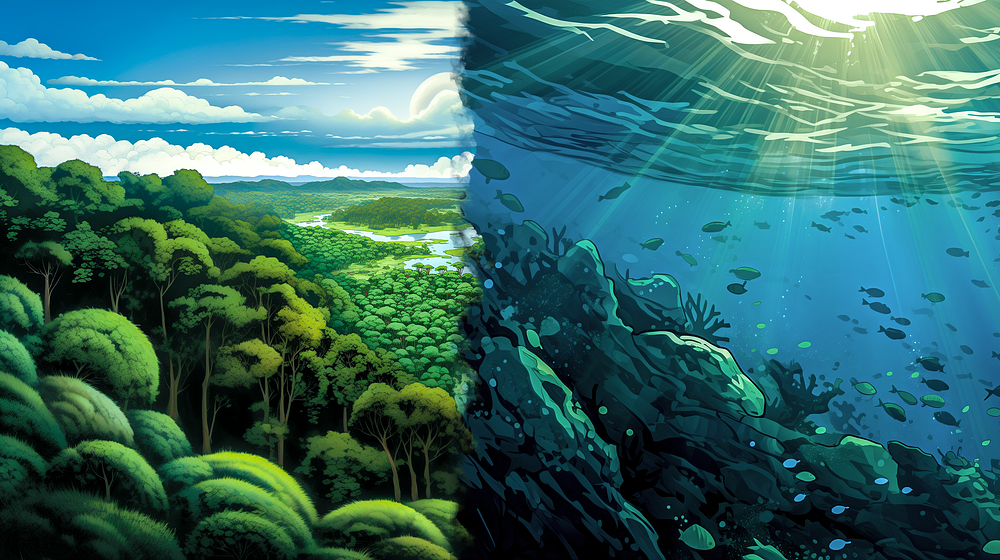
Oxygen is generated through photosynthesis, a process in which plants, algae, and certain bacteria use sunlight to convert carbon dioxide and water into energy-rich sugars, releasing oxygen as a byproduct. This process occurs both on land and in the oceans, but the balance between oxygen production and consumption differs significantly between ecosystems.
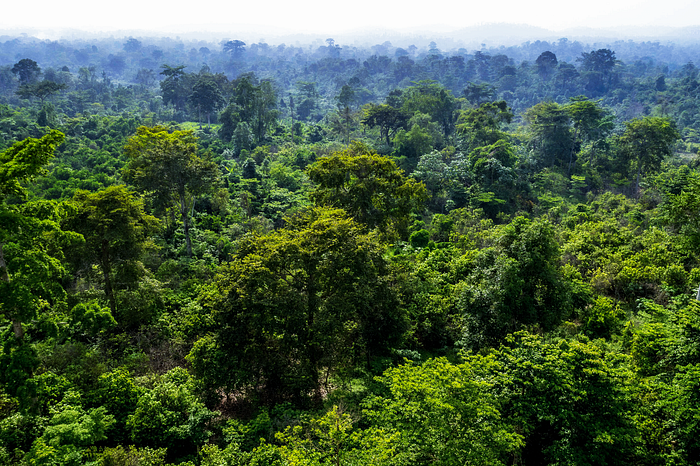
Forests, including the Amazon, are incredibly active sites of photosynthesis. Trees absorb large amounts of carbon dioxide and release oxygen during daylight hours. However, this oxygen does not simply accumulate in the atmosphere.
Trees themselves consume oxygen through respiration, just as animals do. In addition, vast numbers of microbes, fungi, and insects in forest soils consume oxygen as they break down dead plant material. Over time, these processes nearly cancel out the oxygen produced through photosynthesis.
As a result, mature forests like the Amazon are close to oxygen-neutral. They produce enormous quantities of oxygen, but they also consume nearly the same amount, leading to little to no net contribution to the oxygen in the atmosphere (NASA Earth Observatory).
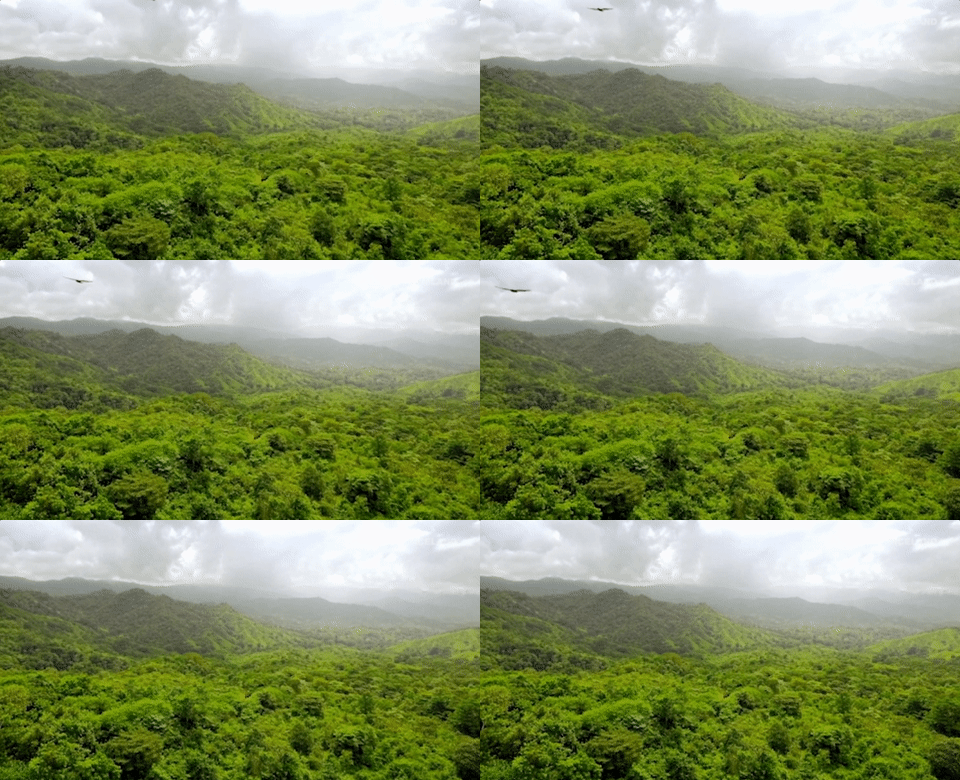
The idea that the Amazon produces 20% of the world’s oxygen likely originated from a misunderstanding. Some scientists estimate that the Amazon accounts for roughly 15–20% of terrestrial photosynthesis, meaning photosynthesis that occurs on land (Oxford University, Yadvinder Malhi). But land-based photosynthesis represents only a fraction of total global photosynthesis.
Once oceanic photosynthesis is included, the Amazon’s share of total oxygen production drops dramatically. When respiration and decomposition are factored in, the Amazon’s net contribution to atmospheric oxygen approaches zero (Scientific American).
Another constraint is basic atmospheric chemistry. Carbon dioxide makes up less than 0.05% of Earth’s atmosphere, while oxygen accounts for about 21%. There simply is not enough carbon dioxide available for any single ecosystem to generate such a large fraction of global oxygen.

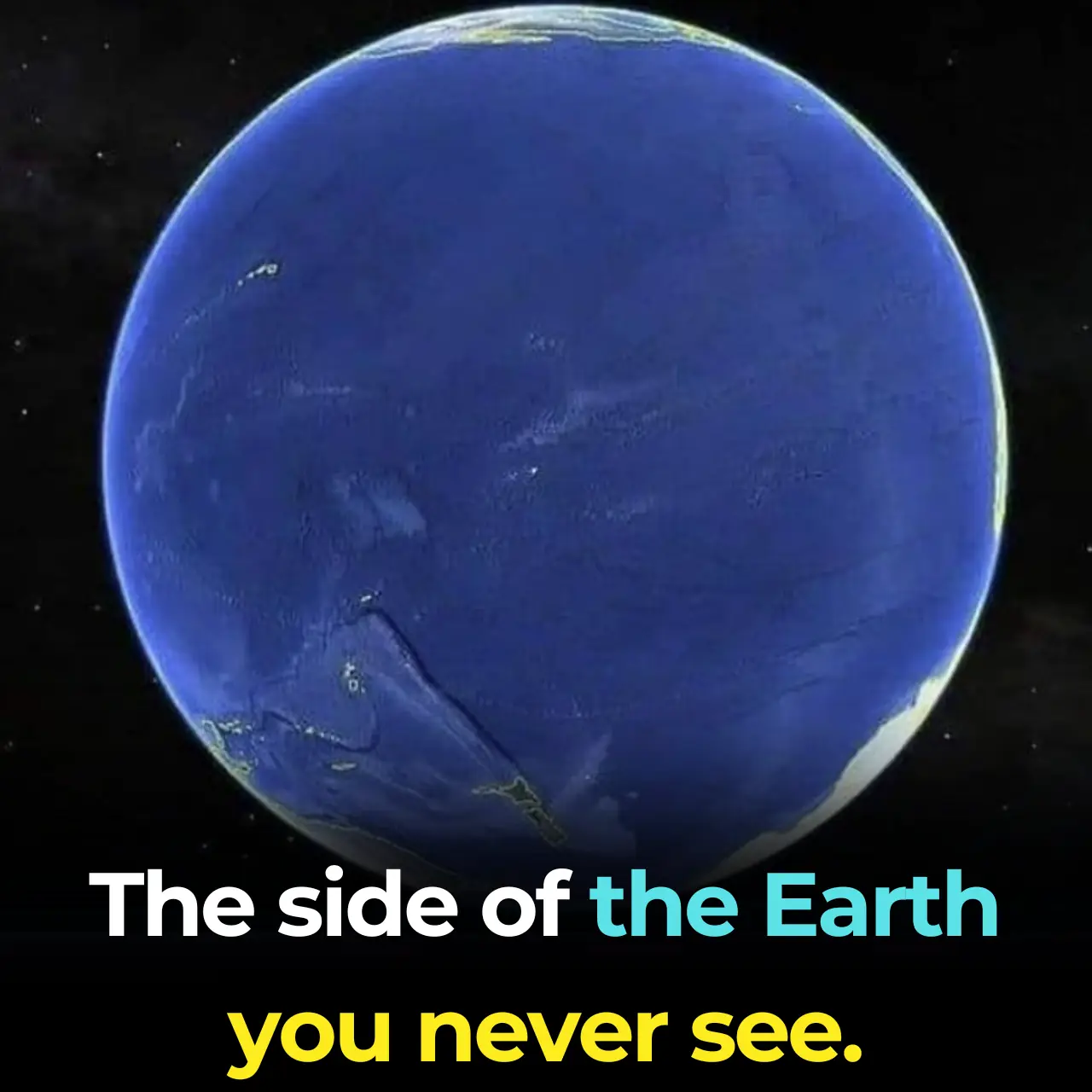
While forests tend to balance oxygen production and consumption, the oceans operate differently. Phytoplankton—microscopic algae and cyanobacteria floating near the ocean surface—carry out photosynthesis on a massive scale.
These organisms reproduce rapidly and exist in staggering numbers. Collectively, marine phytoplankton are responsible for producing more than 70% of Earth’s oxygen (National Oceanic and Atmospheric Administration; NASA).
One particularly abundant species, Prochlorococcus, is considered one of the most important photosynthetic organisms on the planet. According to oceanographer Dr. Sylvia Earle, this single group of microbes contributes roughly one in every five breaths taken by humans worldwide (National Geographic).
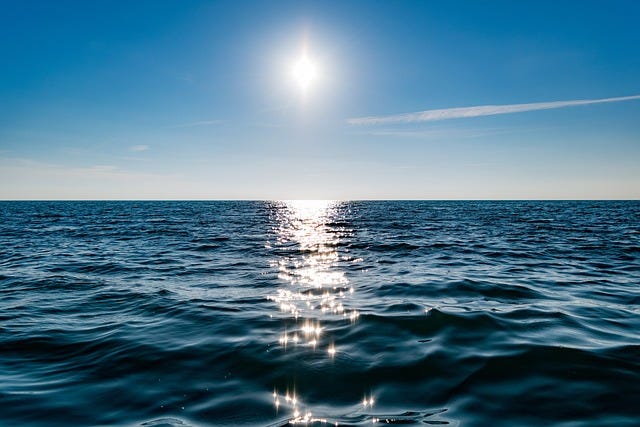
The oceans’ ability to produce oxygen depends heavily on water quality, temperature, and nutrient availability. Pollution, warming seas, and ocean acidification can disrupt phytoplankton populations, threatening this invisible but vital oxygen engine.
Clear, healthy waters allow oxygen produced by phytoplankton to mix efficiently into the atmosphere. Damage to marine ecosystems risks destabilizing this process, with consequences that extend far beyond the oceans themselves (NOAA).
When comparing oxygen production, the difference is clear.
Amazon Rainforest: Produces large amounts of oxygen but consumes nearly all of it through respiration and decomposition, resulting in little net gain.
Oceans: Generate the majority of Earth’s oxygen through phytoplankton, with a significant net contribution to the atmosphere.
This does not diminish the Amazon’s importance. While it may not supply our oxygen, it plays a crucial role in regulating climate, storing carbon, maintaining rainfall patterns, and supporting unparalleled biodiversity (World Wildlife Fund).
The danger of the oxygen myth is not that it exaggerates the Amazon’s value, but that it oversimplifies it. The rainforest does not need to produce oxygen to be indispensable. Its destruction would still have devastating effects on climate stability, species survival, and global weather systems.
Likewise, protecting the oceans is not optional. Marine ecosystems underpin Earth’s oxygen supply and help regulate carbon dioxide levels. Damage to either system weakens the planet’s overall resilience.
Rather than assigning the title of “lungs of the Earth” to a single place, it is more accurate to view the planet as a network of interdependent systems. Forests, oceans, soils, and even microscopic organisms all contribute to maintaining conditions that make life possible.
Understanding where our oxygen truly comes from helps sharpen conservation priorities—and reminds us that some of the most important processes on Earth are happening quietly, out of sight, beneath the surface of the sea.