Shocking Rise in Cognitive Disabilities Among Young Adults – A Decade-Long Yale Study Reveals Startling Trend
Facts 17/12/2025 11:37
The world’s wildlife is disappearing at a rate that has alarmed scientists, conservationists, and policymakers alike. Over the past five decades, global wildlife populations have declined by an average of 73%, according to data from major international conservation assessments. This dramatic drop is not merely a loss of animals in the wild; it represents a profound disruption to the natural systems that sustain life on Earth.
Wildlife populations include mammals, birds, fish, reptiles, and amphibians across thousands of monitored ecosystems. While the statistic does not mean that 73% of all animals or species have gone extinct, it does indicate a steep average decline in population sizes. In many regions, once-abundant species are now struggling to survive, while others have disappeared entirely from habitats they occupied for centuries.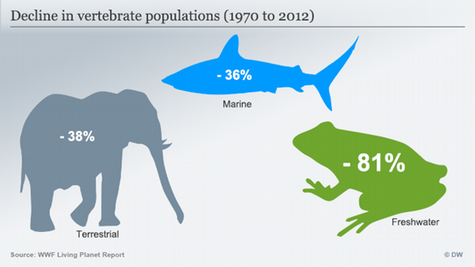
Scientists emphasize that this decline has far-reaching consequences beyond biodiversity loss. Healthy ecosystems rely on complex interactions between species to function properly. Pollinators support food production, predators regulate population balance, and aquatic species help maintain water quality. As wildlife populations shrink, these systems weaken, increasing the risk of ecosystem collapse.
Human activity is widely recognized as the primary driver of this decline. Habitat destruction from deforestation, agriculture, and urban expansion has removed vast areas of natural land. Overfishing and overhunting have depleted animal populations faster than they can recover. Pollution, including plastics, pesticides, and industrial waste, continues to contaminate land and water. Climate change adds another layer of stress, altering temperatures, rainfall patterns, and migration routes faster than many species can adapt.
The impact is already being felt worldwide. Freshwater ecosystems have suffered some of the steepest declines, affecting communities that depend on rivers and lakes for drinking water and food. Coral reefs, which support a quarter of all marine life, are dying due to rising ocean temperatures. Forest ecosystems are losing key species that help regulate carbon and maintain soil health, accelerating climate instability.
Despite the scale of the problem, experts stress that this trend is not irreversible. Conservation success stories exist where wildlife populations have rebounded due to protected habitats, sustainable resource management, and strong environmental policies. Species such as wolves, whales, and certain bird populations have recovered in regions where human pressure was reduced and ecosystems were allowed to regenerate.
Scientists and environmental organizations argue that meaningful change requires both systemic action and individual responsibility. Governments play a critical role through legislation, habitat protection, and climate commitments. Businesses must reduce environmental harm and adopt sustainable practices. At the same time, individuals can contribute by reducing waste, conserving water and energy, supporting conservation organizations, and making informed choices about food and consumption.
The decline of wildlife is ultimately a reflection of how humanity interacts with the natural world. Every species lost weakens the resilience of ecosystems that provide clean air, fresh water, fertile soil, and climate stability. Protecting wildlife is not only an ethical responsibility but a practical necessity for human survival.
As researchers continue to monitor global trends, one message is clear: action must happen now. The decisions made in the coming years will determine whether wildlife populations continue to fall or begin to recover. Protecting what remains today is essential to ensuring that future generations inherit a planet rich in life, balance, and natural beauty.