
Facts 17/12/2025 10:00
Scientists Find Crows Are Capable of Recursion — A Cognitive Ability Thought to Be Unique to Humans and Other Primates
For decades, linguists believed that one mental ability separated human language from all other forms of animal communication. That ability was recursion—the capacity to recognize nested structures inside a larger sequence. Now, new research suggests that crows possess this skill too, challenging long-standing assumptions about what makes human language unique.
A newly published study reveals that crows can process recursive patterns, a cognitive function once thought to belong exclusively to humans and, later, to primates. The finding adds to growing evidence that bird intelligence—particularly that of corvids—may rival that of mammals in surprising ways.
What Is Recursion, and Why Does It Matter?
Recursion is a fundamental property of human language. It allows us to understand sentences that contain structures within structures. Consider the sentence:
“The rat the cat chased ran.”
Even though the sentence feels complex, most adult humans instinctively understand that the rat ran and the cat chased. This is possible because the brain correctly pairs related elements—“rat” with “ran,” “cat” with “chased”—even when they are embedded within one another.
Linguist Noam Chomsky famously argued that recursion was the defining feature that made human language different from all animal communication systems. For years, this idea dominated the field of linguistics.
That certainty began to crack in 2020, when researchers showed that rhesus monkeys could recognize recursive patterns after extensive training (Science Advances, 2020). Now, crows appear to do the same—without that extra preparation.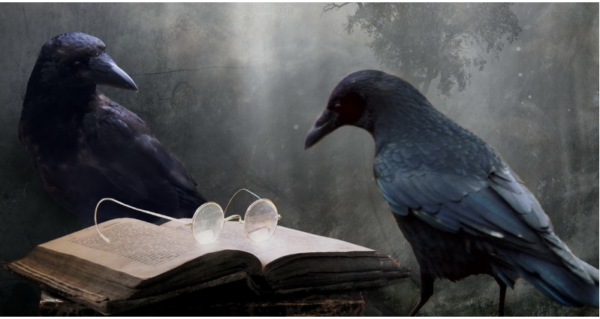
How Scientists Tested Crows’ Recursive Thinking
Researchers from the University of Tübingen designed experiments similar to those previously used with monkeys. The crows were presented with sequences of visual symbols, such as brackets, and were asked to identify which symbols formed correct pairs within increasingly complex strings—for example, recognizing the embedded pair in a structure like <( )>.
As the tests progressed, the symbol sequences became longer and more layered. The key question was whether the crows could still detect the correct nested relationships.
The results were striking. The crows successfully identified recursive structures in about 40% of trials, matching the performance level of rhesus monkeys—but crucially, without the extended training the monkeys required (Science Advances, University of Tübingen).
This suggests that crows may grasp abstract structural relationships more intuitively than previously assumed.
Why This Changes How We Think About Animal Intelligence
The discovery carries important implications. First, it shows that recursion is not limited to primates, nor to species closely related to humans. Second, it reinforces the idea that complex cognition can evolve independently in very different branches of the animal kingdom.
Crows already have a reputation for intelligence. Previous studies have shown they can use tools, solve multi-step puzzles, remember human faces, plan for the future, and even understand cause-and-effect relationships (Nature, BBC Science). The ability to process recursive structures adds another layer to this cognitive profile.
While this does not mean crows “understand language” in the human sense, it does suggest they possess mental building blocks once believed to be uniquely ours.
A Bigger Picture of Cognition and Evolution
Scientists caution that recursion alone does not equal language. Human language also relies on semantics, grammar, and shared symbolic meaning. However, recursion is a core ingredient—and discovering it in birds forces researchers to rethink how cognitive abilities evolve.
Rather than being a single leap unique to humans, recursion may be a more general problem-solving skill that appears whenever a species faces complex environmental or social challenges.
As researchers continue exploring animal cognition, findings like this remind us that intelligence does not follow a single evolutionary path. Sometimes, it takes flight.
News in the same category

Introducing NEO: The $20,000 Humanoid Robot That Will Revolutionize Your Home

Michelin's Game-Changing Airless Tires: No Punctures, No Blowouts, Just Pure Innovation

Experience the Ultimate 4,000-Mile Canadian Train Adventure for Just $558

Revolutionary mRNA Vaccine Shows Early Promise in Defeating Deadly Brain Cancer

Is Intelligence Linked to Political Ideology? New Research Reveals Surprising Findings

Shocking Rise in Cognitive Disabilities Among Young Adults – A Decade-Long Yale Study Reveals Startling Trend

MIT's Groundbreaking mRNA Vaccine Technology Boosts Effectiveness 100 Times and Reduces Toxicity

Leucine’s Hidden Power: How an Essential Amino Acid Boosts Mitochondrial Energy and Cellular Health
Wildlife Populations Have Declined by 73% in the Last 50 Years, Scientists Warn

Mariana Trench -The deepest location on Earth
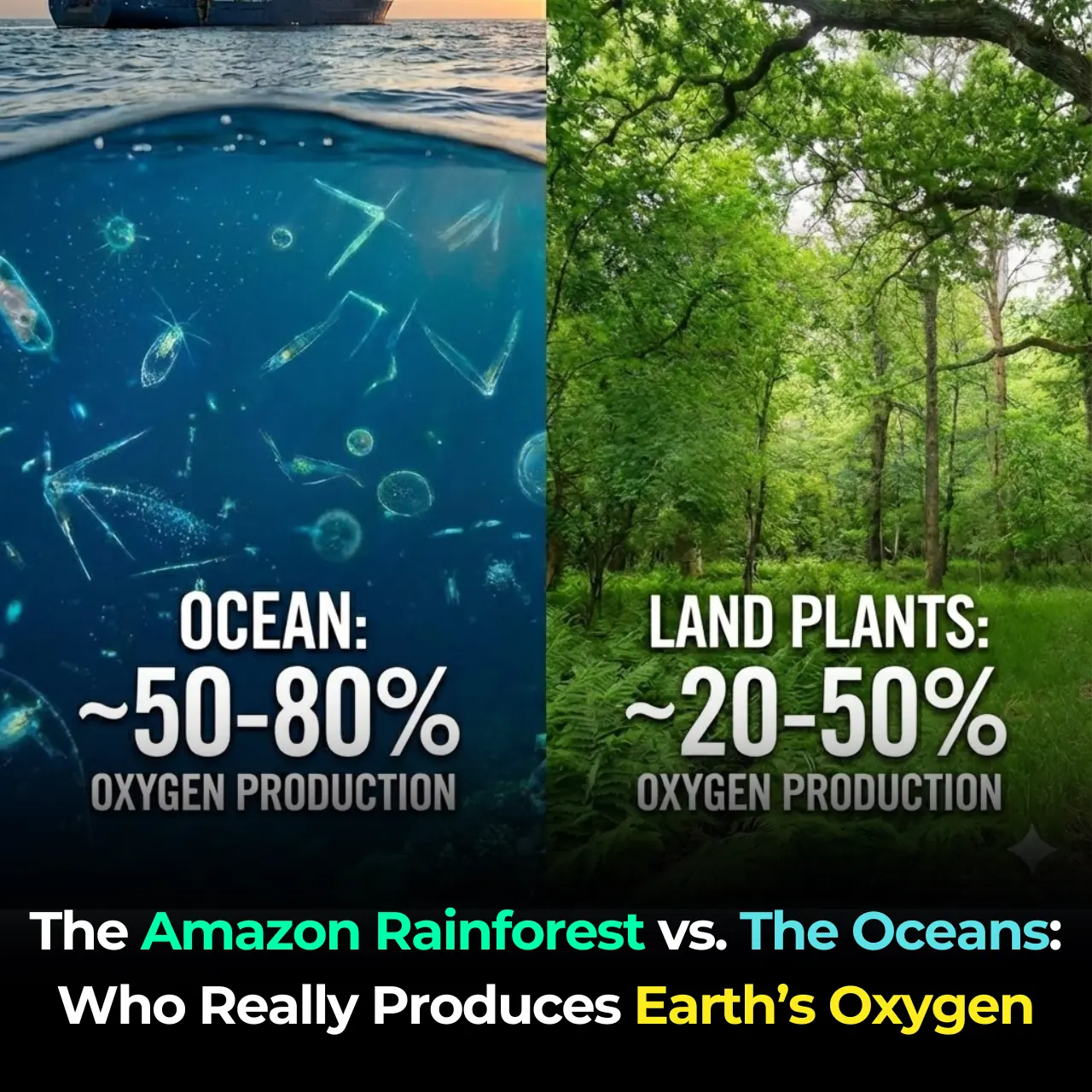
The Amazon Rainforest vs. The Oceans: Who Really Produces Earth’s Oxygen?

The Walking Trees of Ecuador: They Reportedly Move Up to 20 Meters Per Year

Meet one of France’s last on-site lighthouse keepers
British Father and Son Become First to Swim Through Point Nemo, the Farthest Point From Land on Earth

10 Reasons People Treat You Poorly and How to Protect Yourself

Erythritol Under Scrutiny: Could the Popular Sugar Substitute Weaken Your Brain’s Protective Barrier?

Rust-Powered Revolution: Iron-Air Batteries Could Unlock Affordable Long-Duration Energy Storage

Colombia’s Largest Tree Is So Big in Diameter, It Has Grown Pillars to Support Its Branches
News Post
How Stan Larkin Lived 555 Days Without a Heart, Thanks to a Groundbreaking Artificial Heart
Facts 17/12/2025 12:20
Introducing NEO: The $20,000 Humanoid Robot That Will Revolutionize Your Home
Facts 17/12/2025 12:14
Michelin's Game-Changing Airless Tires: No Punctures, No Blowouts, Just Pure Innovation
Facts 17/12/2025 12:08
Experience the Ultimate 4,000-Mile Canadian Train Adventure for Just $558
Facts 17/12/2025 12:02
Revolutionary mRNA Vaccine Shows Early Promise in Defeating Deadly Brain Cancer
Facts 17/12/2025 11:55
Is Intelligence Linked to Political Ideology? New Research Reveals Surprising Findings
Facts 17/12/2025 11:46
Shocking Rise in Cognitive Disabilities Among Young Adults – A Decade-Long Yale Study Reveals Startling Trend
Facts 17/12/2025 11:37
MIT's Groundbreaking mRNA Vaccine Technology Boosts Effectiveness 100 Times and Reduces Toxicity
Facts 17/12/2025 11:27

Blanching pork in boiling water might seem clean, but it actually absorbs more dirt: This is the correct way to do it.
Tips 17/12/2025 11:21

When buying loofah, which is tastier: dark green or light green? I've been shopping at the market for decades and still don't know this.
Tips 17/12/2025 11:20

Secrets to Growing Jasmine: Four Simple Steps for Year-Round Blooms, Hundreds of Flowers in Abundance
Tips 17/12/2025 11:18

Don't throw away rice water, keep it for these 6 "miracle" things, and save millions of dong every year.
Tips 17/12/2025 11:17
Leucine’s Hidden Power: How an Essential Amino Acid Boosts Mitochondrial Energy and Cellular Health
Facts 17/12/2025 10:57
Wildlife Populations Have Declined by 73% in the Last 50 Years, Scientists Warn
Facts 17/12/2025 10:46
Mariana Trench -The deepest location on Earth
Facts 17/12/2025 10:31
The Amazon Rainforest vs. The Oceans: Who Really Produces Earth’s Oxygen?
Facts 17/12/2025 10:19
The Walking Trees of Ecuador: They Reportedly Move Up to 20 Meters Per Year
Facts 17/12/2025 10:08
Meet one of France’s last on-site lighthouse keepers
Facts 17/12/2025 09:54
British Father and Son Become First to Swim Through Point Nemo, the Farthest Point From Land on Earth
Facts 17/12/2025 09:41