To preserve tofu, don't put it directly in the refrigerator. Remember these two tips and your tofu will stay fresh for 10 days.
Tips 23/12/2025 14:56

When indoor humidity levels rise, mold can easily develop and spread. Mold may appear anywhere in the house—from household items to walls and ceilings. This not only affects the overall appearance of your living space but also increases the risk of health problems such as allergies, infections, and asthma. Therefore, cleaning and removing mold promptly is essential to protect both your home and your family’s well-being.
Below are several effective methods to remove mold from walls and ceilings, along with practical tips to prevent it from coming back.
Citric acid, also known as lemon acid or sour powder, is a natural substance commonly found in citrus fruits such as lemons and oranges. Thanks to its natural cleaning properties, citric acid is effective in removing mold and mildew.
You can easily find pure citric acid at supermarkets or food supply stores, where it is often sold as a food additive or natural preservative.
To clean moldy walls, mix 1–2 tablespoons of citric acid with 1 liter of water and stir well until fully dissolved. Pour the solution into a spray bottle and spray it directly onto the moldy areas of walls or ceilings. Let the solution sit for about 10–15 minutes so it can penetrate deeply. Then, gently scrub the area with a soft brush and wipe it clean with water. Allow the surface to air-dry naturally. If mold stains remain, repeat the process.
To prevent mold from returning, ensure your home stays dry and well-ventilated. During humid weather, keep doors and windows closed to prevent moist air from entering. Regular inspections and timely cleaning will help stop new mold from spreading.
White vinegar is another effective and affordable solution for removing small mold spots on walls. As soon as you notice mold growth, it’s best to treat it early—the sooner you act, the better the results.
Mix white vinegar with clean water at a 1:1 ratio and pour the solution into a spray bottle. Spray it onto the moldy area, leave it for 10–15 minutes, then wipe clean with water.
For stubborn mold stains, you can mix baking soda with vinegar to form a paste. Apply the mixture to the affected area and scrub thoroughly with a brush until the mold loosens. Finally, rinse with clean water.
Soap is a basic cleaning agent that can help remove mild mold stains. Simply dissolve a small amount of soap in warm water and use the solution to wipe moldy surfaces. This method works best for light, newly formed mold.
Hydrogen peroxide is known for its strong cleaning and disinfecting properties. Dilute it with water and spray the solution onto moldy walls. Gently scrub with a brush until the mold comes off, then wipe with a damp cloth. This method helps disinfect the surface while removing mold effectively.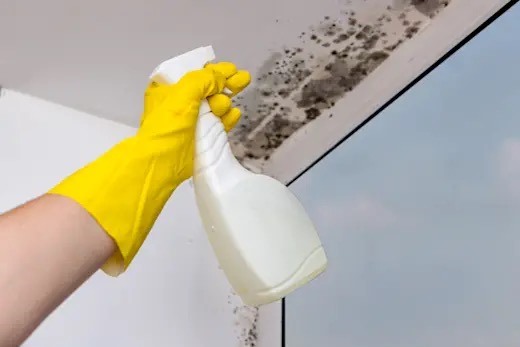
Bleach containing chlorine is highly effective for severe mold problems. Dilute bleach with water before use, spray it onto the affected surface, and let it sit for a short time. Then scrub gently and rinse with clean water.
For newly formed dark mold stains, products like diluted chlorine bleach (such as Javel bleach) can be particularly effective. Soak a cloth in the diluted solution and wipe directly onto the moldy area.
A common dilution ratio is 1:99 (bleach to water) for light mold. For heavy mold infestation, a stronger ratio such as 1:20 may be required. Always wear gloves when using bleach, as chlorine can irritate the skin and respiratory system.
Note that bleach works well for surface stains but does not solve underlying issues such as water leakage or structural dampness.
When cleaning moldy walls or ceilings, always wear gloves and a face mask to protect yourself from inhaling mold spores or harsh chemicals. Proper ventilation is also recommended during cleaning.
There are many reasons why walls become damp, moldy, or start peeling over time. One of the most common causes is high humidity combined with inadequate waterproofing during construction.
In Vietnam, where average humidity levels often exceed 70% and the rainy season lasts for months, homes are particularly vulnerable to moisture-related damage. Poor-quality paint, aging materials, or improper construction techniques can also lead to peeling paint and mold growth.
In many cases, wall blistering and peeling are caused by salt crystallization (efflorescence). This occurs when construction materials contain excess salts or impurities, or when walls are painted while still damp and highly alkaline.
Other contributing factors include painting only one side of the wall, physical damage from impacts, or improper use of adhesives and fixtures.
For walls with severe peeling or blistering, it is necessary to remove all damaged plaster, extending at least 10 cm beyond the affected area. Apply a bonding layer to improve adhesion, then re-plaster using clean, sifted sand. Once the wall is completely dry, apply an anti-alkali primer followed by a finishing coat of paint.
For mold-related salt damage, scrub the surface with a wire brush to remove old paint and mold roots. Then wipe the area multiple times with hot water or 90% alcohol to eliminate remaining salt deposits. Allow the wall to dry for at least 48 hours before repainting.
If immediate repairs are not possible, you can temporarily improve appearance by using PVC panels, foam wall tiles, or wallpaper to cover moldy or peeling areas. Before installation, remove loose paint and clean the surface.
While this method is quick and cost-effective, it only addresses aesthetics and does not eliminate the root cause of mold. Long-term waterproofing is still necessary.
Repainting is one of the most effective solutions regardless of the severity of peeling. Scrape off all damaged paint, clean the surface thoroughly with anti-mold chemicals, sand the wall smooth, and apply primer before repainting.
For heavily damaged walls, remove all old paint and allow the surface to dry completely before replastering and repainting.
If ceiling stains are minor, fast-drying waterproof paint can help prevent further water penetration. For serious leaks, more complex solutions such as fiberglass layers, waterproof sealants, or cement reinforcement may be required. In such cases, professional assistance is recommended.
Proper roof design, including adequate slope and drainage, is crucial to prevent water pooling and ceiling leaks.
Use a dehumidifier to maintain optimal indoor humidity.
Place moisture absorbers such as silica gel, activated charcoal, lime, or coal in fabric bags around the house.
Close doors and windows during humid weather to prevent moisture buildup, and ventilate during dry days.
Use air conditioning in dehumidifier mode for 2–3 hours to significantly reduce indoor moisture levels.